Philippines

With more than 7,000 islands sprawled along the Pacific Ring of Fire, it’s virtually impossible to visit all of the Philippines. Fortunately, the country’s finest qualities—including stunning landscapes and hospitable locals—can be found all across the archipelago. Those seeking white sand beaches should visit Boracay (which is, admittedly, also a serious party island) or Palawan (which is less developed).” Culture-lovers are better off on the largest island, Luzon, home to the UNESCO-recognized town of Vigan, the Ifugao rice terraces, and baroque churches.

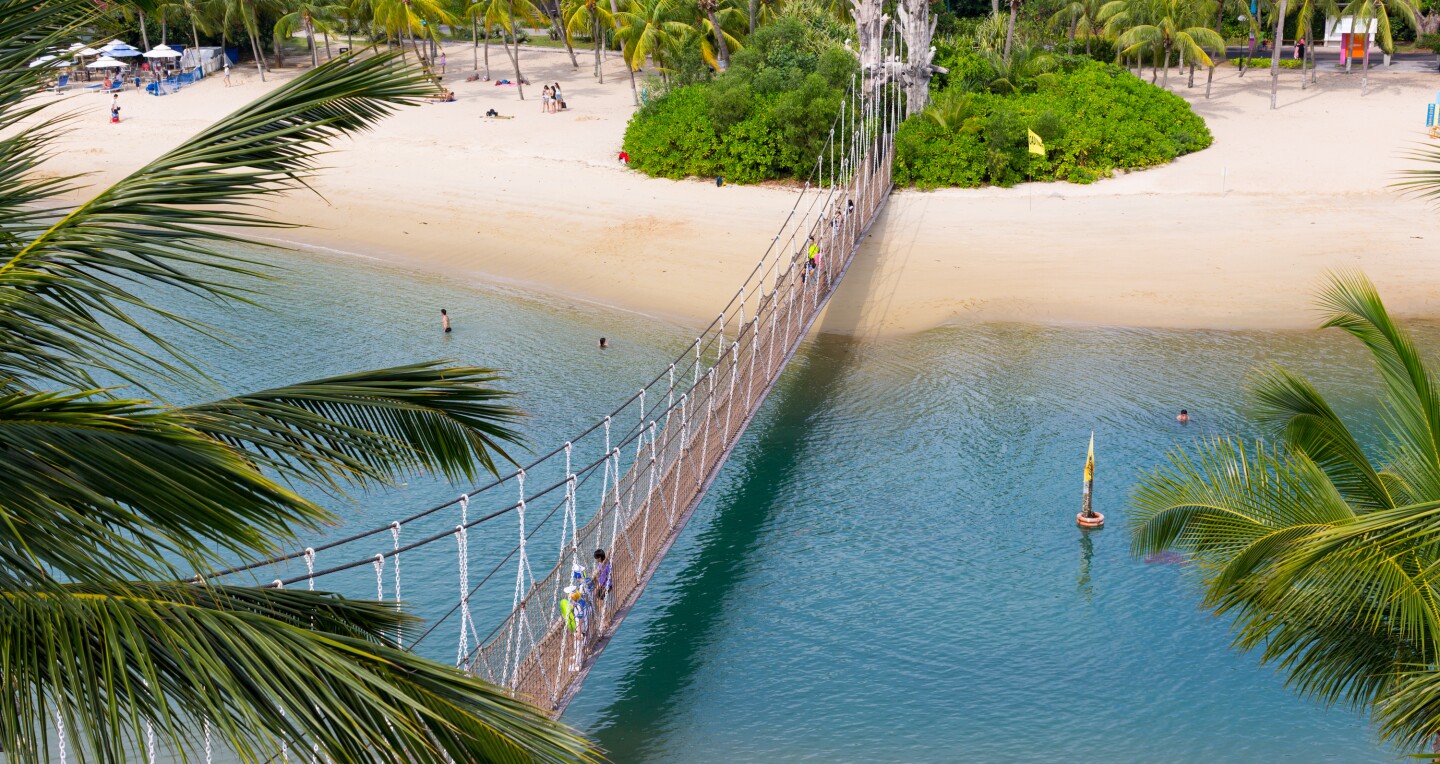
Hanging bridge to Palawan island, Sentosa, Singapore

Photo By Roman Rudiak/Shutterstock

Overview

Can’t miss things to do in Philippines

The Philippines’ charm stems largely from three characteristics: ancient cultures, natural beauty, and overwhelmingly friendly people. A visit to the beach is a must. Swimming with whale sharks is highly recommended (and completely safe). Island-hopping trips among the thousands of uninhabited islands are surprisingly affordable. A visit to a village where life has remained essentially the same for millennia—such as to Batad, set among rice terraces inscribed on the UNESCO World Heritage List—is a unique and humbling experience. Hospitality is an important part of Filipino culture, and if you socialize with locals you’re likely to be invited to a home-cooked family dinner.

Food and drink to try in Philippines

Filipino cuisine—like the culture—varies from island to island. It consists of a hodgepodge of Austronesian dishes influenced by neighbors (such as Malaysia) and former rulers (Spain and the United States). The result is a variety of paellas, pork, noodle-based dishes (known as pancit), and liberal use of soy sauce, vinegar, and fish sauce. Outside of large cities, few Filipinos frequent restaurants, and the best food is most often found on dinner tables in local homes. Fortunately, locals are wonderfully outgoing and quick to invite a new friend to dine with the family. Where possible and appropriate, accepting such invitations is recommended.

Culture in Philippines

The Philippines lacks many of the characteristics shared by other Southeast Asian countries. While others in the region have strong Buddhist and East Asian traits, Filipinos are a primarily Austronesian people (the same who later migrated to Tahiti and Hawaii), strongly influenced by three centuries of Spanish rule and a long American military presence. The culture is best described as Asian–Latin American. American fashion and rock-and-roll culture are popular, Catholicism is widespread, and colorful Filipino Jeepneys are practically identical to Latin American “chicken buses.” Music completely ingrained in the culture and ancing is an unofficial national pastime.

Shopping

Low prices and affordable alterations make shopping any place in Asia a treat. This is especially true in the Philippines, said by some to be Asia’s shopping capital. Western styles are common, and malls are so popular that many of the world’s largest reside in the country. For high-end shopping in Manila, Greenbelt in the Makati district is the obvious choice. The SM Megamall in the Ortigas district is the biggest shopping center in the country and is an impressive sight. Bargain hunters should head for Greenhills in the San Juan district, where pearls are plentiful, designer goods suspect, and shopkeepers ready to bargain. The best times to shop are after Christmas and Valentine’s Day, when sales are ubiquitous.

Practical Information

March through May are the hottest months in the Philippines, followed by a rainy season that lasts until October. November to February are the most temperate months to visit. Most nationalities don’t need a visa for trips of up to 30 days, though an ongoing ticket and a passport that’s valid for at least six months are required. Air conditioning on buses can be frigid, so be sure to take warm clothing. The currency is the peso; English is widely spoken. Electricity is 220 volts.

How to get around Philippines

The majority of international flights land in Manila, though there are other options if you want to avoid the chaotic capital. For a nonstop flight from the United States, book on Philippine Airlines. As of October 30, 2018, the airline launches nonstop service from JFK to Manila five times per week. Domestic travel in the Philippines is affordable. Islands are easily reached on airlines including Cebu Pacific Air, Philippine Airlines, PAL Express, and AirAsia Philippines. You can also island hop by ferry. Book through 2Go Travel.

Guide Editor

READ BEFORE YOU GO
HOTELS
These hotels know how to make an entrance.
RESOURCES TO HELP PLAN YOUR TRIP
Still in use today, the Ifugao Rice Terraces were carved into the hillsides of Ifugao Province by hand some 2,000 years ago, and are fed by an elaborate irrigation system that captures water from the forests above. While many people explore this famed landscape from the town of Banaue, the Banaue Rice Terraces cluster here isn’t technically part of the Rice Terraces of the Philippine Cordilleras UNESCO World Heritage site. These terraces are, however, designated a National Cultural Treasure by the Philippine government and are undeniably spectacular. But probably the most impressive of all the terraces are at Batad, a tiny, remote village in the municipality of Banaue that is only accessible by foot. Thanks to their pristine condition, these terraces—along with four other clusters—are included in the UNESCO inscription. The reward for your hike up is a panorama of a kind of enormous amphitheater where each level is actually a rice paddy and where the village of Batad takes the place of the central stage at its base. Maximize your experience by staying in one of the indigenous huts and wake up to a view of the terraces before you even get out of your cot.
One of Intramuros’s main tourist attractions, Fort Santiago and its beautifully landscaped grounds on the bank of the Pasig River make for a wonderful escape from the bustle of the big city. Originally built by the Spanish in 1590, the citadel today includes gardens, plazas, fountains and a lily pond. The Rizal Shrine museum features displays of memorabilia relating to national hero Dr. José Rizal, executed by the Spanish in 1896 for being one of the leaders of the Philippine Revolution. The fort includes a re-creation of his cell and the courtroom where his trial was held.

Travel on the large island of Luzon, in the Philippines, can be rough, to say the least, due to traffic-congested roads and road blocks, but if you can make your way to the farthest point north on the Philippine Archipelago you will be rewarded by a true paradise called Pagudpud Beach! The sand is white like sugar and the water crystal clear. The bay is filled with a plethora of wildlife and sea creatures, and the calm waters are perfect for snorkeling right from the sandy beach. Although Pagudpud is a well-known tourist destination, I have never seen the beaches packed with tourists (my family is from a nearby village called Bacarra) and it isn’t hard to find a long stretch of beach to have all to yourself. The beaches here are truly remote. Spend the entire day snorkeling and eating fresh fruit and seafood that can easily be purchased roadside. I recommend staying for the sunsets, which are magnificent over the China Sea.
One of the more bizarre landscapes in the Philippines is Bohol’s Chocolate Hills, a 20-square-mile area that contains some 1,700 hills. To date, these natural formations still baffle geologists, though legend claims the hills are rocks once thrown by battling giants, or tears cried by a giant who lost his love. The hills are green during wet season and turn into brown mounds during the dry season, hence the name. Climb up to the viewpoint to get a 360-degree view and unleash your imagination. Some people say the hills look like giant Hershey’s Kisses; others just see mounds left behind by enormous moles. Before you leave, buy some local Peanut Kisses to help you remember your visit—perhaps inspired by the Hershey’s chocolates, they are shaped like the hills.
The mountainous Coron Island, just northeast of Palawan, is part of the officially designated ancestral domain of the indigenous Tagbanua people (possibly descendants of the original inhabitants of the Philippines). They steward the land and sea, and control access to the island, much of which is off-limits to visitors. There is still plenty to attract travelers to the area, though: a small, sleepy town and clear lakes; limestone rock formations; and white-sand beaches. Those lucky enough to be welcomed into a Tagbanua community can learn about their culture and how they spearfish, as well as the special techniques for harvesting octopuses, seaweed, and sea cucumbers. For snorkelers, Siete Pecados offers rich coral reefs and the chance to spot dugongs, giant hawksbill turtles, and baby sharks. Divers can also hope to get a glimpse of puffer fish, eels, and giant clams. As well as the diverse marine life, there are numerous Japanese shipwrecks from World War II on view underwater. Add in the visibility of up to 80 feet, and this area is a superb playground for diving enthusiasts.
Filipino food is a grand stew of flavors and styles developed across the Southeast Asian country’s 7,000 islands. Flavors often lean toward sour in savory dishes (the country is a vinegar fan’s delight) and, on the dessert front, the sweet relief from the heat that halo halo and ice cream treats provide. But you’ll also see the influence of many other countries’ flavors in the mix, from Spanish cuisine to Chinese. The restaurant scene ranges from relaxed open air spots that focus on local food to high-end dining at resorts. If food is your top reason to travel, consider sticking around the capital for several days. Many restaurants in Manila are becoming household names around the world.
Whether you’re an urban explorer or more of a beach bum, there’s a hotel in the Philippines for your type of trip. While business travelers tend to stay near Manila, many will fly through the hub to hit the famous beaches of the Philippine islands, where there are five-star resorts and plenty of sunshine. Here’s where to find everything from a historic hotel with views of Manila Bay and a luxury property near Makati’s best shopping to a private island resort surrounded by coral reefs.
Not surprisingly, this chain of more than 7,000 islands holds a million wonders—wildlife, mountains, jungles, and the white sand beaches of your dreams. With so many places to go, you’ll have to make some tough choices. What can wait for the next trip? Will you go island hopping or stay put on one of the larger islands? Will you head for the Chocolate Hills and the chance to see tiny primates with giant eyes? Or will you swim with whale sharks and go scuba diving off the low-key island of Palawan? There are no wrong answers.
Every now and again, travelers just need to stay in one place and leave the running around to the rest of the world. That’s where resorts come in. Though most of these resorts on the Philippine Islands are within easy reach of other grand adventures, these properties serve up a world all their own. They all serve memorable meals and have snap-worthy views.
The Masungi Georeserve is a conservation area in the rain forest of Baras, Rizal, just 30 miles from Manila. The landscape is a mix of jagged limestone rock formations (the reserve’s name comes from the word masungki, which means “spiked”), lush woods, and caves. There is a unique guided nature hike through this terrain that includes rope courses, suspended bridges, steps, and hanging rest areas. Taking around three to four hours to traverse, the trail does not need any special hiking skills—but does require that you be in decent physical condition. Scaling the peaks rewards visitors with breathtaking views of the Sierra Madre mountain range on one side and the Laguna de Bay lake (the largest in the Philippines) on the other. The rest spots are spectacular: The Sapot is like a huge spiderweb you can walk on, and there’s a shelter called the Patak dangling from a hanging bridge as well as a giant hammock called the Duyan. Reaching one of these spots in the late afternoon might just reward you with a great sunset. Rain-forest weather is hot and humid, so the best time to go is during the cooler months of November to February. Advance reservations are required.