New Zealand

Comprised of the volcanic, lush green North Island and its rugged, mountainous neighbor to the south, New Zealand has just about everything you could ask for in a destination. With a rich Maori heritage, beautiful beaches, geothermal spas, Lord of the Rings filming locations, and a growing wine culture—plus tons of adventure sports—the “Land of the Long White Cloud” has much to offer travelers, who are guaranteed to fall in love with this little nation.

TravelGuide-NewZealand-tyler-lastovich-unsplash.jpg

Photo by Tyler Lastovich/Unsplash

Overview

When’s the best time to go to New Zealand?

At the bottom of the Southern Hemisphere, the seasons in New Zealand are reversed from what most of us are accustomed to. Summer runs roughly from December to March, with Christmas through January considered peak season. Snowfields on both islands lure skiers and snowboarders, making New Zealand a popular winter destination as well. During the shoulder seasons, the crowds die down. The weather on the North Island, especially around Auckland, is considered mild and temperate, making it a nice destination year-round.

How to get around New Zealand

Really, the only way to get to New Zealand is by flying, and all international flights are routed through Auckland because of its large airport. From Australia, it’s a four-hour flight, and from Los Angeles it’s 12. A growing cruise industry brings tourists to travel around New Zealand by ship.

Many visitors choose to rent a “campervan” as a way to explore New Zealand’s lush countryside, save on accommodations, and participate in the country’s rich camping tradition. There are plenty of holiday parks and sites in which to park overnight, but free camping isn’t allowed anymore in most of New Zealand. If you are planning to explore the country for more than a month, you might even consider buying a car or campervan. Because of New Zealand’s remote location and limited public transportation, there is a large market of used cars being bought and sold by travelers; it’s a relatively easy, cheap, and painless process. The major cities also have airports, so if you’re on a limited schedule, you can fly between destinations. Public buses connect towns and cities (you can buy hop-on, hop-off bus passes), and there are some train routes on both islands, as well as plenty of tour companies.

Food and drink to try in New Zealand

New Zealand has a growing food scene, and in recent years big cities like Wellington and Auckland have turned out gourmet restaurants, chic cafes, and boutique bars. The famous coffee culture here ensures you will never be far from a delicious cup of coffee. Trendy new independent craft beer companies and breweries continue to pop up around the country, and plenty of wineries dot both islands.

Culture in New Zealand

Before it was colonized by Westerners, New Zealand was settled by the seafaring Maori people from the Pacific. You can visit various Maori sites and have Maori cultural experiences in places like Rotorua. From carving greenstone or jade pendants to witnessing the famous Haka, you’ll see Maori culture and history everywhere in New Zealand.

The two main wine festivals are Toast Martinborough on the North Island in November, and the Marlborough Wine Festival in February on the South Island. New Zealand’s version of Independence Day, when the Treaty of Waitangi was signed between the Maoris and the British Crown, takes place every year on February 6. Also in February, Wellington comes alive with the Sevens, when seven rugby teams compete, creating a massive party in Wellington. If adventurous eating is your thing, then be sure to check out the Hokitika Wild Food Festival in March, where you can try anything and everything.

Local travel tips for New Zealand

- New Zealand is one of the safest and friendliest countries in the world. From the commonplace encounters with hitchhikers around the islands to conversations with just about anyone you meet, it won’t take long for you to realize that there’s something special about Kiwis.
- Remember that because New Zealand is very remote, parts of the country aren’t easily accessed, aren’t connected to phone service, or are prone to wild weather and geological activity such as earthquakes, landslides, and volcanoes—and it’s good to come prepared.

Practical Information

- English and Maori are the official languages of New Zealand, and pretty much everybody speaks English.
- Of course, like any language, Kiwis (aka New Zealanders) have their own take on some words. If you’re told to get dressed in your togs and jandals, change into a swimsuit and flip flops. And when you’re driving around in a camper van, there’s a good chance you’ll end up in the middle of the wop wops (aka the sticks).
- The country runs on 230/240 volts with angled two- or three-pin plugs so you’ll need a converter.

Guide Editor

Brett Atkinson is a full-time travel and food writer based in Auckland. He writes about adventure travel, unusual destinations, and surprising angles on more well known destinations for Lonely Planet and the BBC, among other outlets.

Liz Carlson is a writer and travel blogger based in New Zealand.

READ BEFORE YOU GO
HOTELS
At these rental properties around the world, you can commune with wildlife and farm animals.
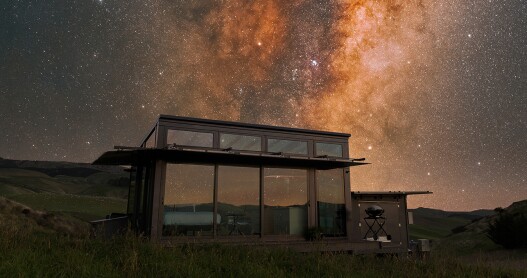
Forget pitching a tent. When you stay in these luxurious huts, domes, and pods, getting close to nature doesn’t mean roughing it.
RESOURCES TO HELP PLAN YOUR TRIP
At this luxury property perched over Matauri Bay near the top of the North Island, the colonial-style buildings are dwarfed by the endless wavy greens of a championship, par-72 golf course that ends at the Pacific. The ocean views and holes positioned adjacent to plunging precipices make Kauri Cliffs one of the most famous golf resorts in the world. The hilltop infinity pool is another crowd-pleaser, especially when it reflects the pinks and purples of the sunset. Featuring a beach-meets-country vibe, lodge interiors are outfitted with New Zealand artwork and furnishings imported from Europe and Australia. Outdoors, patches of totara trees dot the 6,000-acre property—one section houses the tranquil spa. Walking paths lead to a waterfall, three secret beaches, and picnic sites that offer sweeping views of Cape Brett and the Cavalli Islands.
Perched just up the hill from the white sands of Oneroa Beach on Waiheke Island, the Boatshed fulfills the wainscoted, shuttered, pitch-roofed holiday images that dwell in the minds of beach lovers the world over. Originally the vacation cottages of designer David Scott, the Boatshed now offers six sun-drenched accommodations that complement the laid-back island vibe—a magnet for a free-spirited set of artists, vintners, chefs, and water lovers. Many furnishings were custom-designed by the Scott family and exude the feeling of a boat cabin, especially when placed among the built-in shelves and cabinetry of the bachs—the local word for an authentic New Zealand beach shack. Accommodations range from old boat sheds to a three-story tower that feels like a lighthouse, and outdoor decks provide many opportunities to enjoy the sea breeze. The boutique hotel was the realization of Daniel Scott’s dream—to share the simple pleasures of the beach life with travelers from around the globe.
On the site of a former brick windmill in what is today central Auckland, an old Sheraton tower underwent a $9 million renovation in 2006 to become one of the city’s most luxurious hotels: the Cordis. Across the common spaces and 411 guestrooms, this property is draped in fine silks and velvets, appointed with antiques fit for royalty, and crowned by gilded dome ceilings and chandeliers. It’s a popular meeting place for the corporate elite, featuring a striking ballroom that seats 860 people, banquet style. High-tech conferencing equipment and an in-house audio-visual team create a seamless experience, which has helped the hotel earn Earth Check certification. When work is complete, there are ample options for unwinding, from the high tea at the elegant lobby lounge—a more delicate version of the London lobby—and the Chuan Spa, which specializes in traditional Chinese medicine. Also on site is an exclusive Club Lounge, a fitness studio, a swimming pool, and the renowned Eight restaurant, which offers an interactive dining experience with eight specialist kitchens, each dedicated to a different cuisine and led by an expert chef.
This funky boutique hotel on the edge of the Britomart shopping district goes way back in Auckland history. Built in 1841 as The Commercial Hotel, the DeBrett building survived two fires and two rebuilds plus a stint as a hostel before becoming the quirky place guests experience today. The Housebar has always been the center of hotel life, and today, the intimate wood-and-mint venue exudes its original art deco style and serves classic cocktails and local beers and wines alongside refined pub snacks.

In addition to restoring the bar and adding a glass-roofed atrium that houses the hotel restaurant, DeBretts Kitchen, the current owners affixed contemporary artwork and photography throughout and sheathed the entire building in candy-striped carpeting, custom designed from 100 percent New Zealand wool. Besides the carpet and small-batch minibar selections, no two rooms are the same. Each features unique furnishings from the 1930s on, and every bed has an original screenprinted throw. Two of Hotel DeBretts centerpieces, the chandelier and water sculpture in the restaurant, were crafted by Auckland artists from materials salvaged during the latest renovation. The result is a local experience from top to bottom that gives guests a real taste of New Zealand.
There’s no better place to stop and smell the roses (and the dahlias and the begonias) than Christchurch Botanic Gardens. From New Regent Street, hop on the renovated tram, which stops near the entrance to the 80-plus acres of majestic oaks, water gardens, and rose beds. Rolleston Ave. and Worcester Blvd. This appeared in the January/February 2015 issue.
One of the greatest walks in New Zealand, the Milford track is just over 50 kilometers and leads into the famous Milford Sound. Considered one of the most beautiful places in New Zealand, the Milford Track is categorized as one of New Zealand’s “Great Walks,” prompting many people from near and far to come hike the 5 day circuit. Giant waterfalls crash down from vertical cliffs, and mist usually hangs about the tops of the peaks creating a mysterious, almost legendary feel to the place. Whether you are hiking the track or cruising in a boat around the fiords, or even kayaking the Milford Sound, definitely don’t skip this remote part of New Zealand on a visit.
The award-winning Depot is a restaurant with a difference run by quintessential Kiwi chef and author Al Brown. Squid ink linguine, pork hock and plump fresh oysters come hand-in-hand with wine on tap, old style crockery and super friendly service. I personally think the best seats are outside. Unfortunately they’ve succumbed to the “no reservations” disease so a good approach is to put your name on the door and then grab a drink across the road at Belotta in the SkyCity complex.
Near Lake Wanaka in the South Island is the remote and sparsely settled Lake Hawea. Surrounded by steep mountains untouched by man that drop swiftly down to turquoise blue waters, it couldn’t be more picturesque. This is the perfect place to stop on a road trip on the South Island between Wanaka and Franz Josef Glacier to the north. There are a few beaches fit for swimming and plenty of pull-offs to take a photo or two.
A magical alpine lake on the South Island is Lake Pukaki, crystal blue and turquoise. Oftentimes in the morning it’s so still it reflects a perfect mirror of the clouds. One of many glacial lakes in the area, the best view is from the southside, when on sunny days you can see all the way to Aoraki-Mount Cook, New Zealand‘s highest peak. Though not as developed as other lakes on the South Island, it’s worth at least stopping by for a photo or two on any road trip.
The cultural heart of Wellington is right downtown on Cuba Street. Here art galleries rub shoulders with boutique cafes, and there’s more than an enough independent bookshops, thrift stores, and quirky bars to keep even the most alternative traveler sated. If you’re looking to mingle with locals and really get a feel for what makes Wellington special, look no further than Cuba Street. And if you have a hectic New Zealand itinerary, Cuba Street is a great spot to just relax and enjoy the capital.