New Zealand

Comprised of the volcanic, lush green North Island and its rugged, mountainous neighbor to the south, New Zealand has just about everything you could ask for in a destination. With a rich Maori heritage, beautiful beaches, geothermal spas, Lord of the Rings filming locations, and a growing wine culture—plus tons of adventure sports—the “Land of the Long White Cloud” has much to offer travelers, who are guaranteed to fall in love with this little nation.

TravelGuide-NewZealand-tyler-lastovich-unsplash.jpg

Photo by Tyler Lastovich/Unsplash

Overview

When’s the best time to go to New Zealand?

At the bottom of the Southern Hemisphere, the seasons in New Zealand are reversed from what most of us are accustomed to. Summer runs roughly from December to March, with Christmas through January considered peak season. Snowfields on both islands lure skiers and snowboarders, making New Zealand a popular winter destination as well. During the shoulder seasons, the crowds die down. The weather on the North Island, especially around Auckland, is considered mild and temperate, making it a nice destination year-round.

How to get around New Zealand

Really, the only way to get to New Zealand is by flying, and all international flights are routed through Auckland because of its large airport. From Australia, it’s a four-hour flight, and from Los Angeles it’s 12. A growing cruise industry brings tourists to travel around New Zealand by ship.

Many visitors choose to rent a “campervan” as a way to explore New Zealand’s lush countryside, save on accommodations, and participate in the country’s rich camping tradition. There are plenty of holiday parks and sites in which to park overnight, but free camping isn’t allowed anymore in most of New Zealand. If you are planning to explore the country for more than a month, you might even consider buying a car or campervan. Because of New Zealand’s remote location and limited public transportation, there is a large market of used cars being bought and sold by travelers; it’s a relatively easy, cheap, and painless process. The major cities also have airports, so if you’re on a limited schedule, you can fly between destinations. Public buses connect towns and cities (you can buy hop-on, hop-off bus passes), and there are some train routes on both islands, as well as plenty of tour companies.

Food and drink to try in New Zealand

New Zealand has a growing food scene, and in recent years big cities like Wellington and Auckland have turned out gourmet restaurants, chic cafes, and boutique bars. The famous coffee culture here ensures you will never be far from a delicious cup of coffee. Trendy new independent craft beer companies and breweries continue to pop up around the country, and plenty of wineries dot both islands.

Culture in New Zealand

Before it was colonized by Westerners, New Zealand was settled by the seafaring Maori people from the Pacific. You can visit various Maori sites and have Maori cultural experiences in places like Rotorua. From carving greenstone or jade pendants to witnessing the famous Haka, you’ll see Maori culture and history everywhere in New Zealand.

The two main wine festivals are Toast Martinborough on the North Island in November, and the Marlborough Wine Festival in February on the South Island. New Zealand’s version of Independence Day, when the Treaty of Waitangi was signed between the Maoris and the British Crown, takes place every year on February 6. Also in February, Wellington comes alive with the Sevens, when seven rugby teams compete, creating a massive party in Wellington. If adventurous eating is your thing, then be sure to check out the Hokitika Wild Food Festival in March, where you can try anything and everything.

Local travel tips for New Zealand

- New Zealand is one of the safest and friendliest countries in the world. From the commonplace encounters with hitchhikers around the islands to conversations with just about anyone you meet, it won’t take long for you to realize that there’s something special about Kiwis.
- Remember that because New Zealand is very remote, parts of the country aren’t easily accessed, aren’t connected to phone service, or are prone to wild weather and geological activity such as earthquakes, landslides, and volcanoes—and it’s good to come prepared.

Practical Information

- English and Maori are the official languages of New Zealand, and pretty much everybody speaks English.
- Of course, like any language, Kiwis (aka New Zealanders) have their own take on some words. If you’re told to get dressed in your togs and jandals, change into a swimsuit and flip flops. And when you’re driving around in a camper van, there’s a good chance you’ll end up in the middle of the wop wops (aka the sticks).
- The country runs on 230/240 volts with angled two- or three-pin plugs so you’ll need a converter.

Guide Editor

Brett Atkinson is a full-time travel and food writer based in Auckland. He writes about adventure travel, unusual destinations, and surprising angles on more well known destinations for Lonely Planet and the BBC, among other outlets.

Liz Carlson is a writer and travel blogger based in New Zealand.

READ BEFORE YOU GO
HOTELS
At these rental properties around the world, you can commune with wildlife and farm animals.
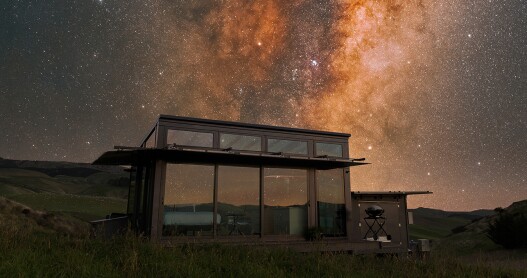
Forget pitching a tent. When you stay in these luxurious huts, domes, and pods, getting close to nature doesn’t mean roughing it.
RESOURCES TO HELP PLAN YOUR TRIP
Rēnata West was born and raised in Whakarewarewa, a village on New Zealand’s North Island, where his family and community have embraced tourism that both protects his people and preserves their rich culture—a model he now seeks to spread to other Indigenous communities.
Prime Minister Jacinda Ardern said the borders won’t reopen until the nation’s vaccine rollout is complete.
Why we love it: Epic views and high style on the South Island

The Highlights:
- Design that maximizes the views
- A small size that makes for an intimate, exclusive experience
- Access to a variety of outdoor adventures

The Review:
Set in the South Island’s Ahuriri Valley, on 6,000 pristine acres bordered on three sides by conservation parks, is your own slice of natural paradise. Opened in late 2018, The Lindis is a striking, contemporary lodge that blends into the landscape, with a sloping roof that mimics the mountain and river backdrop and, inside, floor-to-ceiling windows framing magnificent views.

There are just five rooms to choose from—two master options and three lodge suites, all with private indoor and outdoor lounge spaces, fluffy king beds, and gas fireplaces. (Master suites also have separate living rooms and oversized bathtubs.) Beyond the accommodations, there are endless activities to choose from, from horseback riding, fly fishing, and e-biking to eco- and buggy tours and spectacular stargazing. Fuel up for your adventures with the lodge’s refined, contemporary cuisine, crafted by house chefs using locally sourced ingredients—think South Island crayfish, foraged porcini mushrooms, and Wild Fiordland venison—and paired with fine New Zealand wines from the well-stocked cellar.
Rebuilt after a devastating earthquake in 1931, the relaxed port city of Napier is New Zealand’s capital of art deco design and architecture. Nestled amidst the heritage shopfronts of its compact downtown area is one of the country’s most interesting restaurants, proving there is plenty of culinary excellence outside of New Zealand’s big cities. Bistronomy showcases seasonal ingredients in its compact and stylish dining room—produce is often grown or foraged locally, and creatively harnessed for plates including fish tartare with sorrel and apple, or confit lime with shortbread, orange curd and mint. The drinks list presents excellent varietals from the nearby Hawkes Bay wine region, and Bistronomy’s NZ$75 chef’s choice menu of six courses is great value.
Combining fine-dining flair with the relaxed ambience of a mountain resort town, Rata in Queenstown is one of the New Zealand eateries operated by well-known Kiwi chef Josh Emett. With a CV that includes cooking stints in the United States and London, Emett has crafted a menu that deftly marries a range of international influences to proudly local produce. Sharing plates include New Zealand octopus with saffron aioli or Marlborough salmon with horseradish and green apple, while local venison and merino lamb are standout main courses. The colors and feel of the forest inform the stylish decor—the eponymous rata is a tree native to New Zealand. Two- and three-course lunch menus are both a good value.
Between the rugged coastline of the Banks Peninsula and the snowcapped peaks of the Southern Alps, the Canterbury Plains, formed by mountain rivers, make up one of New Zealand’s most fertile regions. The aerial view of the patchwork of green farms intersecting at Charing Cross has become an iconic New Zealand image. The plains are traversed by the TranzAlpine train, a scenic rail journey sweeping from Christchurch to Greymouth on the South Island’s west coast, taking in Arthur’s Pass National Park, the glacial Waimakariri River and many of Canterbury’s hill country farms.
Following a powerful earthquake in February 2011, the Christchurch Cathedral was severely damaged, and while there is an ongoing ideological and economic debate over whether or not the Gothic-style church can, or should be, repaired, the Anglican parishioners of New Zealand‘s second-largest city can now worship in this fascinating edifice made of, among other things, 96 giant cardboard tubes. Designed by Shigeru Ban, a Japanese architect who specializes in building temporary structures following natural disasters, the Cardboard Cathedral (formerly called Christchurch’s Transitional Cathedral), was erected in less than a year. Its excellent acoustics are also regularly utilized for concerts and events.
The most exclusive lodge in New Zealand, having hosted everyone from Queen Elizabeth II to the late Robin Williams, Huka Lodge feels like a refined country getaway set on the banks of the Waikato River near the North Island resort town of Taupo. Founded in 1924 by a charismatic Irishman named Alan Pye, the property was later reimagined by entrepreneur Alex van Heeren with the help of interiors specialist Virginia Fisher and famed New Zealand landscape designer Suzanne Turley. The surrounding grounds are ranked as a ‘Garden of National Significance’ by the New Zealand Gardens Trust. Whether staying in the lodge suites—which feature French doors that open up to a wooden terrace just steps from the river—or the lofty private cottages, guests will feel like royalty here.
Built in the 1840s as a sheep station that still operates today, Wharekauhau—meaning “place of knowledge” in Maori—pays homage to the area’s tradition of feeding the wise and the cultured. Thirteen cottage suites were positioned to take in this dramatic slice of North Island pasture that landslides into Palliser Bay southeast of Wellington. The cottages are unpretentious yet filled with such luxuries as four-poster beds with curtains, private terraces, separate lounge areas, writing desks, gas fireplaces, double baths, and walk-in showers. Each space is homey, cushioned by soft rugs and upholstery and enclosed by rustic wood panels and beams. The Edwardian main lodge, adorned with cream-toned furniture and antiques, invites guests to curl up by the fire, or chat with the chef in the open kitchen that flows into a charming country dining room. Outside, there’s inspiration all around, extending from the sheep herds to the Palliser Bay lighthouse.
A farm-style experience about an hour from Christchurch, Okuti Garden caters to travelers who love to create and play. An art box encourages crafting; “tree circles” are great for yoga and meditation; and a small lake features a boat popular among readers and small children. Bohemian accommodations include yurts, a tepee, a caravan, and a cabin. Each is homespun and handmade, decorated with drawings, wind chimes, and dream catchers left by former guests.

The property is completely off grid, relying on composting toilets, a solar shower, and a gray-water system that recycles wastewater to irrigate the wetlands. One area of the wetlands grows willow rods, which are woven into arches, domes, and tunnels—turning waste into wonders.