Shanghai

Once a tiny fishing village, Shanghai is a thriving metropolitan hub with an incredible history. Here, East meets West, old marries new, and the running joke is that the city is constantly under construction. With a population of nearly 24 million, the various quarters give this mega-city a surprisingly neighborhoodlike feel. The incredible diversity of people is reflected in the richness of the culture, cuisine, and architecture. Shanghai is a city on the go, so before you get swept away in the flow or jostled out of your place in line, be sure to find a spot to slow down, plant your feet, and take it all in.

Travel-Guides-Shanghai-02.jpg

Photo Courtesy of Trujillo/Paumier

Overview

When’s the best time to go to Shanghai?

While every season has its charms and challenges, spring and fall are simply stunning. The weather just begs you to come out and stroll around the sun-dappled streets of the former French Concession or find a rooftop perch from which to take in the city. As the weather becomes more unpredictable, it’s wise to check the forecast, but don’t worry, if you get stuck in the middle of a downpour, umbrella sellers have a knack of appearing out of nowhere to peddle rain gear.

How to get around Shanghai

Shanghai has two airports, Pudong and Hongqiao, both of which are now connected by metro (Line 2/Green). When flying into Pudong, you can chop considerable time off your trip downtown by jumping on the maglev and either taking the metro into town from there or grabbing a taxi to your final destination. Buses also run from both airports to various points in the city center at frequent intervals (cost is 12-30 RMB, or less than $5), just check the signs at the airport. Taxis are an easy option, but it helps to have your destination printed in Chinese if you don’t speak any Mandarin.

Shanghai has a fabulous public transportation system, making it quite easy and affordable to traverse the city. Explore Shanghai is a handy way to find stations as well as calculate time and cost. You can pick up a Shanghai Public Transportation Card at the service counter in any metro station for a refundable deposit of 20 RMB. These cards, once topped up, can be used to pay for buses, metro rides, ferries, the maglev, and even taxis, saving you from digging for loose change as you travel. Taxis are also easy to catch and relatively affordable.

Can’t miss things to do in Shanghai

Start the morning off at the Bund. Get there in time to catch the sunrise and stroll along the promenade to see the fan dancers, the backwards walkers, and the groups practicing tai chi. There’s something magical about this waterfront stretch in the mornings. Take in the beauty, the culture, and the history of the city, all while gazing at the growing skyline across the river.

Food and drink to try in Shanghai

A veritable melting pot of cultural influences, the restaurant selection is as diverse and vibrant as the city’s residents. From Michelin star–rated chefs to mom-and-pop, hole-in-the-wall eateries and food carts lining street corners after the sun sets, you can easily eat your way through the city several times over. And while you can dine on authentic Turkish, Russian, or Argentinean feasts, don’t leave the city without sampling China’s various regional cuisines. From sweet to spicy to salty to… well, bizarre, the diversity of the country is reflected in its food, and really, you haven’t experienced China until you’ve tried the stinky tofu. Take a crash course on the classic cuisine of Shanghai cuisine by signing up for a curated meal at at Xiao Baihua, shared with an expert on the topic and set up by AFAR’s partner, Context Tours.

Culture in Shanghai

Check the listings in Smart Shanghai because hardly a day goes by without a show—ballet, theater, art exhibitions, or music. And for a soulful evening as iconically Shanghai as it is global, consider attending one of the nightly Chinese Acrobatic Shows or catching live jazz at the Cotton Club or House of Blues and Jazz.

Along with fabulous music festivals in the spring and late summer (Midi, Strawberry, JZ), Shanghai also has numerous “international” cultural gatherings such as the Shanghai International Fashion Cultural Festival (March 2014), the International Film Festival (June 2014), and the International Fitness Festival (Nov 2104).

Local travel tips for Shanghai

- A few words of Chinese will get you far and are usually always appreciated.
- For your own sanity, avoid the metro at rush hour.
- When at any market, always bargain—always.
- You don’t need to tip in Shanghai.
- Dip your dumplings in vinegar, they’re better that way.

Guide Editor

Christy Campbell is a freelance travel writer and owner of a small branding and communications business, Black Bear Ink. When she’s not exploring new places or getting lost in her backyard, she’s practicing the art of storytelling on Lane Letters.
READ BEFORE YOU GO
Beneath the cutting-edge surface of Shanghai lies a trove of fascinating history. As the city turns to that past to inform its future, a local weighs in on the hotspots across his hometown.
HOTELS
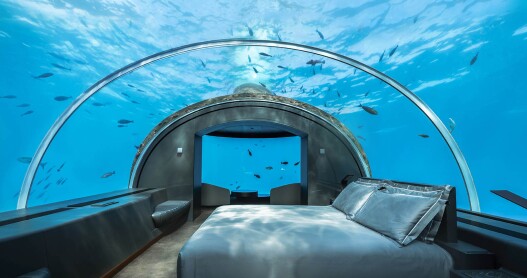
Sleeping with the fishes takes on a whole new meaning at these villas and suites under the sea.
RESOURCES TO HELP PLAN YOUR TRIP
You can find this Shanghai stalwart just around the corner from the Portman Ritz-Carlton, plying eager diners with prototypical Shanghai dishes around the clock (and all-you-can-eat dim sum on the weekends). Locals here tuck into hairy crab soup (the crab comes from nearby Yangcheng Lake), lobster fried rice, sheng jian bao (pan-fried soup dumplings), Shanghai crispy duck (an umami-packed take on Peking duck), and, from the dim sum menu, fresh tofu vegetable rolls. If you’ve got limited time and want to taste both Shanghainese classics and proper dim sum, Lynn is the place.
The first new building to be constructed on the Bund in 60 years, the terraced, granite Peninsula opened in October 2009. Celebrating the city’s Roaring Twenties, the standalone hotel creates a grand sense of arrival with a sweeping driveway. Art Deco design elements occur throughout the property, and traditional decor employs lacquer, marble, granite, wood, and original art. Rooms and suites come with spacious dressing rooms with a full-length valet box for discreet delivery of laundry and packages; they also feature Peninsula’s industry-leading, intuitive in-room technology, with room functions controlled at the touch of a button, and VOIP telephones that allow guests to make free local and international calls. For arrival and departure in style, book the hotel’s Rolls-Royce Phantoms or 1934 Rolls-Royce Phantom II. The property also has China’s first hotel private yacht, a British-built Princess 54 model.
This huge property comprising two towers—the River Wing and the Grand Tower—showcases Huangpu River views from its position by the riverside promenade. The Grand Tower, designed by New York–based Kohn Pedersen Fox, features 375 rooms and suites, while the more classic River Wing has 577 rooms. High-style restaurants and bars sit between the two. Rooms have crystal chandeliers and a mural of Chinese flowers above the bed. The Gallery, in the Grand Tower, exhibits paintings and sculptures from up-and-coming artists, which rotate each quarter.
This urban luxury resort in Shanghai has a polished, cool contemporary feel, mixing Eastern and Western sensibilities. Interiors lean toward dark tones and clean lines, with clever landscaping providing a sense of escape. Organic materials include liberal use of wood, stone, and marble. Large windows bring in natural light, and decor mixes contemporary with touches of traditional Chinese. Environmentally sensitive practices take multiple guises: Solar panels gather energy for hotel operation. The heatproof facade limits the need for air-conditioning. And sunshades in each room open and close automatically to let in or keep out the sun’s light and heat. Rooms also have dragon-scaled screens and cast bronze basins. Club rooms come with the perks of 24-hour check-in/check-out and butlers.
As the centerpiece of the Shanghai Center complex on Nanjing Road, the 45-story Portman Ritz-Carlton melds contemporary Chinese with traditional European-style decor. Textiles in guest rooms echo the materials used in the qipao. Accommodations in light browns and creams also have 300-thread-count bed linens, and down pillows and duvets. Rooms feature modern Chinese decor, bathrooms with sliding rosewood doors, and Asprey Purple Water amenities. A traditional candle-lighting ceremony takes place in the lobby to re-create a ritual held in big mansions in the era before electricity. At the Ritz Kids Academy, children can take classes on social etiquette, covering such key subjects as table posture, tea manners, and self-confidence.
One of Pudong’s marquee buildings, the Cesar Pelli–designed Shanghai IFC, is the setting for this 285-room property. Occupying the top 18 floors of the South Tower, the Ritz-Carlton opened in June 2010 during the World Expo and was meant to usher in Shanghai’s status as a global powerhouse. Its design skews modern with hints of 1930s Shanghai, while views take in panoramas of the Bund. Guest accommodations start at a roomy 540 square feet, have Art Deco themes, and include Asprey amenities.
Opened in 2012, the Four Seasons Pudong resides in what’s known locally as the Jewel Box—the 50-story, 21st-Century Tower, a rectangular prism in the heart of the Lujiazui business district. Art-filled interiors pull their inspiration from Shanghai’s 1920s and 1930s golden age. The lobby wows with a dramatic grand spiral staircase with an underbelly of Maccasar ebony, and a suspended, 1,000-strip metal sculpture created by Japan’s Studio Sawada Design that looks like a dangling collage of willowy twigs. Rooms offer prime views of Pudong’s evolving skyline and come with fresh flowers and Lorenzo Villoresi bath products. The decor is inspired by Shanghai Art Deco, with an intense palette of rouge, glossy black, and textured gray, coupled with smoky glass and metallic accents. In the bathrooms, a custom wall and glass panel mimic Coco Chanel’s iconic No. 5 perfume.
Housed in a 100-meter-tall, concave building in the heart of Xintiandi, the 24-story property has rooms with enduring views over the neighborhood’s Shikumen storefronts. Accommodations combine dark woods, floor-to-ceiling windows, green and gold wool carpets with a paisley-like motif, and dual-basin bathrooms with oversized bathtubs. Shanghai’s Art Deco period and Xintiandi’s courtyard houses inspire interiors, while color schemes of black and green appear throughout, from the dark local granite used as flooring and walls to green glass detailing. Another recurrent theme is the horse, a key Han symbol, laser-cut into large lobby columns and bronze beams to resemble bark on a tree.
Four thousand modern art pieces throughout public areas and guest rooms liven up this Pudong waterfront hotel, which opened in April 2013. The highlight is the lobby’s Glass Murals, made from almost 72,000 mosaic tiles and inspired by local artist Miao Tong’s painting Sound of the Wind. Elsewhere in the lobby, guests will encounter Chinese screens, sculpted furnishings, and bronze tones that mimic the glow of sunset on the river. Rooms have taupe furnishings, with flashes of indigo and lotus-green, and abstract ink paintings of traditional Chinese garden landscapes. Some have hypnotic Huangpu River views. As with many hotels in Pudong, the property is set within a larger complex, in this case the 61-acre mixed-use Harbour City development.
The tallest hotel in mainland China occupies floors 79 to 93 of the Shanghai World Financial Center, the 101-story skyscraper made by Mori Building, developer of Tokyo’s Roppongi Hills complex. As expected, any room or public area in the property likely has jaw-dropping views. Interiors mirror the aesthetics of a cultured modern Chinese residence, with sequences of gates, halls, and chambers as thoroughfares, and earth tones complementing natural materials. Monochromatic rooms have walls finished in linen, lacquer, and slatted-wood panels, with generous daybeds, 24-hour butler service, and plasma televisions embedded in the bathrooms’ vanity mirrors. But really, no amenity can top the incredible views.