Austria

Austria was once part of a mighty empire, which the Habsburgs ruled over from Vienna for some seven centuries. Although Austria today is just a fraction of its former glory, it still maintains its rich cultural and artistic heritage. Vienna is one of Europe’s most attractive cities, combining historic sites with a vibrant creative scene. The city is justifiably famous both for its classical music pedigree and for its elegant grand balls. With two-thirds of the country’s landscape shaped by the Alps, Austria is paradise for anyone eager to explore the mountains—or nature in general. Some of the world’s top ski resorts can be found in the western part of the country. The regions around the Danube, as well as south of Vienna, are known for their many family-run wineries. Austria is also a leader in the farm-to-table movement, and has over 20% of its agriculture, and more than 20,000 farmers, committed to organic farming.

Austria castle at sunset

Shutterstock

Overview

When’s the best time to go to Austria?

Temperatures in spring and fall are usually milder, making it a great time to visit. Winter sports are a major draw to the resort towns in the Austrian Alps, and the skiing is consistently ranked as some of the best in the world. The season lasts from December through late March. Vienna and Salzburg tend to be more crowded in July and August, and during major festivals. Temperatures vary by region and elevation, but averages do not climb above a comfortable high 70s in Vienna during summer.

How to get around Austria

Vienna can be reached via direct flights from several North American cities, including New York (JFK and Newark), Washington D.C., Miami, Chicago, and Toronto, though it is often practical to fly through Munich or Zurich—especially for a trip to Austria’s western provinces. Smaller airports in cities like Salzburg, Graz, Klagenfurt, and Innsbruck can be easily reached. High-speed trains connect Vienna and Salzburg with cities like Munich and Zurich. A hydrofoil travels between Bratislava and Vienna on the Danube. U.S. visitors can stay up to three months with just a passport, after which time a visa is required. If you are entering Austria using a rental car, make sure there is a Vignette (toll sticker) affixed to the windshield.

Cities in Austria are linked by a fast and efficient rail system, with Vienna to Salzburg taking as little as two-and-a-half hours. To explore large towns and cities, public transportation (bus and tram), biking, or walking is best. Driving on Austria’s highways requires a toll sticker—available in ten-day, two-month, and twelve-month increments—which can be purchased at gas stations, post offices, auto clubs, and even in neighboring countries. Renting a car is another great way to explore rural regions and high Alpine routes.

Food and drink to try in Austria

Austria’s cuisine reflects heavily on its imperial past, with influences from Hungary, Italy, and the Balkans. Classic dishes like Tafelspitz (beef, root vegetables, and sauerkraut), Wiener Schnitzel (veal cutlet, flattened and fried), and Gulasch (rich meat stew, often with paprika) can be found throughout the country, while every region is proud of their speciality dishes. But, let’s face it, the major food draw is really the delectable cakes and pastries, including the famous apple strudel and Sachertorte. You’d be forgiven for not knowing that Vienna is the only world capital producing significant quantities of wine within its city limits. White wines dominate the vineyards of the Wachau Valley, while reds prevail in Burgenland and Styria.

Culture in Austria

Some consider Vienna the cultural capital of Europe. The city has been synonymous with the music of Mozart, Beethoven, and Strauss, to name a few, as well as painters like Klimpt. Elegant balls, nights at the Vienna State Opera (one of the world’s best), and hours spent in coffeehouses are quintessential Vienna. The 640-year legacy of the Habsburg dynasty, which officially ended in 2011 with the death of Otto von Habsburg, can be found throughout the city. Oh, and let’s not forget the Boys Choir. Austria has nine inscriptions on the UNESCO World Heritage List: Schönbrunn Palace in Vienna, the Historic Center of Vienna, Wachau Cultural Landscape, Prehistoric Pile Dwellings around the Alps, Historic Center of Salzburg, Hallstatt-Dachstein/Salzkammergut Cultural Landscape, Graz Historic Center and Eggenberg Palace, Fertö/Neusiedlersee Cultural Landscape, and the Semmering Railway.

The year waltzes in with Vienna’s Ball Season in January and February, during which time “Fasching,” Austrian Carnival, also begins. The world famous Salzburg Festival takes place July–August, culminating with a performance of Hugo von Hoffmannsthal’s Everyman. Summer sees a variety of music festivals, from classical to rock (Nova Festival) to avant-garde (Styrian Fall), as well as wine festivals extending into the fall. Austria’s Christmas markets round out the year. Vienna alone lights up with 20 official Christmas markets selling seasonal gifts, decorations, and sweets.

Local travel tips for Austria

Austria has nine provinces: Vienna, Burgenland, Lower Austria, Upper Austria, Salzburg, Styria, Carinthia, Salzburg, Tyrol, and Vorarlberg. While German is the official language, there are regional dialects that German speakers from outside may have trouble understanding. In some cases, totally different words are used. The German Krankenhaus, for example, is Spital (hospital), and a Brötchen is a Semmel (roll). But language shouldn’t be an issue; English is widely spoken. Austria is a parliamentary democracy, and its national holiday falls on October 26—a day of free entry to state museums and many government buildings.

Related video

Guide Editor

READ BEFORE YOU GO
HOTELS
Travel like James Bond in these six beautiful destinations, from the beaches of Jamaica to the mountains of Austria.
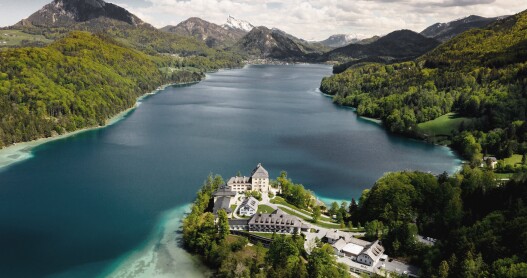
Rosewood Hotels and Resorts has transformed the historic Schloss Fuschl hotel outside Salzburg into a contemporary lakeside escape.
Whether you’re a food fan or adventurer-—or somewhere in between—there’s something to delight your senses in this centrally located European country.
Afar’s resident hotel expert shares the summer 2024 openings that are worth a special trip.
It’s easy to see why these ski chalets and mountain cabins are among the highest rated on Airbnb.
For the sustainably minded craftspeople in Austria’s most design-forward region, the forest has been a source of inspiration for centuries.
RESOURCES TO HELP PLAN YOUR TRIP
Viennese wine taverns are at the heart of the region’s summer celebrations. Here’s our guide to the best.
Dating back to 803 C.E., the St. Peter Stiftskulinarium is said to be the oldest restaurant in Europe. While there’s a fine contemporary Austrian menu, the history and atmosphere of the various salons and dining rooms are an even bigger draw. The arcaded courtyard in particular is charming and turns into a winter wonderland during the Christmas-market season. The highlight for most travelers will be the Mozart Dinner. Taking place in the stunning ambience of the Baroque Hall, the meal is served with a performance by an ensemble of Mozarteum University Salzburg graduates wearing period costumes—wonderful musicians who also work with renowned orchestras.
While the name translates to the rather simple “dining room”, the experience at Esszimmer is anything but. Since 2004 it has grown to become synonymous with fine cuisine in Salzburg and has been awarded three toques by Gault & Millau as well as one Michelin star. The interior design is modern yet cozy, with a fireplace, warm lighting, and a glass floor providing a glimpse into a water channel from the Middle Ages. Chef Andreas Kaiblinger’s creative plates are visually delightful and scrumptious with bold yet recognizable flavors. Several tasting menus are offered with primarily Austrian and French influences (including excellent vegetarian options), though individual items can be ordered as well.
It’s not yet Brooklyn, but the Spittelberg quarter in the Neubau district is arguably Vienna’s newest trendy spot. As neighborhoods go, Spittelberg is tiny, made up of old working-class blocks with an unsavory past. But Spittelberg lies in the shadow of the mega-successful MuseumsQuartier, and the bars and restaurants tucked into leafy courtyards behind Biedermeier buildings are hopping now. Thankfully, a village feel remains on the quiet pedestrianized streets and alleys where, in warm weather, Schanigartens (Vienna’s version of outdoor restaurant seating) appear. Amerlingbeisl, Bohème, and Witwe Bolte are three of the most popular bistros, along with newcomer Das Spittelberg. The neighborhood’s Christmas market, with its glühwein kiosks, is perhaps the top one in the city.
How’s your billiard game? With three antique tables, Café Sperl is old-world Vienna at its best; the year 1880 appears in their logo, after all. Sperl’s sumptuous art nouveau interior—wood paneling, hanging lamps, plaster figures on the ceiling—is said to be the city’s only coffeehouse space that has never been modernized. Since it’s in the southwest Mariahilf district, off the path usually beaten by travelers, you’re not likely to encounter many tourists here. Yet, given that its location, on the Gumpendorfer Strasse and by the famous Naschmarkt, is newly trendy, you should hurry there before it gets discovered. On Sunday afternoons, it adds live piano music; in warm weather, there’s sidewalk seating where you can enjoy one of the dozens of different coffee drinks.
Lovers of Vienna’s homegrown early-20th-century Wiener Werkstätte design style will want to visit the Café Schwarzenberg: It was the preferred haunt of Josef Hoffmann. The illustrious architect who cofounded the Werkstätte drafted many ideas there that came to fruition. Opened on the Ringstrasse in 1861, the café takes its name from the nearby square that is itself named for the Prince of Schwarzenberg, a prominent Austrian field marshal in the Napoleonic wars. Guests are treated to huge vaulted windows under high ceilings and those who sit outside on the terrace enjoy views of the illuminated Karlskirche dome while they sip their Einspänner coffee with its dab of whipped cream on top.
Zum Schwarzen Kameel’s unusual moniker, which means At the Black Camel, grabs your attention. It’s a play on the name of founder Johan Baptist Cameel, who opened the establishment back in 1618. Appointed a spice purveyor to the Hapsburg court in 1825, Zum Schwarzen Kameel is today a restaurant, with a separate delicatessen that makes good sandwiches and a gourmet shop selling fine cheeses and wines. The Kameel interior is justly famous as well, with a wood-paneled art nouveau dining room that (of course) postdates the era when Beethoven frequented the restaurant. The area around its Bognergasse location is now a stone-paved pedestrian zone with luxury shops, which makes the Kameel’s front terrace a delightful place to stop for a drink or meal.
You might not think of Vienna as a very Greek city, but guess what: The oldest restaurant in town is the Griechenbeisl, the Greek Tavern. Back in the late 15th century, Levantine traders lodged in this building on Fleischmarkt street, and its hodgepodge of rooms in which many a historic figure have dined hasn’t changed much since. The walls of the Mark Twain Room are decorated with autographs by the great scribe and many other notable figures. Despite its name, the Greek Tavern specializes in schnitzel and other dishes that are as pure Austrian as can be. And the live music you enjoy while dining won’t be made by a bouzouki, but by a Viennese zither. Out front there is a plaque commemorating the 17th-century minstrel Marx Augustin, famous as the subject of the song “Oh Du Lieber Augustin.”
Perhaps “boiled beef in broth” doesn’t sound quite as alluring as its German name of Tafelspitz. Yet Tafelspitz was the preferred meal of Emperor Franz Joseph, and it remains a favorite Viennese dish. There’s one establishment, Plachutta, that has cornered the market on fine Tafelspitz; the eponymous gastronome Mario Plachutta has raised his preparation of the modest rump cut served with roasted potatoes, minced apples, and horseradish to a gourmet level. The main restaurant sits on the popular Wollzeile shopping street just a block from the Ringstrasse, but the chef has also built a mini empire of jade-toned Plachutta restaurants—including one in a lovely Biedermeier cottage and another near the Schönbrunn Palace in Hietzing.
Don’t let the umlaut throw you off. Vestibül restaurant occupies an original vestibule in the Burgtheater, known for having one of Vienna’s most gorgeous interiors. And the space is not just any vestibule, but includes both the porte cochere for the Hapsburg coaches that would arrive at this famous imperial theater and the marble-lined hallway leading to the guests’ private loges. Located across from City Hall on the Ringstrasse, Vestibül is under the guidance of one of Austria’s most celebrated chefs, Christian Domschitz. His menu is not flashy, but rather rests on superb takes on traditional dishes, such as his signature Hummerkrautfleisch—creamy cabbage with lobster.