Austria

Austria was once part of a mighty empire, which the Habsburgs ruled over from Vienna for some seven centuries. Although Austria today is just a fraction of its former glory, it still maintains its rich cultural and artistic heritage. Vienna is one of Europe’s most attractive cities, combining historic sites with a vibrant creative scene. The city is justifiably famous both for its classical music pedigree and for its elegant grand balls. With two-thirds of the country’s landscape shaped by the Alps, Austria is paradise for anyone eager to explore the mountains—or nature in general. Some of the world’s top ski resorts can be found in the western part of the country. The regions around the Danube, as well as south of Vienna, are known for their many family-run wineries. Austria is also a leader in the farm-to-table movement, and has over 20% of its agriculture, and more than 20,000 farmers, committed to organic farming.

Austria castle at sunset

Shutterstock

Overview

When’s the best time to go to Austria?

Temperatures in spring and fall are usually milder, making it a great time to visit. Winter sports are a major draw to the resort towns in the Austrian Alps, and the skiing is consistently ranked as some of the best in the world. The season lasts from December through late March. Vienna and Salzburg tend to be more crowded in July and August, and during major festivals. Temperatures vary by region and elevation, but averages do not climb above a comfortable high 70s in Vienna during summer.

How to get around Austria

Vienna can be reached via direct flights from several North American cities, including New York (JFK and Newark), Washington D.C., Miami, Chicago, and Toronto, though it is often practical to fly through Munich or Zurich—especially for a trip to Austria’s western provinces. Smaller airports in cities like Salzburg, Graz, Klagenfurt, and Innsbruck can be easily reached. High-speed trains connect Vienna and Salzburg with cities like Munich and Zurich. A hydrofoil travels between Bratislava and Vienna on the Danube. U.S. visitors can stay up to three months with just a passport, after which time a visa is required. If you are entering Austria using a rental car, make sure there is a Vignette (toll sticker) affixed to the windshield.

Cities in Austria are linked by a fast and efficient rail system, with Vienna to Salzburg taking as little as two-and-a-half hours. To explore large towns and cities, public transportation (bus and tram), biking, or walking is best. Driving on Austria’s highways requires a toll sticker—available in ten-day, two-month, and twelve-month increments—which can be purchased at gas stations, post offices, auto clubs, and even in neighboring countries. Renting a car is another great way to explore rural regions and high Alpine routes.

Food and drink to try in Austria

Austria’s cuisine reflects heavily on its imperial past, with influences from Hungary, Italy, and the Balkans. Classic dishes like Tafelspitz (beef, root vegetables, and sauerkraut), Wiener Schnitzel (veal cutlet, flattened and fried), and Gulasch (rich meat stew, often with paprika) can be found throughout the country, while every region is proud of their speciality dishes. But, let’s face it, the major food draw is really the delectable cakes and pastries, including the famous apple strudel and Sachertorte. You’d be forgiven for not knowing that Vienna is the only world capital producing significant quantities of wine within its city limits. White wines dominate the vineyards of the Wachau Valley, while reds prevail in Burgenland and Styria.

Culture in Austria

Some consider Vienna the cultural capital of Europe. The city has been synonymous with the music of Mozart, Beethoven, and Strauss, to name a few, as well as painters like Klimpt. Elegant balls, nights at the Vienna State Opera (one of the world’s best), and hours spent in coffeehouses are quintessential Vienna. The 640-year legacy of the Habsburg dynasty, which officially ended in 2011 with the death of Otto von Habsburg, can be found throughout the city. Oh, and let’s not forget the Boys Choir. Austria has nine inscriptions on the UNESCO World Heritage List: Schönbrunn Palace in Vienna, the Historic Center of Vienna, Wachau Cultural Landscape, Prehistoric Pile Dwellings around the Alps, Historic Center of Salzburg, Hallstatt-Dachstein/Salzkammergut Cultural Landscape, Graz Historic Center and Eggenberg Palace, Fertö/Neusiedlersee Cultural Landscape, and the Semmering Railway.

The year waltzes in with Vienna’s Ball Season in January and February, during which time “Fasching,” Austrian Carnival, also begins. The world famous Salzburg Festival takes place July–August, culminating with a performance of Hugo von Hoffmannsthal’s Everyman. Summer sees a variety of music festivals, from classical to rock (Nova Festival) to avant-garde (Styrian Fall), as well as wine festivals extending into the fall. Austria’s Christmas markets round out the year. Vienna alone lights up with 20 official Christmas markets selling seasonal gifts, decorations, and sweets.

Local travel tips for Austria

Austria has nine provinces: Vienna, Burgenland, Lower Austria, Upper Austria, Salzburg, Styria, Carinthia, Salzburg, Tyrol, and Vorarlberg. While German is the official language, there are regional dialects that German speakers from outside may have trouble understanding. In some cases, totally different words are used. The German Krankenhaus, for example, is Spital (hospital), and a Brötchen is a Semmel (roll). But language shouldn’t be an issue; English is widely spoken. Austria is a parliamentary democracy, and its national holiday falls on October 26—a day of free entry to state museums and many government buildings.

Related video

Guide Editor

READ BEFORE YOU GO
HOTELS
Travel like James Bond in these six beautiful destinations, from the beaches of Jamaica to the mountains of Austria.
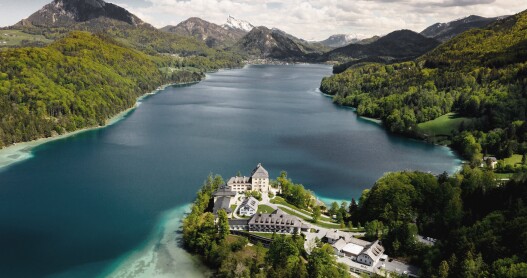
Rosewood Hotels and Resorts has transformed the historic Schloss Fuschl hotel outside Salzburg into a contemporary lakeside escape.
Whether you’re a food fan or adventurer-—or somewhere in between—there’s something to delight your senses in this centrally located European country.
Afar’s resident hotel expert shares the summer 2024 openings that are worth a special trip.
It’s easy to see why these ski chalets and mountain cabins are among the highest rated on Airbnb.
For the sustainably minded craftspeople in Austria’s most design-forward region, the forest has been a source of inspiration for centuries.
RESOURCES TO HELP PLAN YOUR TRIP
As if floor-to-ceiling Inner City views from an 18th-floor space weren’t enough, the 21,500-square-foot illuminated ceiling by Swiss artist Pipilotti Rist will wow you at Das Loft restaurant. With strict historic preservation building codes long in place that dictated nothing be built higher than the city’s iconic Stephansdom cathedral tower, Vienna was rather late to the game of splashy starchitect buildings. In 2010, however, Jean Nouvel’s Sofitel Vienna Stephansdom opened across the Danube Canal, an area that had been plagued by banal postwar stucco buildings. Now, guests at the hotel’s Das Loft penthouse and panoramic restaurant can not only enjoy beautiful urban vistas, but a popping cocktail scene and modern takes on Austrian dishes.
Don’t let the umlaut throw you off. Vestibül restaurant occupies an original vestibule in the Burgtheater, known for having one of Vienna’s most gorgeous interiors. And the space is not just any vestibule, but includes both the porte cochere for the Hapsburg coaches that would arrive at this famous imperial theater and the marble-lined hallway leading to the guests’ private loges. Located across from City Hall on the Ringstrasse, Vestibül is under the guidance of one of Austria’s most celebrated chefs, Christian Domschitz. His menu is not flashy, but rather rests on superb takes on traditional dishes, such as his signature Hummerkrautfleisch—creamy cabbage with lobster.
Don’t even think about leaving Vienna without having at least one schnitzel dinner. Sure, you can find the crispy breaded veal and pork cuts at restaurants all over town, but where you want to go is to Figlmüller, where the pork schnitzels are a good foot in diameter and spill over the edge of the plate. Just minutes from Stephansdom cathedral, the original, rustic Figlmüller is tucked into a narrow shopping gallery between streets. Just outside the passageway, the Figlmüller family’s sister restaurant Lugeck opened in 2014 with upscale cuisine served in a gorgeous art nouveau building. Its interior is done in a contemporary beechwood look, and its front terrace looks right at a towering statue of Gutenberg on Lugeck Square.
When you’re looking for a fun night out, why not opt for one right on the Danube? The chic Motto am Fluss restaurant is located within the terminal for the Danube Canal ferries, but it’s like no dock you’ve ever seen before. The futuristic and super-bright space looks like a sleek cruise ship itself. On the lower level, the restaurant, with its black-and-white-checkered floor and silver orb lamps, reflects Venetian influences. Here, you can linger over breakfast in the café until 4 p.m. In warmer months when the weather is good, the terrace is the place for cocktails or biodynamic Austrian wines. On weekends, DJs add to the already-high cool factor in the trendy riverside spot.
Not only a star in Vienna, but on the world culinary scene, Steirereck is also breaking new ground architecturally. A few years ago, the restaurant, situated in a landmark art nouveau building amid the leafy Stadtpark, unveiled a futuristic redo. Blond wood and a white contoured ceiling now accent the new blocklike spaces which extend outward and whose reflective facade highlights the surrounding parkland. Showcasing chiefly recipes from the Styria province, fixed menus include novelties like char with beeswax, yellow carrot, pollen, and sour cream, while the cheese carts offer a selection of the more than 100 varieties available here. During the meal, a detailed menu card delivered between courses provides information about the dishes you are enjoying. The building’s lower-level Meierei im Stadtpark restaurant is a more casual dining option.
It’s the wine. It’s not just the small houses with baroque detailing, or the cobblestoned streets with old trams that wind their way up the Vienna Woods foothills, that make Grinzing the most popular of all of the former villages that have been absorbed into present-day Vienna. The city has by some counts more urban vineyards than anywhere else in the world, and Grinzing’s famous Heurige (wine taverns) draw big crowds. The proprietors of Zum Martin Sepp, across from the parish church, welcome visitors to their cozy courtyard and tavern rooms. Guests enjoy Austrian specialties such as the Kaiserschmarrn pancake dessert and drink house grüner veltliner and other wines, while swaying to musicians wielding the signature folk accordion and playing old Viennese drinking songs.
Berggasse 19 is the address of a modest house on a modest street, but it was there that much of the modern world and culture were changed forever. For nearly 50 years, the Freud house—now, officially, the Sigmund Freud Museum—was the home and office of the legendary psychoanalyst, until 1938 when he finally departed for London as Nazi forces were descending on Vienna. The rooms are filled with old books, antiques, personal artifacts, and correspondence, though not the famous couch (which is now at the Freud museum in London). In 2019, the house will undergo a yearlong €4 million renovation to its facade and exhibition spaces. If you walk the Ringstrasse over to the Burgtheater area, you can see the University of Vienna that was once the General Hospital where Herr Professor worked for many years.
Vienna’s architecturally rich Inner City can lead to a visual overdose on baroque wonders. Those who venture to districts beyond its historic heart will find a great little discovery in the Hermesvilla in the Lainzer Tiergarten, a nine-square-mile wooded landscape and former imperial hunting grounds with resident boar and deer. The smaller of Franz Joseph’s retreats, the Hermesvilla was a gift to his beloved, quirky wife Sisi, who called it her “palace of dreams.” It is said that Franz Joseph built it to keep her from running all around Europe as she was wont to do. The interior still holds many original furnishings, and the small statue of Hermes in front of the villa inspired its name. (Note that the villa is closed in the winter, roughly from early November to late March/early April.)
Those who just stumble upon the Hundertwasserhaus apartments in the Third District will likely be wowed by the buildings. Friedensreich Hundertwasser’s funky, mid-1980s organic housing complex is weird and gorgeous with a wavy, eclectically painted facade that looks like something out of a cartoon. With trees growing on its terraces and roof, it’s the antithesis of staid imperial Vienna. A freethinker if there ever was one, the artist, architect, and environmentalist Hundertwasser could be called Austria’s Gaudí. Visitors can learn more about him in the ground-floor café. Nearby, Hundertwasser designed the Kunst Haus Wien art museum out of an old Thonet furniture factory, while up the Danube Canal an incineration plant’s chimney got the Hundertwasser treatment with trippy colors and a funky golden ball on top.
When Mozart was a child, he performed here for Empress Maria Theresa; Franz Joseph I was born and died here, and his unhappy wife, Sisi, presumably sulked inside. Schönbrunn Palace, in the western Hietzing district, naturally invites comparisons to Versailles, as the Hapsburgs built it to rival the French palace. Today, the 1,441-room baroque masterpiece designed by Fischer von Erlach is a World Heritage site, with its Great Gallery and carriage museum among the draws. Its gardens are so vast that a small train takes you around to the palm house, an orangery, and a zoo. The recently renovated, columned Gloriette structure and its café look over the palace and, beyond, Vienna. Schönbrunn’s grandeur never ceases to impress—not bad considering that the palace was only a summer retreat for the Hapsburg rulers.