
Buenos Aires

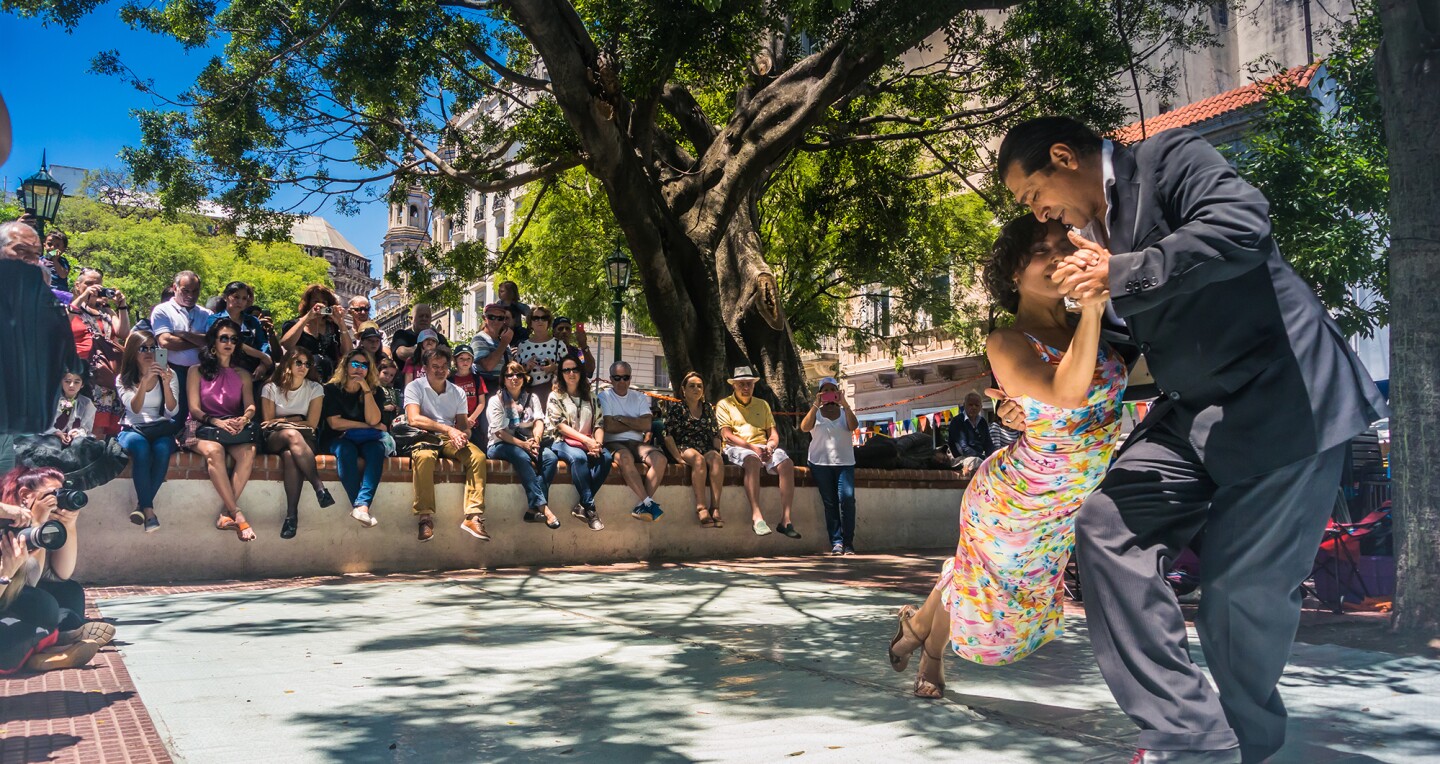
Traditionally, it’s the world capital of tango. These days, thanks to a vibrant urban art scene and nightclubs spurring on musical innovation, cool kids from all over the globe look to Buenos Aires as a style capital of Latin America. The Argentine metropolis, by turns moody and frenetic, is just as colorful as you’d expect—and porteños (its inhabitants) themselves are as notoriously proud and effortlessly hip as you’d imagine. While there are sights to be seen, of course, half the joy in visiting Buenos Aires is drinking up the intoxicating blend of the city’s romantic past and trendsetting present.

2_buenos_aires.jpg
Overview

When’s the best time to go to Buenos Aires?

Temperate spring (September to November) and autumn (March to May) are the most desirable times to visit Buenos Aires. Though winter days (June−August) are shorter, and the weather is gray and chilly. The Argentine capital almost never sees snowfall and the cold weather is fine for cultural sightseeing, but winter visitors miss out on the long strolls, park outings, and outdoor café action that make the city so charming. January is oppressively hot: schools are out, some businesses close, and porteños (what the locals call themselves) with enough money to clear out take refuge at beaches outside of the city.

How to get around Buenos Aires

Nearly all international flights arrive at Ezeiza International Airport (EZE), located about 22 miles from the city center. Though public buses serve the airport, they’re notoriously inconvenient; you’re better off paying for a taxi at the official desks inside the arrivals hall. (Prices fluctuate all the time; the current price of 900 pesos is about $15.50.) Some shorter flights arrive at Buenos Aires’ smaller, more central airport, Aeroparque Jorge Newbery (AEP).

Once in the city, public transportation options include the traveler-friendly Subte (subway) and a vast, somewhat overwhelming, but efficient and fast system of colectivos (buses). Purchase Subte tickets in the underground stations before boarding, and if you’re getting on a bus, be prepared with exact change in monedas (coins) to feed into the machine behind the driver. Taxis are abundant and affordably priced; just be aware that many taxistas refuse large bills.

Can’t miss things to do in Buenos Aires

Some cities have food trucks; Buenos Aires has roadside carritos. Look for billowing smoke—or just follow the mouthwatering aroma of sizzling meat—to one of these rickety grill stands. Then ask for a local favorite, the choripán (a chorizo sandwich), and use a plastic spoon to top it off with freshly prepared chimichurri, set out in small bowls near the grill.

Food and drink to try in Buenos Aires

Argentina is world famous for beef; you’ll find it on nearly every table in Buenos Aires, from basic parrillas (steak houses), where grilled steak are served with chorizo, papas fritas (french fries), and green salads, to upmarket restaurants where rare cuts of bife de chorizo are perfectly paired with Malbec from Mendoza. Though vegetarian cuisine and ethnic food trends have been relatively slow to catch on in this meat-eating culture, you’ll find a growing number of international options in the Palermo Soho and Palermo Hollywood districts.

Culture in Buenos Aires

Architecturally speaking, Buenos Aires is fascinating, particularly along the Parisian-style Avenida de Mayo and throughout the historic barrios of San Telmo, Recoleta, San Nicolás, and Monserrat, where the grand Spanish and Italianate buildings stand as testament to the city’s proud immigrant past. On rainy days, see some of the city’s museums—MALBA hosts many of the most significant Latin American art exhibits.

For the most authentic taste of porteño culture, you’ll have to wait until after dark, when local dancers crowd the floors of traditional milongas (tango clubs) and imaginative musicians and DJs mix and mash provincial Argentine music with cumbia, hip-hop, and house music in the city’s nightclubs.

Buenos Aires hosts major events throughout the year. The biggest draws are the ArteBA art exposition, Feria del Libro book fair, Tango Buenos Aires Festival y Mundial, Casa FOA design festival, and La Exposición Rural, a farm show−like agricultural fair.

Local travel tips for Buenos Aires

In Buenos Aires, you can always spot the out-of-towners. They’re usually wandering around the streets in the evening, hungry for dinner at 7 p.m.—and wondering why none of the restaurants have even turned their lights on yet. As a rule, the locals have a light breakfast (often coffee and medialunas—sweet, croissant-like pastries), a late lunch, and merienda (a snack with coffee, mate, or tea) around 5 or 6 p.m. Dinner never happens earlier than 8:30 or 9 p.m., often much later on weekends. Note that the city empties out in January, with many porteños away on their summer vacations.

Guide Editor

READ BEFORE YOU GO
Some of the best memories and connections are forged when we travel as a family. These are our top picks for places to go when we’re traveling with everyone from tiny tots and teens to a multigenerational group that spans many ages and stages.
HOTELS
In a historic 1929 building that used to be the tallest in South America, Hotel Casa Lucia offers travelers a view of the city’s next era.
RESOURCES TO HELP PLAN YOUR TRIP
Teatro Colón is considered one of the most beautiful theaters in the world. Though the theater was, to the great disappointment of many travelers, closed for years while undergoing major renovations, the Colón has now reopened and is playing host to a busy schedule of opera, ballet, and symphony. If you can’t get tickets for this legendary theater, try another elegant venue like Teatro Nacional Cervantes or Teatro San Martin. Check out Ciudad Cultural Konex if you’d rather see an edgier contemporary performance of modern dance or theater, or head to La Trastienda to hear live music by some of Argentina’s best young artists.
The hot-right-now Fierro Hotel bills itself as the ‘Hotel for the Gourmand,’ and it’s no wonder - the boutique hotel is famous on the foodie scene for hosting special events like ‘One Table,’ the biweekly TFIF Happy Hour brings in the talent of celebrity bartender Fede Cuco, and - drum roll, please - resident chef Hernán Gipponi and his restaurant were recently recognized at the Latin America’s 50 Best Restaurants Awards 2013. To see what Gipponi - who honed his craft at Michelin-starred restaurants in Spain - can do, come for the nine-course modern Argentinian tasting menu, or splurge on his classy weekend brunch.
Standing in Plaza Congreso, you might find yourself staring up at the Moulin Rouge-like windmill adorning an Art Nouveau building on the corner. Approaching the door, you’ll see it’s covered in cobwebs - this architectural landmark, once a glamorous cafe where politicians had coffee and tea between meetings, has been abandoned for years. Confiteria El Molino (‘el molino’ means ‘windmill’) has been closed since 1996, though local activists keep pushing to fund its restoration. So far, it hasn’t happened, and the fairy tale-like building on the corner adds an eerie ghostly feel to the busy urban intersection.
For serious wine enthusiasts, this is the closed-door dining experience of choice. On Wednesday through Saturday at at Casa Coupage, a pair of sommeliers serve a seasonal tasting menu with wine pairings to nine tables inside their elegant Palermo apartment. In this intimate environment, dinner doubles as an informal wine course - the sommelier talks you through everything you taste, discussing the grape, terroir and winemaker, answering your questions, even helping you choose a few bottles to take home with you.
For a little old-school San Telmo atmosphere, you can’t do much better than this classic corner bar. Dating from 1864, the antique building started out as a pulpería (general store), the seedy center of a gambling ring and even a brothel before it was converted into the popular restaurant and bar it is today. On your way in, check out the antique cash register and the gorgeous vitraux (stained glass) over the long bar: it’s no wonder this place has been used as a film set several times over. Then pull up a chair at one of the rustic wooden tables, preferably by the windows for maximum people-watching potential. If it’s morning or time for merienda, ask for a cortado with medialunas; otherwise, order an ice-cold chopp (draft beer) and a monster-sized lomito (steak) sandwich.
Touring this one-of-a-kind urban villa and archaeological site allows a unique insight into the city’s history. The beautifully restored urban mansion was once the residence of a wealthy Spanish family; they fled for higher ground when yellow fever struck San Telmo, and the abandoned building later served as tenement housing for countless immigrant families. When a new buyer purchased the property in 1985, he discovered layers of historical objects in the subterranean tunnels. Today, knowledgeable local guides take small groups through the grand villa and its underground maze, pointing out the old water cistern and display cases filled with antique children’s toys, old hairbrushes and beautifully painted dishes, reminders of an era gone by.
The historic leather goods company Rossi & Caruso is considered the Hermès of Argentina. Its Recoleta shop attracts horse enthusiasts and serious riders with its fine-quality saddles and horse-related gear. Non-equestrians visit for the buttery leather jackets and purses.
Tucked away on the second floor of a courtyard building in the residential Recoleta neighborhood, the shoe store Comme Il Faut is a magnet for tango dancers. Customers provide their shoe sizes to cheerful saleswomen, and stacks of shoeboxes—in every color and heel height—emerge from the back.
More than a local institution dating back to the 1850s, the Café Tortoni ranks among the world’s most famous salons. As vintage photos here show, the columned establishment has hosted more literary figures than you can count. Play billiards while you enjoy a latte, or order from the full restaurant menu.
Milonga references a style of dance intrinsic to the Argentine tango and Afro-influenced in style, known to be less formal and more rustic. This particular evening in Buenos Aires at La Catedral was serendipitous. I sat in awe watching couples dancing tango, spiralling by sexily, while I day dreamed to do as they did. The setting was dark, the atmosphere, artistic and the evening, late. After many bottles of wine and nearly dawn, we experienced a most organic moment of sound and song with the few remaining locals. They surprised us with acoustic guitar, drumming and singing that had us in a trance. It was a beautiful moment of unspoken camaraderie translated rhythmically. Come to find out, this is a typical evening at La Catedral, locals mastering the dance of love to a live band. Lessons are offered as well.