Tahiti

Tahiti is the largest island in the Islands of Tahiti archipelago in the South Pacific, commonly known as French Polynesia. Whether snorkeling a turquoise lagoon or surfing a black-sand beach, hiking to a waterfall or just to your hammock, or marveling at the colors of Papeete Market or at the agility of traditional dancers, it offers a mix of culture, adventure, and indulgence. Lodging is more affordable in Tahiti than on her sister islands, and you won’t need to arrange onward transport. But just because the island is convenient—an eight-hour direct flight from L.A.—doesn’t make it any less alluring as a destination itself.

Houses above the water with a large rocky mountain in the distance
Overview

When’s the best time to go to Tahiti?

Tahiti is really a year-round destination. If you had to choose, the absolute ideal months to visit are during the May to October “dry season,” when the weather is slightly cooler and there is less rain. That said, traveling between November and March can offer better rates. Although technically the “wet season,” the weather is usually still good: You will likely get periods of rain, but also plenty of blue sky. Expect higher humidity, though.

How to get around Tahiti

Faaa is the only international airport among the Islands of Tahiti. It is located on Tahiti itself, just a few miles west of the capital city, Papeete. Flight time from Los Angeles is only eight hours and the islands are in the same time zone as Hawaii, meaning there’s only two or three hours difference (depending on time of year) with the U.S. West Coast. (This makes jetlag much less of an issue than traveling somewhere like Fiji, where you will cross the international dateline.) Once on the ground, it is very easy to circle the island by rental car—there is just one main road and it hugs the coastline. Note there are no formal street addresses in Tahiti. Instead, locations are identified by PK (points kilometriques), which represent the distance in kilometers from Papeete cathedral.

Can’t miss things to do in Tahiti

- Tahiti underwater is sublime, so make sure to go snorkeling or diving.
- Try surfing, too—it was invented in Polynesia, possibly in Tahiti.
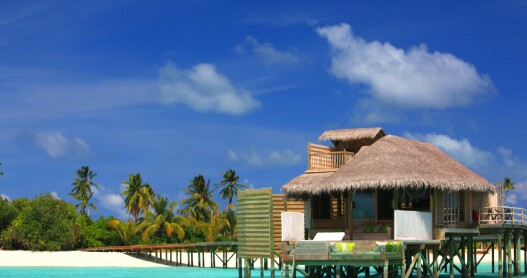
- If you’re by the beach, stay at least a couple of nights in an overwater bungalow if you can.
- Away from the sea, catch a Tahitian dance performance at a luxury hotel—it’s mesmerizing.

Food and drink to try in Tahiti

Fresh fish and seafood is a staple in Polynesia. The national dish is poisson cru, freshly caught raw fish (usually tuna) with diced vegetables marinated in lime and soaked in coconut milk. It is absolutely delicious and can be served with rice. Chevrettes are another popular Tahitian delicacy. These are freshwater shrimp often grilled or cooked in a French-influenced butter sauce.

Culture in Tahiti

Music and dance have long been an integral part of Tahitian life, and today learning the traditional dances is as popular with locals as tourists, who fill the many schools in Papeete. There are four main styles of dance in French Polynesia, and many hotels offer performances with dinner at least once a week. But to really experience the best of Tahitian dance, visit during Heiva I Tahiti: a major festival of traditional Polynesian culture that takes place for a week each July in Papeete and includes music, dancing, singing, and sports. Another large and important festival is the Billabong Tahiti Pro Surfing Tournament, which is an international, professional-level surfing contest held at Teahupo’o in Tahiti Iti over three days each May.

For Families

Tahiti is a great destination for families, especially if traveling from the West Coast. With the island just an easy eight-hour direct flight from Los Angeles and on the same time zone as Hawaii, it doesn’t take little ones long to adjust. Many resorts have kids clubs and are specifically geared towards families. And with adventures from snorkeling to waterfall hikes, there is plenty to do.

Local travel tips for Tahiti

Stay in a family-owned pension or Tahitian B&B to truly experience Tahitian life and culture. Spend your morning fishing with the locals, then take your fresh catch to the nearest motu (like a kind of mini island) for a picnic to remember.

Nearly every activity can be booked through your hotel, pension, or guesthouse upon arrival.

The tattoo art form was invented in Polynesia (or, at least, that’s where Europeans first enountered it), and today many Polynesians sport beautiful works of art as symbols of their personal identities.

Guide Editor

READ BEFORE YOU GO
HOTELS
The world’s best beach resorts put cultural and environmental preservation front and center.
While a stay in the famously lavish resorts of Tahiti and Bora Bora may be a dream vacation for many, the local guesthouses offer travelers a deeper look into Polynesian culture and life.
RESOURCES TO HELP PLAN YOUR TRIP
When planning a recent trip to Guatemala, I luckily stumbled upon the webpage of a unique retreat on the shores of Lake Petén Itzá, called Ni’tun. My friend Joan and I had decided to visit Tikal and other Mayan sites in Petén and wanted to have a “home base” where we could stay for several days and take day trips around the region. Reading about Ni’tun, I realized we found exactly what we were looking for - a peaceful lodge in natural surroundings. Lorena, one of the co-owners, arranged all details of our day tours for us, communicating regularly by email prior to our arrival. We expected a peaceful, natural retreat, and were not disappointed. Set on a hillside with its own private dock and boat for transportation to Flores and other towns around the lake, Ni’tun’s main building and the guest houses (casitas) were designed and built in traditional Mayan style. Our casita was spacious with two queen beds and outdoor seating. The two-story dining and bar area, pictured here, allows for outdoor dining and a relaxing place to enjoy drinks after a day of trekking through the jungle. Lorena, a talented chef, does most of the cooking, using organic, healthy ingredients, and she prepared one fabulous meal after another (vegetarian meals for me, and gluten-free for my friend Joan). We enjoyed premium Guatemalan rum -- Zacapa Centenario -- over ice (and learned: never use it as a mixer, it is one of the finest rums in the world). We left all stress behind the minute we arrived!
Of course I was in awe of the imposing temples at Tikal, but my favorite area was the Central Acropolis. Walking through the various buildings of this residential complex, it was easy to imagine how it might have been when people lived here. I lingered for a long time, wandering through all the halls and chambers, and finally climbing the stairs to take in the view from above. A magical place...
On a hillside, just north of Antigua, stands this stone cross. From the top of Cerro de la Cruz (Hill of the Cross), you have sweeping views south over the city of Antigua with the magnificent Volcán de Agua, towering over the landscape. I would recommend going up to Cerro de la Cruz only after you have already spent time in Antigua. That way, when you get up to the hill and look over the city, you can try and find all the landmarks that you visited. That is what we did when were there – trying to spot the Arco de Santa Catalina, Iglesia La Merced, Parque Central, Fernando’s (our favorite place for coffee) etc.
When in Antigua, definitely stop by the Casa Santa Domingo. First off, this place ain’t no ordinary casa! It is a large hotel (convention center, spa, museum etc) but executed well. There is a lot of history and guides standing out front would happily show you around. We were in the mood for just soaking it up on our own. You will enjoy the colorful tropical birds, the beautiful fountain and the historic ruins. It was the bastion of one of the grandest convents of the Americas (according to them.) If you like every amenity at your fingertips then this is the place for you in Antigua. At the very least stroll the grounds and have a Gallo, Guatemala’s national beer.
If you love textiles as much as I do, you’ll love Guatemala. Everywhere I looked, there were beautiful embroidered as well as woven fabrics. I came home with more than my fair share! If you go to Guatemala and you find yourself in Antigua, consider taking a short trip to the nearby village of Santiago Zamora. There, you will find an enterprising group of village women who have formed a cooperative to sell the traditional Guatemalan handicrafts that they make themselves and these include textiles woven on simple backstrap looms. The village girls contribute as well, making small stuffed animals from the fabrics woven by the older women. The money from the sales of the handicrafts goes directly back into the village, primarily for the welfare and education of the children but also for the overall benefit of the village. You do have to pay a bit more by buying from the women in Santiago Zamora but it does go to a good cause and you will return home not only with a beautiful textile but with some priceless memories as well.
An hour boat ride along Usumacinta River on the Guatemala border can take you to Yaxchilan, Palenque’s less visited cousin in the tropics of Chiapas, Mexico. Twelve-thousand-year old architecture brings many questions to mind. But at this moment, I wondered what life was like for these two gardeners, who spend many days working in the shadows of this ancient civilization. http://www.lonelyplanet.com/mexico/tabasco-and-chiapas/yaxchilan
When U.S. school buses are decommissioned, they are reincarnated in Central America and given new life. Repainted and rechristened, they become tropical intercity transport worth taking. For travelers, a journey on one of these is an immersive Guatemalan experience as well as a nostalgic ride. For crossing international borders on land, many Centroamericanos ride on double-decker buses, from which you can look down on all the Panamerican Highway action; traveling from Guatemala through El Salvador and Honduras to Nicaragua, this was a typical scene, as we wondered, “are we there yet?”
French Polynesia has so much to experience, it is hard to decide what is a must-do. You can swim, snorkel, and watch expert surfers in the azure waters; doze on a white-sand beach and wake for fresh-caught tuna and a Tahitian sunset; or sleep in blissful French Polynesian bungalows overlooking blue lagoons. These jaw dropping beautiful islands in the South Pacific offer endless possibilities—why not try them all?
Colorful and chaotic, at least by Tahitian standards, Papeete is Tahiti’s capital city and a cultural hub worth exploring. It’s undergoing a bit of a renaissance these days, with an infusion of graffiti street art brightening once gray buildings. Sip cappuccino at a chic sidewalk café while soaking up a rapid-fire French soundtrack, shop the vibrant market for everything from flawless pearls to bright parae, or catch a world-class dance and music performance.
This vast and heavenly swath of the Pacific is where the overwater bungalow was born—that most elegant blend of luxurious privacy and authentic materials, perched on stilts in aquamarine lagoons. Find your slice of paradise here.