Antigua and Barbuda

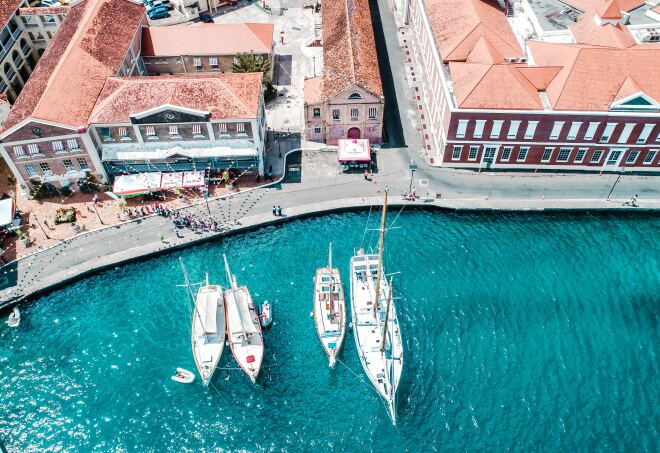
Antigua and Barbuda is a Caribbean destination that’s both exotic and accessible. Here you’ll find a rich history to explore, some of the finest rums, unique delicacies like the Antigua Black pineapple—considered the sweetest in the world—and, in the surrounding waters, a vibrant sailing scene unmatched in the West Indies.

Caribbean sea, Antigua and Barbuda, Antigua island, windmills of Betty Hope, old cane sugar plantation

RIEGER Bertrand

Overview

How to get around Antigua and Barbuda

Antigua’s location at the middle of the West Indies island chain means it’s closer than about half of all other Caribbean destinations. From the United States, several major airlines land at VC Bird International Airport, just five miles from the island’s capital of St. John’s. Soon, the older, though not terribly bad, facilities will be retired, as a modern, brand-new terminal is slated to open in early 2015. No visas are required for travelers from the U.S., Canada, and a wealth of other European Union countries. Barbuda has just one tiny village, Codrington, where the miniscule airport and ferry landing dock are located.

You’ve got two main options. One, a trusted taxi driver. Inquire at your hotel for someone they regularly use. A driver will happily shuttle you around, rates are fairly reasonable, and you won’t have to worry about overindulging in the great rum selection. Or, rent a car. It costs less than being driven, and you’re completely free to explore at your leisure, uncovering unique experiences with a little direction and a lot of chance. Most hotels and resorts can arrange a car for you once you’re on the island. Just remember, all those years of British influence mean they drive on the left in Antigua and Barbuda.

Local travel tips for Antigua and Barbuda

Barbuda is blissfully undeveloped. The island is famous for its bird population, and is a choice spot for birders. To see the island on a day-trip from Antigua sign up for a tour with the Barbuda Express (they also offer island day trips for people staying in Barbuda as well) and they operate the daily catamaran service between the sister islands. If you’re staying on the island, know that most of the independent restaurants in Barbuda require 24-hour advance reservations, because they only buy enough food for confirmed guests.

Guide Editor

READ BEFORE YOU GO
HOTELS
Stay up past your bedtime for these one-of-a-kind experiences.
RESOURCES TO HELP PLAN YOUR TRIP
Journeys: Cruise
Swim in crystal-clear waters, snorkel vibrant coral reefs, and relax on secluded beaches during this eight-day Caribbean yacht cruise.
You see it while dodging massive potholes on the dirt road just a bit past the entrance to Coconut Beach Club; looming atop Goat Hill. Fort Barrington was one of the first lines of defense for St. John’s reporting ship movements to nearby Rat Island via flag and light signals. While just a lookout station, being on the front lines wasn’t easy. Fort Barrington likely saw the most action of any fort on Antigua, being captured and liberated from the French going back as far as 1652. The fort as it stands today was built in 1779 and is one of the best ruins to explore. Not only does its position atop Goat Hill provide a short but invigorating climb, there are also several rooms to explore, and the view from the top is unmatched for its sea view — blue stretches for miles.
English Harbour is one of Antigua‘s crown jewels, so it should be no surprise that Fort Berkeley was erected to protect this excellent protected bay. Placed on the peninsula on the western entrance, this fort has been enforcing entry to the anchorage for nearly 300 years. Today, the fort is mostly ruins, but it still supplies visitors with stunning views of the harbor. From Nelson’s Dockyard it’s a fairly short 10-minute stroll to the ramparts and well worth the walk. From here you can see the dockyard’s waterfront, every boat that enters the bay, and beautiful Galleon Beach on the opposite shore.
No visit to Antigua is complete without taking in the sunset atop Shirley Heights Lookout at its weekly Sunday sundowner party. The view from Shirley Heights is without a doubt the most famous, most photographed, most celebrated vista gracing Antigua. Immediately below, English and Falmouth Harbours clutch their bays. On clear days you can see Guadeloupe to the south and Montserrat with it’s still active volcano to the south west. It does get busy, so expect a crowd and while there might be a couple locals sprinkled in here and there, it’s mostly visitors. Around 7ish, the tunes crank up with either some reggae classics, some pumping soca, or even live a steelpan band. Smoke from a collection of barbecues compete with the music to fill the air and stimulate your senses. Expect chicken and ribs slathered in local flavors, plus burgers for the less adventurous. I did have some trouble getting grilled fish on my last visit, but once I found some, it was charred to perfection.
You run across a lot of churches while driving around Antigua. Modest, majestic, and everything in-between, there’s a house of worship to suit most every style. Then, there’s St. Barnabas… Upon first seeing St. Barnabas, though, I just had to stop. It’s just so… umm… striking. Yes, that’s the word: striking, both in its seemingly random mishmash of structural additions and its color *ahem* scheme. It’s the green that really struck me the most; a most unnatural hue (or so I thought) that called to mind the horror of Frankenstein, or the slime from that old Nickelodeon slime. At least that would be someone’s first impression. Upon learning a little more about the structure, you’re bound to hear about something called Antigua green stone. Indeed, the structure and its color are as natural as can be! The unique stone comes from the Liberta area of Antigua, where the Church is found. All around here you see homes, walls, and other buildings sporting the same green hue.
What must life have been like back in 1739. That was the year the foundation stones were laid for Fort James on the northern entrance to St. John’s Harbour. Upon completion of the fort, it became customary for every vessel passing to pay a fee of 18 shillings to the captain of the fort or risk a shot being fired across its bow! With 10 cannons capable of firing 24 lb balls for over a mile on the ramparts, as you can imagine, ships generally paid the fee. Today, Fort James still sports its signature cannons pointing menacingly out into the harbour. Most of the other structures within the fort though, have crumbled. In their place, at least on the north side of the fort, is a quaint restaurant: Russels. There you can cap off your trip back in time with “old-fashioned rum punches”, fresh fish, peas and rice, and other traditional fare... Something like they must have eaten back in 1739.
The Antigua Yacht Club is the center of so much of Antigua’s world-class sailing experience. Right in the heart of English Harbour, this prestigious yacht club has been serving the island for over 40 years. It hosts the Classic Yacht Regatta, the RORC Caribbean 600, Sailing Week, the National Sailing Academy that serves the community with free watersports education, and even the Caribbean Dingy Championships. This is the place to stock up on last-minute supplies at the shop, or grab a bite at Cloggy’s or Club Sushi. Yeah, The Antigua Yacht Club is a hub for sailors of all stripes to talk shop whether coming in or leaving for some time on the water.
Goat water is basically a thin soup. Swimming in its brown depths you’ll find lumps of practically any part of a goat (usually bones and all), there’s clove, thyme, plus some other assorted herbs and spices, and depending on what island you find yourself sampling goat water, don’t be surprised to find some additional items in there like small dumplings, yams, and potatoes.


You can find goat water on many islands in the Caribbean from Antigua, Grenada, St. Kitts, Nevis, and many more. It’s even the national dish of Antigua’s neighbor: Montserrat!


On islands like Jamaica, expect a cousin of goat water to be served at weddings… Especially to the grooms. Why? Well, that version also goes by the name “mannish water” so can imagine what the expected results of slurping up a bowl!
What’s a roti? The simple answer is the ultimate comfort meal of curry wrapped in a thin dough—borrowed from India and perfected in Trinidad and Tobago. You have to understand — making roti is not an easy task. Like many other traditional Caribbean foods, it takes a lot of time and effort to make something this comfortingly delicious… And perhaps those hours of anticipation actually added a little something to the flavors when you finally got the finished, hot roti in between your hands. It starts with the “skin” or roti (officially, only the skin is called roti, but in the Caribbean, we apply the name to the whole package). This is where a roti becomes a success, or literally falls apart. Any time you buy a roti, this is always the thing most people comment on. “Skin’s too thin.” “Skin’s too thick.” “Skin’s too dry.” Etc. The roti skin has to be just right, or the whole thing will fail. My favorite type of skin is dhalpuri which is just what you’ll find at Roti King — now just ask them to fill it with goat, chicken, or shrimp and you in business!
I generally have a thing against beaches next to the road. Usually, they’re unfortunate victims to automotive pollution: obnoxious noises, exhaust fumes, and sneaky greases seeping into everything. Darkwood Beach is different. Sure, it’s right on the road on the southwest coast of Antigua, but somehow it escapes the usual woes of roadside sands. Maybe it’s because the road is fairly quiet. Or maybe it’s the persistent onshore trade winds. Or maybe it’s because people care enough to keep the beach clean. Regardless, what you, the traveler, get is a great beach with good swimming and snorkeling, plus a beach bar serving rum and traditional West Indian eats — complete with white plastic chairs in the sand.