Canada

Canada spans six time zones, and some say that it boasts the longest street in the world. This nation gave the world Leonard Cohen, Leslie Nielsen, Mounties, Tim Hortons, Superman, zippers, the light bulb, and the snowblower. This is a place where polar bears, poutine, and epic panoramas predominate. Canada’s wilderness beckons adventure-seekers from the world over, while the country’s cultural attractions, culinary marvels, hockey rinks, and artistic landmarks thrill visitors of all stripes.

Vancouver Canada totem pole

Jessie Beck

Overview

When’s the best time to go to Canada?

The best time to visit Canada depends on what you wish to experience. The snowy months of winter allow for world-class skiing, snowshoeing, and hockey games. Summer is ripe for sunseekers to explore both the Pacific and Atlantic coasts, the lakes of Ontario, and the wild country of the North. Spring turns the West into one gigantic flowerpot, while fall transforms Eastern Canada into a kaleidoscope of colors. Keep in mind that many Canadians travel during the summer months. Also, national parks and big cities attract thousands of visitors from the United States during school holidays and long weekends, when prices can soar in destinations like Toronto, Vancouver, Jasper, Montreal, Banff, Calgary, and Halifax.

How to get around Canada

Major international airports are spread across the country from Vancouver in the west to Halifax in the east. Many international visitors choose to arrive at U.S. border cities (e.g. Seattle, WA and Buffalo, NY) and then drive across the border. This can be a cheaper way of entering Canada, but be prepared for traffic and extended waits at border checkpoints during peak travel times.

Major cities like Toronto, Vancouver, Calgary, Montreal, and Halifax have excellent public transportation networks: taking the bus, riding the metro, or hailing a cab is a breeze. Smaller cities and rural towns are walkable, but you’ll need a car to get out into the countryside. Public transportation in and out of national parks is virtually nonexistent. The space between metro centers can seem daunting, so consider flying if you wish to cut down on travel times.

Food and drink to try in Canada

Canadian cuisine is as diverse as the country is expansive. On one city block—or on one menu—you may find restaurants serving Ukrainian, Chinese, Irish, German, Portuguese, Haitian, Nigerian, and Ethiopian dishes. Each province and city has its own culinary flair: you’ll find unique Western fare in Calgary and Edmonton, gastro-nouveau in Toronto and Vancouver, fine French dining in Montreal and Quebec City—and the best the ocean has to offer in Halifax, Charlottetown, and St. John.

Culture in Canada

Have you come for the great outdoors, or Winnipeg’s Folklorama? Perhaps you’re in town for Toronto’s MuslimFest, or you made the trek to quirky little Maxville, Ontario, for the Glengarry Highland Games. Massey Hall in Toronto has hosted the world’s largest musical acts for decades, while the Quebec Winter Carnival is Canada’s premiere winter event. The Edmonton International Fringe Festival, held every August, is the largest and oldest fringe fest in North America.

Canadians love to party. Canada Day (July 1) is celebrated from coast to coast, with Canadians and visitors packing public squares, stadiums, parks, and concert halls for massive festivals. The Calgary Stampede takes over Alberta’s largest city every July; Montreal’s International Jazz Festival (June 29–July 9) welcomes 2.5 million visitors each year; and Pride, Scotiabank Caribbean Carnival, The Canadian National Exhibition, and the Toronto International Film Festival bring revelry to Ontario’s capital.

Local travel tips for Canada

English is Canada’s common tongue, though French is spoken throughout Quebec and in many Atlantic cities. That said, you’ll hear nearly every other language in the big metro centers. The currency is the Canadian Dollar ($). Tipping is required (15%) in restaurants, and it is generally expected in taxis and hotels. ATMs are everywhere, and major credit cards are accepted across the country. Electricity is 110v.

Guide Editor

READ BEFORE YOU GO
HOTELS
These hotels around the world—all owned and run by women—reflect a wide range of destinations and styles.
At the 10-room Ode Toronto, local art, vintage shopping, and neighborhood restaurants in Dundas West define the experience.
Sleep under the world’s darkest, clearest skies across six continents at one of these 19 dark sky zone hotels.
Afar editors share the 2025 hotel stays they didn’t want to leave—and would happily return to.
At Nimmo Bay in British Columbia, luxury means snorkeling in 50-degree water, sipping water from cedar-lined mountain streams, and spotting grizzlies from a floating sauna.
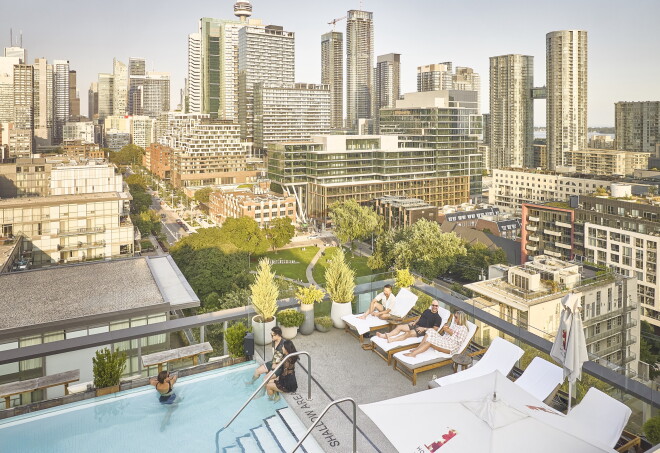
In Toronto’s burgeoning hotel scene, you’ll find Canada’s first Ace Hotel, a reimagined St. Regis, and an ultra-cool boutique stay in a private women’s club.
Heli-ski in winter, or hike, bike, and paddle in summer at Eleven Revelstoke Lodge, a revamped heritage property in Revelstoke, British Columbia.
Whether it’s a villa in Italy, a dude ranch in the U.S. West, or a luxury all-inclusive in the Caribbean, here are places where accommodations and experiences are ideal for large family groups with a wide range of ages.
These women aren’t just breaking barriers. They’re building a more inclusive, dynamic future for hospitality—and your hotel experience will be the better for it.
This winter, snuggle up in one of these insanely cozy bubbles, pods, cabins, and geodesic domes.
RESOURCES TO HELP PLAN YOUR TRIP
Where in Montreal can diners hope for an affordable meal that isn’t drenched in oil or entirely free of flavors? At L’Gros Luxe, that’s where. This stylish neighborhood watering hole may look like a hip, Victorian-inspired and overall super cool place but the truth is that anyone is welcome; from ladies who lunch, young families who brunch or friends out to celebrate a birthday. Portions at L’Gros Luxe are smaller than a regular meal but bigger than tapas, and yet prices are always under $8 per plate. L’Gros Luxe strives to bring its customer the freshest, locally-sourced produce available, and the way they can afford to cut back on prices is by making literally everything in house - from sauces to veggie patties from scratch. Their poutine is quite a mouthful - tater tots, cheese curds, veggie gravy and green onions. A nice change, and something poutine aficionados should not deprive themselves from. Their legendary Ceasars, which are topped with a mini grilled-cheese, are simply mindblowing. And easy on the wallet.
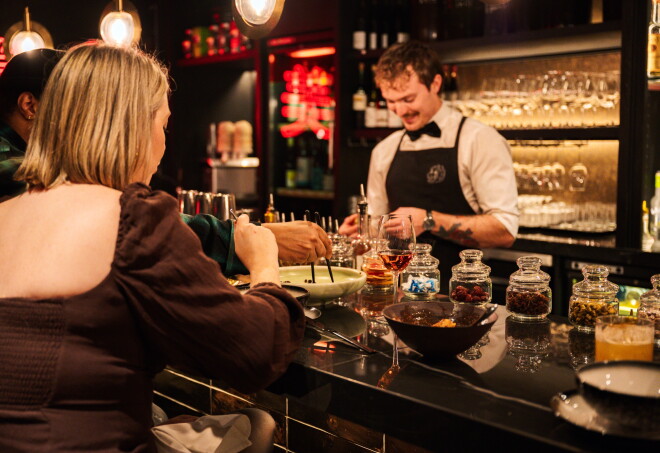
Bar Raval looks ordinary from the outside, but inside, the sinuous lines of the floor-to-ceiling mahogany woodwork—bar, walls, window frames—instantly bring Gaudí to mind. Created to mimic the spirit of Barcelona’s pintxos bars (in addition to the Catalonian influence of the decor, platters of food are laid out on the bar, as is the Basque pintxos tradition), the space is often packed. In the mornings, patrons sip lattes and enjoy doughnuts finished with a lick of chocolate and spiced hazelnut.
Suddenly, grub that is both Chinese and Jamaican is a thing. Chef Craig Wong, third generation Chinese-Jamaican himself, has taken over a Dundas West space and done quite the number on the local dining scene, turning out a cuisine of his own that manages to encapsulate all that is Toronto. Pick from eats like the Jamaican patty double down — chef’s take on the famed KFC number — and the dirty fried rice with red sausage and peas. For a small group, go with the so-called Whole Shebang and test out Wong’s take on jerk chicken. Dinner can be reserved, but if you’s aiming for brunch, be there when the place opens and tuck into the Hong Kong-style waffles and the luscious maple butter French toast.
Despite moving down the street and making the transition from independently owned hardware store to a franchise of the Home Hardware chain, Hoggs has kept the spirit that distinguishes it alive and well. This is much more than a hardware store, and locals have come to depend on it for great gift ideas and a regular supply of British imports, like Yorkshire tea, Scottish caramels and Wellington boots in all sizes. What’s handy is they still sell hammers, ladders and anything else you may need for home improvement.
At the neighborhood’s eastern extreme, on Rue Dante, this traditional Italian bakery is renowned as the purveyor of the city’s best cannoli, though it’s a hotly debated issue. They are blindingly scrumptious, that’s for sure, and they come in chocolate, vanilla ricotta, vanilla ricotta with tiny chocolate chips, vanilla custard or mocha. They’re just one of the many sweet treats on offer though, so wander over after a day at the market and let yourself be tempted by the cornetti, the million-layered sfogliatelle, the flaky, cream-filled lobster tails or the dozens of varieties of cookie.
This rickety old five-storey loft building downtown became an enclave for art galleries a couple of decades ago because the rents were affordable and the location was central. Management has since embraced its status as Montreal’s small-gallery and artist-run centre headquarters, and spruced the building up a bit, encouraged by the enthusiastic foot-traffic the galleries bring. Some mainstays absolutely not to be missed on your trip there include Pierre-François Ouellette Art Contemporain (pictured), where you might catch art by Kent Monkman, Maskull Lasserre or Karilee Fuglem; Circa, an exciting space in constant development these days, dedicated to sculptural works; and Galerie Joyce Yahouda, an effervescent space where you can see work by local artists including Céline B. La Terreur, François Morelli or David Elliott.
The cute pun of the name (“chouchou” means “favorite” in French) will give you an idea on the appealing collection within this Rue Sherbrooke shoe store. They carry some standard brands, like Stuart Weitzman, but also a bunch of unusual ones that it’s nearly impossible to find in Montreal, such as Ash, Neosens and Barbara Milano. They specialize in Italian designers, and feature a wide range of shoe, from the most vertiginous stilettos to totally wearable – yet chic – walking shoes. The prices are reasonable to boot, which is always a nice surprise in this neighborhood.
You’ll want to spend hours in this cheerful second-floor boutique, trying on everything in sight with the help of the knowledgeable staff. The unique collection of goodies includes Montreal fashion brands like Pajar alongside international favorites including Citizens of Humanity, James Perse, J Brand and Free People. The seasonal lookbook is casual, sophisticated, adaptable and fresh, with a focus on natural, flowing textiles and muted colours, with a few punches of high-octane hues. The accessories collection alone is worth the trip, especially the handbags.
Among the city’s coolest art spaces, Fonderie Darling is a giant – and I mean GIANT – industrial space-turned-contemporary art gallery. It’s a shining example of the type of architecture that existed in the area before the rapid gentrification. Divided into two halves, the space generally hosts one monumental work or series of works in the cavernous main area, and a smaller, more human-scaled exhibition in the second half. Fonderie Darling is also home to a dozen or so artist studios for artists-in-residence from around the world, which one can occasionally visit. Make an evening of it and reserve a table at the Fonderie’s restaurant, Le serpent, one of the hottest addresses in town.
This is the storefront to the internationally known high fashion web empire that few people – even Montrealers – know is based Montreal. SSENSE has been selling brands like Erdem, 3.1 Philip Lim, Givenchy, Chloé, Yves Saint Laurent, Valentino and dozens more élite designers for years now, bringing the world of fashion to Montreal in a way even department stores Ogilvy and Holt Renfrew haven’t been able to. In contrast to the web store, this stylish storefront on fashion avenue – where local designers Denis Gagnon, Rad Hourani and more have their boutiques – is the place to go to try some designer items on in the flesh.