Salzburg

Salzburg’s beautiful baroque old town is a UNESCO World Heritage Site, and it’s easy to see why. Historic architecture, elegant gardens, and charming lanes hark back to the time when the city was a part of the Holy Roman Empire, ruled by archbishops and brought to life by the salt trade. As the city of Mozart, it’s only fitting that Salzburg has developed into a cultural capital defined by music, theater, and art. Beyond the city, a world of natural wonders awaits, with beautiful mountain scenery, crystal-clear lakes, outdoor sports, luxurious spas, and romantic retreats in the SalzburgerLand.

original-salzburg-banner-crop-2019.jpg

Photo By Kirk Fisher/Shutterstock

Overview

Food and drink to try in Salzburg

Salzburg’s dining scene includes an array of traditional regional offerings, including various schnitzels, sausages, and dumplings, often served in historic surroundings. There are also more innovative restaurants, such as Esszimmer, which has a more modern European menu. Salzburg is also Austria’s unofficial beer capital, with several breweries, including Augustiner Bräu and Stiegl. Many visitors associate the city with chocolate, cakes, and pastries, thanks to the pistachio- and marzipan-filled Mozartkugel, the delicious Sachertorte, and the simple, fluffy Salzburger Nockerl pastry that is found in almost every good café.

Culture in Salzburg

Salzburg is synonymous with culture, from Mozart to modern art. Traditional costumes and folk dance are also important aspects of the local culture, as seen during the Rupertikirtag Festival, a folkloric celebration of Austrian culture that is held over several days each September. Locals proudly sport their dirndls and lederhosen while engaging in various folk dances, demonstrating and exhibiting handcrafts, and, of course, drinking beer. Each square in the city features stalls with local food specialties, candies, Austrian wines, and handicrafts, and also has carnival rides.

Music

What would Salzburg be without music? Visitors to the city can be found exploring the world of Mozart, from his birthplace to places he performed, as well as enjoying modern performances of his works. People also enjoy searching out scenes from The Sound of Music at Mirabell Palace and Gardens, Hellbrunn Palace, Leopoldskron Palace, or Nonnberg Abbey. There is also The Sound of Music Tour of the city and its surroundings. Of course, Salzburg has more to offer than music. Magnificent cathedrals, great shopping, a flourishing food scene, and the incredible natural features of the Alps make it an exciting destination.

Festivals

From Mozart Week in late January to the last days of the Christmas markets in December, there is no shortage of events to celebrate in the city. None, however, is as world–renowned as The Salzburg Festival, officially inaugurated in 1920 but based on an earlier festival that focused on Mozart. Each summer, the city fills with the sounds of orchestral and chamber music, opera, theater, and readings during the five-week festival, which runs from late July through late August. The highlight is the yearly performance of Hugo von Hofmannsthal’s Everyman morality play, staged at the Domplatz with the landmark baroque cathedral as a backdrop.

Practical Information

Salzburg lies on the Austria-Germany border and is most easily reached by air via Munich Airport and the highly efficient rail lines. While summers are warm and inviting, the city is also beautiful and easy to explore under a blanket of snow. The old town is compact and best seen by foot. Rooms are hard to come by during the Salzburg Festival, so booking well in advance of late-summer visits is advised. Power in continental Europe is 220 volts, so visitors from North America will need a plug adapter and possibly a power converter. (Most electronics will do just fine with only the former.) Visas are not required for stays of less than three months. The official language is German and the currency is the euro.

Guide Editor

READ BEFORE YOU GO
Herbalism and traditional plant medicine are the focus of increasingly popular foraging walks offered by hotels and tour outfitters.
RESOURCES TO HELP PLAN YOUR TRIP
Salzburg has no shortage of atmospheric restaurants and shady beer gardens serving hearty sausages, schnitzels, dumplings, and potato dishes. Don’t skip these classics, but do save room for new arrivals that offer more creative and modern cuisine.
Nestled among the boutiques and restaurants that line the city’s main shopping street, the historic Hotel Goldener Hirsch has all the hallmarks of a Tyrolean hunting lodge right in the heart of medieval Old Town, from vaulted ceilings and mounted antlers to staff dressed in lederhosen and dirndls. Vintage guest-room keys are embellished with stag silhouettes, and even the tableware and linens in the two restaurants (one a former blacksmith, the other a goldsmith) feature the signature leaping-deer motif. Both serve hearty local fare—stop in for schnitzels, beef goulash, and bratwurst with sauerkraut, then call it a night in one of 70 cozy guest rooms, which balance cheerful country textiles and antique furnishings with modern amenities like flat-screen TVs, minibars, and free Wi-Fi.
Closed until 2024 for renovations.

Set on three-and-a-half acres of garden grounds atop Mönchsberg Mountain, the castle-inspired Hotel Schloss Mönchstein is like something out of a fairytale. Be sure to arrive hungry: In addition to a restaurant that serves Austrian and international fare and an indoor/outdoor orangery with light bites and drinks, the hotel has several private dining rooms, including one nestled in the castle’s tower and dubbed the Smallest Restaurant in the World, as well as a neo-Gothic chamber filled with black-hued antiques. The 24 guest rooms have regal touches like damask-patterned velvets and marble bathrooms with soaking tubs and walk-in rain showers, and a vast menu of treatments at the on-site spa, including Dermalogica facials and body wraps, are fit for royalty. After a day of pampering, an infinity pool and hot tub offer panoramic views over the city below.
While many know the famous Reber brand Mozart Kugeln outside of Austria, those delicious marzipan and pistachio filled chocolate balls, they are by no means the original. They were created in 1890 by a Salzburg confectioner named Paul Fürst, who received a gold medal for these treats at the Paris Exhibition of 1905. The “Original Salzburger Mozartkugeln” are still created using the same family recipe by his great grandson, Norbert. They can only be purchased, along with truffles and other specialties, at one of his four namesake Cafe-Konditorei Fürst locations in the city.
Café culture is an essential part of the Austrian experience, and there’s no better place to find it in Salzburg than at the historic Café Tomaselli. Dating back to 1700 and owned by the Tomaselli family since 1852, the great coffees, delicious pastries, and warm ambience mean the marble-topped tables don’t stay empty for long. It’s a place to see and be seen, a traditional institution popular with visitors, intellectuals, and celebrities. Even Mozart was a regular here. His widow, Constanze, later returned to the city with their children and lived upstairs with her second husband, Georg Nikolaus von Nissen, from 1820 to 1826. A Mélange (similar to cappuccino) or Einspänner (mocha with thick whipped cream) are two top picks from the extensive coffee menu. Order pastries separately—from the large selection brought tableside by one of the so-called “cake maids.”
Wolfgang Amadeus Mozart was born in Salzburg in a burgher’s house at Getreidegasse 9 on January 27, 1756. He lived here in the heart of the city for several years before his family moved into a more spacious residence, now called the Mozart-Wohnhaus, across the river. Mozart’s birthplace (or Geburtshaus) features several floors showcasing historic furniture, letters, memorabilia, and many of the family portraits painted during his lifetime (although Mozart’s musical genius was not appreciated in the city during his life). It also displays his early instruments, including violins, his clavichord, and a harpsichord, as well as locks of the composer’s hair.
Follow the sound of music to the iconic Mirabell Palace and Gardens, where Fräulein Maria and the von Trapp children delightfully sang “Do-Re-Mi.” Mirabell has become a dream destination for marriage ceremonies, boasting what some call the most beautiful wedding hall in the world. Of course, you don’t have to tie the knot to enjoy this elegant slice of Salzburg: Stroll through the gardens and admire the charming flower beds, statues of Roman gods, hedge theater, Pegasus fountain, and garden of baroque marble dwarfs.
Along with Vienna, Salzburg and the Alps are Austria’s top draws and the perfect place to spend the second half of a two week trip. Mozart’s Salzburg is adorned with beautiful gardens, a mighty fortress and great museums. Salzburg is the perfect gateway to the Austrian Alps, dotted with quaint villages like Hallstatt, pristine lakes and Austria’s most well known resorts, including the famous Kitzbühel. Trek through the Alps or just enjoy the views from cities like Salzburg and Innsbruck.
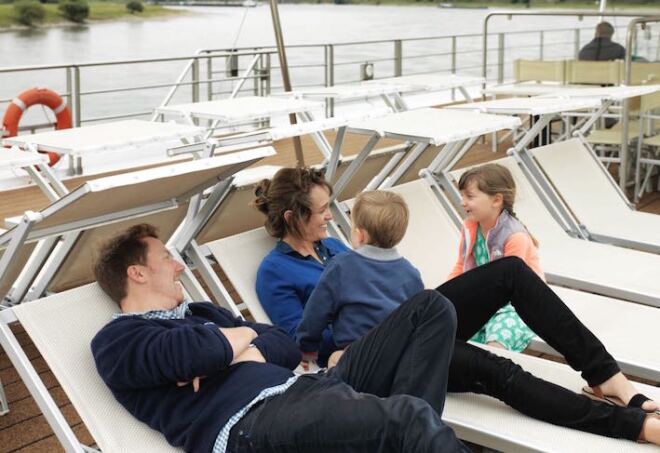
To get to Salzburg, Austria while river cruising on the Danube, dock in Linz, and then head for the hills. Most river cruise companies provide all-day excursions to Salzburg, known as the film location for The Sound of Music. Highlights include: Salzburg’s Old Town, a UNESCO World Heritage Site, a visit to Mozart’s birthplace, and exploring the Hohensalzburg Fortress just above the city center.
Salzburg’s splendor took shape under the prince-archbishops who ruled here during the Holy Roman Empire. Their former center of power is now a collection of the city’s most important structures called the DomQuartier, with museums and galleries documenting Salzburg’s golden age. Here among the lively squares are highlights like the baroque 17th-century Salzburg Cathedral and the 7th-century St. Peter’s Abbey—said to be the oldest in the German-speaking world. Browse the art collections of the archbishops in the Residenzgalerie and further explore their history in the state rooms of the Alte Residenz (Old Palace) and in the Salzburg Museum in the Neue Residenz (New Palace).