

For years, cruising was defined by ships jumping from one port to the next as passengers hurried to see as much as possible before it was time to head back on board. Now, that approach is beginning to shift in response to a growing trend among travelers seeking more meaningful, immersive experiences and more time to take in each place they visit.
This change reflects the broader slow travel movement that prioritizes deeper connections over the number of destinations. As Rob Clabbers, president and CEO of Q Cruise + Travel, puts it, “Travelers today are less interested in ‘collecting places’ and more interested in understanding them.”
Data backs this up, too. In a recent Afar reader survey, a little less than half of respondents (42 percent) said the key factor that would entice them to take their first cruise is an itinerary that lingers in destinations instead of rushing between them—far outpacing concerns like avoiding crowds or eating exceptional food. Clearly, spending more time in port is top of mind for would-be cruisers.
Across the industry, cruise lines—ocean, river, and expedition—are responding by rethinking their itinerary structure, placing greater emphasis on longer stays, overnight calls, and more time to explore destinations at passengers’ pace.
Exploring ports after dark
One of the biggest shifts in cruising right now is the rise of overnight stays and later departure times, giving travelers more time to experience destinations after the crowds thin out. Virgin Voyages, for example, prioritizes longer stops in places like Ibiza and Mykonos, where passengers can tap into the islands’ nightlife, dining, and cultural scene well into the wee hours.
But creating that extra time isn’t simple; in fact, it requires careful planning in some of the world’s most competitive ports. “Securing docking space within a planned voyage is essentially a high-stakes puzzle with limited pieces,” says Natasha Salzedo, senior director of itineraries and destinations for Virgin Voyages. “Most desirable ports, particularly in the Mediterranean, Caribbean, and Northern Europe, have finite berths, and those slots are often requested years in advance.”
Despite those constraints, the demand for longer stays in port continues to shape itinerary planning across the industry, even for lines operating larger ships. At Celebrity Cruises, expanded overnight offerings—including more than 100 opportunities in 2026—are giving travelers extended access to destinations that reward a slower pace.
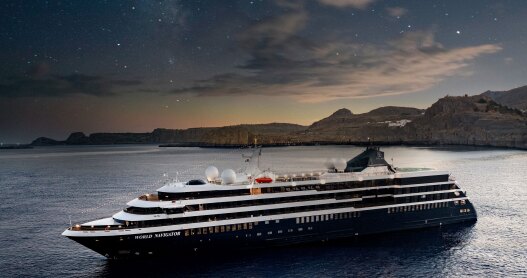
Holland America Line takes a similar approach. As Paul Grigsby, the line’s vice president of deployment and itinerary planning, explains, “When guests have 30 to 40 hours in a destination, there’s time to settle in, revisit favorite spots, and participate in evening activities.”
For smaller ships, however, that flexibility has long been central to the model. Azamara Cruises, a small-ship luxury cruise line, has forged its brand around extended port stays. Since its founding in 2007, the line has prioritized longer calls, and today nearly half of its port visits include late nights or overnights.
“Our itineraries are built to give guests real connections with the places they visit,” says CEO Dondra Ritzenthaler. “That means extended time in port—often 10 hours or more—and overnight stays that allow travelers to experience a city beyond daytime sightseeing.”
In 2025, the line debuted an “Own the Night” initiative comprising 28 double-overnight stays across its fleet (meaning guests can spend up to 48 hours in a single port) and nearly 250 exclusive nighttime excursions developed in partnership with local guides. Options range from club-hopping in Singapore to relaxed sunset strolls through Old Town Dubrovnik, Croatia.
River cruises set the standard for longer port stays
River cruising aligns naturally with this growing demand for deeper, more connected travel. “Today’s traveler wants to really experience a destination, not just pass through it or quickly check it off a list,” says Ellen Bettridge, president and CEO of Uniworld Boutique River Cruises.
River ships, which typically sail much shorter distances than ocean-going vessels do, often sail directly through city centers and smaller towns and can spend more time docked in the heart of a destination, including well into the evening or overnight, making it possible for passengers to head out into town for extended visits.

Longer port stays are a natural fit for river cruises, which often sail into the heart of iconic destinations like Paris.
Photo by Snap Wonder/Unsplash
That advantage is reflected in how river itineraries are organized. Unlike ocean cruising—where securing berth space can limit how long ships stay and where they dock—river lines design routes around direct access to destinations. Viking, for example, notes that it controls or has priority access to more than 100 docking locations in city centers, allowing its ships to dock steps from major attractions and neighborhoods—which river cruise passengers have grown to love and appreciate about this style of travel.
Expedition cruises redefine what a “port” even is
Expedition cruising pushes the idea of lingering longer even further, often beyond traditional ports altogether. These innovative vessels can anchor in remote locations, allowing travelers to go ashore via Zodiac boats and explore places far beyond the reach of traditional cruise itineraries.
“Unlike traditional cruising, expedition vessels aren’t tied to fixed port infrastructure or tight docking windows,” says Karin Strand, vice president of expedition development at HX Expeditions. “We can stay longer, reach more remote places, and explore far more flexibly.”
Viking takes a similar approach with its expedition vessels. Ships built for remote areas can either anchor offshore or use dynamic positioning, a computer-controlled system that lets the ship “hover” in place using its own power—avoiding the need to anchor and thus reducing the risk of damage to the seabed—by making small, constant adjustments against wind, waves, and currents.
The result is a more flexible, slower-paced style of travel: Rather than following a fixed schedule, ships can spend more time observing wildlife or exploring areas of particular interest, or they can adjust course based on weather or sea conditions to optimize landing times.
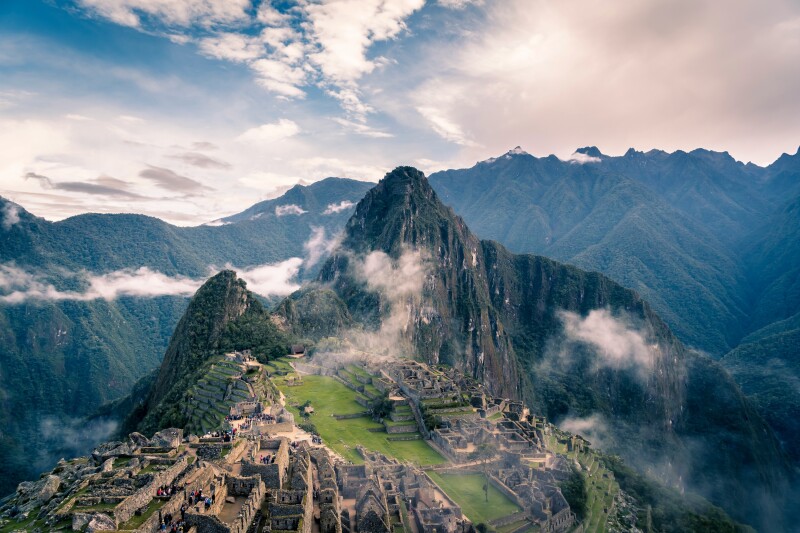
Machu Picchu in Peru is among the many overland and pre- and post-cruise extensions cruise lines offer.
Photo by Willian Justen/Unsplash
Enhanced land programs
For travelers who want more time in a destination or region, pre- and post-cruise land extensions are becoming an increasingly important part of the trip. These add-ons make it easier to go beyond the port city, whether through trip extensions before or after the cruise or multiday inland “overland” experiences during the cruise. In some cases, guests can leave the ship for an overnight stay and rejoin later, as offered by Crystal Cruises in partnership with Abercrombie & Kent.
Other luxury lines are following suit by upping the ante on pre- and post-cruise land programming. Silversea Cruises, for example, offers curated, small-group excursions led by seasoned guides in destinations such as the Great Wall of China, Denali National Park, and Machu Picchu. Expedition cruise lines are also increasingly investing in land-based experiences.
Lindblad Expeditions is expanding its offerings through a partnership with Natural Habitat Adventures, which is expected to include experiences such as land-based polar bear tours in Canada—in addition to its current lineup of pre- and post-cruise extensions in destinations such as Alaska, Ecuador, and the Scottish Highlands.
Rather than treating the cruise as the whole experience, more travelers are building trips around it. According to Richard Marnell, executive vice president of marketing for Viking, 37 percent of the line’s guests added a land extension in 2025—a sign of growing interest in travel that doesn’t end when the ship docks.


