

In recent years, the number of digital nomads from the United States has more than doubled. It soared from 7.3 million in 2019 to 18.1 million in 2024, per MBO Partners 2024 Digital Nomads report. With more jobs going remote, even more people are thinking about packing up and seeing the world and working as they go.
While I might not be a nomad, per se, I moved to Europe for similar reasons in 2016: I wanted to immerse myself in an international community from where I grew up, in Kansas. At that time, Germany was one of only a few options where self-employed U.S. citizens could take up residence, so I went to Berlin on the freelance artist residence permit and spent the next seven years there. In 2023, I moved to Spain courtesy of its just-debuted digital nomad visa.
Postpandemic, many European countries have made it (relatively) easy for remote workers from the United States to stay awhile. Over a dozen now have special residence schemes specifically for digital nomads that can accommodate longer stays than a tourist visa would allow. Some countries, like Germany, have relaxed residence permit rules for self-employed people and remote workers that allow long-term stays. (Note: Always check the relevant government websites for the latest application process and translation requirements for documents, which are subject to change.)
Thanks to digital nomad visas and residence permits, these 15 countries in Europe make it possible to work remotely while living abroad. Time to refresh that résumé and start scanning LinkedIn for remote job opportunities.
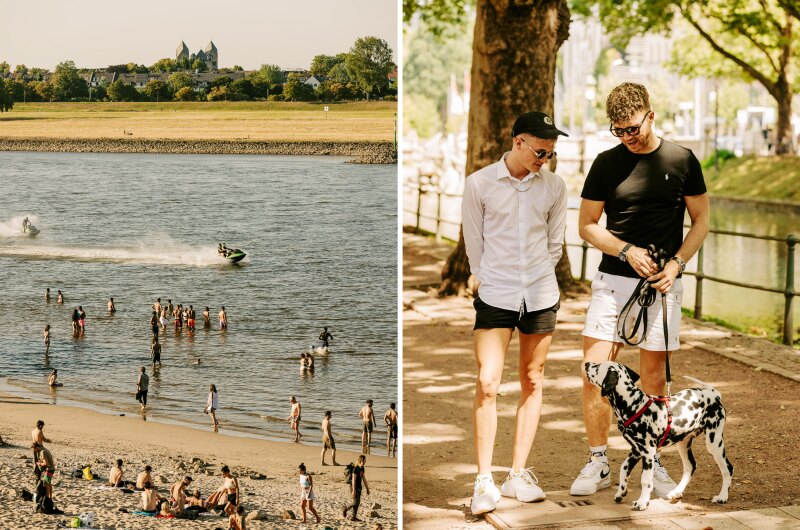
Dusseldorf, Germany, comes alive in warm weather.
Photos by Felix Brüggemann
1. Germany
- Why Germany: Social programs for families, access to nature, and cool cities
- Cost: 100 euros (about US$107)
If you’re self-employed and working in a field such as architecture, journalism, art, music, or theater, you might be eligible to apply for Germany’s residence permit for freelancers. (There is also a self-employed residence permit for company founders and sole proprietors.) You’ll need to prepare well ahead of time: Appointments at the immigration office are booked many months in advance, and as Germany is notoriously bureaucratic, there is a lot of paperwork to get together.
Who can apply?
Anyone who does “freelance work if it is expected to have positive economic or cultural effects” and can meet the application’s other requirements. It can be renewed indefinitely, or there’s the option in many cases to take up permanent residency after five years.
How to apply for Germany’s digital visa
Head to your city of residence’s government website and download the relevant permit’s application form. Applicants must provide documentation in person at the visa office to apply, including proof of main residence in Germany (like an apartment lease—Airbnb bookings won’t cut it), acceptable health insurance, and proof of income and work, including contracts or letters of intent from clients willing to hire you.

One of the most popular destinations for digital nomads in Portugal is Lisbon.
Courtesy of Aayush Gupta/Unsplash
2. Portugal
- Why Portugal: Vibrant city life, sun and sea, and a laid-back lifestyle
- Cost: 90 euros (about US$99)
Portugal has become a hot spot for digital nomads in recent years, with artists, startup employees, and the self-employed beelining to the vibrant cities of Lisbon and Porto. (And it’s no wonder: Portugal is one of the best places to retire abroad, according to International Living.) The fantastic arts scenes, excellent food and wine, and strong communities of fellow digital nomads and expats certainly don’t hurt either. Surfers with remote jobs, meanwhile, flock to the Algarve, a southern region full of coastline that’s home to some of the country’s—if not the world’s—most spectacular beaches.
Portugal offers a Temporary Stay Visa for digital nomads, which is good for up to a year and allows multiple entries into the country but can’t be used to obtain long-term residency. For those looking to stay indefinitely, there’s also a long-term or residency visa, which allows you two entries in four months, after which you can apply for a two-year residency.
Who can apply?
People who work remotely need to earn four times the national minimum wage in Portugal. In 2025, that means would-be expats need to earn at least 3,480 euros per month. Proof of accommodation plus savings worth 12 times the national minimum wage in Portugal, or 10,440 euros for 2025, are also required.
How to apply for Portugal’s digital visa
For both a Temporary Stay Visa and Residency Visa, you’ll need to submit passport photographs, proof of work, your criminal record, travel insurance, and more. Some might require notarization or an apostille. You’ll also need to download the application form and fill it out, then submit it in person with the rest of your documents at a Portuguese consulate or embassy.

Dubrovnik is one of the Croatian cities drawing American with remote work visas.
Photos by Kevin Faingnaert
3. Croatia
- Why Croatia: Fantastic beaches, historic cities, and excellent food and wine
- Cost: Prices differ depending on how you apply, but start at about US$180
Croatia has had a digital nomad residency program since January 2021. With dramatic natural scenery, including its Adriatic coastline, the country draws lovers of nature and the sea—and, perhaps, remote-working Game of Thrones lovers. Cities like Dubrovnik and Split have Roman ruins, castles, and medieval streets that made them natural picks to serve as filming locations for the hit fantasy series.
Remote workers and freelancers are eligible for Croatia’s digital nomad visa, which allows stays of up to 18 months. If you’re employed, it can’t be with a Croatian company.
Who can apply?
People working with or for companies registered abroad or who are self-employed and who meet a monthly income threshold. The income requirement corresponds to at least 2.5 average monthly net salaries paid the previous year; for 2025, that’s 3,295 euros per month.
How to apply for Croatia’s digital nomad visa
You can apply online or in person. If online, the application will be evaluated by the police station closest to where you’re going to be staying in Croatia. If you’re from the United States or another country that doesn’t require a tourist visa in advance of entering Croatia, you can apply from either a Croatian embassy or consulate abroad or from the nearest police station to your current address in Croatia.
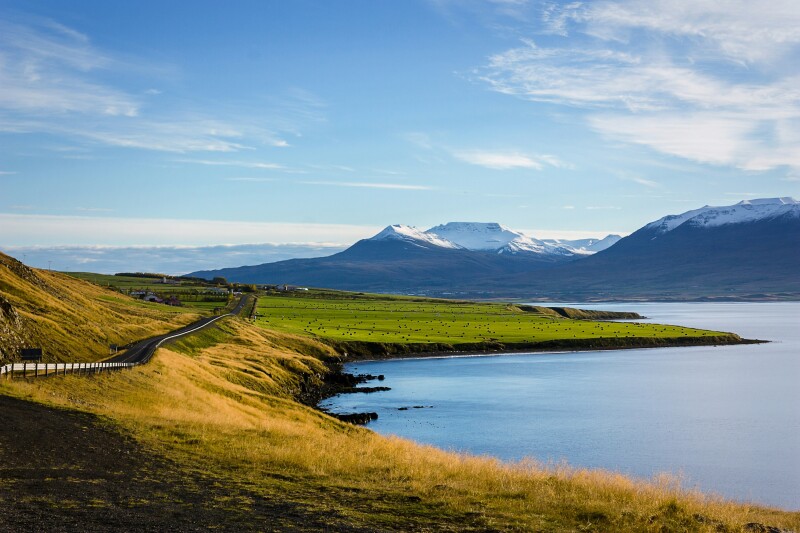
Since 2020, Iceland has offered a long-term visa for full-time workers.
Photo by Josh Reid
4. Iceland
- Why Iceland: Impressive natural landscapes and plentiful outdoor activities, with relative proximity to both the United States and Europe
- Cost: 12,200 ISK (about US$90)
Iceland’s landscape is a paradise for outdoors enthusiasts, and the capital, Reykjavík, is a charmer too. Launched in 2020, the country’s Long-Term Visa for non-EU/EEA remote workers is aimed at remote workers wanting to stay in the country for up to 180 days.
Who can apply?
You’re eligible to apply if you’re working permanently for a foreign company or are self-employed; you’re from outside the EU/EEA/EFTA and don’t need a visa to travel to the Schengen area; and you haven’t already gotten the visa in the past 12 months. You must also meet a monthly income threshold of 1,000,000 ISK (about US$7,900) or 1,300,000 ISK if you have a spouse or cohabitating partner coming with you.
How to apply for Iceland’s digital nomad visa
Fill out the application form and collect the required documents, which include proof of income, health insurance, and passport photos. Once the fee is paid, send everything in via mail; alternatively, submit it to the drop box in the Directorate of Immigration’s lobby in Reykjavík. Or, if you’re outside the capital, you can drop it off at the District Commissioners’ offices in your locality.
5. Greece
- Why Greece: History; artistic city life; beaches, beaches, and more beaches; at least 6,000 islands (did we mention beaches?)
- Cost: 75 euros for the application (about US$85)
This country practically sells itself when it comes to destinations to live and work. Thanks to Greece’s digital nomad visa, announced in 2021, the possibility of working from one of the country’s scenic islands is now a reality. The visas are valid for up to 12 months with a renewal of another year. They can be issued to freelancers, the self-employed, or those working remotely for foreign businesses or clients.
Who can apply?
You must work remotely and have a net income of 3,500 euros per month after tax, with additional adjustments made per family member joining.
How to apply for Greece’s digital nomad visa
Among other documentation such as proof of work and income, you’ll need to gather additional documents (contact an embassy to learn the latest ones that are required) showing that you have an address in Greece, a clean criminal record, and health insurance, and that you’re in good health. Submit your documents in person to a Greek consulate near you, and you’ll be notified of approval within 10 days. Once you’re in Greece, be sure to register for your residence permit, too.

Work from Malta and enjoy 3,000 hours of sunshine per year.
Photo by Ostap Senyuk
6. Malta
- Why Malta: Mild (and windy) winters, multicultural history, Mediterranean lifestyle, and beautiful nature
- Cost: 300 euros (about US$340) per applicant
Living in Malta offers a Mediterranean lifestyle and plenty of things to do, especially given its tiny size. The country’s Nomad Resident Permit is open to freelancers and remote workers for foreign companies alike. It’s good for up to one year, and you can renew it, as long as you’re still eligible, for up to four years.
Who can apply?
Freelancers, self-employed individuals, or employees of foreign companies (or who have foreign clients) can apply. Applicants must meet a minimum gross yearly income of 42,000 euros.
How to apply for Malta’s digital nomad visa
You must apply online. (Use the Maltese agency’s guide to make sure you have the documents you need.) If the application is successful, a Letter of Approval in Principle is issued. At that point, applicants need to submit proof of accommodation and a health insurance policy within 30 days.
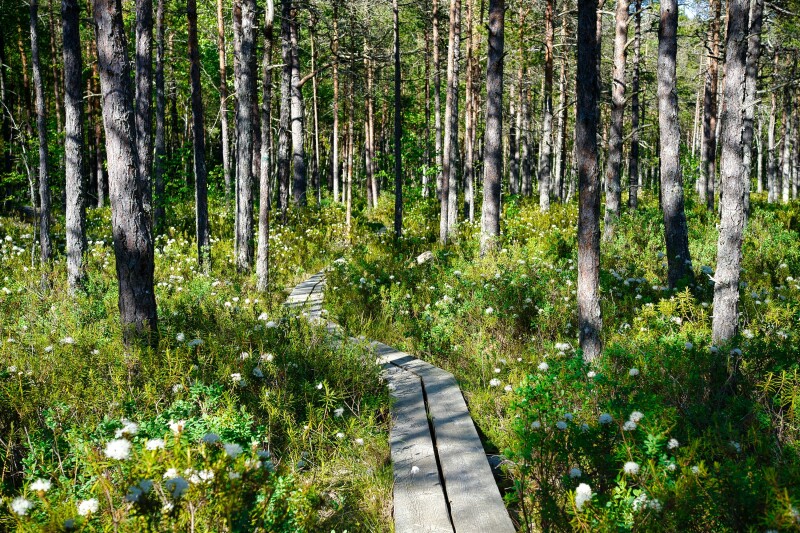
Even though Estonia is incredibly connected, remote workers still have many places to decompress—like Lahemaa Rahvuspark, pictured.
Courtesy of Maksim Shutov/Unsplash
7. Estonia
- Why Estonia: Relatively low cost of living, a hip scene in Tallinn, lots of startups, super-digitalized government and society
- Cost: 100 euros (about US$113)
Estonia has a bustling startup scene, a reputation for cool design and art, and an affordable cost of living for many digital nomads. In 2020, the country introduced a visa specifically for digital nomads: It grants them up to a year’s stay with the ability to work.
The country is incredibly digital, with widespread Wi-Fi in public areas and almost all government services—including birth certificates, medical records, and even contract signing—available online.
Who can apply?
You must be able to do your job 100 percent remotely using technology and have a non-Estonian employer and mostly non-Estonian clients. You should also meet an income threshold of 4,500 euros monthly.
How to apply for Estonia’s digital nomad visa
Fill out the online application form, then print and gather the other required documents for your application. Bring them to your closest Estonian embassy or consulate, then be prepared to wait up to 30 days for a review of your application. If you’re in Estonia legally already, apply at a local Police and Border Guard office before your existing tourist visa ends.

Romania debuted its remote work visa in 2022.
Courtesy of Alexander Spatari/Getty Images
8. Romania
- Why Romania: Scenic hiking and mountains and a lively scene in Bucharest
- Cost: 120 euros for visa processing (about US$140)
Romania’s digital nomad visa program has been available since January 2022 and is part of an effort to attract high-income earners. The country is known for its natural scenery, including the Carpathian Mountains and Danube Delta—plus the Transylvanian forest, which is sometimes called “Europe’s Yellowstone.” All of this with a low cost of living makes Romania an ideal country for digital nomads to consider.
Who can apply?
Requirements include medical insurance, proof of employment, and a monthly salary that equals three times the national average gross salary. This fluctuates but in November 2025 was around 4,500 euros.
How to apply for Romania’s digital nomad visa
Apply online or at an embassy.

The Spanish municipality of Zarza de Granadilla is one place you could settle when working remotely.
Photo by Benjamin McMahon
9. Spain
- Why Spain: Easily navigable train systems, history around every corner, and a perfect balance of vibrant cities and an idyllic countryside
- Cost: 80 to 150 euros (about USD$93 to $175), depending on which consulate you’re applying through
In 2022, Spain announced its digital nomad visa in conjunction with the country’s Startup Act, a law that hopes to foster more innovation in the country’s technological industries. Today, the visa is taking applications and welcoming Americans (and beyond) who want to live in a country with one of the highest qualities of life in the world—and who doesn’t love late-night tapas?
Who can apply?
Any foreigner who works remotely for an employer located outside of Spain and wants to live in Spain as a resident can apply. Self-employed applicants who work for a Spanish company can still apply, as long as the work doesn’t contribute to more than 20 percent of their total income.
Applicants must have undergraduate or postgraduate degrees or three years of work experience in their current professional field. Spouses and/or unmarried partners may also obtain the visa, along with dependent children or relatives.
How to apply for Spain’s digital nomad visa
Aspiring Spanish digital nomads need to first apply for an NIE number (similar to a Social Security number). Then, they must fill out a national visa application form, provide a passport photo, their passport (and a copy of the page or pages with biometric data), and proof of residency in the consular district they’re applying from.
Furthermore, they have to submit a criminal record certificate for the past two years, another document confirming the absence of criminal records for the past five years, a health insurance certification, proof of employment (at least three months), and proof of financial means (at least 200 percent of the national Spanish minimum wage, more if there are other applicants).

Montenegro’s digital nomad visa makes it a tempting base for the Balkan region.
Courtesy of Radik Sitdikov/Unsplash
10. Montenegro
- Why Montenegro: Ample natural beauty and relatively low cost of living
- Cost: 67 euros (about US$72)
Montenegro, which is known for its dramatic coastlines and mountains, has also followed in many European countries’ footsteps. In December 2021, the Montenegrin cabinet announced the launch of a digital nomad program (with potential tax breaks). Visas are valid for two years and can be extended for a maximum of two more years.
Who can apply?
Applicants must prove that they will earn a monthly salary of at least 1,350 euros per month.
How to apply for Montenegro’s digital nomad visa
Applicants must apply at a Montenegro embassy or a Serbian embassy if a Montenegrin embassy is not accessible.

Sun and sand are a given during the warm season in Trieste.
Photos by Felix Bruggemann
11. Italy
- Why Italy: Incredible food, beautiful architecture, and la dolce vita
- Cost: 116 euros (about US$127)
Italy’s gorgeous small villages, scenic islands, and ski spots are among the reasons why it’s one of the most well-loved countries in the world. In April 2024, Italy released its new digital nomad visa for remote workers, giving you that much more time to explore cities like Rome and Florence. Plus, you can take advantage of the country’s off-season and avoid the crowds in its most visited places.
Who can apply?
Italy’s digital nomad visa is available to two types of people: digital nomads who are freelancers, consultants, or other specialists, and employees who can do their work completely remotely. Applicants must prove that they will earn an annual salary of at least 25,500 euros or more (approximately US$22,200).
How to apply for Italy’s digital nomad visa
To apply for Italy’s digital nomad visa, you will need to sign up for an in-person appointment at an Italian consulate, submit an application, and provide proof of both accommodation for the term of the visa and health insurance.
Applicants also need to show that they’ve been a remote worker for at least half a year before applying for the visa (proof like tax returns and client invoices are accepted). You also need to provide a university or college degree, a professional license, or verifiable professional experience.

Cyprus, being an island, means remote work could involve water breaks.
Courtesy of Matej Mikan/Unsplash
12. Cyprus
- Why Cyprus: Comfortable weather, scenic beaches, relatively low cost of living
- Cost: 70 euros (about US$81)
Cyprus is full of all the best parts of living in the Mediterranean: appealing weather, natural beauty, great beaches, and friendly people. Plus, it has one of the lowest crime rates in Europe and a laid-back attitude, making life there feel relaxed.
One note: Only 500 visas are granted yearly, so get your application in early.
Who can apply?
Remote workers who have employers, companies, or clients abroad and make at least 3,500 euros per month after taxes. Your visa will be granted for a year, with a possibility of renewing for two more.
How to apply for Cyprus’s digital nomad visa
Within three months of arriving in Cyprus, submit your application and documents to the central government offices in Nicosia.

The relative low cost of living is a draw for Americans who want to live in Budapest.
Courtesy of Ljubomir Zarkovic/Unsplash
13. Hungary
- Why Hungary: Relatively low cost of living, central location in Europe, vibrant capital city
- Cost: Around 110 euros (about US$127), with additional costs depending on application method
Hungary’s buzzy capital, Budapest, has long been a favorite for European city breaks, but the country’s since opened its doors to residents wanting to stay awhile courtesy of its “White Card,” or digital nomad visa. Although it might not offer the sun of Mediterranean countries, Hungary’s attractive countryside, hearty food, and affordable living costs make it good for digital nomads wanting to balance their budget with quality of life.
Who can apply?
You’ll need an employment contract or proof of operating a business outside the country, along with an income of €3,000 from the past six months. Your visa is good for a year to start with, and it can be renewed for another two.
How to apply for Cyprus’s digital nomad visa
You can apply in one of three ways. If you’re outside of Hungary, you can apply through the country’s Enter Hungary portal or through an embassy or consulate. If you’re already in Hungary, you can apply via the National Directorate for the Policing of Aliens. Your fees for the visa might differ depending on which you choose.

Tourists love Prague. Now, you can live there if you like.
Courtesy of Alice E/Unsplash
14. Czechia
- Why Czechia: Vibrant culture, gorgeous countryside, and a base for European travel
- Cost: CZK 2,500 (about US$120)
Introduced in 2023, Czechia’s digital nomad visa has since taken off. After all, the nation has spectacular countryside, and its capital of Prague has a vivid cultural scene and historic architecture. Plus, its relatively low cost of living makes it an appealing option for digital nomads who want to live abroad and travel around too, thanks to excellent rail and air connections across Europe.
Who can apply?
IT and STEM remote workers and freelancers with a graduate degree or three years of industry experience. You must make CZK 60,530 (about US$2,800) per month, and you’ll also need to submit to a criminal background check. Visas are granted for one year.
How to apply for Czechia’s digital nomad visa
Make an appointment at a Czech embassy or consulate, where you’ll also submit your documents.

Find a Norwegian client, and you could live in Norway.
Courtesy of Tim E. White/Getty Images
15. Norway
- Why Norway: Incredible nature, outdoor sports, general safety
- Cost: 600 euros (about US$695)
Norway’s known for having memorable scenery, a very high standard of living, with an emphasis on work-life balance, plus public services like healthcare and free education. While it doesn’t specifically have a digital nomad visa, independent contractors like freelancers can now apply for a visa to stay in the country. There’s only one caveat: You need a Norwegian client who pays at or above the minimum wage.
Who can apply?
Similar to other countries, you can apply if you are an independent contractor with a business established abroad. There’s just one caveat: You need a Norwegian client who pays at or above the minimum wage. You’ll also need to have health insurance and bring in at least NOK 364,000 (about US$36,000) a year.
How to apply for Norway’s independent contractor visa
Bring your application form and documents to an embassy or consulate if you’re outside Norway. Or, if you’re already there, bring them to your appointment with the police.
This article was originally published in 2023 and most recently updated on November 21, 2025, with current information.


