New Orleans

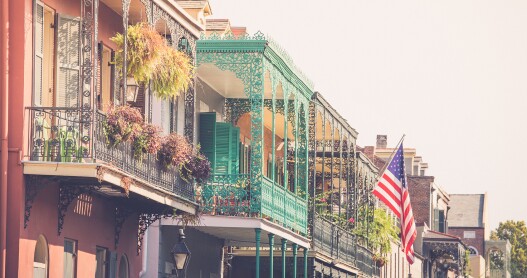
New Orleans, on Lousiana’s Gulf Coast, is never short of an excuse to laissez les bon temps rouler—and the city’s popularity has been driven by what the Big Easy does best: eating, drinking, and being merry. The French Quarter has plenty to entertain beyond the neon-lit Bourbon Street, so it’s worth exploring the city’s outlying neighborhoods, from the manse-lined streets of Uptown to the boho Bywater. And one need only wander into any of the bars along Frenchmen Street to be convinced that New Orleans’s musical heritage beats on—and that no matter how small the venue, there’s always room to dance.

NEW ORLEANS, LOUISIANA USA- FEB 2 2016: An unidentified  local jazz band performs  in the New Orleans French Quarter, to the delight of visitors and music lovers  in town.

Jazz spills out onto the street everywhere across New Orleans.

Photo By GTS Productions/Shutterstock

Overview

When’s the best time to go to New Orleans?

Mardi Gras, Essence Festival, and Jazz Fest, the city’s biggest events, take place in winter, summer, and spring. Though summer brings fewer crowds due to the heat, it’s worth considering a nonpeak trip to avoid the tourist throngs and exorbitant hotel rates. August’s Satchmo Festival is a celebration of native son Louis Armstrong, while the holiday season brings bonfires, Reveillon dinners, and caroling in Jackson Square.

How to get around New Orleans

New Orleans’s Louis Armstrong International Airport is about 25 minutes from the French Quarter by taxi. The fare is a flat rate of $36 for the first two passengers, plus a $15 surcharge for each additional person. Airport shuttles are slightly more—$30 for a one-way ticket, $56 round-trip—and run every half-hour or so to hotels and other locations.

The French Quarter is easily navigated on foot, and the city’s streetcars can be useful if you’re planning to explore well-trodden parts of the city like the Garden District, City Park, and the Superdome; a day pass costs $3. For everywhere else, taxis are readily available.

Can’t miss things to do in New Orleans

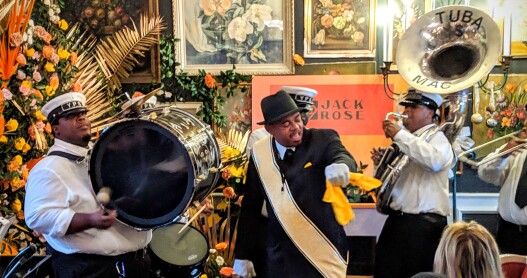
If you’re within earshot of a brass band, chances are good it’s a second line; drop anything you’re doing and follow that sound—you won’t be sorry. Or head over to Congo Square in Treme, the epicenter of Black culture and music in the city.

A crawfish boil—ideally in someone’s backyard—is an iconic New Orleans pastime. If you don’t have a backyard to borrow, pick up crawfish, potatoes, corn, and sausage from KJean’s, and head to City Park.

Food and drink to try in New Orleans

New Orleans’s already renowned restaurant scene has only gotten stronger over the years. Restaurants that are shaking up the old guard, jazzing up Cajun classics, and bringing new flavors to the forefront include Mid-City’s Heard Dat Kitchen and Senegalese-inspired Dakar Nola. Lunching at Commander’s Palace (when martinis are a 25 cents apiece at lunch on certain days) or queuing for fried chicken at Willie Mae’s Scotch House is essential—but so are whole grilled fish at Donald Link’s Peche, globally inspired street food at Booty’s, and cocktails at Cure.

Culture in New Orleans

In Cajun cooking, the holy trinity is a riff on mirepoix that refers to onion, celery, and bell peppers and is the base for iconic dishes from gumbo to jambalaya. If the city of New Orleans had a holy trinity, it would be food, music, and the Saints. To understand the city’s culture, go for Friday lunch at Galatoire’s, grab a bench at Preservation Hall, and catch a game at the Superdome. There’s also a burgeoning gallery scene along Julia Street and a handful of worthwhile museums, including the Contemporary Arts Center and the National WWII Museum.

New Orleans is a city that likes to get its party on, and its festivals are nothing short of epic. The most famous are Mardi Gras and Jazz Fest, but also of note are alternative music festivals like Satchmo Summerfest and Crescent City Blues and BBQ, plus the (free) French Quarter Festival. Even if you don’t plan your trip around a special event, there’s almost always a parade or a party going on somewhere in the Big Easy.

Local travel tip for New Orleans

The French Quarter—Bourbon Street in particular—is where the tourists go. If you’re a native, chances are you’re hanging out elsewhere.

READ BEFORE YOU GO
HOTELS
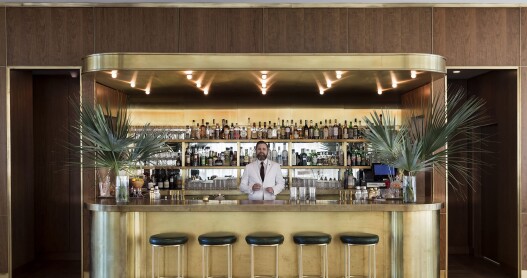
From lobby bars to rooftop lounges, these are the hotel bars Afar editors love checking out when they’re checking in.
Carnival season is here, but there’s still time to make reservations for a last-minute trip to the Big Easy.
The New Orleans City Council just unanimously voted to place heavy restrictions on short-term rentals throughout the city. Here’s what it means for travelers.
The Ace Hotel Group just announced plans to open Maison de la Luz in New Orleans as part of its new luxury spin-off brand.
RESOURCES TO HELP PLAN YOUR TRIP
In New Orleans, crawfish offers more than just sustenance—it’s an entire culture all its own.
Go beyond Bourbon Street to drink up New Orleans history and culture at these fascinating small-scale museums.
For AFAR’s third annual Travelers’ Choice destinations awards, our readers cast more than 100,000 votes to recognize their top places to go. Get ready to hit the road—the world awaits.
Graveyards aren’t always spooky—with their history and architecture, sometimes they’re downright delightful.
As AFAR Experiences looks forward to its trip to New Orleans in March 2019, we turned to New Orleans native Arthur Hardy for some insights on the city’s most famous celebration
The Crescent City checklist is full of things to see and do, but New Orleans rewards those who dive a little deeper.
Tales of the Cocktail just turned New Orleans’s always buzzy nightlife up to 11 as the drinks industry celebrated itself and looked to the future.
Royal Street is to antiques and fine art what Bourbon Street is to booze. This elegant urban thoroughfare is not only home to some of the best examples of the city’s early-19th-century Creole town houses, but is also loaded with high-end antiques retailers. These feature mostly ornate 18th- and 19th-century European sculptures and paintings, early furniture, chandeliers, and dinnerware used by the upper crust. Most of the inventory has a decidedly Continental air to it. Among the better-known shops are Waldhorn and Adler (343 Royal St.); Ida Manheim Antiques (409 Royal St.), run by the same family since 1919; and haute-upscale M.S. Rau (630 Royal St.), with its warren of hidden back rooms open only to serious customers.
Pastry chef Kelly Fields does complicated things with simple ingredients at her modern bakery and eatery. It’s part of the restaurant group overseen by local star chef John Besh, so it’s no surprise that it’s drawn nods from the James Beard Foundation, among others, for its delectable biscuits, corn bread, and more-involved dishes like crawfish and grits. Located in the sleek new district of mid-rise condos and apartments a couple blocks north of Lafayette Square, Willa Jean makes a great spot for a lazy breakfast or brunch—reservations are all but essential on weekends. It’s local knowledge that it’s also open for dinner and that the quality at that time of day remains high, with varied delicious dishes like braised lamb pasta and beer-can chicken (plus, it’s easier to get in).
Hansen’s was started in 1939 by Ernest Hansen, who engineered a loud, homemade machine that shaves the ice to a fineness that many argue is unmatched across the city. (Oh, and they will argue.) The shop is still run with considerable care and attention by Ernest’s granddaughter, Ashley. Snowballs—cups of thinly shaved ice topped with brightly colored sweet flavorings—are a minor obsession in New Orleans. While widely available, snowballs, as well as the culture that surrounds them, seem more advanced at Hansen’s. The selection of flavors is vast, and true connoisseurs mix and match flavors, adding two or three to an order to get just the right balance. (Almond-lime? Orange-coconut?)