New Orleans

New Orleans, on Lousiana’s Gulf Coast, is never short of an excuse to laissez les bon temps rouler—and the city’s popularity has been driven by what the Big Easy does best: eating, drinking, and being merry. The French Quarter has plenty to entertain beyond the neon-lit Bourbon Street, so it’s worth exploring the city’s outlying neighborhoods, from the manse-lined streets of Uptown to the boho Bywater. And one need only wander into any of the bars along Frenchmen Street to be convinced that New Orleans’s musical heritage beats on—and that no matter how small the venue, there’s always room to dance.

NEW ORLEANS, LOUISIANA USA- FEB 2 2016: An unidentified  local jazz band performs  in the New Orleans French Quarter, to the delight of visitors and music lovers  in town.

Jazz spills out onto the street everywhere across New Orleans.

Photo By GTS Productions/Shutterstock

Overview

When’s the best time to go to New Orleans?

Mardi Gras, Essence Festival, and Jazz Fest, the city’s biggest events, take place in winter, summer, and spring. Though summer brings fewer crowds due to the heat, it’s worth considering a nonpeak trip to avoid the tourist throngs and exorbitant hotel rates. August’s Satchmo Festival is a celebration of native son Louis Armstrong, while the holiday season brings bonfires, Reveillon dinners, and caroling in Jackson Square.

How to get around New Orleans

New Orleans’s Louis Armstrong International Airport is about 25 minutes from the French Quarter by taxi. The fare is a flat rate of $36 for the first two passengers, plus a $15 surcharge for each additional person. Airport shuttles are slightly more—$30 for a one-way ticket, $56 round-trip—and run every half-hour or so to hotels and other locations.

The French Quarter is easily navigated on foot, and the city’s streetcars can be useful if you’re planning to explore well-trodden parts of the city like the Garden District, City Park, and the Superdome; a day pass costs $3. For everywhere else, taxis are readily available.

Can’t miss things to do in New Orleans

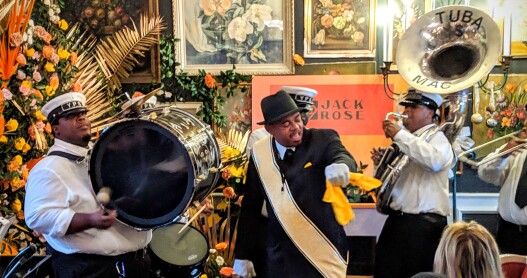
If you’re within earshot of a brass band, chances are good it’s a second line; drop anything you’re doing and follow that sound—you won’t be sorry. Or head over to Congo Square in Treme, the epicenter of Black culture and music in the city.

A crawfish boil—ideally in someone’s backyard—is an iconic New Orleans pastime. If you don’t have a backyard to borrow, pick up crawfish, potatoes, corn, and sausage from KJean’s, and head to City Park.

Food and drink to try in New Orleans

New Orleans’s already renowned restaurant scene has only gotten stronger over the years. Restaurants that are shaking up the old guard, jazzing up Cajun classics, and bringing new flavors to the forefront include Mid-City’s Heard Dat Kitchen and Senegalese-inspired Dakar Nola. Lunching at Commander’s Palace (when martinis are a 25 cents apiece at lunch on certain days) or queuing for fried chicken at Willie Mae’s Scotch House is essential—but so are whole grilled fish at Donald Link’s Peche, globally inspired street food at Booty’s, and cocktails at Cure.

Culture in New Orleans

In Cajun cooking, the holy trinity is a riff on mirepoix that refers to onion, celery, and bell peppers and is the base for iconic dishes from gumbo to jambalaya. If the city of New Orleans had a holy trinity, it would be food, music, and the Saints. To understand the city’s culture, go for Friday lunch at Galatoire’s, grab a bench at Preservation Hall, and catch a game at the Superdome. There’s also a burgeoning gallery scene along Julia Street and a handful of worthwhile museums, including the Contemporary Arts Center and the National WWII Museum.

New Orleans is a city that likes to get its party on, and its festivals are nothing short of epic. The most famous are Mardi Gras and Jazz Fest, but also of note are alternative music festivals like Satchmo Summerfest and Crescent City Blues and BBQ, plus the (free) French Quarter Festival. Even if you don’t plan your trip around a special event, there’s almost always a parade or a party going on somewhere in the Big Easy.

Local travel tip for New Orleans

The French Quarter—Bourbon Street in particular—is where the tourists go. If you’re a native, chances are you’re hanging out elsewhere.

READ BEFORE YOU GO
HOTELS
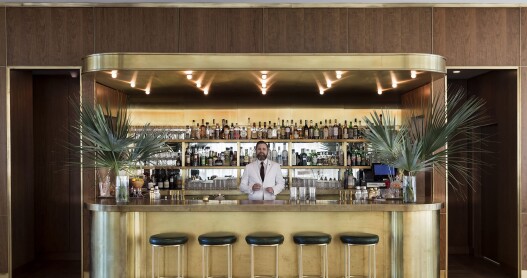
From lobby bars to rooftop lounges, these are the hotel bars Afar editors love checking out when they’re checking in.
Carnival season is here, but there’s still time to make reservations for a last-minute trip to the Big Easy.
The New Orleans City Council just unanimously voted to place heavy restrictions on short-term rentals throughout the city. Here’s what it means for travelers.
The Ace Hotel Group just announced plans to open Maison de la Luz in New Orleans as part of its new luxury spin-off brand.
RESOURCES TO HELP PLAN YOUR TRIP
Owen Brennan founded a fine-dining restaurant empire in 1946, when the proprietor of Arnaud’s taunted him by saying that no Irishman could succeed with anything other than a hamburger joint. Brennan got his revenge at this French-and-Creole restaurant located in a sprawling pink 1795 Spanish-era structure that’s become iconic. After some slouching in recent years, Brennan’s is back on culinary maps following a change in ownership (from one branch of Brennan descendants to another). Pro tip: It’s more famous for breakfast than dinner. Among the more noted dishes is eggs Hussarde, involving poached eggs and Canadian bacon served with both Marchand de Vin and hollandaise sauces.
Preservation Hall occupies a worn Creole town house that was originally built as a home in the early 19th century, and that had evolved into an art gallery and performance space by 1961. (It was founded by a man of philanthropic bent who fretted that the great, aging New Orleans musicians no longer had a place to play.) It hasn’t changed much since the ‘60s—audiences cluster on benches or stand along the back wall to hear whomever is playing that night. Among the glories of New Orleans is traditional jazz, which is still very much alive here and never feels as if it belongs in a morgue—or even an intensive care unit. Check the schedule for upcoming acts, but don’t get hung up on specific performers; every night offers something worth stopping by for, and everyone leaves in a better mood than when they arrived.
Charlie’s is old-school New Orleans writ large. It’s one of a handful of surviving notable neighborhood steak houses (it’s not far from where the original Ruth’s Chris was also once a neighborhood spot), a no-frills joint with faux-wood paneling on the walls and no menus to hand out. The waiters ask you what size you want, and also if you’d like to start with an order of fried onions. (The correct answer is yes.) Pro tip: Kick off your evening an hour earlier and a couple blocks away at Pascal’s Manale with a dozen or two bivalves at the marble oyster bar of a revered Italian-Creole “red gravy” spot.
This late-19th-century city-owned seafood market, which was by and large abandoned after Hurricane Katrina, was reborn as an upscale food hall several years ago. The dilapidated structure was spruced up and the navelike interior painted an austere, modern white. Then a dozen or so food vendors moved in, serving as a sort of incubator for those with an idea but no desire to go the food-truck route. It’s a great place to swing by for lunch or a casual dinner—you can get craft cocktails and spend some time at the oyster bar, then browse the other offerings, which include crab mac and cheese at Fritai and alligator-sausage hash at Elysian Seafood.
The Beauregard-Keyes House stands out in a neighborhood—the French Quarter—already filled with standout buildings. Built in 1826, it’s a superb example of the then-newly-popular Greek Revival style, with its bossy pediment and sweeping granite stairs, which displaced the more austere Creole style. It’s been home to an illustrious roster of residents, including legendary 19th-century chess player Paul Morphy (born here in 1837 and world champion before he turned 20) and Confederate General P.G.T. Beauregard after the Civil War. Next door and visible even if you don’t take the guided tour is a small, walled parterre garden, restored to the formal style of the middle 19th century.
Rock ’n’ Bowl is where to go to find sharps, flats, spares, and strikes all hanging out together. It’s a bit unclear whether this is a nightclub hiding out in a full-size bowling alley, or a bowling alley out enjoying a secret nightlife. Either way, it’s a very New Orleans destination, located near the upriver edge of the city. (It’s about a $15 cab ride from downtown.) After Katrina and a parting of the ways with his earlier landlord, the owner moved a few blocks down to this former paint store, installed new lanes, added a bigger stage, and hauled much of his original funky decor to the new spot. Check the website for forthcoming shows—there’s always plenty of space for dancing, which is especially fun during Thursday zydeco nights.
Anyone interested in the city’s complex and vivid past—and if you’re still breathing, that should include you—would do well to make a stop at the Historic New Orleans Collection. This is a private entity with a public purpose: It was founded to both preserve French Quarter buildings and to amass and display some of the key documents and artifacts covering the city’s three centuries of history. The collection is housed in the impressive Merieult House, which dates back to 1792 and which underwent a Greek Revival makeover in the 1830s. Self-guided tours of the Williams Gallery downstairs and the Louisiana History Galleries upstairs are free; be sure to check out their exhibits on Louisiana’s culture and legacy.
Consider this your worldwide summer cocktail guide.
New Orleans’s newest public park lies along about a mile and a half of the Mississippi River—a lovely retreat reclaimed from industrial squalor. The main entrance is near the foot of Esplanade Avenue, marked by a boxy footbridge (with elevator) over the railroad tracks, which divide the park from nearby low-slung neighborhoods. While walking along the water, note how the powerful Mississippi’s twists and currents require dexterity from a river pilot, as the huge passing barges slide past sideways angling for the bends. At Piety Wharf—a former warehouse location converted into a massive sculpture that invites contemplation—you can cross a steeply arched span (designed by noted architect David Adjaye, and locally dubbed the Rusty Rainbow) into the Bywater neighborhood for a walk back to the French Quarter.
Drinking and NOLA have always gone hand-in-hand—but now, the Crescent City is really jazzed about the caffeinated stuff.