Amsterdam

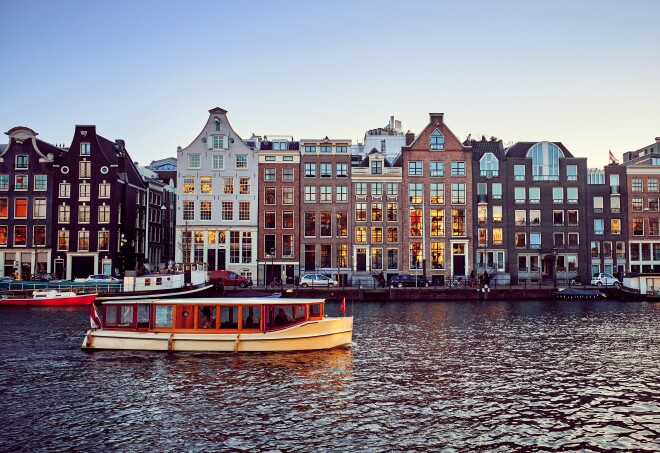
With its Golden Age canals, 17th-century mansions, world-class museums, and well-established counterculture, Amsterdam is a European capital with an edge. While some come for tulips, cheese, and windmills, others are drawn by the city’s reputation for easy sex, drugs, and rock ’n’ roll. Whatever brings you to this charismatic global village, you’re sure to be charmed by its fairy-tale landscapes, tolerant vibe, and historical legacy that harks back to the small, 13th-century fishing village on the Amstel River that would become an international capital.

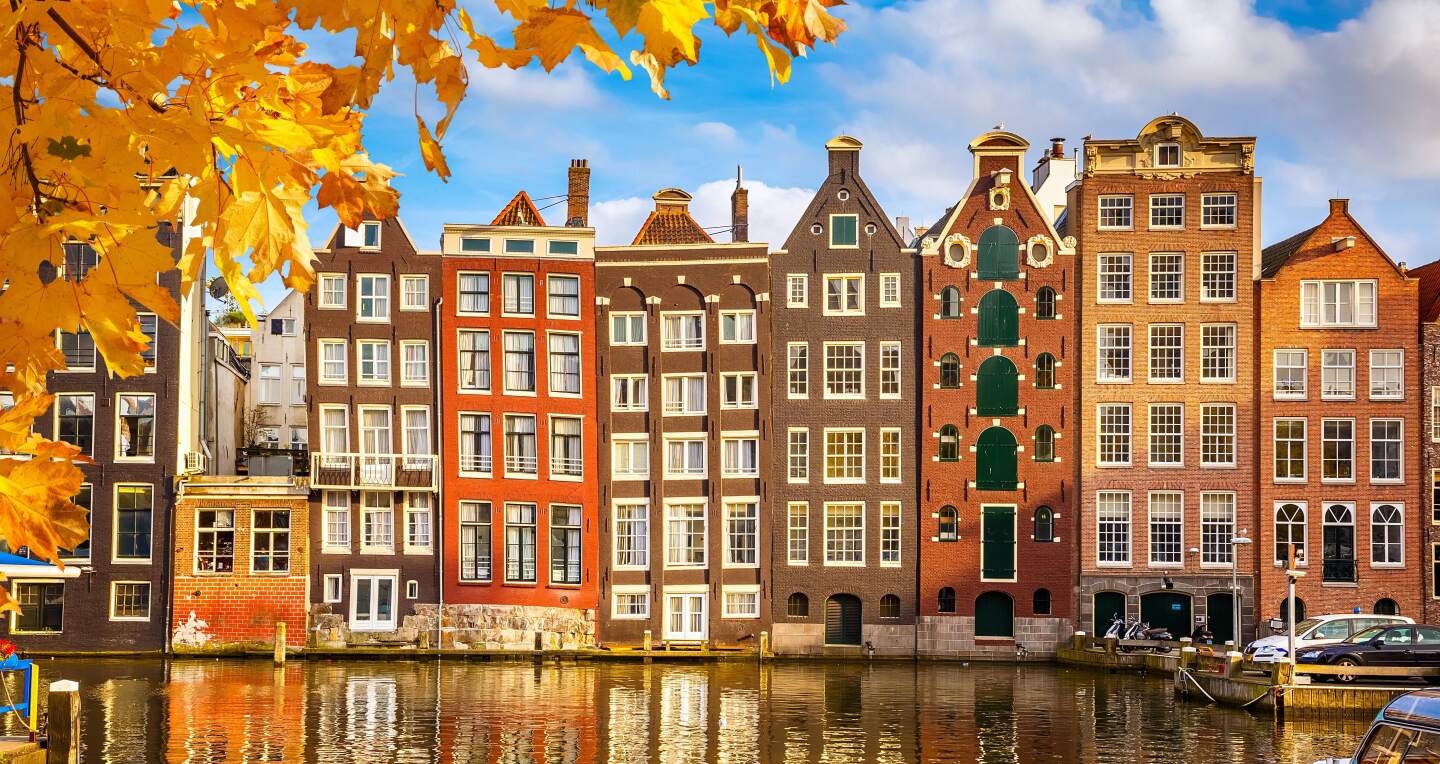
Amsterdam canal at fall, several tall little houses in a row next to the river canal

Sergey Borisov / Alamy/Alamy

Overview

When’s the best time to go to Amsterdam?

Winter may be cold (with January and February the coldest months), but tourists are gone and locals have reclaimed the town. Before the holidays, In Leidseplein and Rembrandtplein, two of the city’s open squares, skating rinks and oliebollen stands appear (oliebollen are the local doughnuts). Twinkling lights decorate bridges; seasonal trimming transform streets into fairy-tale lanes. Amsterdam Fashion Week sashays through town in January, drawing international style-makers. In the spring, tulips bloom, flowers spill over balconies, tourists jam museums, and locals celebrate the lengthening days. Millions arrive to viist Lisse’s Keukenhof, a stunning flower garden. Summer means picnics in Vondelpark, Museumplein, Amsterdam Bos, and all the city’s green spaces. During Open Garden Days in June, many canal houses open private courtyards for viewing. Outdoor concerts and festivals abound, restaurant patios overflow with diners, and locals head to urban beaches. In the fall, as the leaves change color, Amsterdam ushers in the cultural season. New exhibits open at galleries and museums and opera season kicks off.

January: Amsterdam International Fashion Week February: Chinese New Year Festival March: Amsterdam Restaurant Week April: Koningsdag (King’s Day, formerly Koninginnedag or Queen’s Day) May: Art Amsterdam (previously Kunst RAI) June: Holland Festival, Vondelpark Open Air Theater, Taste of Amsterdam, Nuit Blanche, Open Garden Days July: Amsterdam Roots Festival, Kwakoe Zomer Festival August: Robeco Summer Nights, Gay Pride, Grachtenfestival; Pluk De Nacht, Sail Amsterdam, Uitmarkt September: Open Monument Days, Jordaan Festival, Amsterdam Restaurant Week October: Amsterdam Dance Event, Amsterdam Marathon November: Museum Night, Amsterdam Antique Fair, High Times Cannabis Cup, International Documentary Film Festival, Sinterklaas arrives

How to get around Amsterdam

Amsterdam is an international hub for many airlines. Flights arrive at Schiphol, which is about half an hour from the city center by public transportation. Trains arrive at Central Station, where countless connections to the rest of the Netherlands and all of Europe are available. Eurostar buses terminate at Amstel Station. Boat travel is an option for U.K. and Scandinavian travelers, via P &O North Sea Ferries, Stenaline, and Scandinavian Seaways. City parking is rare and expensive. If you must arrive by car, take the A10 Ring into town from any major freeway.

Amsterdam is among the most compact of the world’s major cities, making it easy to get around by foot or bike. An excellent system of GVB trams and buses facilitates travel throughout the city and beyond. A metro line connects Centrum with the suburbs.

Can’t miss things to do in Amsterdam

There’s no sign, no agenda, and no boundaries at Supperclub, where it’s always a memorable evening. From the Salon Neige, where you’ll dine like a sultan to the gay urinal that doubles as a smoking room, this is experimental fun unfettered by convention. Expect eclectic cuisine and entertainment from the seductive to the bizarre, encompassing vaudeville, burlesque, and cabaret.

Food and drink to try in Amsterdam

Holland is known for hearty comfort food, not haute cuisine. Yet its capital competes with the best of Europe on the dining front with nearly 1,500 options, from Michelin-starred restaurants and historic watering holes to gay cafés and Irish pubs. Amsterdam’s culinary melting pot includes diverse fare encompassing Indonesian rijstaffel, Spanish tapas, and Dutch favorites such as stamppot, bitterballen, and pannekoeken. Sample Asian flavors in Chinatown, near Nieuwmarkt, or cruise Haarlemmerstraat, Utrechtsestraat, or Reguliersdwarsstraat for dining options. Avoid touristy Leidseplein. On the street, try Vlaames frites—twice-fried potatoes smothered in mayo—or raw herring served with pickles and onions. Turkish pizza is popular, as are gyros, reflecting Middle Eastern influences. In the wee hours, buy a kroquet or burger from coin-operated windows at FEBO (the Dutch fast-food automat chain), where you’ll see locals trying to be inconspicuous as they grab a late-night snack. Heineken and Amstel are the local beers. For a stiffer drink, try Dutch jenever, which is juniper-flavored gin.

Culture in Amsterdam

With classical music at Concertgebouw, theater at Stadsschouwburg, jazz at Bimhuis, contemporary music at Muziekgebouw, and cabaret at Royal Theater Carré, Amsterdam’s cultural scene offers plenty of variety. Renowned pop and electronic music venues include Air, Melkweg, Paradiso, Sugar Factory, and Escape.

AFAR’s travel partner, Context, offers visitors a private tour, led by a local historian, artist, or architect, of the city’s streets and canals called The Dutch Golden Age, with a focus on how a relatively small Amsterdam came to hold a global position of power in the 1600s.

Local travel tips for Amsterdam

  • Never buy drugs from street dealers.
  • Urinating on the street will cost you €60.
  • Taxi drivers may rip you off unless you know exactly where you’re going.
  • Don’t overtip for inferior service at Dutch bars and restaurants.
  • Establishments along Damrak and in Leidseplein are touristy, overpriced, and often mediocre.

Guide Editor

READ BEFORE YOU GO
HOTELS
Once an orphanage and Palace of Justice, Rosewood Amsterdam is the Dutch capital’s most anticipated new hotel—and one of the city’s last debuts for a while.
A Boeing 737-800 is the main draw of the 1,200-square-foot suite at the Corendon Amsterdam New-West, and the whole room has been recently refurbished to be even cooler.
A recent announcement included numerous measures aimed at controlling what has become an irrepressible flood of visitors.
Who needs a hotel lobby when the city—and its canals—are right on your doorstep?
RESOURCES TO HELP PLAN YOUR TRIP
Amsterdam’s Royal Palace sits on Dam Square at the heart of the city. Though it remains a working palace—it’s where King Willem-Alexander was crowned in 2013—the Dutch royal family only uses it occasionally and the rest of the time it’s open to the public. Walk through the 350-year-old palace to explore its vast halls and priceless art collections. The truly passionate can get a deeper look by booking a guided tour from an art historian.
As glassy high-rises sprout up on the site of a former gasworks complex on the Amstel River, this early-20th-century red-brick house, where the factory’s director once lived, has been preserved and turned into a smart café and art space. All rooms in the two-story home have been outfitted with mod, vintage furnishings and rotating artwork from area artists, and you’re free to grab a drink or coffee at the bar and enjoy them wherever you wish. The riverfront terrace is the perfect spot for a coffee and a bite; the menu includes sandwiches and goods baked on-site using locally sourced ingredients. Arrive early for a table for the busy Sunday brunch, which occasionally features live music.
Adjacent to the famed Rijksmuseum, this restaurant has garnered praise—and a Michelin star—for its inventive, Dutch-influenced cuisine that emphasizes locally sourced and seasonal ingredients. Given the Netherlands’ proximity to the North Sea, the menu leans heavily on seafood—Zeeland oysters and mussels are particular standouts—but its chef, Joris Bijdendijk, also has a way with vegetables, bringing out their full flavor in dishes like spit-roasted celeriac or a beautifully composed tribute to Dutch beans. There’s a six-course tasting menu priced at €67.50 (around $80) and an abbreviated three-course lunch menu for €37.50 (around $45). Reservations are recommended.
This funky spot stands out among Amsterdam’s many urban “beach bars.” You can laze away a sunny afternoon at one of the picnic tables or chairs set up on a wide stretch of sand. Cocktails and beer slake your thirst, while decent pulled-pork tacos, burgers, and poke bowls keep hunger at bay. If the weather isn’t agreeable, the café—located inside a converted warehouse—strikes all the right hipster notes: Think distressed, graffitied concrete walls; leather sofas; vintage television sets; and groovy lighting. An adjacent warehouse hosts all sorts of events, from flea markets to film screenings to dance parties.
Hop on the free ferry from the city’s Central Station for the 15-minute ride to the NDSM wharf, an old shipyard that’s transformed into a hipster haven with restaurants, bars, and artists’ studios. The waterfront “beach bar” Pllek is a popular spot here; built out of old shipping containers, the soaring, dual-level space has an industrial vibe, with corrugated-metal walls warmed by bright artwork, an indoor fireplace, and huge windows looking out over the IJ River. But it’s the man-made beach that draws crowds in warm weather, with comfy beanbags and loungers where you can while away the afternoon. There’s a nice selection of beer and wine; the food is simple but surprisingly good, and it’s crafted with fresh, organic ingredients. Pllek also hosts live-music events, DJs, dance parties, films, and morning yoga classes.
By day, the low-slung leather chairs and chesterfield sofas at this spacious bar-restaurant in the trendy Hoxton hotel on the Herengracht canal belong to the laptop-and-coffee crowd. By night, the same lofty, mod-chic space morphs into a buzzy but sophisticated spot for drinks and bites. If you’d prefer a proper table, the restaurant area at the back—with a retractable roof that opens on temperate days—serves an Italian-influenced menu; it’s especially popular for weekend brunch.
A true feast for the eyes, this Belle Époque brasserie inside a century-old former bank building (now part of the W Amsterdam) is one of the loveliest dining spaces in the city. Beneath a soaring, stained-glass ceiling, immense circular lighting fixtures hang over sleek black-marble tables; an intricate tiled floor, gold accents, and a mirrored bar round out the glamorous vibe. The sophisticated French and Italian dishes are beautifully executed, and don’t miss the cocktails—especially the selection of classic punches. High tea is served in the elegant adjacent tearoom every afternoon.
The precariously leaning, step-gabled houses that were joined to form this elegant dining room date back to 1614, and many of their original interiors remain intact, with beautiful delft-tiled walls, wood beams, and wide-plank floors. The restaurant’s name, which translates to “the Silver Mirror,” serves locally sourced ingredients, such as Zeeland mussels, North Sea shrimp, and Dutch beef, with a contemporary flair; the award-winning wine list includes some 225 bottles from around the world. Order à la carte or try one of the tasting menus, which run from four to seven courses and are priced from €49.95 to €79.95 (about $60 to $95) without wine.
One of the hippest neighborhoods in the city is Amsterdam-Noord, situated directly across the IJ River from the main train station. Here, an iconic 1970s office high-rise has been recently revamped and rebranded as A’DAM, an acronym for Amsterdam Dance and Music. Along with music-themed businesses, restaurants, and an underground nightclub, the tower boasts the rooftop Lookout, an open-air observation deck 20 stories up that offers panoramic views of the historic city center, the bustling port to the west, and the Dutch landscape beyond. Daredevils line up for Over the Edge, a huge metal contraption that lets you literally swing out over the edge of the building. Entrance to the Lookout is €12.50 (about $15) and a ride on the swing is €5 (about $6).
Founded in 1838, Amsterdam’s zoo, just east of the Canal Ring, is one of the oldest in Europe, with a parklike setting that also houses an aquarium and planetarium (entrance to both is included in the price of admission). The grounds, while not large, are home to around 700 species, including giraffes, gorillas, penguins, pelicans, sloths, and reindeer. A highlight is Lemur Island, where the freely roaming long-tailed creatures scurry and hop all around you. The zoo also recently updated its Asian elephant and jaguar enclosures. The aquarium, which dates from 1882, was fully renovated in 1997 and counts tropical fish, sharks, and sea horses among its residents; it also boasts an underwater scene of a typical Amsterdam canal, complete with a sunken bicycle.