Florence

Of the cities that have enjoyed moments as true cultural capitals of the world, Florence is one of the most surprising. A modest trading center, and one devastated by the plague in 1348, Florence emerged late in the 14th century as the “Athens of the Middle Ages.” This was due, in large part, to the ruling Medici family embracing their role of patrons to Leonardo da Vinci, Michelangelo, Brunelleschi, Machiavelli, and other artists and writers.

The glories of the Renaissance are found everywhere you look. The Palazzo Vecchio sits beside the Piazza della Signoria, the symbolic heart of Florence, while less than five minutes on foot will bring you to the Uffizi Gallery, a treasury of many of the most famous paintings of the Renaissance. Cross the Arno River over the Ponte Vecchio and you’ll soon arrive to the Pitti Palace and Boboli Gardens. This city is more than the sum of its parts. When circumstances led to Milan, Rome, and other Italian cities surpassing Florence in population and commercial importance, the historic heart of Florence remained largely intact. Only a few modern buildings can be found in the city center, much of the medieval streetscape remains, and here you can walk in the footsteps of some of Western civilization’s greatest minds.

original-florence-banner-crop-2019.jpg

Photo Courtesy of Atibordee Kongprepan

Overview

When’s the best time to go to Florence?

Florence at the height of summer is often hot and almost always crowded—late spring and early fall are preferable if possible. While Florence is a year-round destination, if you are combining your trip there with visits to wineries and smaller towns in Tuscany, be aware that some businesses do close in the winter.

How to get around Florence

There are no direct flights from the U.S. to Florence, but you can connect through European hubs. The city center is about 20 minutes from the airport by taxi or bus. If you’re also visiting Milan, Rome, or Venice, each is two hours or less by train, with Florence’s main station at Santa Maria Novella near the historic center.

Florence’s compact historic area is best explored on foot, as narrow, busy streets make walking easier than driving. Buses are useful mainly for trips outside the center. Taxis are safe and affordable for short distances, but must be picked up at a taxi stand.

Can’t miss things to do in Florence

The Uffizi Gallery ranks alongside the Louvre and the Hermitage as one of the world’s great museums, though its collection is more focused—specifically on Italian art from the 14th to 17th centuries. The entire arc of Renaissance art can be traced through its canvases, with masterpieces by Botticelli, da Vinci, Fra Filippo Lippi, and many others.

The Galleria dell’Accademia, on the other hand, is a must-stop thanks to one masterpiece: Michelangelo’s David.

Florence’s cultural highlights include a number of buildings that are iconic landmarks. Foremost among them is the cathedral, or Duomo, which includes contributions from three towering figures: Brunelleschi (the dome and baptistery), Giotto (the campanile), and Vasari (The Last Judgment fresco). Students of garden design, and anyone who wants to simply smell the flowers, should explore the Boboli Gardens.

Take a break from all the headiness with a visit to the Mercato Centrale, or San Lorenzo Market. On the ground floor you can shop for sun-dried tomatoes, olive oils, and other culinary gifts. In the food hall upstairs, you can savor some of the flavors of Tuscan cuisine.

Delve even deeper into Florentine culture: sign up for a cooking class, attend a musical event, conduct your own street-food survey. Or take a fresco-painting workshop from our partner, Context Tours, where you’ll learn the ropes of this Renaissance painting technique from a working artist in his studio.

Food and drink to try in Florence

Tuscan cuisine is traditionally simple and hearty food, noted for its bean and vegetable soups and non-fussy pasta dishes. Florence’s most famous dish, bistecca alla Fiorentina, a thickly cut t-bone steak, can be found on many menus. If you have a sweet tooth, gelato was (at least according to some) invented in Florence.

Culture in Florence

Florence’s high culture is the reason to visit the city for many—its museums are home to many masterpieces of Renaissance Italy while some of its churches and palaces are true architectural wonders. The lines at the Uffizi Gallery can be long and purchasing advance tickets is highly recommended. While you will want to see Florence’s most famous highlights, its smaller institutions can offer a respite from the crowds: the Bargello houses important works by sculptor Donatello while the Horne Museum displays the collection of its 19th-century British founder, an avid collector of Renaissance art.

READ BEFORE YOU GO
Following recent regulations in Rome, Venice, and Cinque Terre, additional Italian destinations are implementing rules aimed at encouraging more responsible travel.
HOTELS
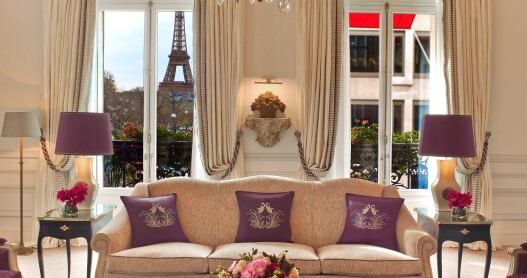
There’s nothing dreamier than a room with a view, and these luxurious hotels are perfectly positioned to give you the best views of some of Europe’s most memorable sights.
RESOURCES TO HELP PLAN YOUR TRIP
This Ferragamo-owned restaurant is located on the river with in-your-face views of the Ponte Vecchio for the lucky few who manage to book one of the tables on the terrace. Chef Peter Brunel has been making waves with his creative menus: Borgo San Jacopo has been awarded a Michelin star for the past several years in a row. Yes, it’s expensive, but with a tasting menu featuring dishes such as porcini mushroom ice cream and fig molasses and risotto with sea urchin, it’s a meal you won’t soon forget.

A fully vegetarian menu is also available, as is a wine pairing for those adventurous eaters who would prefer for the team’s experienced somms to take the lead.
JK Place Firenze is a far cry from Florence’s obsession with all things Renaissance. Set amid the buzz of Piazza di Santa Maria Novella, this onetime private mansion is decked out in black, white, peach, gray, and chrome, with inflections of 1950s movie stars, 1970s pop art, and ornate 19th-century architecture. The reception feels like a library, and the breakfast room is a glassed-over former courtyard with a hefty antique wooden communal table. Free drinks, fresh fruit, and homemade treats (and bubbles at cocktail hour) can be found at all hours in the guests-only lounge area. Impress your well-heeled friends by inviting them to dine on the piazza terrace, presided over by the appropriately black-and-white Basilica di Santa Maria Novella, before moving downstairs to the clubby J.K. Pink Room. Slip upstairs to your individually designed room for a divine night’s sleep, then awake ready to take on one of the world’s most historic cities.
Trattoria i’Raddi, a classic Tuscan trattoria in the Santo Spirito neighborhood, is run by the Outran family. (A few family members are locally famous for playing calcio storico, a historic and brutal sport that seems like a mix of soccer and MMA fighting.) Come here to eat pappa al pomodoro (Tuscan bread-and-tomato stew), pici all’aglione (pasta with garlicky red sauce), and peposa. Peposa is a slow-cooked, peppery beef stew, almost a Tuscan version of chili; according to legend, it was invented by Brunelleschi. The food here is affordable and the prix fixe lunch specials are an even better value.
This independent bookstore feels like a cozy home, with rooms full of books and comfortable chairs in which to sit and browse. Fans of Dan Brown’s Da Vinci Code may recognize the shop as the one where Robert Langdon searched for Dante’s Divine Comedy. There is an extensive selection of English-language titles about Florence, Tuscany, and Italy that range from tiny novelty volumes to large coffee-table tomes. Head to the back and you will find a few shelves of secondhand paperbacks that provide material to read that doesn’t require Wi-Fi.
The history of the palaces and streets and artwork of Florence comes alive during this multimedia theater performance, acted out (in English) in a small baroque church. The show tells the story of two feuding Medici siblings—the last grand duke of the dynasty, Gian Gastone, and his sister, Anna Maria Luisa—and the patto di famiglia, or family pact, that bequeathed the family treasures to the city-state their forebears had ruled for hundreds of years. Long before there was reality television, there was family drama, Florentine style.
You may think Boutique Nadine has a bit of an identity problem. Not only does the shop have two locations just a few blocks from each other in the heart of Florence, but they are both part vintage-clothing store, part indie-designer boutique, and part midcentury-furniture emporium. In the plus column: Everyone finds something to love here. Clothing is arranged by color and walls are hung with classroom world maps. A long table, overseen by a crimson statue of Buddha, displays bowls of beaded bracelets and rings and trays of sunglasses. You may walk out with a vintage designer piece or a classic striped T-shirt, or shoes, bags, a bottle of Aquaflor perfume, or some pretty paper goods.
The perfect souvenir for the food-loving traveler? Slim bars of chocolate wrapped in paper patterned with groovy midcentury designs. Or a pale blue box tied with a satin ribbon, holding a treasure of pralines, caramels, and squares of dark chocolate. Vestri is a family-run establishment that has been turning out delicious chocolate creations for more than 30 years. The clan owns its own cocoa plantation in the Dominican Republic, which ensures the quality and ethical sourcing of its products. The shop also sells modern confections like white chocolate with salt and sesame, as well as sweets based on ancient Florentine recipes. Take decadence to the next level and indulge in a scoop of creamy gelato affogato, drowned in hot chocolate, while you shop.
This family-run bakery has been making cantucci (what you might know as biscotti) for decades. The clan’s patriarch, Roberto, mixes and rolls everything by hand in the back, using a recipe that he knows by heart—ask, and he will happily show you the original recipe, now splattered with egg whites and cocoa. Roberto’s delicate cantucci are far from the tooth-cracking kind sold at many places. If you are really lucky, a fresh batch of the dark-chocolate-and-pistachio variety may have just been pulled out of the oven when you arrive.

This small, family-run wine shop in the Oltrarno district has been a gathering place for Florentines since 1947. Now run by the founder’s grandson and his family, it remains a place where neighborhood denizens come to buy wine to take home or to have a chat over a glass. Inside the shop, floor-to-ceiling shelves display bottles from a variety of Italian regions and vintages, with options in every price range. Glasses of red or white wine, dispensed from taps, can be enjoyed at the narrow bar. Or linger a little longer: Ask for a seat at one of the sidewalk tables, then order a glass of Chianti and a snack of chicken liver pâté (made from Nonna’s recipe) served on grilled Tuscan bread.
Via Tornabuoni, one of the most elegant streets in Florence, is lined with many imposing Renaissance palazzi, including a 15th-century beauty owned by the Antinori family, the famed wine producers. The ground floor of Palazzo Antinori is given over to a refined restaurant with a formal dining room—think starched linen tablecloths and waiters in white jackets—suitable for the aristocratic atmosphere. The kitchen relies on ingredients from the family’s estate, so the menu is limited, seasonal, and fresh. Not surprisingly, the wine list is deep, with a selection of super Tuscan blends and wines from the Antinori cellars.