Croatia

In 1995, after decades of Communist rule and ensuing bloody wars, Croatia emerged from the shadows into the travel spotlight—a nearly undiscovered corner of Europe. Today, visitors continue to arrive in record numbers to explore the country’s medieval cities and villages, eight national parks, 11 nature preserves, and more than 1,200 islands along the Adriatic coast. The dramatic Dalmatia region gets most of the spotlight, with summer crowds flocking to hot spots like the historic walled city of Dubrovnik, the bustling town of Split, and the glamorous island of Hvar. Lesser-known but equally impressive are the heart-shaped Istria (the peninsula at the northern end of Croatia’s coastline) and Kvarner (the gulf just to the south of Istria). The star of Croatia’s inland region is the buzzy capital, Zagreb, which, in recent years, has become a must-visit destination for its quirky museums, colorful markets, and innovative food scene.

Dubrovnik, Croatia

Photo by Brendan Van Son/Shutterstock

Overview

When’s the best time to go to Croatia?

The peak tourist season along Croatia’s coast runs from July through August. It can be hot, crowded, and expensive, but several festivals and events still make it a fun time to visit. For a bit of breathing room and lower prices, try the shoulder seasons—May through June and September are particularly lovely times of year. Winter used to be the quietest period for tourism, but that has changed in the last two years with Zagreb’s Advent festivals bringing in thousands of visitors for Christmastime merriment.

How to get around Croatia

Croatia has seven international airports, with the swanky Franjo Tuđman Airport (also known as Zagreb Airport) being the largest and busiest, as well as the main hub for the national carrier, Croatia Airlines. Other popular ports of entry, especially if you’re heading for the Dalmatian Coast, are Split, Dubrovnik, and Zadar; Pula is a major entryway if you’re Istria-bound.

The bus network in Croatia is extensive and reliable—and a good way to travel if you don’t have your own wheels. There are also regular ferries from the mainland to the islands, with more routes added during the busy high season.

Food and drink to try in Croatia

Croatian cuisine is a melting pot of regional specialties made with high-quality ingredients, from fresh seafood and spicy, paprika-rich fish stew to hand-rolled pasta with just-picked truffles. Don’t miss a meal of juicy meat or octopus, slow-cooked under peka (a dome-like baking lid). And be sure to wash it down with homemade wine or rakija, the local spirit made from fermented fruit.

Culture in Croatia

Croatians love to socialize over coffee and meals, but they also love to party, which makes it easy to see why the country has become one of Europe’s hottest festival destinations. On the other end of the spectrum, the majority of the population is Christian, and a visit to church on Sundays is an important aspect of local culture. As in many parts of Europe, soccer is the other dominant religion. You’ll make fast friends if you cheer for the home team while watching a match.

Can’t miss things to do in Croatia

Croatia delivers a heady mix of culture and nature, from its bustling cities and string of UNESCO World Heritage sites to its eight national parks that protect gorgeous stretches of wilderness. You can’t miss Dubrovnik’s walled Old Town, with its ancient ramparts and sweeping views, or the harbor city of Split, home to Diocletian’s Palace (the most complete Roman palace in the world). Sailing in Croatia—or at least visiting an island or two, like Hvar or Vis—is also essential. If you only have time for one national park, make it the lake-filled wonderland of Plitvice. And try to get to Zagreb, Croatia’s charming capital that has recently blossomed into a major destination.

Practical Information

Croatia is part of the European Union, so E.U. visa regulations apply. While Croatian is the official language, you’ll find that English is widely understood and spoken. The local currency is the euro. Electricity is 230 volts and plugs are types C and F (the standard European kind, with round prongs).

Guide Editor

Born and raised in Croatia, Anja Mutić is an award-winning travel writer who splits her time between Brooklyn and Zagreb.

Updated August 2023.

READ BEFORE YOU GO
After a multiyear renovation, Villa Argentina returns to Dubrovnik, Croatia, bringing new life to a storied Adriatic waterfront hotel that generations of locals and travelers have cherished.
HOTELS
Sure, the beaches and views are great. But these islands excel with sustainable innovation, rich local traditions, and unique accommodations.
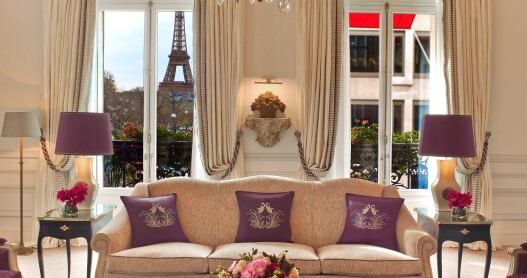
There’s nothing dreamier than a room with a view, and these luxurious hotels are perfectly positioned to give you the best views of some of Europe’s most memorable sights.
RESOURCES TO HELP PLAN YOUR TRIP
On the steep hills above the truffle-obsessed town of Livade in central Istria, Croatia, a man named Vlado Tomažič makes olive oil on his family’s farm. When my husband and I rented the apartment, Casa Maršić (casamarsic.com), adjacent to the farmhouse, we found it the perfect base for exploring the nearby medieval hill towns. We visited Motovun-Montona and Oprtalj-Portole, where we ate fuži, traditional Istrian pasta, with fresh mushrooms and grilled lamb chops at the fantastic Tončić agritourism (agroturizam-toncic.com). We happened to be at the farm during the October harvest and helped Vlado’s friendly crew rake the olives from the trees, taking frequent breaks for gemišt—white wine and sparkling water. Classic Journeys offers seven-night tours of Istria. This appeared in the August/September 2014 issue.
A former 18th-century bishop’s palace in Korčula Old Town, this Relais & Châteaux property has been meticulously restored into an all-suite luxury hotel. Each of the five rooms is decorated along a different theme inspired by the Silk Road and the explorer Marco Polo, who is rumored to have been born on Korčula. The two-bedroom China Suite features low-slung furniture, red pillows, and a scene-stealer of a terrace with views across the town and coastline, while the one-bedroom Arabia Suite includes an all-white color scheme and intricately carved wood screens.

The hotel’s LD Spa specializes in Thai and Ayurvedic treatments, and the restaurant serves fresh, local seafood on a long terrace above the Old Town wall. The restaurant also produces three different olive oils from the groves around Korčula, and works with local partners to serve wines made from indigenous grapes like grk and pošip.
Wine is an integral part of life on the Dalmatian Coast, a region with many indigenous varietals; a visit to Dubrovnik shouldn’t go by without a glass of local wine. Tucked away on Palmotićeva Street off the main Stradun, D’Vino offers cozy interiors as well as atmospheric seating at tables set on the narrow thoroughfare outside. Try a glass of something new from the impressive selection of local producers—the knowledgeable staff can help guide you in choosing one. D’Vino features several tasting experiences that highlight the region’s star wines: the Konavle Valley’s refreshing Malvazija, potent Plavac Mali reds from the Pelješac Peninsula, and Korčula Island’s fruity Pošip whites. Pair the wines with a platter of prosciutto and Croatian cheeses for a wonderful welcome to Dubrovnik and its wine region.
A contemporary take on a classic 1970s Adriatic resort, Hotel Lone is Croatia’s first and only member of the Design Hotels network. The gleaming-white, Y-shaped building may sit amid the forests of Zlatni Rt Park (a 10-minute seafront stroll from the Old Town of Rovinj), but its five-story lobby forgoes nature for flowing golden fabrics, rich murals, and a suspended steel sculpture. The Scandinavian-style accommodations are decidedly more minimalist, with lots of wood and natural light aplenty—plus plunge pools on park-facing terraces in the 16 Jazz rooms. Facilities include an 18,300-square-foot spa with an indoor pool, eight treatment rooms, and a unisex sauna complex, as well as the stellar ResoLution Signature Restaurant.
With Sea Organ and Sun Salutation, architect Nikola Bašić has created two spectacles that harness the beauty of Zadar’s famous sunsets. Sea Organ is a musical instrument fashioned from pipes and holes drilled through stone stairs that descend to the water. A kind of music—whistling, percussion, hypnotic sighs—is released as the sea sloshes forward and pushes air through the pipes. To grab prime seats on the steps, get there a half hour before the sun drops.

A stone’s throw away, Sun Salutation features a series of circles made from photovoltaic glass panels set into the pavement. The panels gather energy from the sun throughout the day, and come evening, lighting elements beneath the glass create a mesmerizing display that simulates the solar system. The solar energy collected by Sun Salutation also helps power the entire waterfront.
The name hardly prepares you for the exquisitely cut and styled women’s clothes inside. Among the featured Croatian designers, my favorite, who goes by the name Rococo, creates Grecian-themed gowns and cocktail dresses. The Dubrovnik branch will reopen in a new location this summer. Od Puča 11, Dubrovnik. This appeared in the January/February 2013 issue.
The Palace is located on the Lapad Peninsula, two and a half miles from Old Town. The 308 rooms all have balconies with sea views.
The Old Town’s main street, Stradun, also known as Placa, can’t be missed—it’s the biggest and widest of all the thoroughfares, and you will probably walk it several times during your stay here. It’s especially nice in the late afternoon, when the angle of the sun makes the pavement shine and the swallows soar overhead. Continue down to the old port and along the waterfront to the far end. Porporela Pier, built courtesy of the Austrian administration’s rule in Dubrovnik during the 19th century, is today somewhat of a lovers’ rendezvous. After your stroll, the benches along the pier provide a simple relaxing moment to take in the views of Lokrum island and Cavtat in the distance.
For our few days in Vis, a two-hour ferry ride from Split, we would drive our Vespa until we got to a beach—they are not hard to come by on this small island. This beach, right about in the middle of the south coast of the island, is mostly only accessible to boats. But we, boatless, scrambled down a steep cliff because it looked so perfect, and spent a few dreamy hours. We arrived on the ferry at Vis Town, walked into the tourist office and booked an apartment for a few days. Those days were spent going from beach to languid, four-hour meal, to beach again.
One of Dalmatia’s most underrated cities, Šibenik is finally being recognized as an exciting coastal destination. Its medieval heart is a stone maze of steep alleyways dotted with charming squares and hidden cul-de-sacs, not to mention a pretty harbor and a seafront promenade lined with cafés. Crowning it all is the Cathedral of St. James, an architectural masterpiece incorporating style elements of both the Gothic and the Renaissance. The cathedral is said to be the world’s largest church built entirely of stone—most of which was quarried in the nearby Adriatic islands. Of particular note in this UNESCO World Heritage site: the frieze of 71 heads on the cathedral’s outer wall, which depicts 15th-century citizens of Šibenik with many different moods and personalities.