

After about four hours of hiking—through Engelmann spruce forests and alpine bluegrass meadows along Colorado’s Gore Range—walking up 2,341 feet of elevation gain and weighed down with a heavy pack, I was more than ready for a break. Just when I thought my legs would buckle under me, my slightly oxygen-deprived brain told me I was seeing a mirage.
The weathered timber and sharp angles of a hut came into view, and I realized with relief that I had reached the Polar Star Inn. This immediately felt like a different Colorado than what I had left behind at the trailhead six miles away—perched at 11,040 feet, this area was higher, quieter, and untamed.
Many Americans associate hut trekking with the Alps, where the concept originated in the second half of the 19th century. But according to Sam Demas, coauthor of Hut to Hut USA: The Complete Guide for Hikers, Bikers, and Skiers, there are 27 different hut systems across the USA, with Colorado’s backcountry featuring one of the best.
What to know about hut-to-hut hiking in Colorado
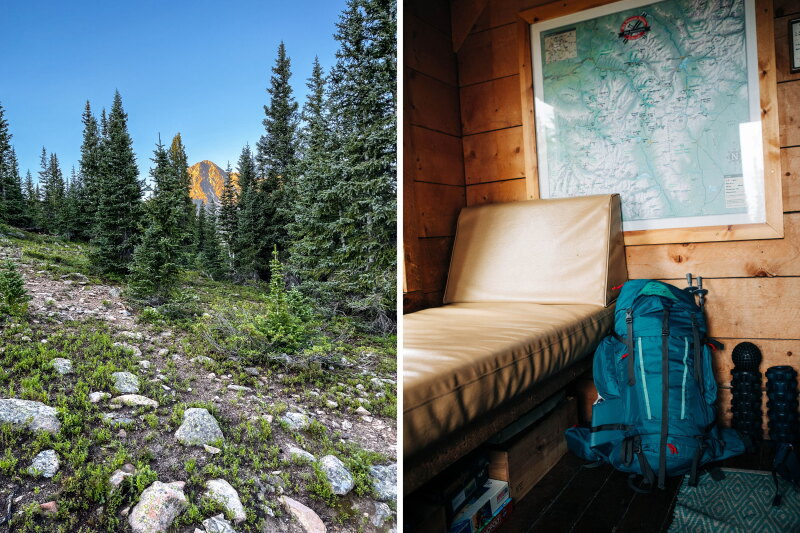
Near Vail, trek through Holy Cross Wilderness, onward to the humble beds at Polar Star Inn, and maybe finish at a fancy hotel like Gravity Haus Vail.
Photo by Letsgoforahike/Shutterstock (L); photo by Karthika Gupta (R)
Colorado’s hut-to-hut experience centers around remote cabins linked by trails throughout the Rockies. The system is run by the 10th Mountain Division Hut Association, inspired by World War II soldiers who trained here. There are 38 huts in total, 14 managed by 10th Mountain and 24 that are private or partner-owned. Spanning 350 miles, the shelters can be reserved online for hiking and skiing. The huts vary in style, but they generally have communal sleeping spaces and a shared kitchen. Some even have solar-powered lights but no electricity beyond that.
“Colorado huts differ from the European ones in that they’re not full-service,” says Floyd Wright, Colorado operations co-ordinator and guide with Wildland Trekking. He has hiked to many of these huts and explains that you bring your own food, carry your own essentials, and leave the hut the way you found it. “But they allow us to explore amazing places, while furnishing dry, warm sleeping accommodations in remote and somewhat inhospitable environments.”
How long is the trail?
Colorado’s hut system isn’t one continuous end-to-end hike but more of a “choose-your-own-adventure” trip across a network of trails to different huts. Many first-timers choose to do a long weekend, hiking in on day one, moving to a second hut on day two, and returning on day three.
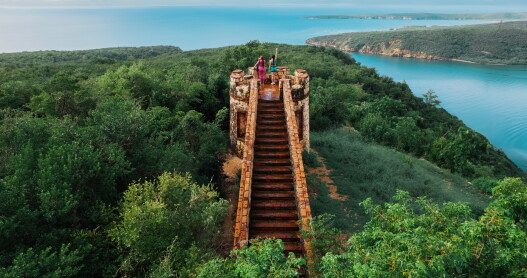
Daily mileage varies by route, with approximately 1,500 to 3,000 feet of elevation gain. Because many huts are situated at over 10,000 feet, altitude can be challenging. “Start early in summer, because afternoon storms are common in the Rockies and avalanche risk requires strong backcountry skills in winter,” cautions Wright.
Can you do shorter, easier versions?
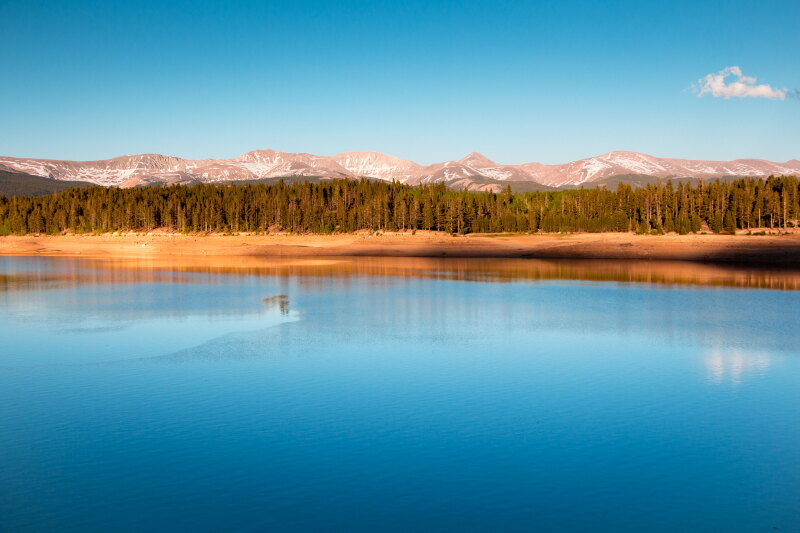
Some huts have stellar views, like those over Turquoise Lake.
Photo by Tampa/Shutterstock
One of the best parts of Colorado’s hut-to-hut trekking is its flexibility. You can link multiple huts or use one as a basecamp, staying a few nights and taking shorter day hikes without carrying a full pack.
“Shrine Mountain Inn’s huts have indoor plumbing and running water, so they are a classic first hut experience,” says Anna Kistner, reservations counselor at 10th Mountain. “And the Continental Divide Cabin is what we call ‘beginners and unders’—perfect for families with kids, since it’s less than a mile with gradual elevation.” She also suggests the route from Emmelyn Hut to Sangree M. Froelicher Hut for a multi-hut adventure.
Some routes have hotel options too, although the lodgings are a bit further from trailheads and are better to use mainly for preparing or post-hike recovery. Aspen is closest to Benedict Huts with stays at Hotel Jerome or the St. Regis Aspen Resort. Meanwhile, Gravity Haus Vail is a natural base near Shrine Mountain Inn, and Freight Leadville is a jumping-off point for Fowler-Hilliard Hut.
Once you’re in the system, the scenery is the real attraction. Skinner Hut is known for views of Turquoise Lake from its ridgeline perch, and Benedict Huts sit in an open valley where shifting light appears to constantly change the shape of the surrounding Elk Mountains. “The view is particularly stunning from their glass-covered outhouses,” says Kistner.
How to book the huts in Colorado
Reservations are essential, as popular huts book months in advance. Summer dates open in the fall, and winter reservations are staggered through a lottery system. It is best to check availability before planning your trip. “All huts have mattresses, pillows, stoves, and cookware, but confirm what’s provided before you arrive,” advises Kistner.
Night rates vary, but 10th Mountain huts like Janet’s Cabin or Vance’s Cabin cost about $40 per person per night, and kids 12 and under are half off. Others, like High Lonesome Hut, are $500 to $600 for the whole house and are ideal for groups.
Hire a guide to help you hike
For out-of-state travelers or anyone new to hiking above 10,000 feet, guided trips can be a smart introduction. Operators like Colorado Adventure Guides and Aspen Expeditions are approved by the 10th Mountain Association and handle logistics and safety, especially in winter. “Transport of packs is sometimes handled by porters, or in a few cases, driven in summer,” adds Wright. “But unlike full-service European huts, be prepared to cook your own meals.”
Is it worth it?
Colorado’s hut-to-hut trips fully immerse hikers in nature, as many of these cabins are in remote wilderness areas. Away from roads or businesses, the landscapes feel truly cinematic with jagged granite peaks, wildflower-filled valleys, and dramatic ridgelines. Instead of scrambling to pitch a tent as temperatures drop, you arrive at a warm hut ready to soak in the experience. As Wright says, “This mix of earned comfort in the rugged backcountry is what brings people back year after year.”


