Philadelphia

The country’s sixth-largest city, Philadelphia has long been a travel destination for families and history buffs. But Philly, or that “overlooked middle child” between New York and Washington, D.C., has only recently found its place as an arts and culinary destination. Visitors will find world-class galleries and museums, and premium food fare ranging from artisan chocolates to world cuisines. The city’s friendly row house neighborhoods are interspersed with parks, squares, and welcoming outdoor spaces on both the Delaware and Schuylkill rivers. And as anyone who’s watched Rocky knows, Philly locals are a proud bunch with an underdog spirit and an “atty-tood.”

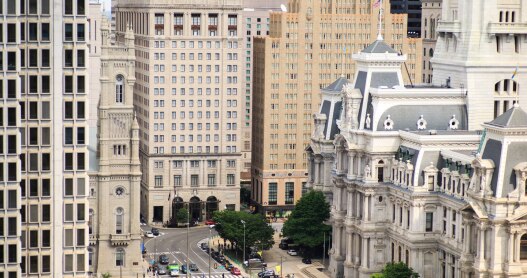
View of buildings in the Center City of Philadelphia, Pennsylvania.

Photo By Jon Bilous/Shutterstock

Overview

When’s the best time to go to Philadelphia?

Philly’s gorgeous parks and outdoor spaces are enjoyed year-round, though summer weather in the City of Brotherly Love can be oppressive during long stretches of humid days. Ideal times to visit are during spring and fall. Local parks and squares feature a multitude of flowering trees, providing lovely scenery in the spring and vivid colors in the peak of autumn. Winters in Philly are unpredictable and sometimes brutally cold. Those visiting in winter would be wise to choose a hotel in Center City to avoid transportation hassles in the event of a snowstorm.

How to get around Philadelphia

The Center City area is a 20-30 minute taxi ride from Philadelphia International Airport, depending on traffic. Taxis charge a required flat rate of $28.50 from the airport to central Philadelphia, which includes Center City and some outlying neighborhoods. The city’s public transportation system, SEPTA, operates a train line from the airport’s Terminal B with stops at several downtown stations.

While central Philadelphia is concentrated and easily walkable, those who plan to visit attractions in more remote neighborhoods can travel by SEPTA buses and regional rail lines. Bus fare is $2.50 and exact change is required. Tokens and day or weekly passes can be purchased at a discount. Taxis are easily available on downtown streets or at any hotel.

Can’t miss things to do in Philadelphia

There is no better introduction to the city’s outlying neighborhoods than a Mural Arts walking tour. Visitors get to see parts of the city that are truly off the beaten track while viewing an array of painted masterpieces gracing buildings all over Philadelphia.

Food and drink to try in Philadelphia

The Philadelphia restaurant scene is thriving and holds its own against any world-class city. Stand in Rittenhouse Square and you’re a stone’s throw from dozens of the city’s finest restaurants. For a top dining experience, choose one of the many restaurants of the city’s three culinary heroes—Jose Garces, Stephen Starr, and Marc Vetri. Philly’s Chinatown offers unlimited options for ethnic food. For a quick lunch or early dinner, the Reading Terminal Market provides endless choices—from standard local fare such as cheese steaks and hoagies to artisan grilled cheese and soul food.

Culture in Philadelphia

The keystone of Philadelphia’s thriving arts scene is the stately Philadelphia Museum of Art, recently bolstered by an annexed building across the street that enabled it to expand its already impressive exhibit space. Visitors should not miss the world renowned Barnes collection of priceless Impressionist paintings, recently transferred from the suburbs to stunning new digs on the Benjamin Franklin Parkway. But the jewel in Philly’s cultural crown is the city’s Mural Arts program, which has earned it the title of “Mural Capital of the World.” Visitors can take a trolley tour into various Philly neighborhoods to view buildings transformed by all manner of imaginative murals. Those interested in the local gallery scene should spend a day roaming 2nd and 3rd streets in Old City for an impressive array of original arts and crafts—two highlights of which are The Clay Studio and The Center for Art in Wood. Old City hosts a popular “First Friday” event, when the openings of new gallery shows are celebrated with wine and cheese.

The spring through fall seasons in Philly offer unlimited neighborhood street events like the 2nd Street Festival in Northern Liberties, the biannual Rittenhouse Square Fine Art Show, and gatherings of food trucks in Fairmount and other areas. Summer music festival highlights include July’s XPoNential Music Festival hosted just over the Delaware River in Camden by revered local public radio station WXPN, and the relatively new Made in America Festival on Labor Day weekend. Penn’s Landing on the Delaware River is host to frequent free events all summer long. And you won’t regret spending time strolling South 9th Street in mid-May, when the nation’s oldest outdoor market throws its annual Italian Market Festival.

Local travel tips for Philadelphia

Yes, Philly is a big city, but most of its historical and cultural attractions are located in Center City or along the Benjamin Franklin Parkway, an area that is eminently walkable. Finding parking in the city is difficult, making walking and public transit the less stressful alternatives. The Reading Terminal Market, a regular pit stop for grocery shopping or lunch, gets crowded during conventions and other large events nearby such as the annual Philadelphia Flower Show, so get to the market early. Locals wanting to stay tuned to the never-ending offerings of street festivals and events use the excellent website uwishunu, whose neighborhood and seasonal guides are invaluable.

Guide Editor

Sue Manuel is a self-taught artist and photography addict who is passionate about music, travel, and doughnuts. She is a regular visitor to New Orleans and her other favorite destinations include Hawaii, Latin America, Morocco, and New Zealand. When she is not exploring Philadelphia’s Fairmount Park by bike or with her dog Daisy, she is busy posting thousands of travel and Philly photos on various websites under the pseudonym lucymagoo.

READ BEFORE YOU GO
HOTELS
These hotel pools around the globe are worth building a trip around.
An immersive tale from The Notary Hotel, inspired by the curated experiences of Autograph Collection Hotels.
Autograph Collection Hotels bring their unique histories into the present—and make for immersive guest experiences.
RESOURCES TO HELP PLAN YOUR TRIP
Philadelphia’s City Hall is the largest and tallest city hall in the US, and for locals, the midpoint for all things Center City. Designed by architect John McArthur, Jr., it was completed in 1901 and originally designed to be the world’s tallest building, an honor that it held only briefly. There are over 250 ornamental marble statues decorating the exterior of the building, and it is topped off by a bronze statue of the city’s founder, William Penn, created by sculptor Alexander Milne Calder. (Trivia: The statue is 37 feet tall and weighs 53,348 pounds, and once wore a super-sized Phillies baseball cap; then some years later was dressed in a giant Flyers jersey.) Underneath the William Penn statue is a tower with an observation deck that offers incredible 360 degree views of the city (and the Schuylkill and Delaware Rivers, and New Jersey, and beyond!). This view, toward the southeast, captures the iconic PNB Building. Visitors can purchase timed tickets for the observation deck from the City Hall Visitor Center, Room 121 (east of the central courtyard).
There’s truly no other place in the world like this unique and disturbing museum. It’s probably best that photography is strictly prohibited inside, because that might spoil the bizarre surprises that wait for those who haven’t been yet. The Mütter is a medical museum in Center City that’s part of the College of Physicians of Philadelphia. Be forewarned: Its world-renowned collections are often somewhat disquieting—biological oddities, anatomical and pathological specimens, wax models, and antique medical equipment. (Wooden cabinets in one gallery hold drawers full of objects that people have swallowed!) The gift shop may be the most interesting museum store you’ll ever visit, and might be the only place that sells conjoined-twin cookie cutters.
Anyone visiting Philadelphia who plans to include the Museum of Art and/or the Fairmount Water Works in their itinerary should consider taking a little extra time to stroll along nearby Boathouse Row. The adventurous who have a bit more time can consider renting bikes and riding the recreational path that runs alongside the banks of the Schuylkill River. Many of the historic boathouses date back to 1860, and the last house on the row at #15, Sedgeley Club, is Philadelphia’s only operating lighthouse, built in 1887. The Schuylkill River and rowing are inextricably linked and the first recorded regatta on the Schuylkill took place in 1835. There is a regatta scheduled nearly every weekend from March through November, and to view the races you’ll need to venture a little further north on Kelly Drive, past the Girard and Columbia Bridges. For anyone who’d like to view or photograph the iconic illuminated boathouses after dark, the closest viewpoints would be either of the elevated gazebos behind the Art Museum, or the riverfront gazebo adjacent to the Water Works complex.
Laurel Hill Cemetery is a hidden gem that many locals don’t know about, and those who do have put it on their bucket list of places to go. The cemetery is also on many “first” lists: The first planned rural cemetery for the city. The first architecturally designed cemetery in the US. The first US cemetery designated a National Historic Landmark. A sprawling 78 acres of hillside overlooking the Schuylkill River, Laurel Hill is now within the city limits but when conceived in 1836, this area was considered a rural suburb. Laurel Hill was the final resting place for Victorian gentry, Civil War generals, a signer of the Declaration of Independence (who was re-buried here), architects, spiritualists and industrialists, and local hero and beloved Phillies sportscaster Harry Kalas (on whose grave are blue seats from the old Veterans Stadium). To appreciate the architecture of the tombstones and mausoleums, visitors can wander the winding paths on a self-guided tour. Download a map from the website or get one in the gift shop (Yes! There is a charming gift shop). Or consider checking the website for unique and informative tours, held year-round. Spring and fall are the best times to go; the grounds are elegantly landscaped and maintained. If you drive, there is a parking lot across from the cemetery’s gatehouse entrance. By public transit, Septa’s Route 61 bus from Center City stops near the entrance. There is a small museum across from the gift shop that shouldn’t be missed.
There is much mystery surrounding Hop Sing Laundromat, an intimate take on the secret speakeasy. No sign marks the entrance, on Race Street in Philly’s Chinatown, only a locked gate and a doorbell. This craft cocktail lounge is brimming with dark atmosphere, wonderful music, and a menu of mind-bendingly creative libations. My drink of choice is the Hotel Nacional, a tropical tribute to the legendary hotel in Havana. Mixed with 15-year special reserve rum, apricot liqueur, fresh pineapple juice, and more, its sublime deliciousness quickly erases the list of ingredients from memory. Drinks range from $12 to $14, and some of the other creative concoctions include the Hemingway Daiquiri, Philly Colada, General Tso’s Chocolate Shake, Memphis Mystery Train, and Captain Kirk. This is not just a bar, it’s an experience, and worthwhile to sit at the bar and watch the talented bartenders in action. Key details to know in advance: bring ID and cash (no credit cards), and dress presentably (the dress code prohibits flip flops, sandals, sneakers, shorts, hats). Don’t arrive hungry, since no food or snacks are served. And be warned: the house rules do not allow chatting on cell phones or taking pictures. Those who violate the dress code will be turned away at the door and those who don’t follow the rules will be asked to leave. Good to know the rules in advance, because this is an experience that shouldn’t be missed. Open 5 pm to 2 am.
Since 1993, Philadelphians Wendy Born and James Barrett have shown a deft hand in the kitchens of their multi-location Metropolitan Bakery. Artisanal breads – able to rival any venerated loaf from Europe– are their claim to fame but their cookies, cakes, croissants and locally-sourced jams and spreads are equally as divine. They have several locations in Philadelphia, including my favorite in Chestnut Hill a bit further afield, but consistency is assured in each outpost. You can also expect to see the duo’s vision (and baked goods) played out at FARMiCiA, the organic/local restaurant they co-own in Old City. If you have a hankering for something sweet, don’t leave without picking up one of their toothsome chocolate chip cookies (or a few).
This historic market has been in operation since 1892, and is beloved by locals as a destination for lunch, grocery shopping, or buying regional gifts at the Pennsylvania General Store. More than 70 businesses sell fresh wares here, including ice cream, cookies, meat, seafood, produce, Mexican cuisine, and artisanal grilled-cheese sandwiches—just to name a few. Philadelphians line up daily for just-baked goods from the Amish-owned Beiler’s Bakery, which also runs a separate doughnut stand in the Pennsylvania Dutch section of the market. The market’s location, across the street from the Pennsylvania Convention Center, can mean throngs of visitors on convention days; try to get to the market as early as possible to avoid the crowds.
Pizza Brain, located on Frankford Avenue in Fishtown, bills itself as the world’s first pizza museum and restaurant. With pizza-related toys, artwork, and memorabilia on display around the eatery, fine dining becomes fun dining. An added bonus? An outpost of Little Baby’s Ice Cream—revered around Philly for its handcrafted batches of exotic ice cream flavors—is right next door, making this the perfect address for kids and foodies of all ages. The geniuses behind Pizza Brain have now opened a second restaurant, Pizza Dads, in Brewerytown. Both locations are BYOB.
Philly visitors, don’t miss a stop at Pennsylvania’s most-visited museum, the Franklin Institute. Allow ample time to make your way through its multiple floors, where entertaining and hands-on educational displays await. Crowd-pleasing permanent exhibits include a 350-ton locomotive, a giant walk-through heart, flight simulators, a high-wire bike, and fun interactive areas covering electricity, sports, machines, motion, and technology. The museum also includes an observatory, planetarium, and IMAX theater. The institute frequently hosts after-hours events, most notably star-gazing, and recently opened two escape-room-type attractions.
Visitors seeking an immersive-history experience can get a chance to travel back in time and check out the homes, stories, and daily routines of early Philadelphians, from everyday citizens to the city’s better-known inhabitants from the past. Buildings along Elfreth’s Alley, the country’s oldest continually occupied residential street, reveal the lives of the city’s earliest residents. Most of the houses on the block are private homes, but houses numbered 124 and 126 have been preserved as a public museum. Guided tours begin in the Museum Shop (Number 124). Private tours of the Alley and Museum House are available all year round.