New Orleans

New Orleans, on Lousiana’s Gulf Coast, is never short of an excuse to laissez les bon temps rouler—and the city’s popularity has been driven by what the Big Easy does best: eating, drinking, and being merry. The French Quarter has plenty to entertain beyond the neon-lit Bourbon Street, so it’s worth exploring the city’s outlying neighborhoods, from the manse-lined streets of Uptown to the boho Bywater. And one need only wander into any of the bars along Frenchmen Street to be convinced that New Orleans’s musical heritage beats on—and that no matter how small the venue, there’s always room to dance.

NEW ORLEANS, LOUISIANA USA- FEB 2 2016: An unidentified  local jazz band performs  in the New Orleans French Quarter, to the delight of visitors and music lovers  in town.

Jazz spills out onto the street everywhere across New Orleans.

Photo By GTS Productions/Shutterstock

Overview

When’s the best time to go to New Orleans?

Mardi Gras, Essence Festival, and Jazz Fest, the city’s biggest events, take place in winter, summer, and spring. Though summer brings fewer crowds due to the heat, it’s worth considering a nonpeak trip to avoid the tourist throngs and exorbitant hotel rates. August’s Satchmo Festival is a celebration of native son Louis Armstrong, while the holiday season brings bonfires, Reveillon dinners, and caroling in Jackson Square.

How to get around New Orleans

New Orleans’s Louis Armstrong International Airport is about 25 minutes from the French Quarter by taxi. The fare is a flat rate of $36 for the first two passengers, plus a $15 surcharge for each additional person. Airport shuttles are slightly more—$30 for a one-way ticket, $56 round-trip—and run every half-hour or so to hotels and other locations.

The French Quarter is easily navigated on foot, and the city’s streetcars can be useful if you’re planning to explore well-trodden parts of the city like the Garden District, City Park, and the Superdome; a day pass costs $3. For everywhere else, taxis are readily available.

Can’t miss things to do in New Orleans

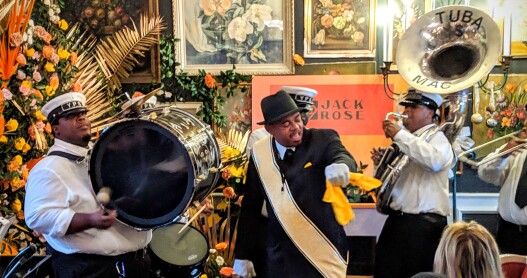
If you’re within earshot of a brass band, chances are good it’s a second line; drop anything you’re doing and follow that sound—you won’t be sorry. Or head over to Congo Square in Treme, the epicenter of Black culture and music in the city.

A crawfish boil—ideally in someone’s backyard—is an iconic New Orleans pastime. If you don’t have a backyard to borrow, pick up crawfish, potatoes, corn, and sausage from KJean’s, and head to City Park.

Food and drink to try in New Orleans

New Orleans’s already renowned restaurant scene has only gotten stronger over the years. Restaurants that are shaking up the old guard, jazzing up Cajun classics, and bringing new flavors to the forefront include Mid-City’s Heard Dat Kitchen and Senegalese-inspired Dakar Nola. Lunching at Commander’s Palace (when martinis are a 25 cents apiece at lunch on certain days) or queuing for fried chicken at Willie Mae’s Scotch House is essential—but so are whole grilled fish at Donald Link’s Peche, globally inspired street food at Booty’s, and cocktails at Cure.

Culture in New Orleans

In Cajun cooking, the holy trinity is a riff on mirepoix that refers to onion, celery, and bell peppers and is the base for iconic dishes from gumbo to jambalaya. If the city of New Orleans had a holy trinity, it would be food, music, and the Saints. To understand the city’s culture, go for Friday lunch at Galatoire’s, grab a bench at Preservation Hall, and catch a game at the Superdome. There’s also a burgeoning gallery scene along Julia Street and a handful of worthwhile museums, including the Contemporary Arts Center and the National WWII Museum.

New Orleans is a city that likes to get its party on, and its festivals are nothing short of epic. The most famous are Mardi Gras and Jazz Fest, but also of note are alternative music festivals like Satchmo Summerfest and Crescent City Blues and BBQ, plus the (free) French Quarter Festival. Even if you don’t plan your trip around a special event, there’s almost always a parade or a party going on somewhere in the Big Easy.

Local travel tip for New Orleans

The French Quarter—Bourbon Street in particular—is where the tourists go. If you’re a native, chances are you’re hanging out elsewhere.

READ BEFORE YOU GO
HOTELS
From lobby bars to rooftop lounges, these are the hotel bars Afar editors love checking out when they’re checking in.
Carnival season is here, but there’s still time to make reservations for a last-minute trip to the Big Easy.
The New Orleans City Council just unanimously voted to place heavy restrictions on short-term rentals throughout the city. Here’s what it means for travelers.
The Ace Hotel Group just announced plans to open Maison de la Luz in New Orleans as part of its new luxury spin-off brand.
RESOURCES TO HELP PLAN YOUR TRIP
Occupying what were the Maison Blanche department store and the S.H. Kress & Co. five-and-dime, this stately hotel first opened its doors in 2000 after a $250 million overhaul of the then-shuttered Beaux-Arts buildings. After Katrina, the property underwent a second renovation, which included the expansion of its spa (now a sprawling 25,000 square feet) and the addition of a private entrance for Club level guests.

This is a Ritz-Carlton, so you can expect the same (high) level of service and luxury—think ornate furnishings, sumptuous linens, and a $3.5 million art collection—as at other properties within the brand. But the property isn’t just another Ritz. Bellmen wear seersucker, the bistro serves po’ boys, and there’s live jazz in the lounge (which also serves a mean Vesper).
Opened in April 2001, this Central Business District property, a converted dry-goods warehouse, is a departure from the typical New Orleans hotel. Instead of fleur-de-lis wallpaper and Louis XIV chairs, you’ll find Fortuny lamps, Herman Miller desk chairs, and Agape “Spoon” tubs in the palatial bathrooms. The 18 lofts (two are penthouses), with their white walls, concrete floors, and modern furnishings, feel straight out of the pages of Dwell.

The hotel doesn’t have the amenities of a larger hotel; the lobby is meant for checking in, not hanging out, and there’s no restaurant or bar to prop up, but guests have privileges at the sister hotel, International House. And, most significantly, the fact that there are just 18 rooms means that from the minute you check in, the front desk team knows you.
Opened in January 2012 in the historic Audubon Building on Canal Street, this cheeky newcomer is a departure from the New Orleans hotel scene (which tends toward the traditional). Its motto, “Play Naughty, Sleep Saintly,” appropriately captures the property’s saucy, sultry vibe, especially in the bordello-like Burgundy Bar and in the five suites, added in 2014 and named after the archangels Christopher, Michael, Gabriel, Raphael, and Lucifer. By comparison, the restaurant, with its white walls and banquettes paired with antique chandeliers and local artwork, is more demure. Standard rooms are similarly minimalist—though without sacrificing comfort or any of the usual modern conveniences, including 46-inch flat-screen televisions and free Wi-Fi.
Opened in April 2015, this is one of the newest additions to New Orleans’ hotel scene. It’s also one of the most unique. Set in an 1854 warehouse near the Port of New Orleans, the property pays homage to its past as well as to its Arts District location. The look is contemporary industrial, with plenty of original architectural details (hardwood floors, exposed piping and brick, wall-to-wall windows) paired with Tivoli radios, flat-screen TVs, free Wi-Fi, and other modern conveniences. The hotel lobby is part art gallery, with a rotating collection curated by the New Orleans Center of Creative Arts, part commissary, with locally crafted products displayed in chandlery cases, and part coffee shop, with pastries from the neighboring restaurant—which is one of the hottest openings this year.

Compere Lapin (French for “brother rabbit” and also a fictional character in Caribbean and Creole folk tales) serves food that draws on chef Nina Compton’s island roots, classic French training, and traditional Creole fare. The result is wonderfully colorful dishes like conch croquettes with pickled pineapple tartare sauce, roasted jerk corn with aioli and lime, and curried goat with plantain gnocchi and cashews.
First opened in 1893 as Grunewald Hotel, this historic building stretches an entire city block and has a storied past that’s equally expansive. The Roosevelt has played host to presidents and senators, duchesses and dignitaries, actors and actresses. Huey Long kept a suite here in the 1930s and could often be found propped up at the Sazerac Bar (where his go-to cocktail was the Ramos Gin Fizz). Entertainers from Ella Fitzgerald and Frank Sinatra to Tina Turner and Ray Charles have performed in the Blue Room.

A $145 million rehab, completed in 2009, restored the hotel to its former glory. Now part of the Waldorf Astoria Collection, the property combines the grandeur of yesteryear with all the trappings of a modern luxury hotel—including a lavish Waldorf Astoria Spa and a hip Italian eatery.
I forgave the service (slow as molasses) at Donald Link’s newest seafood spot, Peche, where highlights included crab-and-chilies capellini, fried bread, and fish sticks. Go with a crowd and order everything.
Plan on spending the better part of a day at the National World War II Museum, even if you profess limited interest in history. This fine, sprawling museum—formerly the D-Day Museum—is affiliated with the Smithsonian Institution, and was established here because of the role the locally made Higgins landing craft played on D-day. Don’t expect the usual repository of static artifacts, like machine guns and airplanes—although you will find those on display. It’s more about gathering stories, from film and oral histories, and from all sides of the conflict. The museum was the idea of Stephen Ambrose, noted author of books about WWII, who wanted to share with the public the interviews that didn’t make it into his books. It’s grown massively since its humble beginnings, and does a remarkable job of capturing the era through both a microscope and wide-angle lens.
This gem right off Bourbon Street is close to the action but far enough (and insulated enough) to make you feel like you can get away from the frenetic pace of the city’s most famous avenue at a moment’s notice. Guest rooms are well-appointed and comfy, with plantation-shuttered windows, plush beds and sleek bathrooms. Plus, every guest gets a voucher for a welcome drink in the hotel’s smoke-free bar, the Bourbon O. Be sure to catch live music there on Friday nights, as well as bartender Cheryl Charming, whom a local magazine named Mixologist of the Year in 2014. Back at the hotel, the Roux on Orleans restaurant can satisfy breakfast, lunch and dinner desires, and a heated saltwater pool makes lazing about in a lounge chair all day very, very easy. But if you want to be the ultimage envy of Bourbon Street revelers, make sure to reserve a balcony suite; it features a porch overlooking all the boozy revelry below and lets you party above the action.
New Orleans’ green spaces run the gamut from City Park, which spans 1,300 acres and is the 6th largest urban park in the United States, to the city block-sized Jackson Square, a French Quarter gathering point for artists, musicians, and street performers. The former has walking trails, botanical gardens, and an open-air sculpture garden, plus tennis courts, an 18-hole golf course, and a mini-golf course, but most come to see the world’s oldest grove of mature live oaks. Uptown’s Audubon Park is frequented by walkers, joggers, and cyclists who make their way around the park’s 1.8 mile loop—and it’s also home to the Audubon Zoo.
“Well, we’ll see about that!” loudly harrumphs an endless of stream of out-of-town customers, eager to challenge the claim that Willie Mae’s makes “the world’s best fried chicken.” They’re usually much quieter when they depart—invariably cowed into silence by the spicy, armor-plated crust surrounding strikingly moist meat. Not a chicken lover? You can also dig into pork chops, veal, or catfish at this iconic (if out-of-the-way) neighborhood institution in Treme, a five-minute taxi ride out of the French Quarter. Willie Mae herself is no longer at the helm, but her granddaughter has taken over and seems to guard its reputation as tightly as she does the family chicken recipe.