New Orleans

New Orleans, on Lousiana’s Gulf Coast, is never short of an excuse to laissez les bon temps rouler—and the city’s popularity has been driven by what the Big Easy does best: eating, drinking, and being merry. The French Quarter has plenty to entertain beyond the neon-lit Bourbon Street, so it’s worth exploring the city’s outlying neighborhoods, from the manse-lined streets of Uptown to the boho Bywater. And one need only wander into any of the bars along Frenchmen Street to be convinced that New Orleans’s musical heritage beats on—and that no matter how small the venue, there’s always room to dance.

NEW ORLEANS, LOUISIANA USA- FEB 2 2016: An unidentified  local jazz band performs  in the New Orleans French Quarter, to the delight of visitors and music lovers  in town.

Jazz spills out onto the street everywhere across New Orleans.

Photo By GTS Productions/Shutterstock

Overview

When’s the best time to go to New Orleans?

Mardi Gras, Essence Festival, and Jazz Fest, the city’s biggest events, take place in winter, summer, and spring. Though summer brings fewer crowds due to the heat, it’s worth considering a nonpeak trip to avoid the tourist throngs and exorbitant hotel rates. August’s Satchmo Festival is a celebration of native son Louis Armstrong, while the holiday season brings bonfires, Reveillon dinners, and caroling in Jackson Square.

How to get around New Orleans

New Orleans’s Louis Armstrong International Airport is about 25 minutes from the French Quarter by taxi. The fare is a flat rate of $36 for the first two passengers, plus a $15 surcharge for each additional person. Airport shuttles are slightly more—$30 for a one-way ticket, $56 round-trip—and run every half-hour or so to hotels and other locations.

The French Quarter is easily navigated on foot, and the city’s streetcars can be useful if you’re planning to explore well-trodden parts of the city like the Garden District, City Park, and the Superdome; a day pass costs $3. For everywhere else, taxis are readily available.

Can’t miss things to do in New Orleans

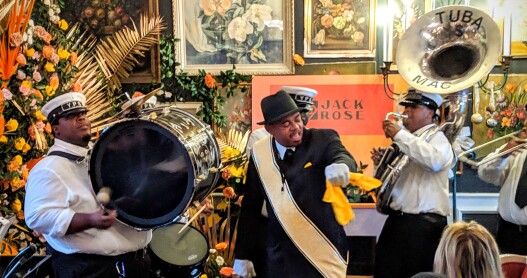
If you’re within earshot of a brass band, chances are good it’s a second line; drop anything you’re doing and follow that sound—you won’t be sorry. Or head over to Congo Square in Treme, the epicenter of Black culture and music in the city.

A crawfish boil—ideally in someone’s backyard—is an iconic New Orleans pastime. If you don’t have a backyard to borrow, pick up crawfish, potatoes, corn, and sausage from KJean’s, and head to City Park.

Food and drink to try in New Orleans

New Orleans’s already renowned restaurant scene has only gotten stronger over the years. Restaurants that are shaking up the old guard, jazzing up Cajun classics, and bringing new flavors to the forefront include Mid-City’s Heard Dat Kitchen and Senegalese-inspired Dakar Nola. Lunching at Commander’s Palace (when martinis are a 25 cents apiece at lunch on certain days) or queuing for fried chicken at Willie Mae’s Scotch House is essential—but so are whole grilled fish at Donald Link’s Peche, globally inspired street food at Booty’s, and cocktails at Cure.

Culture in New Orleans

In Cajun cooking, the holy trinity is a riff on mirepoix that refers to onion, celery, and bell peppers and is the base for iconic dishes from gumbo to jambalaya. If the city of New Orleans had a holy trinity, it would be food, music, and the Saints. To understand the city’s culture, go for Friday lunch at Galatoire’s, grab a bench at Preservation Hall, and catch a game at the Superdome. There’s also a burgeoning gallery scene along Julia Street and a handful of worthwhile museums, including the Contemporary Arts Center and the National WWII Museum.

New Orleans is a city that likes to get its party on, and its festivals are nothing short of epic. The most famous are Mardi Gras and Jazz Fest, but also of note are alternative music festivals like Satchmo Summerfest and Crescent City Blues and BBQ, plus the (free) French Quarter Festival. Even if you don’t plan your trip around a special event, there’s almost always a parade or a party going on somewhere in the Big Easy.

Local travel tip for New Orleans

The French Quarter—Bourbon Street in particular—is where the tourists go. If you’re a native, chances are you’re hanging out elsewhere.

READ BEFORE YOU GO
HOTELS
From lobby bars to rooftop lounges, these are the hotel bars Afar editors love checking out when they’re checking in.
Carnival season is here, but there’s still time to make reservations for a last-minute trip to the Big Easy.
The New Orleans City Council just unanimously voted to place heavy restrictions on short-term rentals throughout the city. Here’s what it means for travelers.
The Ace Hotel Group just announced plans to open Maison de la Luz in New Orleans as part of its new luxury spin-off brand.
RESOURCES TO HELP PLAN YOUR TRIP
Ralph Brennan’s Red Fish Grill pairs eclectic, of-the-sea décor with some of the best seafood in town. Don’t miss the BBQ oysters with Crystal Hot Sauce and blue cheese dressing. Next door, Bourbon House is known for its towering plateaux de fruits de mer, which comes with oysters with caviar, boiled Gulf shrimp, mussels, crab fingers, and seafood salad, and its impressive bourbon selection. Donald Link’s latest endeavor, Peche, is to seafood what Cochon is to pork. On Magazine Street, Casamento’s is an institution for its oyster loaf and fried seafood platters, plus it’s fun to watch the hulking shuckers tackle piles of just-off-the-boat bivalves.
The fragrant, pleasingly cluttered Central Grocery is a holdover from an era when Italian-run groceries occupied storefronts throughout the city. This timeworn shop across from the French Market still boasts an old-world charm, filled with tall shelves crowded with imported goods and various whatnots, mostly Italian. But that’s not why you’ll see lines out the doors. The crowds are clamoring for muffulettas, classic New Orleans sandwiches that originated here about a century ago. (Slogan: “Imitated by many, but never duplicated.”) A muffuletta comes on a type of round, flattish loaf (not unlike a focaccia) that originated in Sicily. The details may vary, but it typically includes cured meats (capicola, salami) and cheese (provolone). What distinguishes it from a hubcap-shaped hoagie is the topping—a tangy marinated-olive salad. Know this: You don’t need to order a whole one; a quarter-sandwich is still plenty filling for one person.
Chef Tory McPhail was recently named James Beard’s Best Chef South and his forward-looking take on Creole classics keeps this New Orleans institution, which has launched the careers of the likes of Paul Prudhomme and Emeril Lagasse, current. Still, you can’t go wrong with classics like the turtle soup, gumbo, and bread pudding souffle. On Saturday and Sundays, there’s more pomp than usual, including a jazz trio that makes its way from table to table, but weekday lunches are nearly as iconic and, thanks to 25-cent martinis, a good reason to have a midday cocktail.
When it comes to po’ boys, everyone has his/her favorite spot. Mine has always been Domilise’s--until I went to Parkway Bakery & Tavern on my way back from City Park. Like Domilise’s, it’s off the beaten path, but well worth it. I ordered the roast beef po’ boy and, since it was the special, the fried pickles. I suggest you do the same. I tripled bagged the duo and made my way back to my hotel. There, I unpacked my goods and found my po’ boy still very much intact and my pickles crisp, warm, and tangy.
Po’boys are on just about every New Orleans visitor’s list of must-eats. They’re a longtime local favorite—built on long, thin-crusted bread that is satisfyingly audible on first bite. Killer Poboys embraces tradition and then adds to it, with inventive fillings that go beyond the traditional roast-beef-and-fried-oyster, like rum-glazed pork belly with lime coleslaw, or roasted sweet potato with a black-eyed-peas-and-pecan spread. Two locations are around the corner from one another in the French Quarter; one of them operates in the back of the Erin Rose bar. If it’s not too busy, order your sandwich there and enjoy it with a frozen Irish coffee.
Donald Link’s “swine shop” (part wine bar, part butcher, part sandwich spot) is a meaty addendum to the Cajun chef’s pork-centric Cochon (around the corner). You can’t go wrong with the always-on-the-menu muffaletta or the pork belly on white bread with cucumber-mint salad and chili-lime aioli, but, on my most recent visit, I opted for the Gambino. Link’s take on the classic Italian sub is a serious undertaking with three types of house-cured meats—coppa, cotta, and soppressata—plus arugula and a herby vinaigrette on perfectly crunchy ciabatta.
The three floors of art on display at the Ogden, one of a handful of museums in the city’s off-the-radar museum district near Lee Circle, run the gamut from Clementine Hunter’s paintings of plantation life to Shelby Lee Adam’s photographs of Appalachia. The medium varies, but everything on display has some tie to the South.
Every city worth its salt has at least one great pizza joint. So why go out of your way to visit this one? Three reasons: (1) the pizza, (2) the neighborhood, and (3) the pizza. The eatery started as a delivery pop-up, with thin-crust pies made in a shared kitchen, and its hours and phone number shared among Bywater residents like state secrets. The name proved as accurate as it was uncreative; demand was vast, and the place finally landed its own spot. Pizza Delicious doesn’t attempt to be cute or overly wry with toppings, but it sets itself apart with fresh ingredients and an eye to perfection. Pro tip: Get a pie to go and head over the arching footbridge at the end of the block and enjoy dinner at Crescent Park with its waterfront view.
Tattooed, yoga mat-toting hipsters frequent this Bywater haunt for its locally roasted coffee, kale salads, and just-pressed juices. And on select weekday nights, the space plays host to a pop-up called Twilight Tacos. The succinct menu includes four different tacos (raisin thyme chicken with mole, purslane, and queso fresco, perhaps, or braised pumpkin, chard, and poblano salsa with toasted pepitas), plus rice and beans, chips and salsa. It’s BYOB, but the house lemonade and limeade are made for mixing, as are craft syrups like pineapple-jalapeno.
A local friend recommended Cake Cafe in the Bywater, so a friend and I stopped for lunch after exploring all afternoon. The humble bakery has some of the best sandwiches I’ve ever had, including my favorite, the crab sandwich, pictured here. It’s challah bread with crab meat, brie, bacon and spinach. It seems like a steep price for a sandwich, but worth every bite. Cake Cafe started as a bakery that sold all manners of sweets, but specialized in king cake, a Mardi Gras tradition. They became so popular that the store expanded to include other food items. Whatever you order, be sure to finish it off with dessert.