Amsterdam

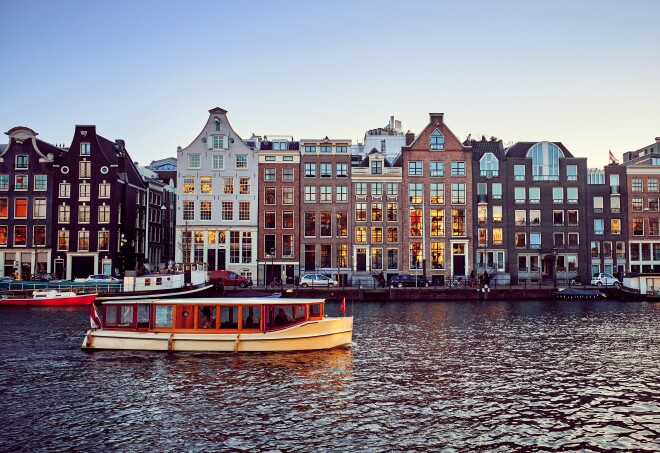
With its Golden Age canals, 17th-century mansions, world-class museums, and well-established counterculture, Amsterdam is a European capital with an edge. While some come for tulips, cheese, and windmills, others are drawn by the city’s reputation for easy sex, drugs, and rock ’n’ roll. Whatever brings you to this charismatic global village, you’re sure to be charmed by its fairy-tale landscapes, tolerant vibe, and historical legacy that harks back to the small, 13th-century fishing village on the Amstel River that would become an international capital.

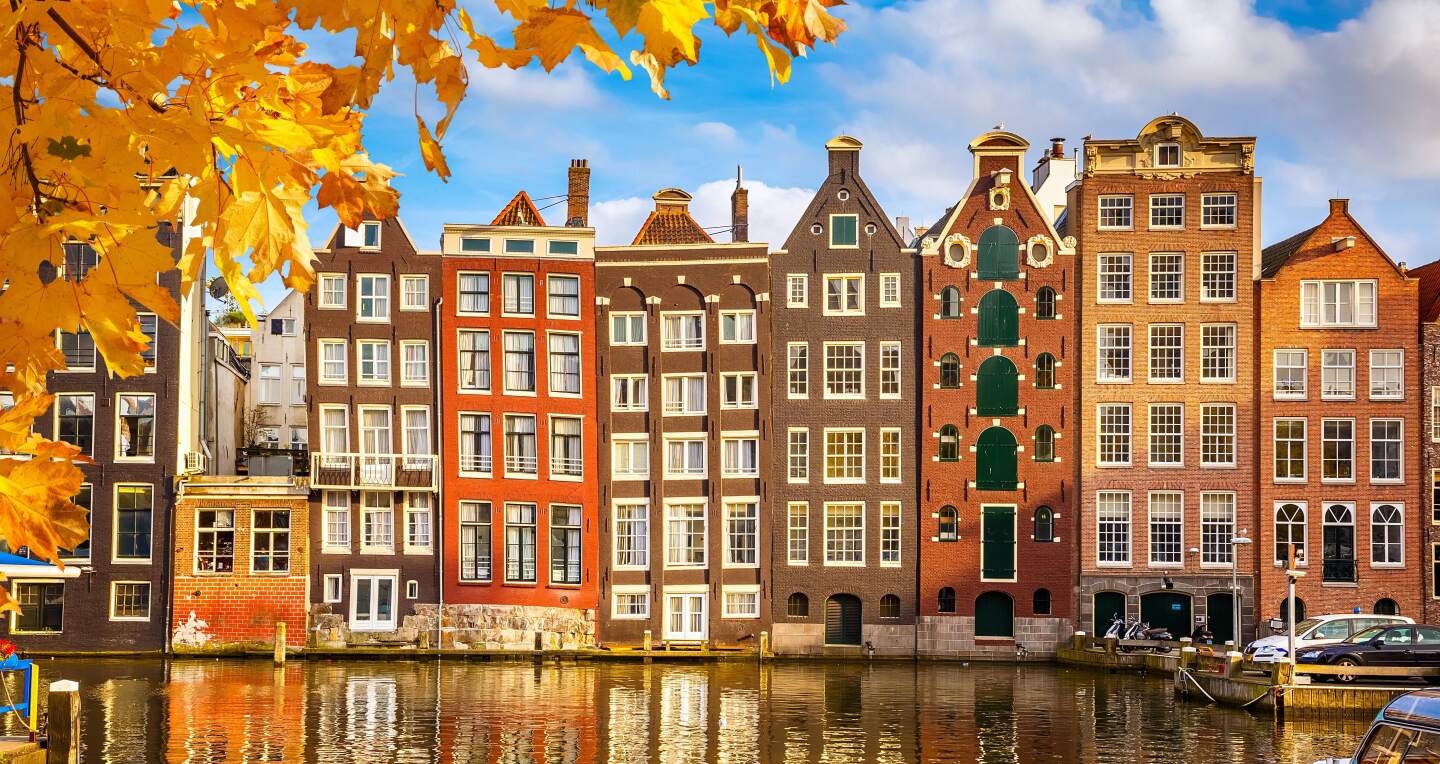
Amsterdam canal at fall, several tall little houses in a row next to the river canal

Sergey Borisov / Alamy/Alamy

Overview

When’s the best time to go to Amsterdam?

Winter may be cold (with January and February the coldest months), but tourists are gone and locals have reclaimed the town. Before the holidays, In Leidseplein and Rembrandtplein, two of the city’s open squares, skating rinks and oliebollen stands appear (oliebollen are the local doughnuts). Twinkling lights decorate bridges; seasonal trimming transform streets into fairy-tale lanes. Amsterdam Fashion Week sashays through town in January, drawing international style-makers. In the spring, tulips bloom, flowers spill over balconies, tourists jam museums, and locals celebrate the lengthening days. Millions arrive to viist Lisse’s Keukenhof, a stunning flower garden. Summer means picnics in Vondelpark, Museumplein, Amsterdam Bos, and all the city’s green spaces. During Open Garden Days in June, many canal houses open private courtyards for viewing. Outdoor concerts and festivals abound, restaurant patios overflow with diners, and locals head to urban beaches. In the fall, as the leaves change color, Amsterdam ushers in the cultural season. New exhibits open at galleries and museums and opera season kicks off.

January: Amsterdam International Fashion Week February: Chinese New Year Festival March: Amsterdam Restaurant Week April: Koningsdag (King’s Day, formerly Koninginnedag or Queen’s Day) May: Art Amsterdam (previously Kunst RAI) June: Holland Festival, Vondelpark Open Air Theater, Taste of Amsterdam, Nuit Blanche, Open Garden Days July: Amsterdam Roots Festival, Kwakoe Zomer Festival August: Robeco Summer Nights, Gay Pride, Grachtenfestival; Pluk De Nacht, Sail Amsterdam, Uitmarkt September: Open Monument Days, Jordaan Festival, Amsterdam Restaurant Week October: Amsterdam Dance Event, Amsterdam Marathon November: Museum Night, Amsterdam Antique Fair, High Times Cannabis Cup, International Documentary Film Festival, Sinterklaas arrives

How to get around Amsterdam

Amsterdam is an international hub for many airlines. Flights arrive at Schiphol, which is about half an hour from the city center by public transportation. Trains arrive at Central Station, where countless connections to the rest of the Netherlands and all of Europe are available. Eurostar buses terminate at Amstel Station. Boat travel is an option for U.K. and Scandinavian travelers, via P &O North Sea Ferries, Stenaline, and Scandinavian Seaways. City parking is rare and expensive. If you must arrive by car, take the A10 Ring into town from any major freeway.

Amsterdam is among the most compact of the world’s major cities, making it easy to get around by foot or bike. An excellent system of GVB trams and buses facilitates travel throughout the city and beyond. A metro line connects Centrum with the suburbs.

Can’t miss things to do in Amsterdam

There’s no sign, no agenda, and no boundaries at Supperclub, where it’s always a memorable evening. From the Salon Neige, where you’ll dine like a sultan to the gay urinal that doubles as a smoking room, this is experimental fun unfettered by convention. Expect eclectic cuisine and entertainment from the seductive to the bizarre, encompassing vaudeville, burlesque, and cabaret.

Food and drink to try in Amsterdam

Holland is known for hearty comfort food, not haute cuisine. Yet its capital competes with the best of Europe on the dining front with nearly 1,500 options, from Michelin-starred restaurants and historic watering holes to gay cafés and Irish pubs. Amsterdam’s culinary melting pot includes diverse fare encompassing Indonesian rijstaffel, Spanish tapas, and Dutch favorites such as stamppot, bitterballen, and pannekoeken. Sample Asian flavors in Chinatown, near Nieuwmarkt, or cruise Haarlemmerstraat, Utrechtsestraat, or Reguliersdwarsstraat for dining options. Avoid touristy Leidseplein. On the street, try Vlaames frites—twice-fried potatoes smothered in mayo—or raw herring served with pickles and onions. Turkish pizza is popular, as are gyros, reflecting Middle Eastern influences. In the wee hours, buy a kroquet or burger from coin-operated windows at FEBO (the Dutch fast-food automat chain), where you’ll see locals trying to be inconspicuous as they grab a late-night snack. Heineken and Amstel are the local beers. For a stiffer drink, try Dutch jenever, which is juniper-flavored gin.

Culture in Amsterdam

With classical music at Concertgebouw, theater at Stadsschouwburg, jazz at Bimhuis, contemporary music at Muziekgebouw, and cabaret at Royal Theater Carré, Amsterdam’s cultural scene offers plenty of variety. Renowned pop and electronic music venues include Air, Melkweg, Paradiso, Sugar Factory, and Escape.

AFAR’s travel partner, Context, offers visitors a private tour, led by a local historian, artist, or architect, of the city’s streets and canals called The Dutch Golden Age, with a focus on how a relatively small Amsterdam came to hold a global position of power in the 1600s.

Local travel tips for Amsterdam

  • Never buy drugs from street dealers.
  • Urinating on the street will cost you €60.
  • Taxi drivers may rip you off unless you know exactly where you’re going.
  • Don’t overtip for inferior service at Dutch bars and restaurants.
  • Establishments along Damrak and in Leidseplein are touristy, overpriced, and often mediocre.

Guide Editor

READ BEFORE YOU GO
HOTELS
Once an orphanage and Palace of Justice, Rosewood Amsterdam is the Dutch capital’s most anticipated new hotel—and one of the city’s last debuts for a while.
A Boeing 737-800 is the main draw of the 1,200-square-foot suite at the Corendon Amsterdam New-West, and the whole room has been recently refurbished to be even cooler.
A recent announcement included numerous measures aimed at controlling what has become an irrepressible flood of visitors.
Who needs a hotel lobby when the city—and its canals—are right on your doorstep?
RESOURCES TO HELP PLAN YOUR TRIP
Amsterdam isn’t known for great service, but this casual restaurant inside the Kimpton De Witt hotel is a welcome exception. In the spacious, modern dining room, the friendly, attentive staff serves up an international menu that particularly excels at wood-fired dishes, including octopus, swordfish, and steaks. An American-style Sunday brunch includes chicken and waffles, avocado toast, and unlimited Bloody Marys and Mimosas.
Rembrandt purchased this sizable former merchant’s house in 1639, when he was at the peak of his fame as a portraitist of the city’s elite. He lived, painted, and taught in the multistory building for nearly 20 years, and on the topmost floor—the site of his studio and workshop—crafted what is considered his masterpiece, the Night Watch. The home’s interior is not original but rather a faithful re-creation, based upon a room-by-room inventory conducted after the artist declared bankruptcy in 1656 and was eventually forced to leave. Be sure to catch the free daily paint-preparation and etching demonstrations; the former is particularly interesting to understand how difficult—and expensive—it was to acquire and process paint in that era. Though there are no Rembrandt paintings at this museum, you will find a large number of his superb etchings on view in the ground-floor exhibition space.
You might expect to find a man with a last name like “Visscher” (fisherman in Dutch) to be behind a restaurant specializing in fresh seafood. But Fons de Visscher took it a step further. Three years after his successful launch of The Seafood Bar on Baerlestraat in the Museum Quarter, the former fishmonger opened a second, larger location on the lively Spui in central Amsterdam.

Since March 2015, seafood lovers have been satisfying their appetites for something fishy at the sleek bistro serving top-quality oysters, mussels, king crab, prawns and lobster. Such classics as fish and chips, bouillabaisse, steamed mussels, and a Fruits de Mer platter bait repeat customers for lunch and dinner.

With its breezy interior, white tiles, exposed brick walls, and hanging white lamps, The Seafood Bar Spui feels like it could be by the ocean. A street-level Oyster Bar whets guests’ appetites as they enter. A second level hosts a bar, while two rear spaces provide quieter enclaves for diners enjoying meals alongside displays of giant King Crab legs and glass-encased oysters, crabs, prawns and sardines. The restaurant adheres to sustainable seafood practices and prides itself on its preparation of fresh, organic and line-caught fish.

The Seafood Bar’s bright, bustling ambiance is hardly conducive to romance. But a wide selection of soups, salads and sandwiches starring creatures fresh from the sea makes up for a little distraction at this casual Nirvana for fish-lovers.
Originally a 15th-century convent, followed by stints as the headquarters of the Dutch Admiralty and Amsterdam’s town hall, the Sofitel Legend The Grand Amsterdam—or simply, The Grand—presides over the heart of the old city. With its imposing brick facade flanked by canals and its location within a stone’s throw of Dam Square and De Oude Kerk, The Grand would be a legend even without Sofitel’s designation. The majestic entrance courtyard hasn’t changed since its construction in the 17th century—a fact that’s reinforced by the hotel’s horse-drawn carriage, which offers guests a different way to explore the city center—and even before the building became a hotel, landmark figures in European history stayed on site, including William of Orange.

While today’s interiors are starkly modern, the designers alluded to the hotel’s storied past in the decor and textiles featured in the 177 rooms and suites, which overlook either the interior courtyard and gardens or the canals, and come with touches like rainshowers and signature MyBed mattresses. The private Canal House Suites—especially popular with the dignitaries and celebrities who frequent the hotel—may appear boldly contemporary, but accents like round windows and wood-beamed ceilings hint at their past as the private homes of Dutch admirals. The hotel’s five dining options include the Michelin-starred Bridges restaurant—set in what was once the town hall’s canteen—as well as the casual, all-day Bridges Bistro, traditional Flying Dutchman café, sophisticated Library D’Or lobby lounge, and peaceful Garden Terrace. The two-floor SO Spa houses a gym, heated indoor pool, wet area with Turkish hammam, and treatment rooms for French-inspired services.
When the Waldorf Astoria opened its Amsterdam outpost in 2014, the iconic brand took six 17th- and 18th-century canal houses—two of which used to be official residences for the mayor, and at least three of which have architectural details by iconic artists—and transformed them into a distinctively Dutch version of world-class luxury. Located in the heart of the historic city, on the picturesque Herengracht canal, the color palette that runs throughout the four eateries (one of which received two Michelin stars within seven months of opening) and the 93 refined rooms were lifted straight from Vermeer’s famous Girl With the Pearl Earring painting. Soothing shades of lapis lazuli and ochre harmoniously complement the views through the large, white-framed windows, whether of the canal or the lush interior garden. The Waldorf also brought the brand’s signature superlative service and decadent spa, guaranteeing that the Amsterdam iteration would be just as beloved by the international elite as the original New York hotel.
Conservatorium has a fascinating past. It started as a bank and then became a music academy before renowned Italian designer Piero Lissoni transformed it into a hotel in 2012. The building itself harmoniously blends old and new, with modern steel beams and glass walls complementing original brickwork and wooden beams. The hotel houses one of the city’s largest and most decadent spas—a subterranean temple to holistic wellness, with its own hammam, Watsu pool, lap pool, and more. Its restaurants and bars are also among the trendiest and most highly acclaimed in the city. Upon arrival, each guest is assigned a personal host to offer recommendations, reservations, and historical tidbits.
The imposing De L’Europe—one of Amsterdam’s original luxury hotels, a holdover from the late 19th century’s age of Grand Tours and neoclassical architecture—has been thoughtfully restored in keeping with its opulent history and The Netherlands’ artistic tradition. The hotel, a red-and-white brick landmark crowning the intersection of the Amstel River and several canals, bridges old and new visions of luxury. Its extensive art collection, consisting of both originals and copies of Dutch Masters, is curated in conjunction with the Rijksmuseum; many pieces were in the collection of Dutch brewing magnate Alfred “Freddy” Heineken, whose family owns the hotel. The museum-caliber artwork can be found not only throughout the see-and-be-seen common areas but also in many of the rooms, especially those in the gallery-like addition, known as the Dutch Masters Wing.

The 48 rooms and 63 suites have decadent touches, including Carrara marble bathrooms with heated floors, personal iPads, and Coco-Mat beds. But De L’Europe’s crowning attraction may actually be outside: A wraparound terrace offers waterfront dining overlooking the historic city, and many of the best rooms have private balconies with views of the rooftops. When hunger strikes, guests can head to the Michelin-starred Restaurant Bord’Eau or Bib Gourmand winner Marie, then grab a nightcap in the luxurious lobby lounge. For rest and relaxation, the hotel also features a spa with bespoke treatments, an infrared sauna, and a Turkish steam bath.
For its much-anticipated first outpost outside London, the hip Hoxton boutique hotel brand—named for the trendy hipster neighborhood of its first hotel—chose five 17th- and 18th-century townhouses (including a former mayoral residence) on the canals of the Dutch capital. The brand has a formula that works, but rather than impose its signature style on another city—colonial-style, if you will—the designers have done it the other way around, imposing the buildings’ architectural styles and the city’s aesthetic on the brand. Original parquet floors, beamed ceilings, and wood paneling infuse the midcentury leather furnishings, geometric mirrors, and creatively patterned subway-tiled bathrooms with a Dutch feel, while the turquoise of the canal outside is reflected in the paint. Two rooms have original ceiling frescoes, and five have (non-working) fireplaces. In the ways that count, The Hoxton is true to its brand, such as bespoke toiletries, a scenester restaurant, a trendy bar, and its signature daily breakfast bag with a banana, granola, and orange juice.
One could argue that the Pulitzer Amsterdam isn’t actually one hotel. Before 1960, each of its 25 buildings was an individual, 17th- or 18th-century merchant canal house. Painstaking renovations over the years have guaranteed that each room feels distinct, maintaining original architectural details from each house, such as arched windows, exposed beams, and friezes. And, from the outside, each house still looks separate, so that the glamorous, art-filled hotel blends right into its surroundings, seeming to be just another of the neighborhood’s picturesque historic buildings.

The recently restored hotel has entrances on and views over two of the city’s main canals—Prinsengracht and Keizersgracht—with a tranquil garden in the middle. The 225 guest rooms blend traditional and modern Dutch craftsmanship and service, while the authentic restaurant and bar showcase local flavors. Located in the heart of Amsterdam’s historic city center, the hotel is within easy reach of the Rijksmuseum, Stedelijk Museum, Van Gogh Museum, and the Anne Frank House. It’s also a quick walk, bike, or boat ride to the fashionable Nine Streets, the quaint shops of Jordaan, the flower market, and the Royal Palace.
An Old World grande dame of the 19th-century tradition, the InterContinental Amstel Amsterdam presides over the Amstel River from its waterfront perch at the eastern edge of the original city. An imposing example of a Dutch take on French Renaissance Revival architecture of the period, the hotel—known initially as the Amstel Hotel—was conceived of by well-to-do Amsterdam doctor Samuel Sarphati to attract wealthy Grand Tour–goers to the struggling city. Since then, dignitaries from Queen Elizabeth II to former President Bill Clinton, and celebrities from Audrey Hepburn to George Clooney, have entered the imposing lobby—with its grand staircase, marble columns, and gilded chandeliers—and taken up residence in its opulent suites.

While in its latest iteration the hotel has updated itself in all the right ways, it still offers each guest the superlative but understated service that such royals (of both state and silver screen) would expect, down to the private butler service that comes with each room. The current French-inspired decor channels the building’s original architecture and includes romantic hand-drawn wallpaper in bedrooms. The unfussy, seasonal cuisine and craft cocktails in the restaurants and bars infuse the traditional space with modern sensibilities. Even the health club has its feet in both past and present: The thoroughly modern facilities were inspired by one of the forefathers of physiotherapy, who took up residence in the hotel and treated such distinguished clients as Empress Elisabeth of Austria there.