
Philippines

With more than 7,000 islands sprawled along the Pacific Ring of Fire, it’s virtually impossible to visit all of the Philippines. Fortunately, the country’s finest qualities—including stunning landscapes and hospitable locals—can be found all across the archipelago. Those seeking white sand beaches should visit Boracay (which is, admittedly, also a serious party island) or Palawan (which is less developed).” Culture-lovers are better off on the largest island, Luzon, home to the UNESCO-recognized town of Vigan, the Ifugao rice terraces, and baroque churches.

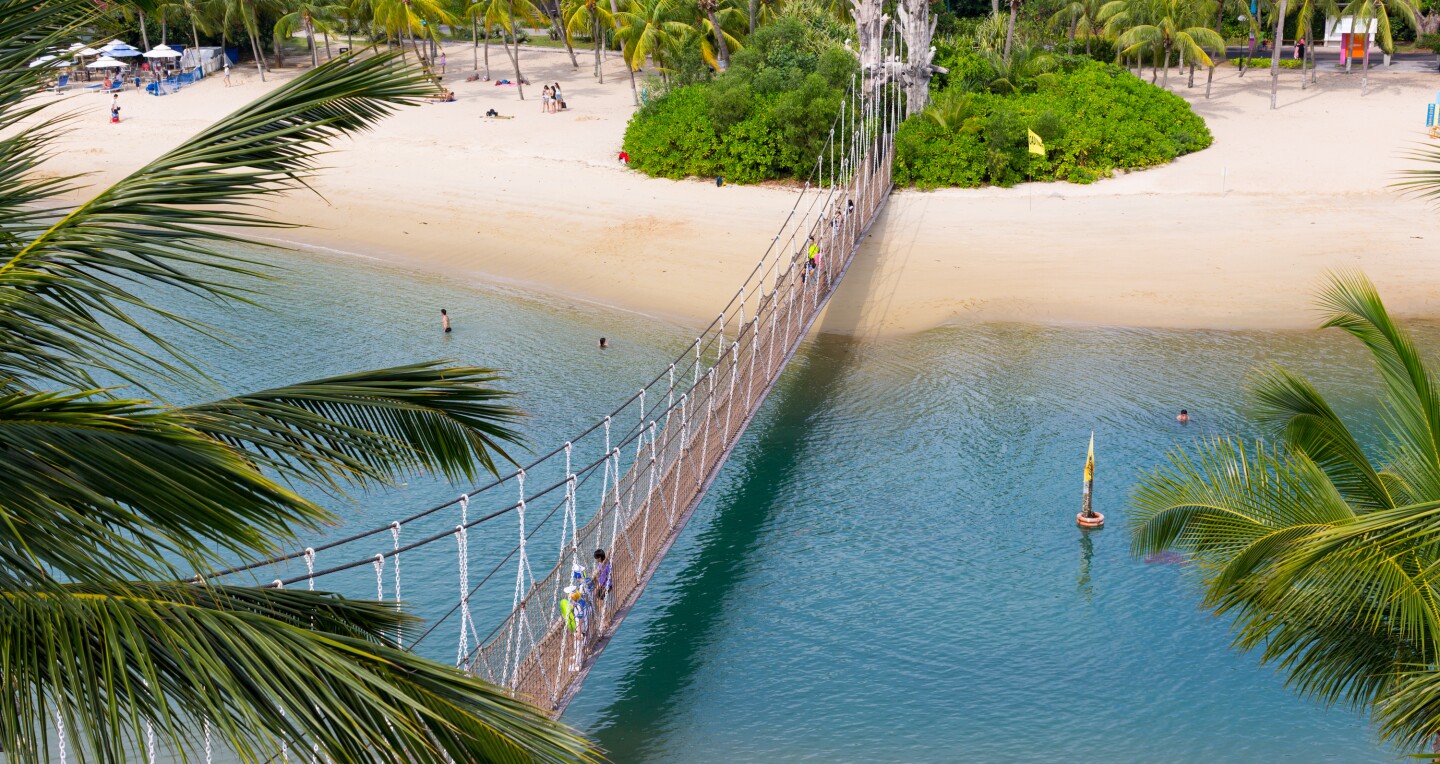
Hanging bridge to Palawan island, Sentosa, Singapore

Photo By Roman Rudiak/Shutterstock

Overview

Can’t miss things to do in Philippines

The Philippines’ charm stems largely from three characteristics: ancient cultures, natural beauty, and overwhelmingly friendly people. A visit to the beach is a must. Swimming with whale sharks is highly recommended (and completely safe). Island-hopping trips among the thousands of uninhabited islands are surprisingly affordable. A visit to a village where life has remained essentially the same for millennia—such as to Batad, set among rice terraces inscribed on the UNESCO World Heritage List—is a unique and humbling experience. Hospitality is an important part of Filipino culture, and if you socialize with locals you’re likely to be invited to a home-cooked family dinner.

Food and drink to try in Philippines

Filipino cuisine—like the culture—varies from island to island. It consists of a hodgepodge of Austronesian dishes influenced by neighbors (such as Malaysia) and former rulers (Spain and the United States). The result is a variety of paellas, pork, noodle-based dishes (known as pancit), and liberal use of soy sauce, vinegar, and fish sauce. Outside of large cities, few Filipinos frequent restaurants, and the best food is most often found on dinner tables in local homes. Fortunately, locals are wonderfully outgoing and quick to invite a new friend to dine with the family. Where possible and appropriate, accepting such invitations is recommended.

Culture in Philippines

The Philippines lacks many of the characteristics shared by other Southeast Asian countries. While others in the region have strong Buddhist and East Asian traits, Filipinos are a primarily Austronesian people (the same who later migrated to Tahiti and Hawaii), strongly influenced by three centuries of Spanish rule and a long American military presence. The culture is best described as Asian–Latin American. American fashion and rock-and-roll culture are popular, Catholicism is widespread, and colorful Filipino Jeepneys are practically identical to Latin American “chicken buses.” Music completely ingrained in the culture and ancing is an unofficial national pastime.

Shopping

Low prices and affordable alterations make shopping any place in Asia a treat. This is especially true in the Philippines, said by some to be Asia’s shopping capital. Western styles are common, and malls are so popular that many of the world’s largest reside in the country. For high-end shopping in Manila, Greenbelt in the Makati district is the obvious choice. The SM Megamall in the Ortigas district is the biggest shopping center in the country and is an impressive sight. Bargain hunters should head for Greenhills in the San Juan district, where pearls are plentiful, designer goods suspect, and shopkeepers ready to bargain. The best times to shop are after Christmas and Valentine’s Day, when sales are ubiquitous.

Practical Information

March through May are the hottest months in the Philippines, followed by a rainy season that lasts until October. November to February are the most temperate months to visit. Most nationalities don’t need a visa for trips of up to 30 days, though an ongoing ticket and a passport that’s valid for at least six months are required. Air conditioning on buses can be frigid, so be sure to take warm clothing. The currency is the peso; English is widely spoken. Electricity is 220 volts.

How to get around Philippines

The majority of international flights land in Manila, though there are other options if you want to avoid the chaotic capital. For a nonstop flight from the United States, book on Philippine Airlines. As of October 30, 2018, the airline launches nonstop service from JFK to Manila five times per week. Domestic travel in the Philippines is affordable. Islands are easily reached on airlines including Cebu Pacific Air, Philippine Airlines, PAL Express, and AirAsia Philippines. You can also island hop by ferry. Book through 2Go Travel.

Guide Editor

READ BEFORE YOU GO
HOTELS
These hotels know how to make an entrance.
RESOURCES TO HELP PLAN YOUR TRIP
Makati’s Salcedo Village is abuzz with the energy of Manila’s creative circle. The coffee at Commune, undoubtedly, fuels this buzz. The community-minded café is a hub of activity at all times: Mornings see neighbors schlepping in for their sleepy breakfast fix, lunch hour is packed with multi-taskers having a meeting while tucking into the local Filipino menu. By mid-afternoon, the space fills with freelancers typing away, rewarding themselves with custom cupcakes while in the background, fashionistas pose for selfies with Commune’s popular 3D latte art. The post-dinner crowd saunters in for a second caffeinated wind paired with warm, homemade apple pie and conversation. The vibe here is casual and friendly. But most importantly, the coffee is potent. Commune salutes its community by using locally sourced and roasted coffee beans. Meanwhile, their drinks are served up in beautifully handcrafted pottery mugs. (I wanted to smuggle one home. In every color!) When in Manila, get to know Salcedo Village, starting at Commune. Because when you’re here, though you may just be a visitor, you’ll feel right at home.
Located in Tagaytay in Luzon, just an hour and a half by car from Manila, Taal Volcano has a complex and unique landscape and offers one of the most picturesque views in the Philippines. Taal Lake is a freshwater lake that partly fills the Taal Caldera, a large collapsed area formed during prehistoric eruptions. Within the lake is the nine-square-mile Volcano Island, which is the active part of the volcano and consists of at least 47 cones and craters, including the Binintiang Malaki cinder cone, which looks how you imagine a volcano should. In the center of Volcano Island is the crater lake, which hosts a small rocky island called Vulcan Point. So there is an island within a lake on an island (which is a volcano) within a lake on an island! (Vulcan Point is in the crater lake on Volcano Island, which is in Taal Lake, which is on the island of Luzon.) The volcano has not erupted since the seventies, though there are occasional signs of unrest. Visiting Taal’s crater lake is a great day-trip option: You hop on a boat across Taal Lake to Volcano Island, where you can hike or ride on horseback to the crater lake. Or you can simply take in the great vistas from Tagaytay, enjoying the cool weather and exploring the many places to eat.
Arriving alone and hungry in the Philippines, I checked into my hotel and immediately asked for a dinner recommendation. After some thought by the staff, I was directed to Zubuchon for some authentic Filipino food; but not just any food: Lechon. And not even just lechon, but what Anthony Bourdain suggested is the “best pig...ever.” This perfectly prepared pig keeps its moisture generously covered and insulated with a layer of pork belly fat. Unfortunately, for some reason, I was not able to purchase a piece of pork less than ½ kilo. So, that is what I ordered. Perhaps I should have given the menu a closer look and ordered from the selection of “Fast Meals” that appear to be better suited for one. Before I ran off with my ½ kilo of pig, the server suggested I also try a Kamias Shake which paired with the pork better than any wine pairing I have had with a meal! The tart, but not quite sour, beverage brought out all the nuances of the lechon. Back at my hotel, I was unable to stop myself from eating all ½ kilo of meat - and heading to bed that evening completely stuffed. Try the lechon in the Philippines. And make sure you have Zubuchon at least once!
Intramuros plays an important part to our country’s history and it is one of the popular destinations for a visitor to our hometown. It is the oldest district and is called the Walled City. Historically, it is the seat of the Spanish government when they colonized the Philippines. You will still see the original wall structure and gates. If you wondered why our local language and other local dialects include words that sound like Spanish, you will understand it after getting a short overview of our history. Visit the Walled City, and find the popular old churches, Manila Cathedral and San Agustin. The other area in Intramuros to visit is Fort Santiago where you will find the old fort and Rizal Shrine, a small museum which features the life and works of Jose Rizal, our national hero. Along the way, you’ll find a lot more smaller attractions like museums, plazas, and old buildings. In fact, walking along the streets of Intramuros, you’ll feel like you are back in time, as you find yourself in the midst of old historical structures which are still in place.
One of the top spots to watch the sun set behind the islands that make up the Bacuit Archipelago, Cadlao Resort is also one of El Nido’s most enticing resorts. Most of the 25 rooms offer views of El Nido Bay or the South China Sea--but, for those sunsets, consider taking them in while taking a dip in the inifinity pool. Decor is spare but elegant, with pops of color all around. If you find yourself antsy to get off property, there’s no better spot than the resort’s private beach, a 45-minute boat ride away. After? Perhaps a spa appointment before dinner at the on-site restaurant, where the catch of the day arrives wrapped in a banana leaf.
Had the tastiest Laing Pizza during a trip to CamSur (Camarines Sur), Bicol Region, Philippines. This is a great example of fusion food which combines an Italian pizza with a very local Filipino dish called Laing. Laing is a dish made of gabi (taro) stem and leaves and coconut milk, which originated from the Bicol Region. Since Bicol is one of the few regions in the Philippines that love to eat spicy food, Laing is heavily spiced with siling labuyo (red hot chilies). Different versions have come about adding a bit of bagoong (fermented shrimp) or meat to the dish. With the Laing Pizza we ate, the spicyness of the Laing combined with the gooey cheese of the Pizza simply wakes up those taste buds! I would definitely want to go back for more :-) You can try this at the cafe inside Camsur Watersports Complex (CWC) in Camarines Sur, which is a popular venue for several world events involving wakeboarding. You can also do some wakeboarding yourself or get some lessons if you’ve never tried it. It’s fun! There are several accommodation options inside the complex from budget to high end.
Malapascua, a tiny island in the Visayan Sea north of Cebu, is well-known for its thresher-shark cleaning station, where divers gather daily to see these beautiful creatures ascend from below to be cleaned by fish before returning to deeper waters. Reef sharks can be seen here, too. What fewer visitors know, however, is that behind the strip of resorts that line Bounty Beach is a traditional village. There are quaint shops and restaurants as well as a large church, and the people are wonderfully friendly and inviting. It’s a great peek into real Filipino island life, meaning Malapascua is a worthwhile stop even if you aren’t interested in the sharks.
Bantayan Island’s fine white sand beaches and clear light blue waters are as enchanting as far busier Boracay, minus the noise and go go go night life. The island’s Ogtong Cave Resort offers a well-kept landscaped garden, a pool, and individual cottages, but the real draw is a cave below the resort grounds, where you can explore and wade in the waters. Rooms at the resort are simple and comfortable. The resort offers doubles up to family rooms with plenty of room for kids. There are two pools on the ground, with one reserved for resort guests. The usual jump off point is Cebu, a one-hour flight away from Metro Manila. You then take an almost 3-hour bus ride from North Terminal to Hagnaya for a 75-minute boat to Santa Fe, Bantayan. You can also opt to take a private van or taxi for a more comfortable and faster ride. Don’t be put off by the long travel time--the beach, cave, and everything else at the resort are well worth what it takes to get there.
If you’re craving for Italian food in Manila, and love those little quaint places, you should visit this place. It’s not in your usual tourist areas, it’s located in Cubao Expo in Cubao, Quezon City, about 20 km from Makati. The Cubao area is more known to the locals as it houses a large wet market, as well as to the sports and live concert enthusiasts who attend events at the popular Araneta Coliseum. In the past, kids loved this area too as there used to be a large indoor carnival. Recently, the commercial area has been rehabilitated, and now also includes a large upscale mall and hypermarket. The owner of Bellini’s is an Italian married to a Filipina and both of them are heavily involved in their restaurant business since 1999. Their food is great as they are all freshly made and uses quality ingredients. Try the beef carpaccio, the pizza is excellent too and I also love their pasta. I also love the decor, they put together some Italian icons on the walls and ceilings and even has a mini Tower of Pisa inside the restaurant :-) After your meal, you can also explore Cubao Expo, which includes small stores selling arts and other quirky stuff. It also has a weekend flea market. If you prefer more upscale shopping, you can go the nearby Gateway Mall.
This is the saying on one of the signs inside the Honesty Cafe, a small little cafe near the port in Ivana, Batanes. Joe and Elena own this place and because they were so busy with many other chores elsewhere, they often had to leave their little cafe which eventually turned into a self-service cafe, where even the payment for the food, drinks or souvenir items you want to get are done by dropping them into a box just sitting on the countertop. Thus, the birth of Honesty Coffee Shop where Honesty is the Best Policy. Some of the other interesting reminders posted inside the cafe :) 1) Get what you need 2) Please pay for whatever you get 3) If you have no change, knock at the next door. If no one answers, sorry, so you give more than the price. But the Lord will give you more later on. May your tribe increase!