
Genoa

Tucked into a thin slice of northern Italian coastline between the Ligurian Sea and the Apennine Mountains, Genoa (or Genova, in Italian) is a historic port city of limited space. For centuries, though, the stalwart Genovese have made the most of their land, coloring the landscape with vivid homes and churches to draw the merchants of the ancient world to their shores. With one of the largest intact medieval quarters in all of Europe—plus stunning art and architecture, delicious cuisine, and easy access to some of the most lovely water in the world—Genoa is a beautiful place to visit.

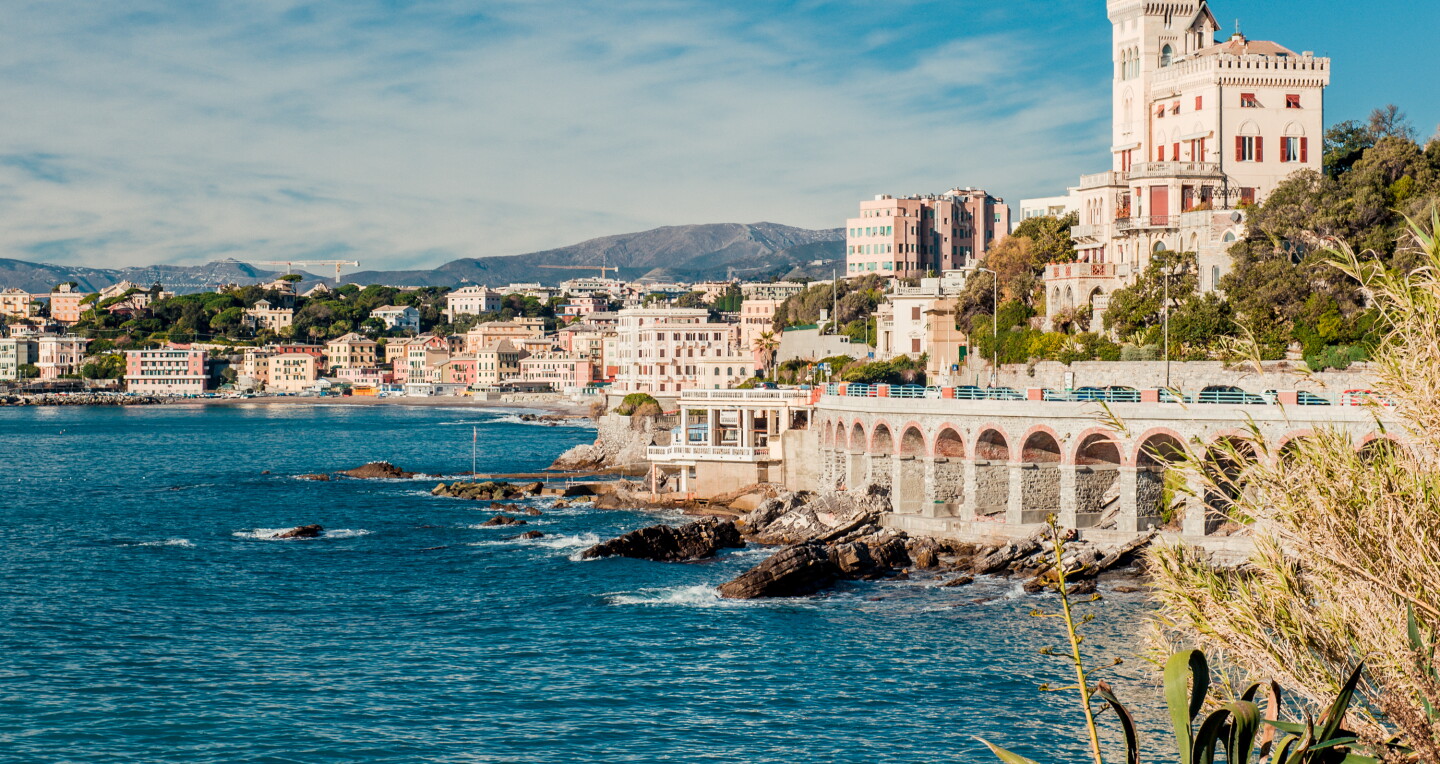
View of  Genoa, port city in northern Italy

Photo By Alex Tihohovs/ Shutterstock

Overview

When’s the best time to go to Genoa?

With museums, art galleries, gorgeous churches, and ancient palaces, the city offers sightseeing for every season, even the cold and rainy ones. While winter is great for exploring, with very few tourists, the rain can be a challenge. Genoa in the late spring (April/May) and the early fall (September/October) is warm enough for enjoying an afternoon on the beach, but not so full of summering tourists that you feel swallowed by the throngs.

How to get around Genoa

No matter where you’re coming from, Genoa is easy to access, with a major airport and two large train stations within five miles of the city center. Most international flights arrive in Milan or Rome, both with great connecting flights to Genoa Cristoforo Colombo Airport. Because of the peculiar mountainous topography, flights must turn out to sea and then come in along the coastline, so if you sit on the right side of the plane, your views are spectacular. Train service is excellent from all over Italy.

The Genovese are proud of their metro, which is clean and runs consistently but has only eight stations. While not convenient for extensive travel, connections to both train stations do simplify city arrival and departure. There are few cabs to hail—instead, look for cabstands at major junctions like the Aquarium and Piazza Ferrari. Primarily, Genoa is a walking city, so bring comfy shoes and enjoy exploring on foot.

Can’t miss things to do in Genoa

In a bygone era of political intrigue and threat of assassination, the Doge of Genoa lived in a fortified palace rumored to contain enough stored food and water to keep him alive two full years with the doors sealed. Needing to travel via secret corridor to the Cathedral of San Lorenzo, he would arrive in his private church quarters just as mass began. While today this part of the church is normally closed to the public, with special reservations you can tour his chambers, and from there climb to the bell tower for spectacular views of the entire ancient city.

Food and drink to try in Genoa

The traditional Ligurian flatbread, focaccia, is the mainstay of Genovese cuisine, and you’ll find that it’s nearly impossible to miss its wafting scent. Every bakery lining the Via San Lorenzo produces its own variety, from the simple olive oil and salt, to those topped with olives, onions, and even smeared thickly with Nutella. A standard slice will cost you 1 euro, and makes for an amazing breakfast with a steaming cappuccino.

Culture in Genoa

Genoa is peppered with UNESCO World Heritage experiences, most notably the Palazzi di Rolli. These 16th-century palaces once housed Genoa’s nobility and were required to be listed on the “rolls” as possible lodging for visiting international dignitaries. Spend a day exploring the Musei di Strada Nuova (palaces turned art galleries) and the boutique shops between them. Save a few hours for the abundance of medieval and Renaissance churches that flank the Via Garibaldi; some of the city’s most precious art lies within their walls.

Although Genoa has been hit by the economic downturn, there is still a desire to celebrate the events of the city’s past. One of four major historic maritime republics (along with Venice, Amalfi, and Pisa), “La Superba” Genoa remains connected to the stories and seafaring traditions. Every four years, Genoa hosts the annual July Regatta celebrating this history. So in 2014 and 2018, expect to encounter hundreds of costumed boatmen, live music, and nighttime street parties.

Local travel tips for Genoa

  • Cappuccino is solely a morning drink. If you don’t want to look like a tourist, don’t order one after 10 a.m.
  • Be prepared to navigate steep inclines as you make your way around town. Because the roads are incredibly narrow and the streets often go straight uphill, many locals drive scooters.
  • Be respectful of customs. The Genovese are quite formal in behavior and clothing.
  • Dress is conservative—no flip-flops or shorts, with jeans rarely seen on anyone over the age of 18.
  • The ancient city is beautiful to explore by daylight, but in the dark (and with relatively few streetlights, it is very dark!) streets can get a bit seedy. Prostitution is legal and still practiced in Genoa, so small alleys can become home to many types of evening characters.
  • Be smart, keep your eyes open, and make sure you are aware of your surroundings at all times.

Guide Editor

Collier Lumpkin is a chef and freelance food writer/photographer who splits her time between New York City and northern Italy. She loves focaccia with olive oil, kayaking on the Italian Riviera, and exploring unexpected tiny towns.

READ BEFORE YOU GO
For tried-and-true pesto, head to the ancient city of Genoa in Italy’s Liguria region.
RESOURCES TO HELP PLAN YOUR TRIP
If you are looking for a super modern, contemporary cocktail bar in Genoa, head to Mua just a few blocks away from Piazza Ferrari. With super sleek white leather couches, you almost feel like you are not even in Genoa anymore. And while the food isn’t anything to write home about, they have an extensive cocktails menu - including my favorite, the Raspberry Mule. My suggestion is to have a few drinks with the friendly bartender, and then move on to a nearby osteria for dinner later in the evening.
Founded by four Swiss brothers mistakenly abandoned in Genoa in 1826, Fratelli Klainguti celebrates their love of all things pastry, and to this day the place serves some of the most delicious breakfast treats in town, alongside cups of steamy cappuccino. Verdi himself loved Klainguti—with his opera Falstaff named in honor of the delicious treat he enjoyed there!
Pop by the Strada Nuova in the early morning for a cappuccino in the sunshine between the beautiful palaces. With a few coffee bars to choose from, you can always find a small table outside to enjoy the passersby as they head to open their shops and catch their buses. (Personally, I love the M cafe and bar inside the Palazzo Rosso, but there are plenty to choose from!)
Since 1880, Amaretti di Voltaggio has been serving coffee, pastries, and liquor in this gorgeous shop a few blocks from Porto Antico. The shop/bar opens at 8am, so come early for a table outside (the people watching along this street is superb), and order a cafe correcto if you are feeling adventurous (they will put a shot of liquor into your coffee, so be ready), or just stick with the tried-and-true cappuccino for the most authentic Genovese morning.
Even after chatting with the owner, I’m still slightly confused as to why this lovely women’s shoe boutique/art gallery is called Plastic Passion, but like so many things in Genoa, we just go with it. Drop by this lovely little shop to pick up Italian-made suede heels, or my favorite, the kitten-heeled black t-strap beauties. And take a minute to check out the upstairs art gallery before you head out.
With a massive apertivo buffet, stop by Storico for the cheapest dinner/drinks combo in town (and delicious, to boot!). For 7 euros, get a cocktail or a glass of wine, and fill your plate as many times as you like from the buffet of warm snacks—focaccia, pizza, pasta dishes, cold salads, and chips are always found on the “menu”! Make sure you sit outside, though, to get the best view of the people milling about in the beautiful Piazza de Ferrari.
Tucked deep in the heart of the ancient city, this is an easy Palazzo to miss—but don’t miss it. My favorite of the Genovese museums, five floors of this massive palace are dedicated to the history and splendor of Genoa—the first three being the restored palace of the Spinola family, and the top two serving as the National Gallery. Explore beautiful frescoes, ceramics from the 1700s, actual clothing from the 15th century, and a massive original Rubens, among the many other varied treasures.
While you can never go wrong with a tried and true cone of pistacchio e nocciola (pistachio and hazelnut) gelato, opt instead for one (or two or six) of the small ‘bicchierini’ here at Gelateria Excelsa for a few bites of different delicious flavors! The chocolate are exceptional - as are any of the ones with ‘frutti di bosco’ (red fruits like strawberry, cherry, and plum).
Board a boat in the old harbor of Porto Antico and spend the day in the Italian sunshine observing the natural habitat of the International Cetacean Sanctuary. In four hours, and with the help of the onboard marine biologist, you are likely to spot families of dolphins, larger whales, and even migrating sea turtles.
If you have a gorgeously sunny afternoon, walk the Corso Italia to the small fishing village of Boccadasse, still considered to be part of Genoa. About an hour’s walk from central town, this seaside stroll will take you past black stone beaches, children’s parks, and countless bars and restaurants enjoying the beautiful sea views. When you arrive, make sure to roll up your pants and step in the water, as the sea spray alone is said to have healing properties.