
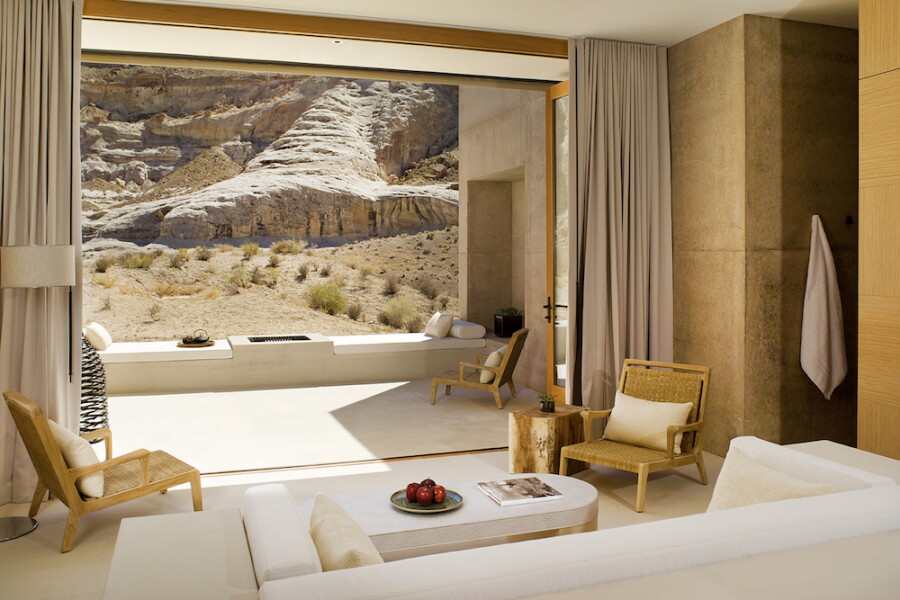
When brothers Édouard and André Michelin launched the first Michelin Guide 125 years ago, the pair knew nothing about restaurants; The guides, which they initially gave away for free, were a marketing ploy; the Michelin brothers were tire manufacturers trying to entice more people to hit the road in France and thus buy their tires.
In 1926, Michelin Guide started awarding one star to fine dining restaurants, and as the 20th century rolled on, the guidebooks aimed at novice motorists evolved into tomes of high-profile reviews and ratings doled out by a group of undercover taste testers.
Today, Michelin stars are for many chefs among the most coveted badges of approval (though for some, the pressure to earn the star year after year is “extreme,” as reported by the Guardian in April 2025).
Nearly a century after awarding its first restaurant stars, Michelin last year began a new hotel-rating system, the Michelin Keys—the hotel equivalent of Michelin stars. And just like the brand’s sought-after stars, its hotel ratings are the result of the same rigorous scrutiny given to restaurants.

A tent at the two-Michelin-key JW Marriott Masai Mara Lodge in Kenya
Courtesy of JW Marriott Masai Mara Lodge
What are Michelin keys and how are they awarded?
Michelin keys are the hotel equivalent of the brand’s famed Michelin stars. A restaurant in a Michelin Guide can have a rating of recommended (which means it’s included in the guide but with no symbol), Bib Gourmand (meaning it offers well-executed, good-value dishes), and one, two, or three stars. Note that decor has no impact on whether a restaurant gets a Michelin star.
The Michelin hotel ratings follow the same format, but with no Bib Gourmand–equivalent category; a hotel can be recommended or have one, two, or three Michelin keys. And unlike with restaurants, the decor of a hotel does impact its rating. Interior design and architecture is one of five criteria Michelin’s inspectors consider, along with “quality and consistency of service, overall personality and character, value for the price, and a significant contribution to the neighborhood or setting.”
Nearly two years since the Michelin key ratings were first launched, there are now more than 7,000 recommended hotels, of which more than 2,400 have between one and three Michelin keys. To award these ratings, the company’s incognito inspectors research on their own and collectively and then spend hundreds of nights sleeping in different hotels across 120 countries.
Michelin’s chief inspector, whose identity has been withheld, told Afar that it can be hard to turn off the “inspector brain”, saying, “I joke that I’m a professional tourist, but that means that in a way I’m working even when I’m on holiday.”
That inspector added, “I have an instinctual tendency to critique the places I stay, but I also feel pulled to visit old favorites as well as any newer hotels I haven’t seen yet in whatever destination I visit. And some of the most special hotel discoveries have happened while I was on vacation, when I was least expecting it.”

A superior room at the Brach Paris, which earned one Michelin key.
Courtesy of Brach Paris
Who are the Michelin hotel inspectors?
Michelin’s anonymous restaurant and hotel inspectors are employees of the tire company. Former restaurant and hospitality professionals who live and work around the globe, they keep a super low profile, with no social media. Some inspectors focus only on hotels or restaurants; others focus on both.
The restaurant and hotel inspector teams work together and decide collectively on each venue’s rating, but, Michelin stated, “Hotel selections and restaurant selections are distinct, and decisions on the Star and the Key are made independently of each other.”
Michelin inspectors dine and check into hotels anonymously and the tire company pays for every form of transportation, meal, and hotel stay. Inspectors are full-time, salaried Michelin staff, and restaurants and hotels never pay to be recommended in a guide.
However, government-run tourism boards have paid the Michelin Guide to send inspectors to their cities and countries; in 2019, the California Tourism Board paid Michelin $600,000 to expand its guide across the state. Michelin’s inspectors still choose the restaurants and hotels to visit and review, but, as Michelin Guide’s director of international development Julianna Twiggs said during an October 2025 press conference in Paris, “The reality is that we need these partners because what we do is costly.”
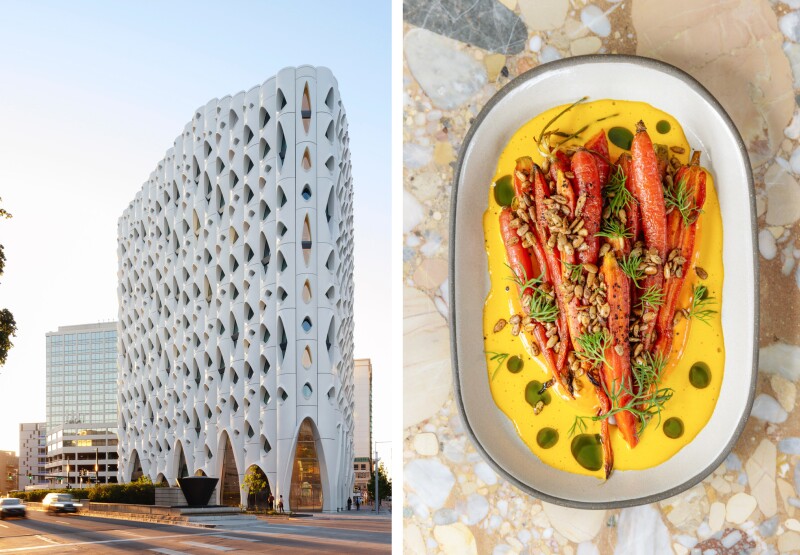
The carbon-positive Populus Hotel in downtown Denver has been awarded one Michelin key.
Courtesy of Populus Hotel
What hotels are in the Michelin Guide?
The 7,000-plus hotels in the Michelin Guide span 120 countries on six continents, from Mozambique to Uzbekistan. Accommodations run the gamut from medieval castles to glamping lodges and include Afar favorites like Populus Seattle, Brach Paris, and the JW Marriott Masai Mara in Kenya.
As for whether more hotel keys will be added, a Michelin representative told Afar, “[2025] was the first year the selection became global, and we plan to continue this global format . . . in order to reflect our vision of a unified market and ensure travelers consistent hotel experiences across the world.” In other words, it would appear that, as with restaurants, new and existing hotels will continue to be rated and reviewed each year.
When asked to provide a particularly memorable hotel experience, Michelin’s chief inspector told Afar that there are “too many to mention. This work has taken me all over the globe for years, and even now I’m amazed that I haven’t lost my sense of awe and appreciation for the pleasures and surprises of travel. From sunrises looking out over the Tokyo skyline, to sunsets in Morocco’s Atlas mountains, to seeing elephants outside my guest room in southern India, to jumping directly into the ocean from the patio of my room in Jamaica—I’ve had some truly unforgettable moments.”


