

Las Fallas, a 19-day festival held in Valencia, Spain, marks the approach of spring with firecracker-filled celebrations each March. The events include late-night street parties, pyrotechnics, parades, music, local cuisine, and more.
Las Fallas is more than a party—it’s part of UNESCO’s Intangible Cultural Heritage list and the cultural framework that shapes Valencia and its surroundings. According to legend, the celebration began in the 15th century, when locals would burn pieces of old wood that propped up lamps at the start of spring. After adding rags and other belongings, the burning piles formed larger figures, eventually becoming the elaborate sculptures that now define the festival.
Today, Valencians spend the entire year leading up to Las Fallas constructing hundreds of satirical wood-and-papier mâché fallas (sculptural scenes), only to burn them spectacularly on the final night. To take part in the festivities as a visitor, follow these tips for the best places to stay, what to eat, and how to experience the festival like a local. If you can’t make the festival itself, we also included some alternative ways you can enjoy cultural experiences tied to the festival year-round.
Attend Las Fallas events and the final burning
Las Fallas officially begin when the mayor announces the start of the festival from the Torres de Serrano and invites everyone to join in the celebration, followed by an unofficial procession to the Plaça de la Mare de Déu and fireworks. The event is called La Crida and takes place on the last Sunday in February.
The real action starts with the daily mascletàs at 2 p.m. in the Plaza de l’Ajuntament during the first 19 days of March. These pyrotechnic displays include fireworks, gunpowder, music, and drumbeats.
You’ll also find various evening fireworks and pyrotechnic shows in the same square as the final burning night approaches. And other neighborhoods in the city also host mascletà displays, so if you’re staying outside the historic center, ask around to find out where you can see them.
The fallas are gigantic sculptural installations made up of individual figures called ninots that represent (often humorous) scenes and characters. From early February through mid-March, you can view them in the Ninot Exhibition and the Ninot Children’s Exhibition at the Museu de les Ciències and cast your votes for the best ones. At the end of the voting period, one structure from each collection is spared from burning.

Walk around to see the figures before they burn
Courtesy of Turisme Comunitat Valenciana
The plantà refers to the day the fallas are moved into the city. This usually happens four nights before the final burnings and is a massive undertaking, as some of the largest installations need to be assembled by crane. It’s a good time to walk around the city and enjoy them while they’re still intact.
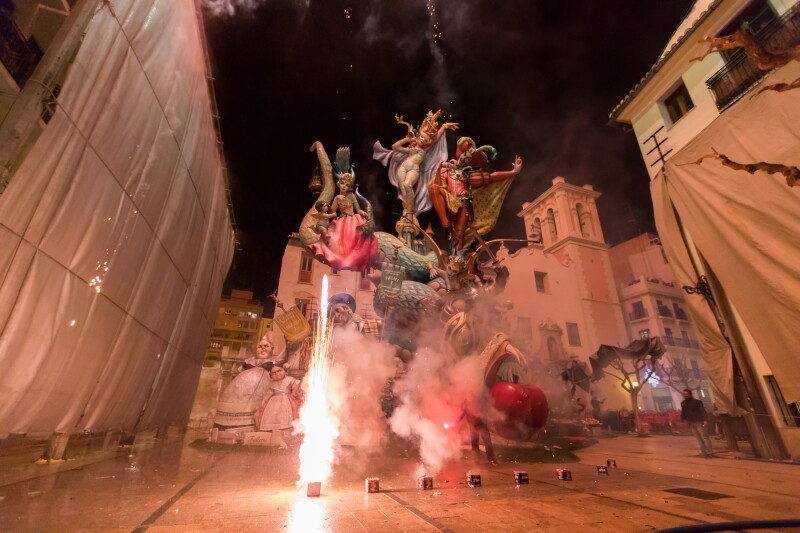
La Crema, or the final burning, of Las Fallas
Courtesy of Turisme Comunitat Valenciana
Las Fallas celebrations also include parades, locals dressed in traditional costumes offering flowers to the Virgin Mary, street parties, concerts, marching bands, and verbenas (late-night parties that often go on until sunrise). Finally, the festival culminates in the fiery citywide cremà, when all the fallas are set ablaze. The burnings start with the children’s ones, followed by the adults, which continue late into the night. This is the most spectacular part of Las Fallas, as some of the ninots are more than 80 feet high.
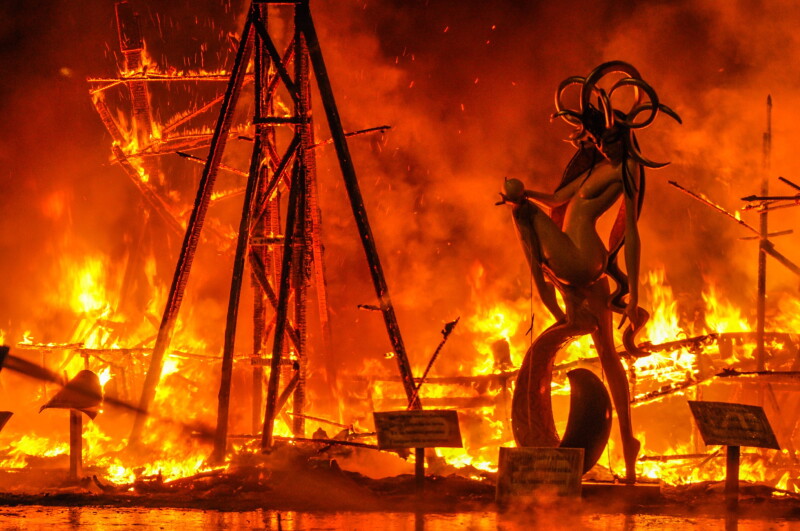
La cremà, or the burning
Courtesy of Turisme Comunitat Valenciana
Where to stay during Las Fallas
The center of the festival is the Plaza de l’Ajuntament, which hosts the rhythmic pyrotechnic mascletà ceremony in the heart of the Sant Francesc neighborhood. To be in the middle of it all, stay in the Meliá Plaza directly in the Plaza de l’Ajuntament or the Only You Valencia, which is a couple of blocks away.
If you want to be close to all the action but a little more removed, consider staying in the Extramurs neighborhood. The Ciutat Vella (old city) area is particularly vibrant during Fallas, and you can easily walk to the historic center to enjoy the main festivities.
What to eat during Las Fallas

Buñuelos
Courtesy of Turisme Comunitat Valenciana
You can always enjoy traditional Valencian fare like paella, but during Las Fallas, one of the most traditional foods to eat is pumpkin buñuelos, a type of fried donut. You can try them at food stalls and traditional horchaterías around the city, such as the tiled Horchatería Santa Catalina, no-frills Horchatería Fabián, and Horchatería El Collado, which is close to the Mercado Central. Pair the sweet snack with a refreshing glass of horchata or dunk them in a mug of thick, swirling chocolate.
Las Fallas tips
Due to the fiery nature of Las Fallas, respecting the barriers and fences the city puts up and staying in the designated areas will help keep you safe. You may also want earplugs during the mascletàs, which can be extremely loud.
Comfortable shoes are also a good idea as you’ll be standing and walking a lot during the festival, and using public transportation, such as the metro, to get around will avoid the many blocked-off streets.

The cremà of the children’s ninots happen earlier
Courtesy of Turisme Comunitat Valenciana
Families and small children enjoy Las Fallas—you’ll likely see local kids out late in the evening. You can experience the more child-friendly side of Las Fallas by visiting the children’s fallas in the early morning for fewer crowds and attending the children’s burnings, which are earlier in the evening.
Visit Las Fallas museums year-round
You can experience the spirit of Las Fallas at other times of the year, too. The ninot exhibitions feature more than 700 of them that you can view (and vote on) more than a month before the main Fallas festivities begin.
At Museu Faller de València, check out the figures spared from the burning each year—some ninots date back to 1934. You can also visit the Museu d’Artistes Fallers, which showcases the artistic process behind the creation of the ninots.
Valencia Tourism also offers a tour to some of the most important locations of Las Fallas, complete with context and history about the famed festival. The essence of Las Fallas—joy, celebration, and starting anew—is core to Valencia’s cultural identity, so you’ll have a memorable trip no matter when you visit.


