

Some people plan their itinerary around the pursuit of the tastiest dumplings or the most pristine powder for heli-skiing. For me, all roads lead to gardens.
On recent trips to Paris and Nice, I visited spectacular gardens on the site of a medieval fortress (in Eze), in a library courtyard (Bibliothèque Nationale de France), at a once-private villa (built by a Rothschild baroness), and adjacent to a museum (the Tuileries at the Louvre).
None of these, however, are botanical gardens—which have a higher calling and merit at least a half-day visit. Merriam-Webster defines these horticultural spaces as gardens “often with greenhouses for the culture, study, and exhibition of special plants.”
Botanic Gardens and Plant Conservation International goes a few steps further, emphasizing the purpose of scientific research and the conservation of rare and threatened plants, plus compliance with international policies and sustainability and ethical initiatives.
While the flora and fauna change from region to region—and season to season—botanical gardens offer an astonishing variety of natural and man-made wonders. These are sanctuaries of tranquility that simultaneously excite nature lovers and inspire would-be green thumbs. You don’t have to be an aspiring botanist or horticulturist to enjoy a visit; these gardens boast magnificent architecture, greenhouses, fountains, wildlife, walking tours, libraries, classes, and special events, including light shows and concerts. They’re also family friendly and less expensive than amusement parks.
Arctic-Alpine Botanical Garden
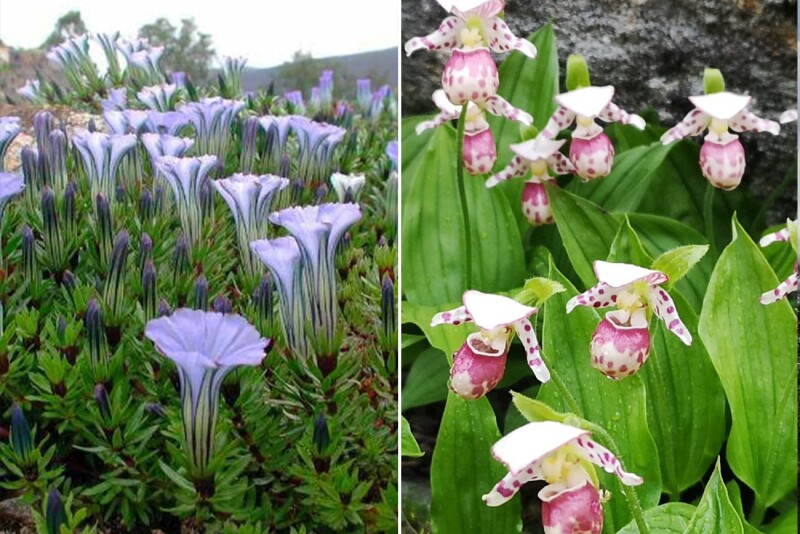
The Arctic-Alpine Botanical Garden showcases plants from some of the world’s most northern regions.
Courtesy of the Arctic-Alpine Botanical Garden
Hours: Daily, open 24 hours (but often covered in snow during winter)
Tickets: Free
The Arctic-Alpine Botanical Garden, the world’s northernmost botanical garden, showcases traditional perennials and herbs from the top of Norway, plus a surprising array of plants from other continents. Part of the University of Tromsø, the garden has 25 collections in total; it specializes in Arctic and Antarctic plants (a rarity), as well as species native to the Himalayas, South America, and Africa. The garden is open year-round and free to visit, but most flowering takes place between May and October. In winter, BYO skis to experience the AABG’s evergreen shrubs and snow-capped rockscapes.
The Berlin-Dahlem Botanical Garden

The Berlin-Dahlem Botanical Garden has an art nouveau greenhouse and a garden designed for visually impaired people.
Photo by Mo Photography Berlin/Shutterstock
Founded in 1679 (with its current site laid out between 1897 and 1910), the Berlin-Dahlem Botanical Garden is a world-renowned 104-acre plant paradise managed by the Free University of Berlin.
Around 20,000 different plant species are cultivated across an outdoor geography garden, arboretum, and a network of 16 public greenhouses. The herbarium collection is especially impressive, holding more than 3.8 million preserved plant specimens.
Among the garden’s other notable features is the historic art nouveau greenhouse that showcases rich tropical biodiversity, and a Fragrance and Touch garden designed to help visually impaired people appreciate the diversity of plants.
In recent years, the garden has also refreshed its medicinal-plant section, creating a layout roughly in the shape of a human body. 230 medicinal species are displayed, complete with information on their chemistry and pharmacology.
Bogor Botanical Garden

Giant arum, or corpse flowers, are must-visit at Bogor Botanical Garden.
Photo by Nizar Kauzar/Shutterstock
Hours: Monday–Friday 8 a.m.–4 p.m., Saturday–Sunday 7 a.m.–4 p.m.
Tickets: $1 (weekdays), starting from $1.50 (weekends and public holidays)
The Bogor Botanical Garden—founded in 1817 by the government of the Dutch East Indies—is the oldest and most significant botanical garden in Southeast Asia. Located south of Jakarta, it covers about 215 acres. There is rain almost daily in the region, so the garden is an ideal spot for cultivating tropical plants. Not surprisingly, the garden has a remarkable palm collection (with nearly 288 species) and vast orchid houses, plus several specimens of the giant arum (Amorphophallus titanum)—aka the corpse flower, which can grow to 12 feet tall and emits a foul odor resembling rotting meat to attract pollinators.
Bogor has played a major role in encouraging tropical plant conservation, environmental education, and ecotourism in the wider region, helping establish 32 new botanical gardens across Indonesia. Dozens of bird and bat species also call this garden home.
Chicago Botanic Garden

The Chicago Botanic Garden’s Shoin House is a recreation of an Edo-period feudal lord’s garden retreat.
Courtesy of Rama Laksono/Unsplash
Hours: Daily 10 a.m.–3 p.m.
Tickets: $20–$22 (adults 13+), $14–$16 (children 3–12), free for children under 3; the garden offers occasional free days, check its calendar
Depending on the season (and which exhibits are on view), visitors at the Chicago Botanic Garden can enter a habitat filled with live butterflies, admire the many replicas of roadside attractions in the Model Railroad exhibit, or take in the garden’s 385 acres of green space while seated on a free tram tour (late April to October).
What kinds of gardens will you find? There’s a rose garden, a fruit and vegetable garden, a world-class bonsai collection, and more than 5,000 dwarf and miniature plants, including evergreens, maples, and magnolias—representing about 300 different varieties. The kaleidoscope of color is spread across nine islands and six miles of lakeshore. To explore what’s in bloom when you visit, download the interactive plant-locating app and take one of the offered walking tours.
Desert Botanical Garden

The Desert Botanical Garden in Phoenix specializes in arid-landscape plants, but that doesn’t mean the displays lack color.
Courtesy of Desert Botanical Garden
Hours: Daily 8 a.m.–8 p.m. (October–April)
Tickets: $40 (adults), $20 (kids 3–17)
Snuggled into the dusty red rocks of the Papago Buttes Park, the 140-acre Desert Botanical Garden has more than 50,000 arid plants and 4,818 species in its unique collection. Of those, 548 species are rare and endangered.
The garden, founded in 1939, is creative with its programming, offering desert landscaping classes for homeowners and five themed hiking trails that are especially nice for families. It’s not just a trove of succulents and cacti, either. There’s also a desert wildflower garden dedicated to brightly colored blooms and the pollinators they attract, such as bees, butterflies, and hummingbirds.
You can get a sense of history here, too. Travel along the Sonoran Desert Nature Loop to learn how the region’s Tohono O’odham and Western Apache people used native plants.
The Huntington Botanical Gardens

The Huntington, with several gardens among its 130 acres, is one of many bucolic spots to visit in Southern California.
Photo by James Casil / Shutterstock
Hours: Wednesday–Monday 10 a.m.–5 p.m.
Tickets: $29–$34 (adults), $24–$28 (seniors 65 and students 12–18 or full-time with ID), $13–$15 (children 4–11), free for children under 4
Located 12 miles from downtown Los Angeles, the Huntington is a fantastic, massive campus with an art museum and library among its 130 acres, boasting more than 83,000 living plants. It’s impossible to see everything in one day. Some of the themed gardens are so spectacular that you could visit just for that collection. The desert garden, for example, is one of the largest outdoor collections of cacti and succulents in the world and includes more than 2,000 species of desert plants. Among the striking specimens, seek out the boojum trees (Fouquieria columnaris).
The grounds also have gardens dedicated to different types of plants (roses, herbs, palm trees) as well as nations (Australia, China, Japan), plus lily ponds and a mausoleum.
Jardim Botânico

Rio de Janeiro’s Jardim Botânico showcases an impressive arid-landscape collection, proving that desert gardens can thrive even in Brazil’s humid climate.
Photo by Nessa Gnatoush/Shutterstock
Hours: Monday, Tuesday, Thursday–Sunday 8 a.m.–5 p.m., Wednesday 11 a.m.–5 p.m.
Tickets: $15
Rio’s 350-acre Jardim Botânico was founded in 1808 by D. João VI of Portugal, prince regent (eventually king) of the United Kingdom of Brazil and Portugal. It has a reputation as one of the finest tropical gardens on Earth, bordered by the world’s largest urban forest, Tijuca National Park. Of the jardim’s 7,000-plus species of tropical plants, the vast majority are native to Brazil. It also has 2,000 species of orchids. And while you may see the garden’s Avenue of Royal Palms surface repeatedly on Instagram, the jardim’s rare bromeliads and traditional Japanese garden—including cherry trees and bonsai—are not to be missed.
Note to birders: Bring your binoculars because hundreds of species nest in this garden.
Kirstenbosch National Botanical Garden

Get a different perspective on the plants at Kirstenbosch National Botanical Garden on the Centenary Tree Canopy Walkway, 40 feet above ground.
Photo by Subodh Agnihotri/Shutterstock
Hours: Daily 8 a.m.–7 p.m. (September–March), 8 a.m.–6 p.m. (April–August)
Tickets: $12 (adults), $2 (children 6–17)
It’s hard to beat a backdrop that includes Table Mountain National Park. Set in the eastern slopes of South Africa’s most iconic landmark, the world-renowned Kirstenbosch National Botanical Garden lives up to the hype. There are 1,305 acres with more than 7,000 species of plants, most of which are native to the Cape and southern Africa.
Located eight miles from the heart of Cape Town, and founded in 1913, the garden is blessed with postcard-worthy groupings of protea and cycads, hiking and mountain biking trails, expansive lawns for picnicking, and a 427-foot treetop walkway (informally known as “the Boomslang”) that arcs gently above the arboretum’s canopy.
Longwood Gardens

Longwood Gardens’ founder drew on European horticultural traditions to design the 1,077-acre estate.
Photo by Megski1313/Shutterstock
Hours: Wednesday–Monday 10 a.m.–5 p.m., Thursday 10 a.m.–4 p.m.
Tickets: $32 (adults 19+), $28 (seniors 62+ and students with ID), $23 (military/veteran), $17 (kids 5–18); add $3 more for each weekend ticket
Longwood Gardens has a rich history, starting with the native Lenni Lenape tribe, which fished, hunted, and planted on the 1,077-acre estate for thousands of years. In 1906, wealthy entrepreneur Pierre S. du Pont bought the land and started to build his own gardens, one by one, drawing heavily on recent visits to renowned gardens in Europe.
He was especially impressed with fountains at the time; he had seen the majestic water pumps at the 1876 Centennial Exposition in Philadelphia. So Longwood, naturally, has plenty of them—hundreds.
Over decades, Longwood has added a conservatory, a plant nursery, an experimental greenhouse, a desert house, many outdoor water lily pools, a meadow garden, tree houses, tropical plants, a plant-breeding program, and a visitor center with a shop, auditorium, and 1,000-car parking lot.
In late 2024, Longwood Gardens completed a vast, $250 million transformation across 17 acres of its central grounds. The showpiece is a new 32,000-square-foot glasshouse (“West Conservatory”) that appears to float on water.
Inside the conservatory, you will find a Mediterranean-inspired garden with canals, fountains, planted “islands,” and a plant palette of aloes, olive trees, cypress, and other species. The conservatory uses sustainable technology, like operable glass walls and roof and earth tubes, to regulate the environment.
Missouri Botanical Garden

America’s oldest operating botanical garden is in St. Louis, Missouri.
Photo by Shutterstock
Hours: Daily 9 a.m.–5 p.m.
Tickets: $16 (adults 13+)
Established in 1859 by merchant Henry Shaw, Missouri Botanical Garden—a National Historic Landmark—is America’s oldest botanical garden still in continuous operation. Its 79-acre spread is best known for the Climatron, a geodesic-dome greenhouse with a rainforest-like climate, dense tropical foliage, and a river aquarium full of fish. More than 2,800 plants grow inside, including cacao and coffee.
The institution has earned international acclaim for its comprehensive botanical reference library and herbarium with more than 6.5 million mounted specimens (the second-largest in the USA after Longwood Gardens).
Other notable draws include the 14-acre Japanese strolling garden, one of the oldest in the nation, and an 8,000-square-foot glass butterfly conservatory housing more than 60 species of winged beauties and 100 species of exotic flowering plants. It’s an attractive destination for those wanting a major American botanical garden outside of the most obvious coastal hubs.
Montreal Botanical Garden (Jardin Botanique de Montréal)

Montreal Botanical Garden was made a Historic Site of Canada in 2008.
Photo by Brian Burton Arsenault/Shutterstock
Hours: Tuesday–Sunday 9 a.m.–5 p.m.
Tickets: $17 (adults), $16 (seniors 65+), $13 (students with ID), $9 (kids 5–17)
The stats alone are impressive: 10 greenhouses spread over 185 acres with 22,000 species of flora—and the whole garden was designated a National Historic Site of Canada in 2008. On top of all that, the Montreal Botanical Garden, opened in 1931, shows creativity in its approach: There’s a toxic plant garden and a garden of innovations that showcases new cultivars from the ornamental horticulture industry.
Depending on the season, visitors can explore an arboretum with 800 species of trees and shrubs, a Japanese garden with bonsai trees, a Chinese garden, and spaces dedicated to perennials, shade plants, ferns, succulents, roses, floating plants, medicinal plants, and, of course, flowers (especially irises, peonies, and lilies).
What’s more, the garden maintains more than 400 species on the list of rare or threatened plants drawn up by the World Conservation Union (IUCN) and, in 2001, opened the First Nations Garden, highlighting First Nations and Inuit connections with the plant world.
If you’re interested in visiting the insectarium with its more than 250,000 specimens (one of the largest insect museums in North America), you need a separate ticket, which includes access to other museums, including the Biosphere and Biodome.
New York Botanical Garden

The New York Botanical Garden is the largest city-based botanical garden garden in the United States.
Courtesy of New York Botanical Garden
Hours: Tuesday–Sunday and select Monday federal holidays 10 a.m.–6 p.m
Tickets: $35 (adults 13+), $31 (seniors 65+), $31 (students with ID), $15 (children 2–12), free (children under 2)
The Bronx’s best-known National Historic Landmark was established in 1891 by botanists Nathaniel Lord Britton and his wife, Elizabeth. Inspired by a visit to Kew Gardens in England, the couple founded their own botanical paradise on the north side of Bronx Park, close to an old-growth forest (the Thain Family Forest) and the Bronx River.
With 250 acres of land, this picturesque green space—known as the New York Botanical Garden—is the largest city-based botanical garden in the United States. Its 50 specialty gardens feature more than a million plants and 12,000 species, including lilacs and magnolias.
Highlights of any visit include a stroll through the circa-1890 Victorian-style glasshouse Haupt Conservatory, the impressive northeastern North American native plant garden, and what is widely considered one of the world’s most sustainable rose gardens.
For plant nerds, there is also the Mertz Library, the largest U.S. botanical research library and the first library whose collection focused exclusively on botany.
Royal Botanic Garden

The Royal Botanic Garden, Sydney, has 15 themed areas, dedicated to tropical plants, succulents, and more.
Photo by James Horan
Hours: Daily 7 a.m.–sunset (November–December, 7 a.m.–8 p.m.)
Tickets: Free
Australia’s oldest scientific institution—and one of the earliest botanic gardens in the Southern Hemisphere—the 74-acre Royal Botanic Garden is a dazzling mix of horticultural beauty and ecological conservation. Founded in 1816 and located on Sydney Harbour, a five-minute walk from the city center, it houses a collection of more than 27,000 plants from around the world, organized into 15 themed gardens. They include an air succulent garden, a tropical garden, an Australian rainforest garden, and one of the largest green walls you’ll ever see.
Unique to this institution is the Cadi Jam Ora–First Encounters Garden, which explores the relationship between plants and people; it’s located on the site where the Cadigal (an Aboriginal cultural group) and European settlers first met in January 1788. An online map offers an overview of the Victorian-era buildings, statuary, fountains, and monuments that dot the landscape.
Royal Botanic Gardens, Kew

The Royal Botanic Gardens, Kew, is home to some 50,000 plants across 300 acres.
Photo by Paul Maguire/Shutterstock
Hours: Daily 10 a.m.–4 p.m. (last entry 3 p.m.)
Tickets: $10–$27 (adults), $5–$9 (children 4–15), free for children under 4
Kew Gardens (as the gardens are better known) may be the most famous botanical park in the world and not just because it’s a UNESCO World Heritage site.
It’s considered the globe’s largest collection of living plants with more than 50,000 of them across 300 acres of dedicated land, including many species you’d never expect to find in England. For that, you have the climate-controlled Princess of Wales Conservatory to thank. The glasshouse (the largest Victorian one in the world) is split into zones: One is dedicated to carnivorous plants like Venus flytraps; another to succulents and cacti; and a third is humid and tropical enough to grow Victoria amazonica, the largest water lilies.
The property, founded in 1759, also has a rock garden with a tiered waterfall and an arboretum with 14,000 trees, including giant redwoods and black locusts dating to the 18th century. For the ultimate immersion, head to the edge of the garden, where a 37-acre storybook forest meets the River Thames and an elevated trail snakes through a watercolorist’s palette of wildflowers.
Singapore Botanic Gardens

Singapore Botanic Gardens: the first tropical botanic gardens recognized by UNESCO
Photos by Danny Ye/Shutterstock
Hours: Daily 5 a.m.–midnight
Tickets: Free; National Orchid Gallery $5-$15 (adults), $1-$3 (students), free for children under 12
The Singapore Botanic Gardens is the only botanic garden on the UNESCO World Heritage list based in the tropics, and it is the first UNESCO World Heritage site in Singapore.
The 203-acre green space, founded in 1859, welcomes millions of visitors a year, drawn to the lakeside gazebos, groves of wild fruit trees, the bonsai garden, three lakes, a small tropical rainforest, and a perfumed grouping of frangipani. There is also a healing garden with 400 types of medicinal plants.
Of special appeal is the 7.4-acre National Orchid Garden—home to more than 1,000 wild orchid species and 2,000 hybrids, organized into color zones.
You may see exotic animals as well; birds, frogs, lizards, bats, monkeys, pigs, turtles, otters, and other animals live here year-round.
This article was originally published in 2019 and most recently updated on December 18, 2025, with current information.


