New Orleans

New Orleans, on Lousiana’s Gulf Coast, is never short of an excuse to laissez les bon temps rouler—and the city’s popularity has been driven by what the Big Easy does best: eating, drinking, and being merry. The French Quarter has plenty to entertain beyond the neon-lit Bourbon Street, so it’s worth exploring the city’s outlying neighborhoods, from the manse-lined streets of Uptown to the boho Bywater. And one need only wander into any of the bars along Frenchmen Street to be convinced that New Orleans’s musical heritage beats on—and that no matter how small the venue, there’s always room to dance.

NEW ORLEANS, LOUISIANA USA- FEB 2 2016: An unidentified  local jazz band performs  in the New Orleans French Quarter, to the delight of visitors and music lovers  in town.

Jazz spills out onto the street everywhere across New Orleans.

Photo By GTS Productions/Shutterstock

Overview

When’s the best time to go to New Orleans?

Mardi Gras, Essence Festival, and Jazz Fest, the city’s biggest events, take place in winter, summer, and spring. Though summer brings fewer crowds due to the heat, it’s worth considering a nonpeak trip to avoid the tourist throngs and exorbitant hotel rates. August’s Satchmo Festival is a celebration of native son Louis Armstrong, while the holiday season brings bonfires, Reveillon dinners, and caroling in Jackson Square.

How to get around New Orleans

New Orleans’s Louis Armstrong International Airport is about 25 minutes from the French Quarter by taxi. The fare is a flat rate of $36 for the first two passengers, plus a $15 surcharge for each additional person. Airport shuttles are slightly more—$30 for a one-way ticket, $56 round-trip—and run every half-hour or so to hotels and other locations.

The French Quarter is easily navigated on foot, and the city’s streetcars can be useful if you’re planning to explore well-trodden parts of the city like the Garden District, City Park, and the Superdome; a day pass costs $3. For everywhere else, taxis are readily available.

Can’t miss things to do in New Orleans

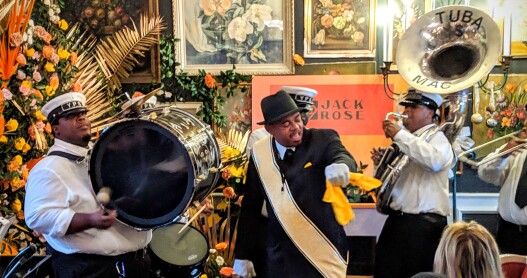
If you’re within earshot of a brass band, chances are good it’s a second line; drop anything you’re doing and follow that sound—you won’t be sorry. Or head over to Congo Square in Treme, the epicenter of Black culture and music in the city.

A crawfish boil—ideally in someone’s backyard—is an iconic New Orleans pastime. If you don’t have a backyard to borrow, pick up crawfish, potatoes, corn, and sausage from KJean’s, and head to City Park.

Food and drink to try in New Orleans

New Orleans’s already renowned restaurant scene has only gotten stronger over the years. Restaurants that are shaking up the old guard, jazzing up Cajun classics, and bringing new flavors to the forefront include Mid-City’s Heard Dat Kitchen and Senegalese-inspired Dakar Nola. Lunching at Commander’s Palace (when martinis are a 25 cents apiece at lunch on certain days) or queuing for fried chicken at Willie Mae’s Scotch House is essential—but so are whole grilled fish at Donald Link’s Peche, globally inspired street food at Booty’s, and cocktails at Cure.

Culture in New Orleans

In Cajun cooking, the holy trinity is a riff on mirepoix that refers to onion, celery, and bell peppers and is the base for iconic dishes from gumbo to jambalaya. If the city of New Orleans had a holy trinity, it would be food, music, and the Saints. To understand the city’s culture, go for Friday lunch at Galatoire’s, grab a bench at Preservation Hall, and catch a game at the Superdome. There’s also a burgeoning gallery scene along Julia Street and a handful of worthwhile museums, including the Contemporary Arts Center and the National WWII Museum.

New Orleans is a city that likes to get its party on, and its festivals are nothing short of epic. The most famous are Mardi Gras and Jazz Fest, but also of note are alternative music festivals like Satchmo Summerfest and Crescent City Blues and BBQ, plus the (free) French Quarter Festival. Even if you don’t plan your trip around a special event, there’s almost always a parade or a party going on somewhere in the Big Easy.

Local travel tip for New Orleans

The French Quarter—Bourbon Street in particular—is where the tourists go. If you’re a native, chances are you’re hanging out elsewhere.

READ BEFORE YOU GO
HOTELS
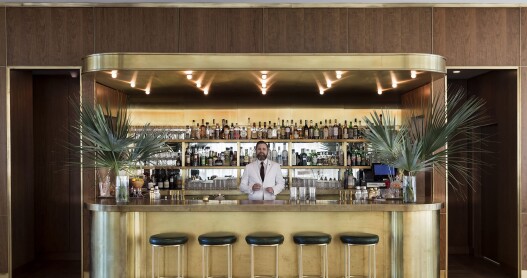
From lobby bars to rooftop lounges, these are the hotel bars Afar editors love checking out when they’re checking in.
Carnival season is here, but there’s still time to make reservations for a last-minute trip to the Big Easy.
The New Orleans City Council just unanimously voted to place heavy restrictions on short-term rentals throughout the city. Here’s what it means for travelers.
The Ace Hotel Group just announced plans to open Maison de la Luz in New Orleans as part of its new luxury spin-off brand.
RESOURCES TO HELP PLAN YOUR TRIP
Why we love it: A boutique stay in Faubourg Marigny that’s full of history, character, and style

The Highlights:
- High design mixed with historic details
- A restaurant from a James Beard–nominated team
- Character-filled common spaces like the parlors and sun room

The Review:
Located in New Orleans’s culturally rich Faubourg Marigny neighborhood, the 71-room Hotel Peter and Paul comprises a historic church, rectory, schoolhouse, and convent, all built in the 19th century. When converting the site, local resident Nathalie Jordi and New York–based interior design firm ASH NYC took pains to preserve original features like cypress wood moldings, stained glass windows, and marble fireplaces, while adding signature details like antique chandeliers and custom rugs handmade in India. As a result, each guestroom has a personality all its own, evident in touches like canopy beds, Italian linens, and trays of locally sourced snacks.

That love for local eats extends to The Elysian Bar, where the team behind James Beard–nominated wine bar Bacchanal serves regionally focused fare like roasted Gulf shrimp and braised beef short ribs, and Sundae Best, which offers small-batch ice cream made with seasonal, locally sourced ingredients. Also on site is a cheery cafe for coffee and pastries; two grand parlors for reading the paper in a vintage rattan chair; a sun room modeled after Claude Monet’s Giverny home; an amber-hued bar serving low-proof spritzes for aperitivo hour; and a tranquil brick courtyard lined with palms, ferns, and vines. More impressive still is the decommissioned Catholic church, designed by famous New Orleans architect Henry Howard. Here, the hotel hosts a mix of private and public events, from weekly concerts to yoga and floral design classes.
Some find this narrow, neon-lit French Quarter street appealing, others appalling. But it’s worth a stroll either way. It’s as if all the sins of mankind and then some were rounded up and corralled here—tawdry strip shows, cheap and potent drinks, the coveting of neighbors’ wives, petty larceny, big-ass beers, bad cover bands, and so on. (Bad cover bands were not technically mentioned in the Old Testament, but to many they’re the street’s most shameful sin.) The heart of the party zone stretches eight blocks from Iberville Street to St. Philip Street, with the thickest concentration of bars on the Iberville end. New Orleans allows alcoholic drinks outside, as long as they’re in plastic cups, or “go-cups"—meaning you can roam the length of Bourbon Street with your beer or hurricane in hand.
In 2016, Ace added another link to its chain of ultracool hotels when it opened an outpost in a renovated 1928 building in the Central Business District of New Orleans. While the Ace employees here are just as edgy as their counterparts elsewhere, they temper that cool with the warm ease of New Orleans’s locals.

Guests enter the hotel through a lobby of mismatched low-slung sofas and vintage coffee tables set in conversation-friendly groupings beside a lovely and ornate wooden bar. Most of the furnishings and artwork complement the hotel’s dominant forest green hue, which itself seems to have been inspired by the color of the streetcars that trundle past on Carondelet Street. Afternoon and evening and late at night, the lobby bar is kept busy by hotel guests as well as a stream of others drawn here by the stylish vibe.
Frenchmen Street is, more or less, the local-music version of Bourbon Street. It also has its share of tourists trundling about with go-cups in hand, but they’re drawn more by the music than the drink. Plan to spend an evening (things start to pick up around 8 p.m., earlier on weekends) along a three-block stretch of small, informal clubs where there’s often no cover (give generously and give often when the bucket comes around), or at most $5 or $10. Notable clubs include the Spotted Cat, the Maison, Blue Nile, D.B.A., the Apple Barrel, and Snug Harbor. Earlier in the evenings, there’s often an impromptu brass band at the corner of Chartres and Frenchmen. Between sets, take a moment to browse the night art markets, the largest of which is next to the Spotted Cat.
Previously known as the Hotel de la Poste, the 97-room property transitioned to the W French Quarter in 2000 and has since undergone a $9-million overhaul. The newly redesigned rooms channel the city’s jazz and voodoo culture, while the new bar and restaurant, SoBou, serves modern Creole fare and has an excellent cocktail program run by Laura Bellucci. Another addition with the renovation, which was completed in 2012, is the FIT gym, open to guests 24 hours a day.

Of course, one of the hotel’s main selling points is its central location on charming Chartres Street, which is lined with antique shops, art galleries, vintage book stores, and the like. And should you want a quiet corner to while away the afternoon, the hotel’s outdoor courtyard is the perfect place to do so.
This English-inspired hotel has been the place to stay in New Orleans for basically forever—well, since it opened in 1984, at least. It’s plush without being pompous, stately without being too serious, though it should be said that this is the kind of place where gents might wear a pocket square and watch fob and feel right at home. The $8 million art collection, which includes original works by Reynolds, Gainsborough, and Huysman, is museum-worthy (you can even take an audio tour), and the 4,500-square-foot spa, part of the 2012 $22 million renovation, is one of the city’s most luxurious. Other notable upgrades include the lobby cocktail bar—a more feminine alternative to the leather-clad Polo Club Lounge, and an outdoor pool.
Built in 1863, Magnolia New Orleans is classic in decor—especially in the marbled lobby with its antique furnishings and Renaissance murals—but with all the up-to-date amenities you’d expect: Rooms and suites have flat-screen televisions and Nespresso coffeemakers, and there’s a small but well-equipped gym on-site and a rooftop sundeck with a Jacuzzi.
This family-run hotel, originally opened in 1886, is steeped in history from its classic furnishings to its esteemed guests. Literary legends William Faulkner and Ernest Hemingway have stayed here; Tennessee Williams wrote about the hotel in his play The Rose Tattoo, and Truman Capote was known to prop up the Carousel Bar & Lounge on many a night. The merry-go-round–like bar (which makes a complete revolution every 15 minutes) is probably the hotel’s most famous feature, and a Vieux Carre cocktail there is de rigueur. Guests will also want to visit on-site restaurant Criollo, which offers an updated take on traditional N’awlins fare.
First opened in 2004 in a former office building in the Central Business District, the Loews New Orleans Hotel completed a $4 million renovation in November 2014. The new look is modern, but with a nod to the Big Easy: rooms and suites (which, by the way, are among the most spacious in town) are done up in soothing blues and grays, and feature local photography on the walls, and the carpets have a wrought-iron fence motif. Large picture windows afford vistas of the city or the Mississippi River.

Run by the legendary Brennan family and named after the vivacious Adelaide Brennan, the hotel restaurant also got a makeover—think canary-yellow seats, teal tufted banquettes, and Andy Warhol–esque pop art of its namesake.
Occupying what were the Maison Blanche department store and the S.H. Kress & Co. five-and-dime, this stately hotel first opened its doors in 2000 after a $250 million overhaul of the then-shuttered Beaux-Arts buildings. After Katrina, the property underwent a second renovation, which included the expansion of its spa (now a sprawling 25,000 square feet) and the addition of a private entrance for Club level guests.

This is a Ritz-Carlton, so you can expect the same (high) level of service and luxury—think ornate furnishings, sumptuous linens, and a $3.5 million art collection—as at other properties within the brand. But the property isn’t just another Ritz. Bellmen wear seersucker, the bistro serves po’ boys, and there’s live jazz in the lounge (which also serves a mean Vesper).