New Orleans

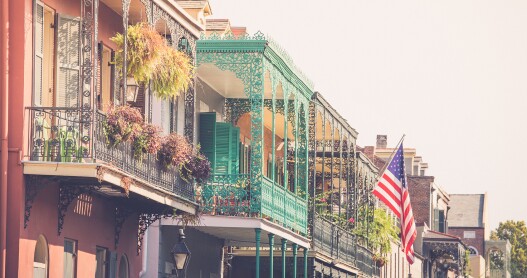
New Orleans, on Lousiana’s Gulf Coast, is never short of an excuse to laissez les bon temps rouler—and the city’s popularity has been driven by what the Big Easy does best: eating, drinking, and being merry. The French Quarter has plenty to entertain beyond the neon-lit Bourbon Street, so it’s worth exploring the city’s outlying neighborhoods, from the manse-lined streets of Uptown to the boho Bywater. And one need only wander into any of the bars along Frenchmen Street to be convinced that New Orleans’s musical heritage beats on—and that no matter how small the venue, there’s always room to dance.

NEW ORLEANS, LOUISIANA USA- FEB 2 2016: An unidentified  local jazz band performs  in the New Orleans French Quarter, to the delight of visitors and music lovers  in town.

Jazz spills out onto the street everywhere across New Orleans.

Photo By GTS Productions/Shutterstock

Overview

When’s the best time to go to New Orleans?

Mardi Gras, Essence Festival, and Jazz Fest, the city’s biggest events, take place in winter, summer, and spring. Though summer brings fewer crowds due to the heat, it’s worth considering a nonpeak trip to avoid the tourist throngs and exorbitant hotel rates. August’s Satchmo Festival is a celebration of native son Louis Armstrong, while the holiday season brings bonfires, Reveillon dinners, and caroling in Jackson Square.

How to get around New Orleans

New Orleans’s Louis Armstrong International Airport is about 25 minutes from the French Quarter by taxi. The fare is a flat rate of $36 for the first two passengers, plus a $15 surcharge for each additional person. Airport shuttles are slightly more—$30 for a one-way ticket, $56 round-trip—and run every half-hour or so to hotels and other locations.

The French Quarter is easily navigated on foot, and the city’s streetcars can be useful if you’re planning to explore well-trodden parts of the city like the Garden District, City Park, and the Superdome; a day pass costs $3. For everywhere else, taxis are readily available.

Can’t miss things to do in New Orleans

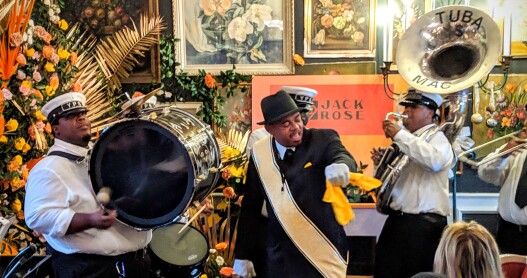
If you’re within earshot of a brass band, chances are good it’s a second line; drop anything you’re doing and follow that sound—you won’t be sorry. Or head over to Congo Square in Treme, the epicenter of Black culture and music in the city.

A crawfish boil—ideally in someone’s backyard—is an iconic New Orleans pastime. If you don’t have a backyard to borrow, pick up crawfish, potatoes, corn, and sausage from KJean’s, and head to City Park.

Food and drink to try in New Orleans

New Orleans’s already renowned restaurant scene has only gotten stronger over the years. Restaurants that are shaking up the old guard, jazzing up Cajun classics, and bringing new flavors to the forefront include Mid-City’s Heard Dat Kitchen and Senegalese-inspired Dakar Nola. Lunching at Commander’s Palace (when martinis are a 25 cents apiece at lunch on certain days) or queuing for fried chicken at Willie Mae’s Scotch House is essential—but so are whole grilled fish at Donald Link’s Peche, globally inspired street food at Booty’s, and cocktails at Cure.

Culture in New Orleans

In Cajun cooking, the holy trinity is a riff on mirepoix that refers to onion, celery, and bell peppers and is the base for iconic dishes from gumbo to jambalaya. If the city of New Orleans had a holy trinity, it would be food, music, and the Saints. To understand the city’s culture, go for Friday lunch at Galatoire’s, grab a bench at Preservation Hall, and catch a game at the Superdome. There’s also a burgeoning gallery scene along Julia Street and a handful of worthwhile museums, including the Contemporary Arts Center and the National WWII Museum.

New Orleans is a city that likes to get its party on, and its festivals are nothing short of epic. The most famous are Mardi Gras and Jazz Fest, but also of note are alternative music festivals like Satchmo Summerfest and Crescent City Blues and BBQ, plus the (free) French Quarter Festival. Even if you don’t plan your trip around a special event, there’s almost always a parade or a party going on somewhere in the Big Easy.

Local travel tip for New Orleans

The French Quarter—Bourbon Street in particular—is where the tourists go. If you’re a native, chances are you’re hanging out elsewhere.

READ BEFORE YOU GO
HOTELS
From lobby bars to rooftop lounges, these are the hotel bars Afar editors love checking out when they’re checking in.
Carnival season is here, but there’s still time to make reservations for a last-minute trip to the Big Easy.
The New Orleans City Council just unanimously voted to place heavy restrictions on short-term rentals throughout the city. Here’s what it means for travelers.
The Ace Hotel Group just announced plans to open Maison de la Luz in New Orleans as part of its new luxury spin-off brand.
RESOURCES TO HELP PLAN YOUR TRIP
Revel is easy to overlook—it’s on a busy stretch of Carrolton Avenue (just off the Canal Streetcar Line) amid a slew of other neighborhood restaurants. But it’s the only one here helmed by Chris McMillian, among the nation’s most prominent bartender-historians. He knows the history and lore of New Orleans drinks better than anyone, and is pretty conversant with cocktails from, well, just about anywhere. The drinks list here is solid, but ask McMillian what he’s been enjoying whipping up lately, and order one of those. And come hungry—the kitchen, manned by his son-in-law, serves up great bistro fare.
Nina Compton, a native of Saint Lucia in the Caribbean, came to New Orleans a few years ago to compete in the Top Chef television series. She didn’t win the culinary slugfest, but New Orleans came out ahead—a short time later she returned to set down roots by opening Compère Lapin, a charming, brick-accented restaurant in a hotel that’s a reasonable stroll from the French Quarter. It’s good to get there early to grab a drink at the bar, which treats its libations with the same seriousness as the kitchen does its food. (A frozen drink… with chartreuse.) The dishes are alive with creative Caribbean flavors—among the more memorable plates are the seafood pepper pot, black drum, and curried goat.
Sucré opened a couple of years after Katrina swept through a bustling stretch of Magazine Street not far from the Garden District. It quickly established itself as the city’s premier destination for chocolates, macarons, gelato, and, well… basically anything with sugar. The original shop is bright and modern rather than cluttered and fussy, and the intricately decorated confections are neatly housed in chilled cases, like jewels in a vitrine. But there’s nothing precious about the tastes here—it’s all big, bold flavors. If you’re here around Mardi Gras season, ask about the seasonal king cake, all lustrous and gilded. Sucré also recently opened a French Quarter outpost with an upstairs tearoom.
Café Du Monde is always open; it’s the clientele that changes—from visiting families and local pensioners early in the morning, to couples in the evening, to Bourbon Street refugees looking for coffee and ballast in the night’s thinnest hours. This huge coffee stop is a rarity—a tourist trap that locals actually love (although they will rarely wait when lines are long). It’s been around for more than a century, and basically serves two items: beignets and café au lait. The beignets are similar to Spanish buñuelos, fried fritters of dough, and are one of those French traditions that’s survived here more durably than in France. While probably not on anyone’s diet list—they come piled with powdered sugar—they’re surprisingly light, and an order (which equals three beignets) disappears with unusual haste.
Verti Marte is at heart a cramped, bare-bones deli. But any effort the owners have failed to expend on stocking the shelves or sprucing up the decor they’ve put into making excellent food. Head to the small counter in the back and make your request; while your sandwich is being assembled, forage for chips or soda. Verti Marte is known for its oversize po’boy sandwiches (shrimp, dressed, is among the more popular), along with muffulettas and tasty side dishes, like smothered cabbage and Brussels-sprout salad. Still hungry? Nobody has gone wrong by ordering the bread pudding and pecan pie.
How a humble European pastry became the Big Easy’s most delicious symbol of Mardi Gras.
After a two-year hiatus, a writer returns to New Orleans to rediscover her roots through art, flavors, and memory.
Author Lauren Shockey’s colorful book presents hangover cures and remedies found across the globe, in the form of traditional and delicious dishes.
An integral part of New Orleans cuisine, beignets are demonstrative of the rich and storied history of the Crescent City.
Why we love it: Atelier Ace’s first luxury property in New Orleans, with antiques and other unique design details to lust after

The Highlights:
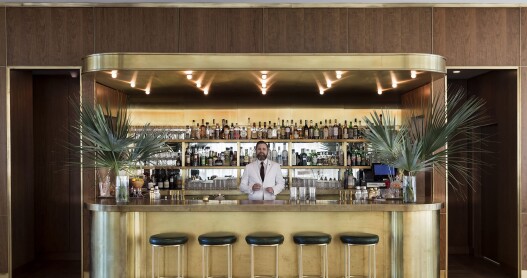
- The guests-only library bar, hidden behind a bookcase at Bar Marilou
- Colorful marble floors in the bathrooms
- High-end service, but plenty of privacy when you want it

The Review:
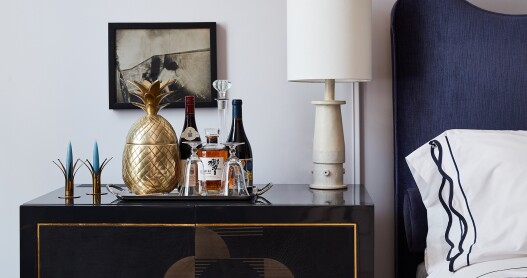
Atelier Ace partnered with Pamela Shamshiri of L.A.-based Studio Shamshiri to design this 67-room property, which opened in April 2019 in an old City Hall annex in the Central Business District. Shamshiri decorated the distinctive guest house with a mix of antiques she collected from around the world, plus custom art and design elements like colorful marble floors, French wallpaper, and vintage-inspired glass light fixtures. Keep an eye out for a reoccurring snake motif throughout the hotel, from sculptural snake shower-door handles in the bathrooms to cobra lamps in the hallways and slithering ceramic elements in the fireplace of the lobby lounge. It’s a little bit Garden of Eden with a hint of the occult, making you feel as if you’ve checked into the private home of an elderly socialite—maybe Iris Apfel—that’s filled to the brim with fabulous souvenirs from her worldly travels over the years.

Maison de Luz is located just across the street from the Ace Hotel New Orleans and guests are encouraged to pop over to the sister property to enjoy the rooftop pool or grab a crawfish roll at Seaworthy. Back at Maison, however, the common areas—including a hidden library bar—are just for overnight guests, creating the feeling of a calm refuge within the city.