San Diego

San Diego is the birthplace of California and sits just 20 minutes from the border with Mexico. Mild weather, sunshine, and 70 miles of coastline help justify the nickname “America’s Finest City.” Travelers come to San Diego for world famous tourist attractions such as the San Diego Zoo and the beaches, but there’s more to the city beyond the Gaslamp and Pacific Beach. In San Diego’s culturally diverse neighborhoods, you’ll find unique restaurants, breweries, art galleries, and locally owned boutiques. San Diego is built atop undeveloped canyons giving the city’s neighborhoods distinctive boundaries and interspersing the city with open space. The canyons also mean that attractions are a bit spread out.

original-san-diego-banner-crop-2019.jpg

Photo Courtesy of Ganapathy Kumar

Overview

When’s the best time to go to San Diego?

During the months of May and June, known as “May Gray” and “June Gloom,” the sun remains hidden much of the day behind a thin veil of high fog. The hottest months, with temps in the eighties, are August, September, and October, when hillsides are golden-brown. A little rain falls during winter, which is the best time to view the natural landscape at its greenest. The combination of ocean, coastal canyons, and mountains to the east creates a variety of microclimates. A 10-degree temperature difference can occur within as little as 15 miles.

Can’t miss things to do in San Diego

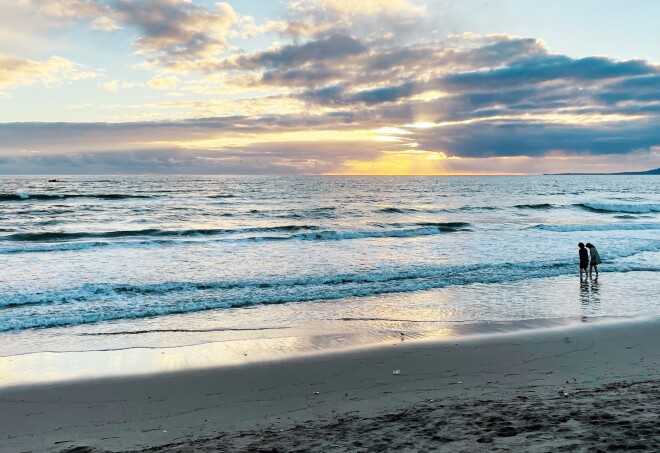
Definitely check out Sunset Cliffs Natural Park in Point Loma. See the crystal waters from the sandstone bluffs. You might feel like you’re in some other country—a beautiful one, for sure.

Food and drink to try in San Diego

The border location plus the influx of Asian immigrants over the centuries means San Diego specializes in Mexican and Asian cuisines. The locavore movement is growing, and many restaurants have been developing relationships with farms just outside the city. You’ll find chef-owned fine-dining establishments, hole-in-the-wall destinations, and dozens of food trucks.

Culture in San Diego

San Diego’s climate and location on the West Coast draw people from all over the world. A variety of cultures are reflected in the shops and restaurants around the city. Each neighborhood has its own feel and style. If you love architecture and hidden treasures, plan to park your car, get out, and walk around!

FESTA!, in Little Italy, is the largest Italian festival on the West Coast. Balboa Park December Nights is a Christmas-themed festival that draws over 350,000 visitors. Restaurant Week happens twice a year—a time to eat gourmet at a great price from more than 170 participating restaurants. The San Diego LGBT Pride fest in Hillcrest draws over 200,000 participants. San Diegans love their festivals, and something is usually happening every month of the year. At these lively events, the trolley offers an easy transportation alternative to parking a car.

Local travel tips for San Diego

- The best time of year is September and October, when the ocean is warm enough for most swimmers to get in the water without a wetsuit, and the hordes of tourists have left.
- Winter is considered “off-season,” so you can get lower hotel rates and still enjoy great weather.
- No matter the time of year, dressing in layers is recommended, as the temperature can change in short distances due to microclimates.
- San Diego’s weather is dry, so carrying water with you is essential!
- The neighborhoods of La Jolla, Ocean Beach, and Pacific Beach have only one main road leading in and out. Avoid visiting around the morning and evening rush hours or you may get caught in a traffic bottleneck.

How to get around San Diego

The San Diego International Airport, formerly known as Lindbergh Field, sits right in the heart of San Diego. Flying in can be a real thrill as the plane passes low over Balboa Park and between buildings.

The San Diego freeway system is laid out in a grid, making it easy to get around by car anywhere in the 372 square miles of city. The trolley is a great choice if you are staying in downtown San Diego, as it stops at many destinations of interest. A machine at each trolley stop accepts cash or credit. Another option is to rent an electric smart car from Car2Go (register in advance, as it takes about five business days to get your membership card). Use the card to activate any Car2Go smart car, and when you’re done, just leave it parked in any legal parking space in the city. To get to the various towns along the coast in San Diego County, or farther north, hop aboard the Amtrak Pacific Surfliner.

READ BEFORE YOU GO
From desert blooms in Death Valley to coastal florals in the Channel Islands and popular poppies in the Sierra foothills, here’s where to find California’s wildflowers.
HOTELS
Live like a local in San Diego by basing your stay at one of the city’s top neighborhood Airbnbs.
RESOURCES TO HELP PLAN YOUR TRIP
Start Your Wellness Journey at the Monarch Beach Resort
When it comes to Kindred, you can forget your preconceived notions of vegan restaurants. The South Park spot features killer cocktails, filling food, and an edgy design, complete with a coffered ceiling, a white-marble bar, and a demon-wolf-head sculpture mounted on the wall. Pair the refreshing Place of Certainty (vodka, elderflower, Aperol, lemon, Thai basil, winter melon bitters, and cucumber) with Kindred’s take on the charcuterie board (smoked golden beets, kale pesto, and red-chili-and-orange-fennel seitan), or order something more substantial, like the beet risotto or the seared cauliflower steak with squash puree and steak sauce. The restaurant also offers an excellent weekend brunch with everything from cinnamon rolls and banana bread French toast to pancakes with bourbon butterscotch.
From Top Chef: All-Stars winner Richard Blais comes this Little Italy favorite, a fast-casual spot specializing in humanely raised chicken and eggs. Here, the fried chicken is crispy and not too greasy, and sandwiches like the Malibu Barbie Q (chicken thigh, cornmeal onion ring, pineapple mustard) are addictive. An almost entirely outdoor spot, the Crack Shack features a walk-up window, bocce ball court, and cocktail bar. For something more traditional, head next door to Blais’s second concept, Juniper & Ivy, where you can enjoy an ever-changing menu of seasonal shared plates. From time to time, the restaurant hosts a Farm Dinner centered on a special ingredient like lamb from a local purveyor, making for one of the best splurge meals in the city.
Trey Foshee, executive chef of George’s at the Cove in La Jolla, is one of the most talented and respected chefs in San Diego. At his casual Mexican restaurant near La Jolla Shores, he cooks with equal skill, using only the best ingredients to create pure, intense flavors. Head to Galaxy Taco for heirloom Masienda corn tortillas, made-to-order guacamole, and epic margaritas with top-shelf liquor and charred fruit. A balance of sweet, sour, and smoke, the Oaxacan Guava (Los Javis mezcal, guava, lime, orange-vanilla shrub, and grapefruit) is a must.
When visiting this dramatic, narrow beach in the wealthy La Jolla enclave, take time to admire—and photograph—its single surf shack. One of San Diego’s most important surf-culture icons, the wooden palapa is actually a designated historic landmark, built in the 1940s by soldiers and surfers who served in World War II and reconstructed as recently as 2016. Windansea is also known for its pounding, experts-only surf break; you should attempt it only if you’re experienced, but it’s just as fun to watch from atop the beach’s smooth sandstone rocks. For some peace and quiet, sunbathe in one of this stretch’s secluded pockets.
Located beneath the San Diego–Coronado Bridge, this public space might not be green and tranquil, but it tells a story of perseverance. In 1970, residents of the predominantly Latino Barrio Logan neighborhood staged a nonviolent takeover when the state attempted to build a California Highway Patrol station on land the city had promised would be a community park. Their protests were ultimately successful; the area was designated a park shortly thereafter. In 1973, brightly hued murals touching on Chicano identity and struggles began appearing on the concrete pillars surrounding the space. Today, visitors can see more than 50, which are considered so culturally significant that they earned the park National Historic Landmark status in 2016.
Gold Leaf cofounder Sonya Kemp worked at design collective SoLo in Solana Beach before fulfilling her lifelong dream of opening her own boutique. Now, she stocks her store with everything from kitchen utensils to kids’ toys, drawing inspiration from Zakka (a Japanese and Scandinavian movement that elevates everyday items). Shop for handblown glass lamps from France, midcentury modern furniture from Tijuana, and vintage clutches and jewelry. Then head next door to the Rose, the boutique’s neighbor here in the Historical 30th & Fern commercial center, for a glass of wine.
An active parish of the Roman Catholic Diocese of San Diego, Mission Basilica San Diego de Alcalá remains a tranquil place of worship and reflection. Regardless of your religious beliefs, the first of California’s 21 missions is well worth a visit for its extensive history. It was originally constructed in Presidio Park in 1769 but moved inland to its current site just five years later. Records show that it was the first place in California to cultivate olives; tree cuttings from this mission would later be used to found olive groves at other missions around the state. It’s also home to the grave of Father Luis Jayme, the state’s first Catholic martyr; he was killed when American Indians stormed the mission in 1775 and is now buried next to the altar. Destroyed many times over, the mission was most recently rebuilt in the 1930s, but looks as it would have in the early 1800s.
This rare phenomenon transforms deserts into a riot of color.
For that old-country feeling, right here at home.