Amsterdam

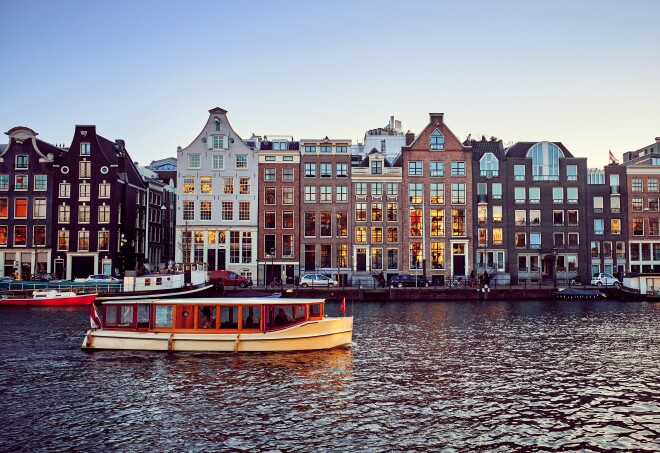
With its Golden Age canals, 17th-century mansions, world-class museums, and well-established counterculture, Amsterdam is a European capital with an edge. While some come for tulips, cheese, and windmills, others are drawn by the city’s reputation for easy sex, drugs, and rock ’n’ roll. Whatever brings you to this charismatic global village, you’re sure to be charmed by its fairy-tale landscapes, tolerant vibe, and historical legacy that harks back to the small, 13th-century fishing village on the Amstel River that would become an international capital.

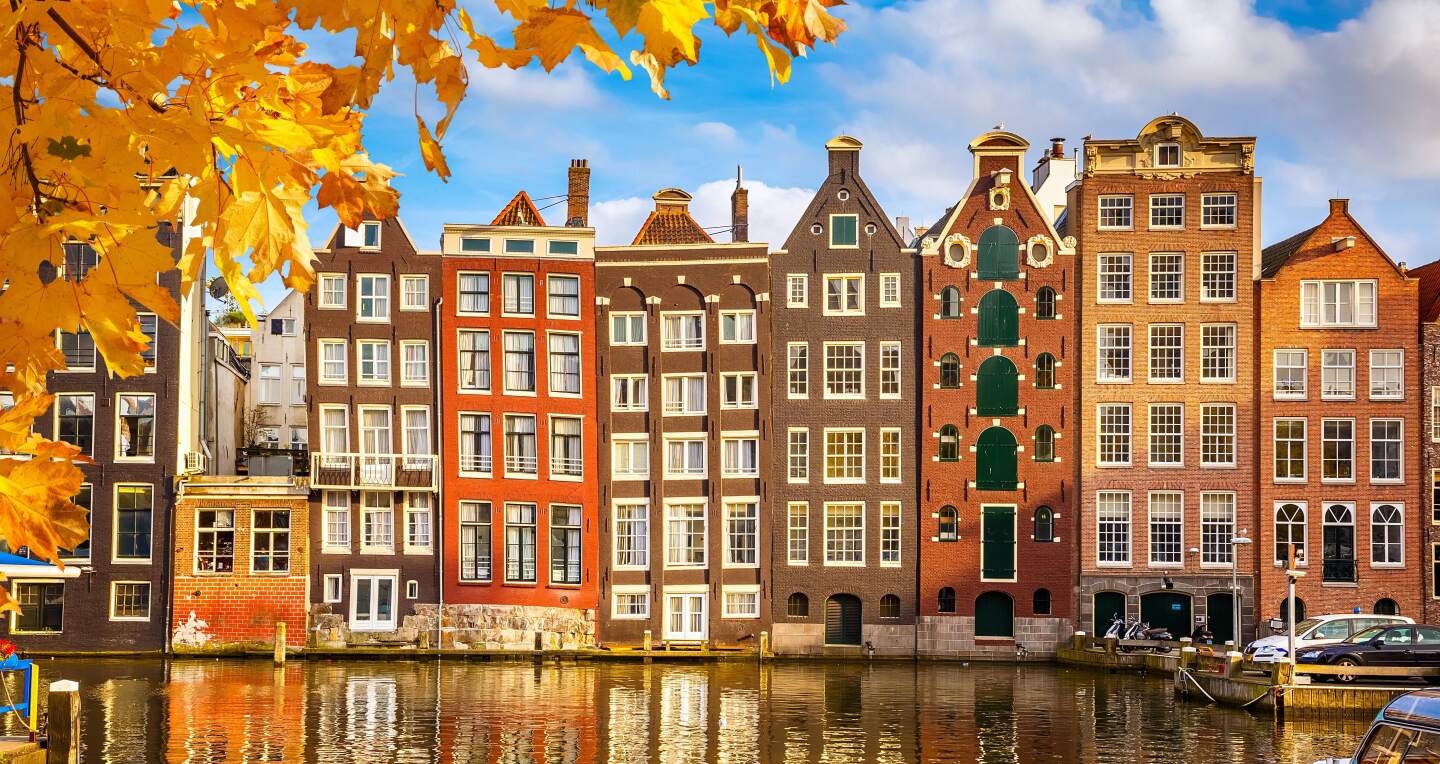
Amsterdam canal at fall, several tall little houses in a row next to the river canal

Sergey Borisov / Alamy/Alamy

Overview

When’s the best time to go to Amsterdam?

Winter may be cold (with January and February the coldest months), but tourists are gone and locals have reclaimed the town. Before the holidays, In Leidseplein and Rembrandtplein, two of the city’s open squares, skating rinks and oliebollen stands appear (oliebollen are the local doughnuts). Twinkling lights decorate bridges; seasonal trimming transform streets into fairy-tale lanes. Amsterdam Fashion Week sashays through town in January, drawing international style-makers. In the spring, tulips bloom, flowers spill over balconies, tourists jam museums, and locals celebrate the lengthening days. Millions arrive to viist Lisse’s Keukenhof, a stunning flower garden. Summer means picnics in Vondelpark, Museumplein, Amsterdam Bos, and all the city’s green spaces. During Open Garden Days in June, many canal houses open private courtyards for viewing. Outdoor concerts and festivals abound, restaurant patios overflow with diners, and locals head to urban beaches. In the fall, as the leaves change color, Amsterdam ushers in the cultural season. New exhibits open at galleries and museums and opera season kicks off.

January: Amsterdam International Fashion Week February: Chinese New Year Festival March: Amsterdam Restaurant Week April: Koningsdag (King’s Day, formerly Koninginnedag or Queen’s Day) May: Art Amsterdam (previously Kunst RAI) June: Holland Festival, Vondelpark Open Air Theater, Taste of Amsterdam, Nuit Blanche, Open Garden Days July: Amsterdam Roots Festival, Kwakoe Zomer Festival August: Robeco Summer Nights, Gay Pride, Grachtenfestival; Pluk De Nacht, Sail Amsterdam, Uitmarkt September: Open Monument Days, Jordaan Festival, Amsterdam Restaurant Week October: Amsterdam Dance Event, Amsterdam Marathon November: Museum Night, Amsterdam Antique Fair, High Times Cannabis Cup, International Documentary Film Festival, Sinterklaas arrives

How to get around Amsterdam

Amsterdam is an international hub for many airlines. Flights arrive at Schiphol, which is about half an hour from the city center by public transportation. Trains arrive at Central Station, where countless connections to the rest of the Netherlands and all of Europe are available. Eurostar buses terminate at Amstel Station. Boat travel is an option for U.K. and Scandinavian travelers, via P &O North Sea Ferries, Stenaline, and Scandinavian Seaways. City parking is rare and expensive. If you must arrive by car, take the A10 Ring into town from any major freeway.

Amsterdam is among the most compact of the world’s major cities, making it easy to get around by foot or bike. An excellent system of GVB trams and buses facilitates travel throughout the city and beyond. A metro line connects Centrum with the suburbs.

Can’t miss things to do in Amsterdam

There’s no sign, no agenda, and no boundaries at Supperclub, where it’s always a memorable evening. From the Salon Neige, where you’ll dine like a sultan to the gay urinal that doubles as a smoking room, this is experimental fun unfettered by convention. Expect eclectic cuisine and entertainment from the seductive to the bizarre, encompassing vaudeville, burlesque, and cabaret.

Food and drink to try in Amsterdam

Holland is known for hearty comfort food, not haute cuisine. Yet its capital competes with the best of Europe on the dining front with nearly 1,500 options, from Michelin-starred restaurants and historic watering holes to gay cafés and Irish pubs. Amsterdam’s culinary melting pot includes diverse fare encompassing Indonesian rijstaffel, Spanish tapas, and Dutch favorites such as stamppot, bitterballen, and pannekoeken. Sample Asian flavors in Chinatown, near Nieuwmarkt, or cruise Haarlemmerstraat, Utrechtsestraat, or Reguliersdwarsstraat for dining options. Avoid touristy Leidseplein. On the street, try Vlaames frites—twice-fried potatoes smothered in mayo—or raw herring served with pickles and onions. Turkish pizza is popular, as are gyros, reflecting Middle Eastern influences. In the wee hours, buy a kroquet or burger from coin-operated windows at FEBO (the Dutch fast-food automat chain), where you’ll see locals trying to be inconspicuous as they grab a late-night snack. Heineken and Amstel are the local beers. For a stiffer drink, try Dutch jenever, which is juniper-flavored gin.

Culture in Amsterdam

With classical music at Concertgebouw, theater at Stadsschouwburg, jazz at Bimhuis, contemporary music at Muziekgebouw, and cabaret at Royal Theater Carré, Amsterdam’s cultural scene offers plenty of variety. Renowned pop and electronic music venues include Air, Melkweg, Paradiso, Sugar Factory, and Escape.

AFAR’s travel partner, Context, offers visitors a private tour, led by a local historian, artist, or architect, of the city’s streets and canals called The Dutch Golden Age, with a focus on how a relatively small Amsterdam came to hold a global position of power in the 1600s.

Local travel tips for Amsterdam

  • Never buy drugs from street dealers.
  • Urinating on the street will cost you €60.
  • Taxi drivers may rip you off unless you know exactly where you’re going.
  • Don’t overtip for inferior service at Dutch bars and restaurants.
  • Establishments along Damrak and in Leidseplein are touristy, overpriced, and often mediocre.

Guide Editor

READ BEFORE YOU GO
HOTELS
Once an orphanage and Palace of Justice, Rosewood Amsterdam is the Dutch capital’s most anticipated new hotel—and one of the city’s last debuts for a while.
A Boeing 737-800 is the main draw of the 1,200-square-foot suite at the Corendon Amsterdam New-West, and the whole room has been recently refurbished to be even cooler.
A recent announcement included numerous measures aimed at controlling what has become an irrepressible flood of visitors.
Who needs a hotel lobby when the city—and its canals—are right on your doorstep?
RESOURCES TO HELP PLAN YOUR TRIP
Eating raw herring is a right of passage for many who visit Amsterdam. Order yours from the friendly Dutch matrons in blue and white-striped aprons at Stubbe’s Haaring, a herring stand with a view on the bridge over Singel Canal, just off Haarlemerstraat. For decades, this local institution has satisfied the fish cravings of Dutchies and visitors with lightly brined herring, smoked eel and other delicacies from the North Sea. Unless you want bragging rights, there’s no need to eat your buttery snack Dutch style, grabbing it by the tail, throwing your head back and lowering the fish whole into your gaping mouth. Most locals eat it in a less flashy way: cut up into small pieces, covered with onions and sweet pickles, topped with a Dutch flag. It’s served on a waxed paper plate, sans bread or cutlery. Use the flag-festooned toothpick to stab the soft, mild-flavored morsels and bring them to your mouth. For a more filling meal, order a broodje haring (herring sandwich) on a soft, white bun, filled with fish, pickles and onions. Eet smakelijk!
Most people don’t think of Warmoesstraat when they plan a shopping spree in Amsterdam. But if your gift lists and desires include dildos, vibrators, S + M toys, porn CDs or kinky leather, it’s where you’ll want to head. As a hub for the city’s leather and LGBT scene, the cobbled street is lined with shops, bars and clubs catering to a gay and kinky crowd. Even if you’re straight, you might find pleasure at Nana, self-described as “the most vibrating shop in town.” Get your groove on with the store’s OmiBod toys that vibrate with your iPod playlist. If nothing but a gay boy will do, search for Mr. Right at Warehouse, The Eagle, Argos or Dirty Dicks, all conveniently lined up on this colorful street off the Red Light District. When hunger hits, head for Getto, where you can saunter through the disco lounge before finding a seat in the dining room, decorated with a chalkboard menu and funky posters. Fuel up on drag queen-inspired burgers and cocktails before heading out to get your kinky on at BoB, MrB and other options for erotic-ware and adult toys. If you’re really into the scene, plan your shopping spree for Leather Pride Amsterdam, held annually on the first weekend of November, when Warmoesstraat becomes the street where some of the town’s most brazen gays come to see and be seen.
The red-light district in Amsterdam is a very busy place with an odd mix of life in one small neighborhood. In a peculiar way it’s very beautiful—there’s so much happening both visually and mentally it takes a bit to process it all as you wander through the rouge-colored alleys. It’s hard to look at the scene without thinking “What if…” And: “How do women end up here? Do they want to be here? In another life, could I be standing in their place?” There’s so much to think about while walking through this area. Even stranger perhaps is that this area is such a major tourist attraction. If you’re looking for seedy, scary alleys, you won’t find them here. But you will see tour groups, families, restaurants, and sex shops.
Any list of cheap eats in Amsterdam would be remiss if it didn’t include FEBO, the Dutch culinary tradition of eating from a wall of fast food vending machines. With 20+ outlets in Amsterdam, it’s easy to find a FEBO de Lekkerste (literally, FEBO the Tastiest). If it’s past midnight, chances are you’ll bump into a handful of Dutchies there, trying to inconspicuously grab a late night frikkandel (minced meat hot dog) or kroket. At the push of a button, out comes a hot snack for munching on while peddling home over cobblestone streets. No one knows exactly how long those mayo-laden burgers are allowed to sit there under heat lamps in FEBO windows. But no one seems to care, especially at 3:00 in the morning, after the bars and nightclubs have closed and there’s no other option for a before-bed snack.
It’s a single street after Amsterdam‘s Negen Straats (Nine Streets), but Hazenstraat, the Tiende Straatje (Tenth Street), rates a ten in serious shoppers’ books. Lined with boutiques, cafés and galleries, this cobbled strip in the Bohemian-chic Jordaan begins starts at Lauriergracht, where French urban artist Invader installed one of 26 mini-mosaics inspired by Space Invaders characters. Highlights include: The English Bookshop, as much a literary gathering spot as a place to buy books and DVDs made from them; Petsalon, a hat shop that’s been a Jordaan fixture for 25+ years; Brown Clothes, featuring Kings Road-inspired couture; Joep Buijs’ art studio, with paintings of colorful women, children and dogs; Olivaria, Holland’s oldest olive specialty shop; Coffeeshop Biba, a back-to-the-60s-style smoke shop that’s grown up with the flower children; Chocolátl, a chocoholic’s Nirvana; Cats ‘n Things, for all things feline; Saarein. a bar for all “queer minded people"; La Festa Pizzeria/Bed & Breakfast; ‘t Stuivertje, serving continental cuisine; and Flamework, Daniela Malaica’s glass jewelry shop proffering vibrant necklaces and other contemporary accessories inspired by her African-Italian roots.
Ah, Warmoesstraat, Amsterdam‘s heart of darkness, the street that never sleeps. Well, maybe...between 5:00–8:00am, after the junkies leave and before tourists arrive. Set adjacent to de Wallen, the city’s most famous Red Light District, this lively straat is home to the gay leather/fetish scene at shops like Warehouse, The Eagle, Argos, Dirty Dicks, RoB and MrB. Have dinner at Getto, an informal bistro with a less in-your-face gay vibe than other establishments on the street, offering drag queen-inspired burgers and international specialties at reasonable prices. Other dining options include Meatballs, Paella, Wok to Wok, Burger Bar and numerous holes-in-the-wall for pizza, shoarma or frites. For a nightcap hit Stone’s, a dive bar with attitude where the time is always 9:25.
This is not your everyday burger joint. From the outside, Burger Bar looks like a typical fast food dive, with a neon sign above a door leading into a narrow, brightly lit interior. Outside tables are likely to be packed with Amsterdammers and there might be a wait for a stool at the bar or one of a few tiny side tables. There’s no ambiance whatsoever, but when your order arrives, you’ll know why you came. For simple, quality food, from juicy burgers to chicken and portobello mushroom sandwiches, Burger Bar does not disappoint. Especially if you’re looking for a quick snack or meal at 4am. With three outlets in Amsterdam, this local favorite offers gourmet burgers in 200- or 270- gram sizes. For a few euros more than a Bic Mac, bite into a juicy patty made with 100% freshly ground Irish, prime aged U.S. Black Angus or Wagyu beef—pure Kobe deliciousness on a locally-baked sesame seed bun. Burgers are grilled as you watch and served with fresh lettuce, tomato, pickle and creamy sauce. Optional toppings include bacon, cheese, grilled onions or mushrooms, avocado, fried egg and/or jalapenos. A side of Belgian fries—crunchy on the outside, fluffy on the inside, delectable with mayo, samurai sauce, blue cheese or other gooey toppings—completes your meal. The outlet on Reguliersbreestraat is a great spot to grab a meal before a movie at the Tuschinsky, around the corner. Others on Kolksteeg and Warmoesstraat fit the bill after the bars and everything else in town has closed.
What’s not to like about Museumplein? In summer, it’s as chill as Vondelpark, with picnickers playing instruments and getting high on the lawn. Add more grass and the field becomes stoners’ heaven as well as a magnet for art aficionados. The latter come for Amsterdam’s trio of world-class museums, all re-opened in 2013 after lengthy renovations—the stately Rijksmuseum, Stedelijk Museum of Modern Art, and the Van Gogh Museum. Tucked south of Leidseplein amidst upscale hotels and cafés, Museumplein is both a culture vulture’s paradise and an open space for those who want to escape the city buzz. In addition to repositories of priceless paintings, it’s home to the Concertgebouw at its southern end.
In a city that prides itself on its reputation as Europe’s Sodom and Gomorrah, Koningsdag (King’s Day) is the one day of the year when everyone gets f*cked-up. It’s when Dutchies honor their monarch by parading down canals in festooned boats, dancing in streets and getting smashed to techno-tunes blasting from disco stages. With King Willem’s 2013 coronation, Koningsdag will be celebrated on April 26, 2014—a day earlier than future years because the new king’s birthday falls on a Sunday. Koningsnacht (King’s Night) will be celebrated on April 25, 2014. Join party-goers on Warmoesstraat, gyrating to pulsating street bands. Belly up to the bar at Stones and admire the barristers over pints of Heineken. Don’t get too f*cked up if you want to get a jump start at the next morning’s Vrijmarkt (free market), when all of Amsterdam turns into a giant garage sale. Would you part with €1 to guess a fat lady’s weight? Or let a child serenade you in Vondelpark? Or throw an egg in a stranger’s face? Have a go on Koningsdag, when entrepreneurs of all ages trade old treasures and new talents for cash. Jostle for a spot on Prinsengracht to watch buff gays in skimpy attire and beer-swilling locals on decorated boats. On Rokin, breathe in the aroma of grilled kebobs and marijuana smoke. Hold on to your hat as you spin on an aerial swing at the Dam Square carnival. However you spend Koningsdag, it’s easy to friends wandering the streets, and poking into bars and coffeeshops until dawn.
Are the Dutch so tall because they consume so much dairy? Hard to say, but the important thing is that delectable cheese made from the milk of cows and sheep grazing on lush pastures in Holland is sold throughout Amsterdam. Netherlanders have been making cheese since 400 C.E. and the product is as synonymous with Holland as tulips, clogs, and windmills. The country is the world’s largest cheese exporter, with a dairy industry that generates around €7 billion annually. There are touristy cheese markets in Alkmaar, Hoorn, and Edam where old weighhouses form the backdrop for the traditional cheese trade. For Amsterdam visitors, shops like Henri Willig Cheese & More proffer everything from mild Gouda and mellow Edam to Boerenkaas (literally, farmers’ cheese), an artisanal raw-milk product. The mini chain of cheese manufacturer Henri Willig was founded in 1974 and now has six shops in the center city and six others elsewhere in Holland. Over 1 million customers visit Henri Willig annually for organic, goat, and smoked cheese, as well as Dutch specialties like Frisian clove cheese (made with low-fat milk, cumin, and cloves) and Leidse kaas, the piquant, cumin-scented variety from Leiden. Henri Willig shops also sell cheese graters, slicers, fondue sets, and other accessories, as well as sweets like Dutch drop (licorice), chocolate, and stroopwafels. An export division ships products to 25 countries. Stop in for a snack, as samples are always set out for hungry customers.