New Zealand

Comprised of the volcanic, lush green North Island and its rugged, mountainous neighbor to the south, New Zealand has just about everything you could ask for in a destination. With a rich Maori heritage, beautiful beaches, geothermal spas, Lord of the Rings filming locations, and a growing wine culture—plus tons of adventure sports—the “Land of the Long White Cloud” has much to offer travelers, who are guaranteed to fall in love with this little nation.

TravelGuide-NewZealand-tyler-lastovich-unsplash.jpg

Photo by Tyler Lastovich/Unsplash

Overview

When’s the best time to go to New Zealand?

At the bottom of the Southern Hemisphere, the seasons in New Zealand are reversed from what most of us are accustomed to. Summer runs roughly from December to March, with Christmas through January considered peak season. Snowfields on both islands lure skiers and snowboarders, making New Zealand a popular winter destination as well. During the shoulder seasons, the crowds die down. The weather on the North Island, especially around Auckland, is considered mild and temperate, making it a nice destination year-round.

How to get around New Zealand

Really, the only way to get to New Zealand is by flying, and all international flights are routed through Auckland because of its large airport. From Australia, it’s a four-hour flight, and from Los Angeles it’s 12. A growing cruise industry brings tourists to travel around New Zealand by ship.

Many visitors choose to rent a “campervan” as a way to explore New Zealand’s lush countryside, save on accommodations, and participate in the country’s rich camping tradition. There are plenty of holiday parks and sites in which to park overnight, but free camping isn’t allowed anymore in most of New Zealand. If you are planning to explore the country for more than a month, you might even consider buying a car or campervan. Because of New Zealand’s remote location and limited public transportation, there is a large market of used cars being bought and sold by travelers; it’s a relatively easy, cheap, and painless process. The major cities also have airports, so if you’re on a limited schedule, you can fly between destinations. Public buses connect towns and cities (you can buy hop-on, hop-off bus passes), and there are some train routes on both islands, as well as plenty of tour companies.

Food and drink to try in New Zealand

New Zealand has a growing food scene, and in recent years big cities like Wellington and Auckland have turned out gourmet restaurants, chic cafes, and boutique bars. The famous coffee culture here ensures you will never be far from a delicious cup of coffee. Trendy new independent craft beer companies and breweries continue to pop up around the country, and plenty of wineries dot both islands.

Culture in New Zealand

Before it was colonized by Westerners, New Zealand was settled by the seafaring Maori people from the Pacific. You can visit various Maori sites and have Maori cultural experiences in places like Rotorua. From carving greenstone or jade pendants to witnessing the famous Haka, you’ll see Maori culture and history everywhere in New Zealand.

The two main wine festivals are Toast Martinborough on the North Island in November, and the Marlborough Wine Festival in February on the South Island. New Zealand’s version of Independence Day, when the Treaty of Waitangi was signed between the Maoris and the British Crown, takes place every year on February 6. Also in February, Wellington comes alive with the Sevens, when seven rugby teams compete, creating a massive party in Wellington. If adventurous eating is your thing, then be sure to check out the Hokitika Wild Food Festival in March, where you can try anything and everything.

Local travel tips for New Zealand

- New Zealand is one of the safest and friendliest countries in the world. From the commonplace encounters with hitchhikers around the islands to conversations with just about anyone you meet, it won’t take long for you to realize that there’s something special about Kiwis.
- Remember that because New Zealand is very remote, parts of the country aren’t easily accessed, aren’t connected to phone service, or are prone to wild weather and geological activity such as earthquakes, landslides, and volcanoes—and it’s good to come prepared.

Practical Information

- English and Maori are the official languages of New Zealand, and pretty much everybody speaks English.
- Of course, like any language, Kiwis (aka New Zealanders) have their own take on some words. If you’re told to get dressed in your togs and jandals, change into a swimsuit and flip flops. And when you’re driving around in a camper van, there’s a good chance you’ll end up in the middle of the wop wops (aka the sticks).
- The country runs on 230/240 volts with angled two- or three-pin plugs so you’ll need a converter.

Guide Editor

Brett Atkinson is a full-time travel and food writer based in Auckland. He writes about adventure travel, unusual destinations, and surprising angles on more well known destinations for Lonely Planet and the BBC, among other outlets.

Liz Carlson is a writer and travel blogger based in New Zealand.

READ BEFORE YOU GO
HOTELS
At these rental properties around the world, you can commune with wildlife and farm animals.
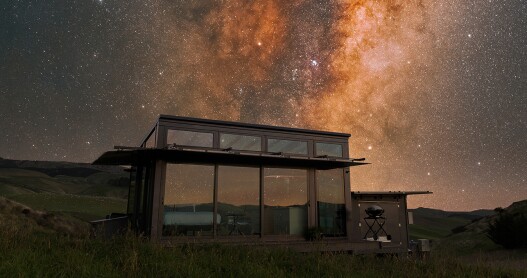
Forget pitching a tent. When you stay in these luxurious huts, domes, and pods, getting close to nature doesn’t mean roughing it.
RESOURCES TO HELP PLAN YOUR TRIP
Choose a 30-, 40- or 75-minute path from which to explore the geothermal wonderland that is Wai-O-Tapu. This protected area offers a kaleidoscopic experience with chromatic pools that can reach temperatures of 75° Celsius (167° F) and high-spraying geysers, the result of volcanic activity. Highlights are the Lady Knox Geyser and Champagne Pool, 65 meters wide and 62 meters deep (213 feet wide and 203 feet deep).
At the end of the tour at the Hobbiton Movie Set, the Green Dragon Inn—a reproduction of the local inn featured in the Lord of the Rings trilogy—serves Middle Earth fare (think savory pies) and drinks (think beer and ginger ale). Its own Southfarthing line of ales is brewed on-site (and on-set) exclusively for the pub, capturing the taste of the Shire.
Part of the spectacular wind- and ocean-eroded shoreline of the Te Whanganui-A-Hei Marine Reserve, Cathedral Cove, on New Zealand’s Coromandel Peninsula, is reached via an undulating coastal track that takes around 40 minutes to hike. To avoid the inevitable crowds, it’s best to visit the massive stone arch early in the morning or late in the afternoon, and the natural shower of the arch’s waterfall is a refreshing option after the walk. The stunning beach is also popular for swimming, and en route there’s good snorkeling at Gemstone Bay and Stingray Bay. To arrive at the cove by sea (a short hop from the nearby resort town of Hahei), contact Cathedral Cove Water Taxi.
The Coastal Pacific Train is back after being closed for two years after the Kaikoura earthquake destroyed the tracks along the scenic route.
Take a closer look at how some of the world’s most popular destinations are coping with overtourism—and learn a few ways you can travel more conscientiously.
The Nevis Catapult is the newest invention from Henry Van Asch, one of the cofounders of commercial bungee jumping.
Overview
Across New Zealand you’ll find weekend farmers’ markets packed with vendors of artisanal products and organic fruit and vegetables, as well as innovative food trucks providing tasty options for breakfast or lunch. Held in the leafy surrounds of Christchurch’s historic Riccarton House, this Saturday-morning institution attracts gourmands from across the city. For travelers, it’s a great place to try cheese and salmon from around the South Island, sample craft beer from local breweries, and stock up on baked goods for on-the-road picnics. Must-visit stalls include Sausage Sisters (for hearty pork-and-apple-sausage rolls) and Utopia Hot (for freshly baked waffles with seasonal fruit).
A short drive north of the South Island town of Oamaru, Riverstone Kitchen is often lauded as one of New Zealand’s best regional restaurants. The stylish dining room is anchored by a robust fireplace crafted from local river stones, and much of the seasonal menu is crafted from the restaurant’s own organic orchards and gardens. A more relaxed café ambience for daily breakfast and lunches segues to a more formal mood at dinner from Thursdays to Saturdays, and the savvy drink list includes wines from the nearby Waitaki Valley as well as small-batch beers from around New Zealand. Ask if any of the excellent Belgian-style farmhouse ales from Oamaru’s Craftwork Brewery are available.
There’s no shortage of great eateries in the New Zealand capital—reputedly Wellington has more cafés and restaurants per person than New York City—and Field & Green is a popular option for the city’s discerning diners. With a versatile menu bylined European Soul Food, it promises ever-changing weekly dishes that could include house-made pasta with wild mushrooms and blue cheese, or baked eggs with spicy lentils and mint yogurt. These hearty but sophisticated flavors are the ideal sustenance for daytime explorations of the city’s harbor attractions, and the good-value, Wednesdays-to-Saturdays three-course supper menu can be partnered with local Wellington craft beers or New Zealand wines.