When’s the best time to go to Martinique?
Martinique’s tropical climate makes the island a great year-round getaway, although it can get crowded during the dry season from December to May. The rainy season lasts from June until November (peaking in September), with heavy—albeit brief—rain showers most days. August is often overshadowed by the threat of hurricanes, but prices fall accordingly. Note that the French flock to Martinique in droves during their summer holidays, which drives up hotel rates.
How to get around Martinique
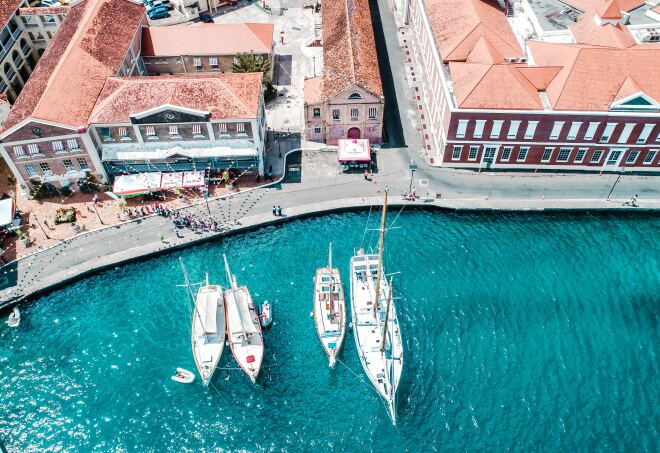
The quickest way to reach Martinique is to fly into Aimé Césaire International Airport (FDF), located eight miles from the Fort-de-France city center. American Airlines offers up to three direct flights on Tuesdays, Thursdays and Saturdays from Miami, as well as daily connecting flights from New York, Boston, and Washington, D.C. Connecting service from the United States through other Caribbean islands is also available via Caribbean Airlines, Winair, Air Caraïbes, and Air Antilles. For travel by sea, large cruise liners dock at the harbor in Fort-de-France throughout the high season from December to April.
Once on Martinique, the most convenient way to get around is to rent a car. You can drive using a license from most nations and the roads are generally kept in excellent condition; be aware that traffic can be extremely congested at times, especially in Fort-de-France. Taxis are common but fees are very high, and there are no rideshare services on the island. Public transportation options are limited, with only a small fleet of buses serving Fort-de-France proper, though there is ferry service between Fort-de-France and Trois-Îlets every day from 6:30 a.m. to 10:30 p.m.
Food and drink to try in Martinique
- Martinique is home to an eclectic mix of local Caribbean specialties and exquisite European fare, with a culinary history informed by French tradition, Creole creativity, and Caribbean ingredients. Be sure to try traditional dishes like conch stew, smoked chicken, and sorbet made with island fruits and spices.
- There are hundreds of dining establishments on Martinique; several are world renowned (like Restaurant 1643 in Le Carbet and Le Brédas in Saint-Joseph). High-end restaurants carry a substantial price tag, but you’ll also encounter dozens of snack stands and small restaurants that serve delicious island fare at reasonable prices. Try Chez Carole in the Grand Marché Couvert in Fort-de-France for accras (salted cod fritters) or Le Barracuda in Trois-Îlets for boudin (local sausage).
- Because Martinique is a French territory, several restaurants on the island feature an extensive—and affordable—selection of French wines. If you prefer cocktails, opt for a Ti punch, a simple blend of rhum agricole, lime, and sugarcane syrup that serves as Martinique’s national drink.
Culture in Martinique
Sun, sand, surf, and epic mountain terrain may draw many visitors to Martinique, but the island also has a fascinating cultural history. The Native Arawaks—and, later, the Caribs—lived on the island long before the French arrived in 1632, bringing with them enslaved African people. After a brutal war, in which thousands of Caribs were killed, the French eventually solidified their dominion over the island. Martinique remains a part of France to this day, though the local Creole culture is a blend of Indigenous, African, and French influences. Learn more at treasured cultural sites like the Anse Cafard Slave Memorial, Scoelcher Library, La Savane Park, the St. Louis Cathedral, and the Balata Gardens.
Martinique boasts an impressive calendar of annual events given its relatively small size. French traditions remain strong here, and the locals observe Bastille Day on July 14 and the Beaujolais nouveau celebrations, which mark the yearly grape harvest, in November. There’s also Carnival (the biggest festival on the island) in February, the Tour des Yoles (an internationally renowned boating event) in August, and the Martinique Jazz Festival (the oldest jazz festival in the Caribbean) during the last week of November.
Can’t miss things to do in Martinique
- Visit the Anse Cafard Slave Memorial to enjoy panoramic views of Diamond Rock and the Atlantic Ocean while learning more about Martinique’s African heritage.
- Spend a day at Habitation Clément, where you can tour a historic sugarcane plantation and rum distillery, taste rhum agricole, and browse galleries full of work by local artists.
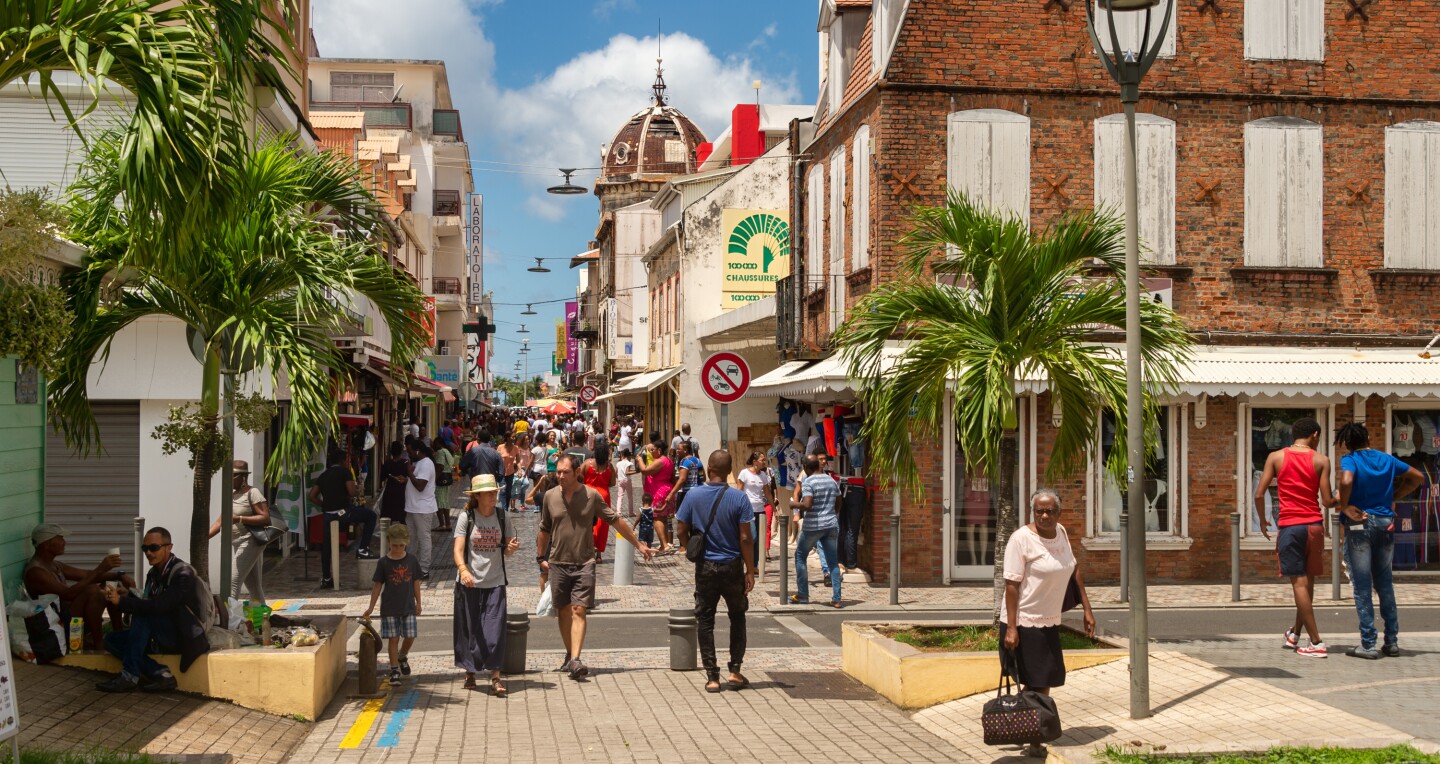
- Fort-de-France is a safe city that can still surprise. The capital features plentiful modern attractions—restaurants, galleries, cafés, and shops—alongside a rich cultural milieu of museums, churches, and historical sites. If you’re visiting Martinique in February, be sure to attend some of the Carnival celebrations, which include lively parties and colorful parades on the weekends.
- Of course, you’ll want to spend some time on the beach while in Martinique. Rather than going to the touristy sands of Pointe du Bout, however, head to Diamond Beach in Le Diamant, on the southwestern shore of the island. Here you’ll find a blissfully uncrowded beachfront and epic views of Diamond Rock in the distance. Trinite is popular for swimming, while Pointe Figuier has quality scuba diving.
Discover more about Martinique’s food, heritage, and beaches.
Local travel tips for Martinique
- Martinique is an overseas department of France and, as such, European Union immigration laws apply to all visitors. Citizens of the United States will need a passport but not a visa.
- The local currency is the euro and you should have some on hand. A lot of the best places you’ll visit will be small, locally owned operations—without credit card machines.
- French is the official language, though French Creole is also widely spoken. Many locals may not know English, so it’s wise to practice some key phrases or have a translation app ready.