Florence

Of the cities that have enjoyed moments as true cultural capitals of the world, Florence is one of the most surprising. A modest trading center, and one devastated by the plague in 1348, Florence emerged late in the 14th century as the “Athens of the Middle Ages.” This was due, in large part, to the ruling Medici family embracing their role of patrons to Leonardo da Vinci, Michelangelo, Brunelleschi, Machiavelli, and other artists and writers.

The glories of the Renaissance are found everywhere you look. The Palazzo Vecchio sits beside the Piazza della Signoria, the symbolic heart of Florence, while less than five minutes on foot will bring you to the Uffizi Gallery, a treasury of many of the most famous paintings of the Renaissance. Cross the Arno River over the Ponte Vecchio and you’ll soon arrive to the Pitti Palace and Boboli Gardens. This city is more than the sum of its parts. When circumstances led to Milan, Rome, and other Italian cities surpassing Florence in population and commercial importance, the historic heart of Florence remained largely intact. Only a few modern buildings can be found in the city center, much of the medieval streetscape remains, and here you can walk in the footsteps of some of Western civilization’s greatest minds.

original-florence-banner-crop-2019.jpg

Photo Courtesy of Atibordee Kongprepan

Overview

When’s the best time to go to Florence?

Florence at the height of summer is often hot and almost always crowded—late spring and early fall are preferable if possible. While Florence is a year-round destination, if you are combining your trip there with visits to wineries and smaller towns in Tuscany, be aware that some businesses do close in the winter.

How to get around Florence

There are no direct flights from the U.S. to Florence, but you can connect through European hubs. The city center is about 20 minutes from the airport by taxi or bus. If you’re also visiting Milan, Rome, or Venice, each is two hours or less by train, with Florence’s main station at Santa Maria Novella near the historic center.

Florence’s compact historic area is best explored on foot, as narrow, busy streets make walking easier than driving. Buses are useful mainly for trips outside the center. Taxis are safe and affordable for short distances, but must be picked up at a taxi stand.

Can’t miss things to do in Florence

The Uffizi Gallery ranks alongside the Louvre and the Hermitage as one of the world’s great museums, though its collection is more focused—specifically on Italian art from the 14th to 17th centuries. The entire arc of Renaissance art can be traced through its canvases, with masterpieces by Botticelli, da Vinci, Fra Filippo Lippi, and many others.

The Galleria dell’Accademia, on the other hand, is a must-stop thanks to one masterpiece: Michelangelo’s David.

Florence’s cultural highlights include a number of buildings that are iconic landmarks. Foremost among them is the cathedral, or Duomo, which includes contributions from three towering figures: Brunelleschi (the dome and baptistery), Giotto (the campanile), and Vasari (The Last Judgment fresco). Students of garden design, and anyone who wants to simply smell the flowers, should explore the Boboli Gardens.

Take a break from all the headiness with a visit to the Mercato Centrale, or San Lorenzo Market. On the ground floor you can shop for sun-dried tomatoes, olive oils, and other culinary gifts. In the food hall upstairs, you can savor some of the flavors of Tuscan cuisine.

Delve even deeper into Florentine culture: sign up for a cooking class, attend a musical event, conduct your own street-food survey. Or take a fresco-painting workshop from our partner, Context Tours, where you’ll learn the ropes of this Renaissance painting technique from a working artist in his studio.

Food and drink to try in Florence

Tuscan cuisine is traditionally simple and hearty food, noted for its bean and vegetable soups and non-fussy pasta dishes. Florence’s most famous dish, bistecca alla Fiorentina, a thickly cut t-bone steak, can be found on many menus. If you have a sweet tooth, gelato was (at least according to some) invented in Florence.

Culture in Florence

Florence’s high culture is the reason to visit the city for many—its museums are home to many masterpieces of Renaissance Italy while some of its churches and palaces are true architectural wonders. The lines at the Uffizi Gallery can be long and purchasing advance tickets is highly recommended. While you will want to see Florence’s most famous highlights, its smaller institutions can offer a respite from the crowds: the Bargello houses important works by sculptor Donatello while the Horne Museum displays the collection of its 19th-century British founder, an avid collector of Renaissance art.

READ BEFORE YOU GO
Following recent regulations in Rome, Venice, and Cinque Terre, additional Italian destinations are implementing rules aimed at encouraging more responsible travel.
HOTELS
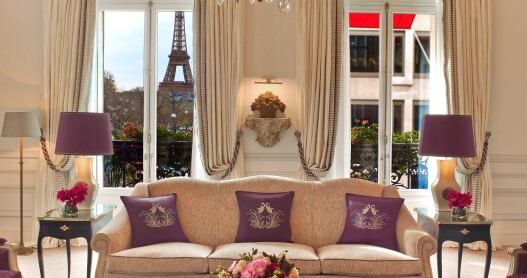
There’s nothing dreamier than a room with a view, and these luxurious hotels are perfectly positioned to give you the best views of some of Europe’s most memorable sights.
RESOURCES TO HELP PLAN YOUR TRIP
Reserve an outside table at this popular enoteca, located on a quiet piazza around the corner from the crowded Ponte Vecchio. You can order a predinner snack or, better still, cobble together a full meal from the selection of crostini with delicious toppings like truffle sausage and melted cheese or spicy ‘nduja sausage. Other menu highlights include the antipasti platters of cheese and mixed cured meats. The staff can help you choose from the wine list, which focuses on small producers. (If you want to expand your wine expertise, guided tastings are also available here.)
The Uffizi Gallery might get more attention, but the Palazzo Pitti across the river is the largest museum complex in Florence. The vast Renaissance palace itself has been owned by the Medici family, used by Napoleon, and repurposed as home to King Victor Emmanuel III. Today you can visit rooms that house Renaissance paintings by Titian, Raphael, and Rubens; a lavish Medici silver and jewelry collection; a collection of fine European porcelain; and a costume collection. An all-in-one ticket grants entrance to each of the museums: Museo Argenti, Galleria Costume, and Museo Porcellane, as well as the Boboli and Bardini gardens.
La Ménagère is simultaneously a breakfast spot, a tapas and cocktail bar, a flower shop, a café, a housewares store, and a restaurant. The large space, once home to a famous Florentine home-goods emporium, is now a ramble of beautiful rooms that serve many needs. The bright and airy bar area is the site for breakfast, lunch, aperitifs, and cocktails, while dinner can be eaten in several of the other charming rooms, including a narrow passage set with a long communal table. There’s even a downstairs space where live music is played a few nights a week.
Stefano Bardini, one of the great art dealers of the 19th century, donated his showroom to the city with the strict condition that nothing be changed. The city of Florence initially ignored his wishes and altered the space quite dramatically, but eventually relented. Now most of the rooms are painted an extraordinary shade of blue and the pieces are arranged by size to display the art. The eclectic collection includes paintings, sculpture, and furnishings, as well as small fragments of marble carvings salvaged from buildings. Highlights include an enormous wooden crucifix by Bernardo Daddi and the original bronze of the famous Porcellino, the statue of the boar from the Mercato Nuovo.
What began in pre-war Italy as two small workshops in the Palazzo Spini Feroni on Via Tornabuoni has grown into a fashion empire and a brand synonymous with Hollywood glamour. A museum dedicated to the craftsmanship of Salvatore Ferragamo opened in this grand palazzo in 1995. The collection includes the wooden lasts, or forms, that Ferragamo used to shape shoes for stars like Marilyn Monroe, Audrey Hepburn, and Sophia Loren. Glass cases display some of the company’s colorful and iconic creations—many that seem more sculpture than shoe. There is also a small space that hosts contemporary art exhibitions.
Two Florentine brothers were inspired by the history of radio communication to name their cushy bar Mayday—and outfit it with vintage radios (set on the tables and hanging from the ceiling), black-and-white photographs, and tons of other vintage memorabilia. The drinks, too, feel of another time, with their focus on handcrafted preparations, small-batch liquors, and organic and locally grown ingredients. Sample everything from unfiltered brews made from Tuscan barley and wheat, to a rare Scottish whisky or a green tea–infused cocktail. The atmosphere is one of collaboration: There are nightly lively music performances, the walls are lined with art installations and exhibits, and patrons are encouraged to leave their own vintage mementos. Classes in mixology and infusion-making are also available, and are a fun way to hone your skills while mingling with locals.
A new regulation bans sitting and eating on curbs and doorsteps on four streets in the center of the Italian city.
The new culture minister is discontinuing the initiative that grants free access to the country’s top museums and monuments once a month.
La Specola, one of the oldest science museums in Europe, contains a collection of specimens of the natural world—some of which date back to the 16th century. It includes strange and wonderful objects ranging from tiny iridescent green beetles and multicolored butterflies to whale and rhinoceros skeletons. There’s even a hippo, preserved by taxidermy, that was once pet to the Medici family and lived in the Boboli Gardens! The extraordinary, if slightly creepy, anatomical waxes filling the last four rooms of the museum were once used to train Florentine medical students. The frescoes and elaborate pietra dura inlays that decorate the walls and ceilings detail Italian scientific achievements.
Florence has been the place to buy leather for centuries, and this workshop has become the place to shop for leather in the past few years. Two best friends, Ben and Matteo, create stylish and modern leather items through traditional methods. Both men had backgrounds in the Italian high-fashion world (Ben worked with Simon Spurr and Luisa Via Roma) before establishing this brand with outlets in Milan, Rome, and Tokyo. Every item is crafted with local leather by Italian artisans outside Florence. The belts, bags, shoes, and jackets have a stylish edge, and each comes with a lifetime guarantee.