

Loyalty program: World of Hyatt
Rates: From $850
The Park Hyatt Tokyo reopened in December 2025 after a 19-month refresh of its guest rooms and public spaces, returning to a city where the luxury hotel landscape has expanded dramatically since its 1994 debut as Park Hyatt’s first hotel in Asia.
As a sommelier at the hotel’s New York Grill and Bar two decades ago, I saw firsthand how unusual it was: an international luxury hotel that had become part of the city’s social fabric. This is where celebrations happened, my cousin’s engagement among them, and where guests and Tokyoites alike gathered for milestone dinners, business deals, and late nights at the bar.
Living in Tokyo today, I checked in with a single question: Does the Park Hyatt Tokyo still matter to the people who live here, now that the hotel landscape is far more competitive?
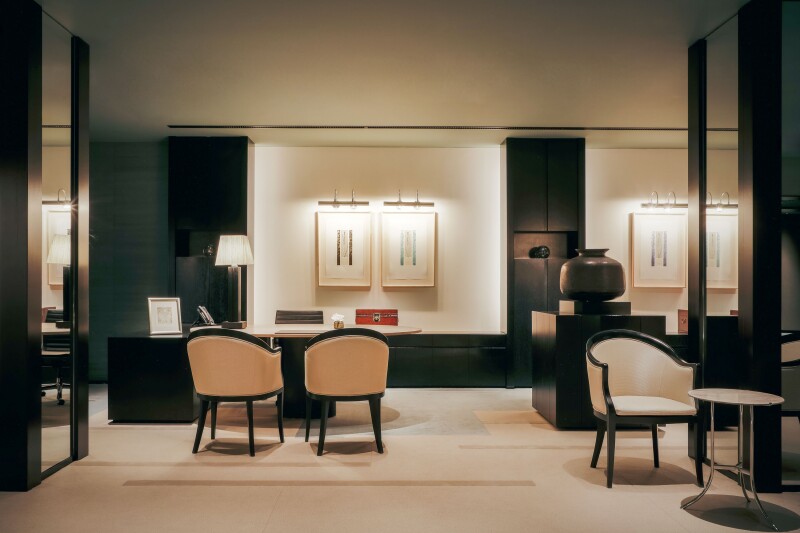
It does—and thankfully, without trying to reinvent itself. Park Hyatt Tokyo hews to what has long set it apart: unusually large rooms, a dining program embedded in the city’s daily life, and a calm atmosphere created by original designer John Morford, with grand yet subdued public spaces and built-in bookshelves that evoke a private residence.
Stepping off the elevator into the Peak Lounge on the 41st floor, I felt a flicker of recognition from so many years of returning here to meet family and friends. The soaring glass atrium remains, but the seating is noticeably more comfortable than I remember: Curved chairs have replaced the old boxier versions, inviting guests to settle in.
At the Park Hyatt Tokyo, even the path to reception through the Peak Lounge is part of the experience.
Courtesy of Park Hyatt Tokyo
Who’s the Park Hyatt Tokyo for?
Travelers who appreciate space and a residential-feeling atmosphere, along with a strong on-site food and beverage program with a local clientele. Hotel obsessives and design history enthusiasts will appreciate the enduring appeal of John Morford’s original vision.
Who it isn’t for
Travelers seeking a more central, high-energy base or the kind of bold, contemporary design available at many of Tokyo’s newer luxury hotels may find the Park Hyatt Tokyo feels understated by comparison.
The location: West Shinjuku
Set in a quieter pocket of Shinjuku, the Park Hyatt Tokyo is more removed than many of the city’s central hotels, although it’s well connected by subway and rail. The hotel occupies the upper floors (39th to 52nd) of Shinjuku Park Tower, designed by Pritzker Architecture Prize–winning architect Kenzo Tange; rooms have skyline views, some with glimpses of Mount Fuji on clear days. Major shopping hubs like the Isetan and Takashimaya are about a 15- to 20-minute walk, while the Meiji Jingu shrine and Yoyogi Park are roughly 20 to 25 minutes on foot.
As a sommelier at the hotel’s New York Grill and Bar two decades ago, I saw firsthand how unusual it was: an international luxury hotel that had become part of the city’s social fabric.
The rooms at the Park Hyatt Tokyo

In the Ambassador Suite at the Park Hyatt Tokyo, the hotel’s 1990s design language remains intact.
Photo by Jouin Manku/Yongjoon Choi/Park Hyatt Tokyo
The renovation, led by Paris-based design studio Studio Jouin Manku, extends across both guest rooms and public spaces, but the most noticeable changes are in the rooms, where the designers took a light-touch approach to updating John Morford’s original design.
Six of the 177 original rooms were combined to create larger suites, leaving even the entry-level rooms—at 538 square feet—unusually spacious by Tokyo standards. As Studio Jouin Manku project manager Mio Shibuya noted during a walk-through, the updates pay subtle homage to Japanese craftsmanship, including sashimono joinery in the wood cabinetry.
In my entry-level King room, the attention to material and proportion was immediately apparent, from the feel of the hardware to the Italian leather sliding doors. The ceiling is intentionally lower at the entry and rises toward the window, drawing the eye outward.
The bathroom, inspired by Japan’s onsen bathing culture, now combines the bath and shower in a single place. A playful handblown orange glass light adds warmth, while the addition of double vanities made of carved Serpe stone—once a rarity in high-end hotels—brings rooms up to date with contemporary expectations of luxury.
It’s worth requesting a Corner room, where layouts open to two vantage points across the city. Among standard rooms, that begins with the Corner rooms and continues into Premium Corner rooms; among suites, dual views are available for the Park Deluxe Suites and above.
The food and drink: New York Grill, Kozue, and more
The Park Hyatt Tokyo has long been as much a dining destination as a hotel, and that remains true. Its restaurants continue to draw a steady local following for celebrations, business lunches, and late nights at the bar, giving the property relevance beyond its guest rooms.
On my recent visit to the New York Grill and Bar, a young couple in the elevator remarked, “We’re making a pilgrimage,” on their way up. The 52nd-floor space still feels like a ritual stop, with skyline views and live jazz in the evenings. It’s where Lost in Translation cemented the hotel’s place in popular culture, but more telling is the mix of guests today: an international crowd alongside Japanese visitors who had returned from across the country. By day, locals fill the room for the refined buffet lunch, and by night, it’s one of Tokyo’s top steakhouses, with premium beef and multiple wagyu cuts.

Girandole by Alain Ducasse offers a menu of lighter French fare that reflects the seasons.
Photo by Jouin Manku/Yongjoon Choi/Park Hyatt Tokyo
At the all-day dining restaurant Girandole by Alain Ducasse (formerly Girandole), the French-inspired menu has stepped up in both ambition and price. At dinner one night, I particularly enjoyed the tender long-tooth grouper with leeks, shellfish, and seaweed butter.
Kozue, the hotel’s long-standing Japanese restaurant, remains in a more removed setting for seasonal cuisine, all plated on exquisite tableware; sake arrives with a selection of small cups presented on a bright lacquer tray. Kobako, female snow crab with roe, and wild boar hot pot were highlights. (Be sure to reserve a morning for the washoku breakfast by Kozue, served at Girandole by Alain Ducasse and composed of colorful small bites with rice, pickles, and miso soup.)
Executive pastry chef Julien Perrinet’s seasonal creations—chestnuts and pears during my visit—show up in the afternoon tea at the bamboo-covered Peak Lounge. Seasonal cakes and savory small bites are served on custom Arita-yaki porcelain with rippled edges, a lovely contrast to the usual tiered trays, with views stretching to Mount Fuji on clear days. Tip: Perrinet’s pastries and chocolates are also available at the Pastry Boutique on the second floor.
Staff: a continued legacy of service
During the hotel’s closure, many staff were reassigned to other Hyatt properties across Japan, returning with broader experience, according to general manager Fredrik Harfors. I was glad to see the familiar face of executive sous chef Takuya Ozawa, who has been with the hotel since it opened and was once my colleague at the New York Grill. When I became the first woman to work the floor there as a sommelier, he was especially supportive and made it easier.
Accessibility
All restaurants and two city view rooms are wheelchair accessible. For more information and to discuss specific needs, call the Hyatt U.S. customer care center at 1 800 233 1234 or Park Hyatt Tokyo at +81 3 5322 1234.
Wellness: The Club on the Park Gym and Spa

The hotel’s pool sits high above the city within the Club on the Park fitness complex, with windows overlooking Shinjuku.
Courtesy of Park Hyatt Tokyo
The Club on the Park was a fixture of the local scene, and it still draws both guests and members to its 47th-floor pool and gym. The pool, set against city views, is especially atmospheric at night, while the spa and a large hot bath occupy the 45th floor. Thoughtful extras include tea, juice, and fruit-infused water in the locker rooms, plus a quiet reading space, which add to the club-like feel.
Sustainability
Park Hyatt Tokyo was the first hotel in Japan to earn certification from both the Marine Stewardship Council and the Aquaculture Stewardship Council. Elsewhere, thoughtful details include paper lanterns from the former Peak Lounge that have been upcycled into elevator art; rooms are mostly free of single-use plastics. Even the lounge’s bamboo trees were preserved: They were sent to a nursery during the renovations and later returned, trimmed to fit the space.
Afar was a guest of the Park Hyatt Tokyo. Our coverage is independent; the hotel did not review or approve this story.


