Florence

Of the cities that have enjoyed moments as true cultural capitals of the world, Florence is one of the most surprising. A modest trading center, and one devastated by the plague in 1348, Florence emerged late in the 14th century as the “Athens of the Middle Ages.” This was due, in large part, to the ruling Medici family embracing their role of patrons to Leonardo da Vinci, Michelangelo, Brunelleschi, Machiavelli, and other artists and writers.

The glories of the Renaissance are found everywhere you look. The Palazzo Vecchio sits beside the Piazza della Signoria, the symbolic heart of Florence, while less than five minutes on foot will bring you to the Uffizi Gallery, a treasury of many of the most famous paintings of the Renaissance. Cross the Arno River over the Ponte Vecchio and you’ll soon arrive to the Pitti Palace and Boboli Gardens. This city is more than the sum of its parts. When circumstances led to Milan, Rome, and other Italian cities surpassing Florence in population and commercial importance, the historic heart of Florence remained largely intact. Only a few modern buildings can be found in the city center, much of the medieval streetscape remains, and here you can walk in the footsteps of some of Western civilization’s greatest minds.

original-florence-banner-crop-2019.jpg

Photo Courtesy of Atibordee Kongprepan

Overview

When’s the best time to go to Florence?

Florence at the height of summer is often hot and almost always crowded—late spring and early fall are preferable if possible. While Florence is a year-round destination, if you are combining your trip there with visits to wineries and smaller towns in Tuscany, be aware that some businesses do close in the winter.

How to get around Florence

There are no direct flights from the U.S. to Florence, but you can connect through European hubs. The city center is about 20 minutes from the airport by taxi or bus. If you’re also visiting Milan, Rome, or Venice, each is two hours or less by train, with Florence’s main station at Santa Maria Novella near the historic center.

Florence’s compact historic area is best explored on foot, as narrow, busy streets make walking easier than driving. Buses are useful mainly for trips outside the center. Taxis are safe and affordable for short distances, but must be picked up at a taxi stand.

Can’t miss things to do in Florence

The Uffizi Gallery ranks alongside the Louvre and the Hermitage as one of the world’s great museums, though its collection is more focused—specifically on Italian art from the 14th to 17th centuries. The entire arc of Renaissance art can be traced through its canvases, with masterpieces by Botticelli, da Vinci, Fra Filippo Lippi, and many others.

The Galleria dell’Accademia, on the other hand, is a must-stop thanks to one masterpiece: Michelangelo’s David.

Florence’s cultural highlights include a number of buildings that are iconic landmarks. Foremost among them is the cathedral, or Duomo, which includes contributions from three towering figures: Brunelleschi (the dome and baptistery), Giotto (the campanile), and Vasari (The Last Judgment fresco). Students of garden design, and anyone who wants to simply smell the flowers, should explore the Boboli Gardens.

Take a break from all the headiness with a visit to the Mercato Centrale, or San Lorenzo Market. On the ground floor you can shop for sun-dried tomatoes, olive oils, and other culinary gifts. In the food hall upstairs, you can savor some of the flavors of Tuscan cuisine.

Delve even deeper into Florentine culture: sign up for a cooking class, attend a musical event, conduct your own street-food survey. Or take a fresco-painting workshop from our partner, Context Tours, where you’ll learn the ropes of this Renaissance painting technique from a working artist in his studio.

Food and drink to try in Florence

Tuscan cuisine is traditionally simple and hearty food, noted for its bean and vegetable soups and non-fussy pasta dishes. Florence’s most famous dish, bistecca alla Fiorentina, a thickly cut t-bone steak, can be found on many menus. If you have a sweet tooth, gelato was (at least according to some) invented in Florence.

Culture in Florence

Florence’s high culture is the reason to visit the city for many—its museums are home to many masterpieces of Renaissance Italy while some of its churches and palaces are true architectural wonders. The lines at the Uffizi Gallery can be long and purchasing advance tickets is highly recommended. While you will want to see Florence’s most famous highlights, its smaller institutions can offer a respite from the crowds: the Bargello houses important works by sculptor Donatello while the Horne Museum displays the collection of its 19th-century British founder, an avid collector of Renaissance art.

READ BEFORE YOU GO
Following recent regulations in Rome, Venice, and Cinque Terre, additional Italian destinations are implementing rules aimed at encouraging more responsible travel.
HOTELS
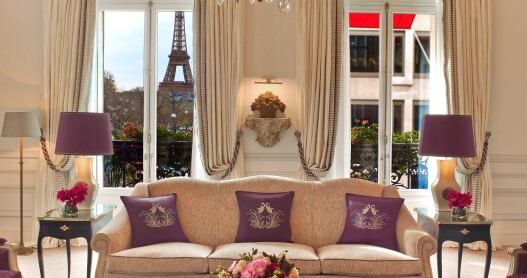
There’s nothing dreamier than a room with a view, and these luxurious hotels are perfectly positioned to give you the best views of some of Europe’s most memorable sights.
RESOURCES TO HELP PLAN YOUR TRIP
For a small, cozy space, Osteria delle Belle Donne serves a very large bistecca fiorentina. This tiny restaurant, with stone walls and warm wood accents, is tucked on a narrow street between the Duomo and the train station. Beyond giant cuts of steak, other tasty highlights of Florentine cuisine are served here: fettuccine with wild-boar ragù, white beans, and seafood dishes. In the cooler months, traditional ribollita (a tomato-based vegetable stew thickened with bread) and budino marrone (chestnut pudding) appear on the menu. The wine list is Tuscan, too, so it’s easy to find pairings for the rustic meals.
The bright colors and floral patterns that adorn Lisa Corti fabrics are inspired by her childhood in Ethiopia and her lifetime of travel to India and Asia. The inventory is extensive, with housewares, women’s clothing, children’s wear, and ceramics. Each handmade item reflects Italian design sensibility and craftsmanship. At her shop in the Sant’Ambrogio district, you will find hand-blocked tablecloths, bedspreads, and pillows alongside blue Jaipur tiles and ceramic serving bowls. Beach lovers can savor multicolored caftans and strappy sandals in the same riot of colors and prints.
Founded by the Sbigoli family, this Florentine workshop has been glazing and painting terra-cotta pottery since 1857. Now run by the artistic Chini family, the sense of history remains. Every piece in the showroom is handmade and unique. The simple patterns are based on medieval and Renaissance colors and designs, ranging from muted green-and-ivory geometrics to bright yellow flowers. There are full dinner settings, lamps, serving platters, coffee sets, and tiny bowls perfect for holding your rings beside the kitchen sink.
This might be the most photographed store in Florence—the charming but cluttered scene includes strings of dried garlic and chilies, baskets of fresh fruit, colorful ceramics, wooden serving utensils, wild-boar salami, Tuscan olive oil, and handmade copper pots—with displays inside the shop and spilling out onto the sidewalk. This historic establishment, on the ground floor of the old tower of Borgo Santi Apostoli, is so friendly that the owner will pour you wine and offer a few bites of pecorino cheese while you decide how much room is left in your suitcase.
While walking around Florence, have you noticed something different about some of the street signs? Clet Abraham is a French artist who stealthily alters traffic signs with graphic stickers that transform a DEAD END sign into a crucifix or a ONE WAY arrow into Pinocchio’s nose. In the artist’s jumbled studio in San Niccolò, you can learn a bit about his process and purchase a sign of your own. If the original works are too pricey, there are also vinyl stickers and T-shirts bearing his whimsical designs.
Who knew grocery shopping could be so photogenic? In summer, you’ll be tempted to photograph the piles of tomatoes; in winter, the tangles of greens. Wander around to get a sense of what is in season and what you will find on local menus at lunch and dinner. Rows of stalls sell meat, salami, fresh fish, pasta, cheese, and bread. If all that food makes you hungry, look for the Trattoria del Rocco inside the market, a diner that serves lunch created from produce sold on-site. The early bird gets the worm here: Everything is swept up and closed down by early afternoon.
Chef Samin Nosrat spent years hearing others fantasize about a particular Florentine panino. Her first bite didn’t go exactly as planned—but here’s why it was worth the pilgrimage.
Located behind the church of San Lorenzo, this is where many members of the ruling Medici family are buried. The octagonal building with an opulent marble interior dates from 1519. The Cappella dei Principi houses sarcophagi belonging to the Medici grand dukes, including Cosimo I. Lorenzo the Magnificent is buried in the adjoining Sagrestia Nuova, which contains Michelangelo’s famous Night and Day and Dawn and Dusk sculptures.
Where to eat and explore while staying in an 800-year-old village.
How one traveler rediscovered Italy through its soulful food.