Croatia

In 1995, after decades of Communist rule and ensuing bloody wars, Croatia emerged from the shadows into the travel spotlight—a nearly undiscovered corner of Europe. Today, visitors continue to arrive in record numbers to explore the country’s medieval cities and villages, eight national parks, 11 nature preserves, and more than 1,200 islands along the Adriatic coast. The dramatic Dalmatia region gets most of the spotlight, with summer crowds flocking to hot spots like the historic walled city of Dubrovnik, the bustling town of Split, and the glamorous island of Hvar. Lesser-known but equally impressive are the heart-shaped Istria (the peninsula at the northern end of Croatia’s coastline) and Kvarner (the gulf just to the south of Istria). The star of Croatia’s inland region is the buzzy capital, Zagreb, which, in recent years, has become a must-visit destination for its quirky museums, colorful markets, and innovative food scene.

Dubrovnik, Croatia

Photo by Brendan Van Son/Shutterstock

Overview

When’s the best time to go to Croatia?

The peak tourist season along Croatia’s coast runs from July through August. It can be hot, crowded, and expensive, but several festivals and events still make it a fun time to visit. For a bit of breathing room and lower prices, try the shoulder seasons—May through June and September are particularly lovely times of year. Winter used to be the quietest period for tourism, but that has changed in the last two years with Zagreb’s Advent festivals bringing in thousands of visitors for Christmastime merriment.

How to get around Croatia

Croatia has seven international airports, with the swanky Franjo Tuđman Airport (also known as Zagreb Airport) being the largest and busiest, as well as the main hub for the national carrier, Croatia Airlines. Other popular ports of entry, especially if you’re heading for the Dalmatian Coast, are Split, Dubrovnik, and Zadar; Pula is a major entryway if you’re Istria-bound.

The bus network in Croatia is extensive and reliable—and a good way to travel if you don’t have your own wheels. There are also regular ferries from the mainland to the islands, with more routes added during the busy high season.

Food and drink to try in Croatia

Croatian cuisine is a melting pot of regional specialties made with high-quality ingredients, from fresh seafood and spicy, paprika-rich fish stew to hand-rolled pasta with just-picked truffles. Don’t miss a meal of juicy meat or octopus, slow-cooked under peka (a dome-like baking lid). And be sure to wash it down with homemade wine or rakija, the local spirit made from fermented fruit.

Culture in Croatia

Croatians love to socialize over coffee and meals, but they also love to party, which makes it easy to see why the country has become one of Europe’s hottest festival destinations. On the other end of the spectrum, the majority of the population is Christian, and a visit to church on Sundays is an important aspect of local culture. As in many parts of Europe, soccer is the other dominant religion. You’ll make fast friends if you cheer for the home team while watching a match.

Can’t miss things to do in Croatia

Croatia delivers a heady mix of culture and nature, from its bustling cities and string of UNESCO World Heritage sites to its eight national parks that protect gorgeous stretches of wilderness. You can’t miss Dubrovnik’s walled Old Town, with its ancient ramparts and sweeping views, or the harbor city of Split, home to Diocletian’s Palace (the most complete Roman palace in the world). Sailing in Croatia—or at least visiting an island or two, like Hvar or Vis—is also essential. If you only have time for one national park, make it the lake-filled wonderland of Plitvice. And try to get to Zagreb, Croatia’s charming capital that has recently blossomed into a major destination.

Practical Information

Croatia is part of the European Union, so E.U. visa regulations apply. While Croatian is the official language, you’ll find that English is widely understood and spoken. The local currency is the euro. Electricity is 230 volts and plugs are types C and F (the standard European kind, with round prongs).

Guide Editor

Born and raised in Croatia, Anja Mutić is an award-winning travel writer who splits her time between Brooklyn and Zagreb.

Updated August 2023.

READ BEFORE YOU GO
After a multiyear renovation, Villa Argentina returns to Dubrovnik, Croatia, bringing new life to a storied Adriatic waterfront hotel that generations of locals and travelers have cherished.
HOTELS
Sure, the beaches and views are great. But these islands excel with sustainable innovation, rich local traditions, and unique accommodations.
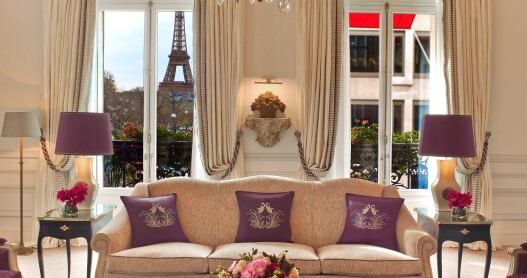
There’s nothing dreamier than a room with a view, and these luxurious hotels are perfectly positioned to give you the best views of some of Europe’s most memorable sights.
RESOURCES TO HELP PLAN YOUR TRIP
At Pile Gate, the Old Town’s main entrance, descend the staircase to a landing near the small fountain (formerly only for Jews) to experience a moment of serenity, looking at this quiet bay bracketed by the mighty fortresses of Lovrijenac and Bokar. Kolorina means “calm harbor” and is the starting point for several kayak tours around the City Walls and the island of Lokrum. (The bay was also the location for the bloody Battle of Blackwater scene in season two of Game of Thrones. )
At the eastern end of Stradun, Sponza Palace survived the great 1667 earthquake and is a rare example of the Gothic–Renaissance style in Dubrovnik. Formerly used as customs house and storage, as well as the Republic’s mint and armory, Sponza today is home to Dubrovnik National Archives. The rooms around its open-air atrium host an exhibit of copies of the Archive’s most relevant documents, some as old as the 11th century. The Memorial Room of Defenders from the 1990s conflict pays a powerful tribute to the victims of the town’s recent war.
A visit to the picturesque town of Cavtat, south of Dubrovnik, must include a visit to the imposing mausoleum of the Račić family. The tomb, on a hill overlooking the town’s waterfront, is worth the shady climb. Built of bronze and white stone, the mausoleum, designed by Croatian sculptor Ivan Meštrović, is quite moving—especially the carved angel faces floating in the dome, waiting to guide the departed to heaven.
War Photo Limited is a museum dealing with a topic that resonates deeply with Dubrovnik’s people: war and conflict. With a small permanent exhibition on the Balkans conflict and the shelling of Dubrovnik in the 1990s, the museum also hosts temporary shows by renowned international photographers on conflicts around the world as well as topics like child soldier victims. Immensely powerful, War Photo Limited makes a lasting impression.
In operation since 1317, the Franciscan Pharmacy was relocated in the 19th century to just outside the beautiful Romanesque-Gothic Franciscan cloister so that women could enter. Alongside Western and allopathic remedies, the pharmacy sells organic cosmetics made on-site using local herbs and ingredients, as well as an antiwrinkle cream made from bergamot.
Saint Blaise became the town’s patron saint in the 10th century after a vision alerted him to an impending attack by Venice. His statue—the old man holding a model of Dubrovnik in his left hand—sits atop the church’s Baroque facade. Inside the domed interior, near the main altar, a 15th-century gold-plated statue of St. Blaise has miraculously survived several earthquakes and fires. (Note: The church will be closed through early 2016 for restoration and will reopen for St. Blaise festivities on Feb 3, 2016.)
A 40-minute drive from Dubrovnik, past panoramas of the Adriatic and green Konavle fields, brings you to this fertile valley, the region’s agricultural backbone. At Đivanović Mills, you can learn how flour was milled 500 years ago. Follow the forest path to the nearby restaurant of Konavoski Dvori for a taste of their famous trout dish and for the cool breeze off the Ljuta River. (Calling the mill in advance is recommended.)
The most important public building in the time of the Ragusan Republic, the Rector’s Palace was home to Dubrovnik’s ruler during his one-month mandate, the period when he was separated from his family to focus solely on matters of state. An inscription above the doorway to the meeting room says it all: “Forget your private concerns when working for the public.” Today, the magnificent Venetian-style palace is a cultural history museum.
A local’s suggestion landed me on Maazgoon’s terrace, a vibrant spot right next door to the Diocletian Palace in Split.

The crew at the restaurant is passionate about modern takes on Mediterranean dishes; food that is all about the best ingredients and, important in my book, food that hasn’t been overworked, or ‘touched too much’.

Go there hungry. I had some whicked tuna sashimi there, and a traditionally prepared octopus in a skillet. They paired a crisp local white with it...and off to heaven I went. My mouth is watering, just writing about it.

They have a saying at Maazgoon: ‘We believe that the whole universe can fit on a plate’. Well, they sure fit a perfect week in Croatia on mine. And that’s a wrap.

>>>Warm thanks to Alan Mandić from Secret Dalmatia, for organizing a truly memorable, and off the beaten path trip for our curious and insatiable group of travelers, and to the Hotel Cornaro for accommodations in Split.
One traveler hikes through the haunted beauty of the Balkans to see if a trail can heal the wounds of war.