

You’ve just finished lunch at a charming French bistro and received the bill. Your hand hovers over your wallet... should you leave a tip in France? If you want to, but it’s not expected.
According to the unspoken rules of French tipping culture, gratuity is not a given for wait staff in restaurants, taxis, and hotels because service fees are already included in your final bill; all employees are paid a living wage by employers and do not rely on tips for their livelihoods. In France, hospitality staffers, from servers to bellhops, earn a decent minimum salary and have the same benefits as other workers.
If you have an exceptional experience, you’re welcome to leave a small tip, the amount of which varies depending on the type of establishment and service. Use these helpful guidelines to navigate tipping etiquette when traveling in France, whether you’re visiting cities like Lyon and Paris or tiny villages in the countryside.

Always try and keep a few euros handy when you’re out and about.
Photo by montatip lilitsanong/Unsplash
How to leave a tip in France
Paying by card (generally contactless) is very common in France, though at smaller establishments there can be a €5 minimum (occasionally €10). At cafés, restaurants, and bars, you can either pay at the counter or, after asking for the bill, the server will bring the card machine to the table.
If you want to leave a tip by card anywhere in France, you must tell the server before you pay, because they’ll input it manually; there is no way to leave a tip by card once you’ve paid (except in one circumstance, which we’ll get to below). However, you can’t be sure a credit card tip will actually go to the staff, so cash is better.
With an increase in (mostly) trendier establishments using U.S. payment processors like Square and Stripe, a tip screen with percentages may come up after you’ve paid your bill. Tipping is at the customer’s discretion and is not expected.
The easiest thing to do is keep small change on hand—a few €5 bills, a handful of one and two euro coins. You can leave the coins as tips if you so wish, and you can ask restaurants to break the five. Small bills and change are also useful for markets, many of which don’t take card. And while it can seem weird for people from the U.S. to tip in change, in France it’s normal; leaving €1 is the equivalent of leaving a dollar bill.
Tipping in French restaurants and cafés is not required
Whether you’re at a corner café or a Michelin-starred restaurant, 15 percent is automatically included as a service charge in French restaurants by law. This fee is usually indicated on the menu or the final bill with words “service compris.” If you have a friendly or efficient waiter, you can leave a small gratuity (un pourboire), but this is by no means required.
In more touristy restaurants, you might come across audacious waiters who try to tell you that a gratuity isn’t included. Technically they’re right; service is included—a gratuity is not. Regardless, you are not obligated to leave them anything.
For a simple beverage, you can round up to the nearest euro or leave 20 to 50 centimes per drink. For a meal at a casual café or restaurant, you could leave one to two euros per person. For a fine-dining establishment, where the service is much more attentive, you may want to leave 5 to 10 percent.
Related: How to Spend One Perfect Day in Paris
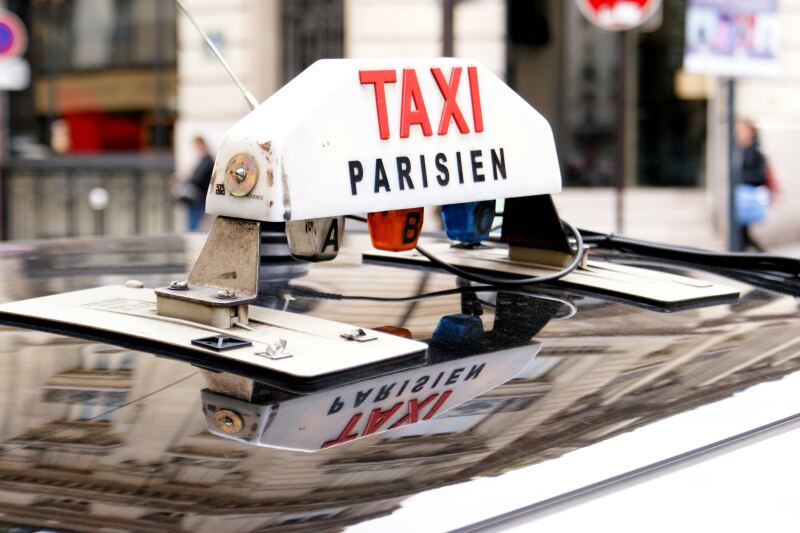
While it’s not a requirement to tip taxi drivers, it’s a nice gesture—especially if they’ve helped you with a heavy bag.
Photo by Diego Fernandez/Unsplash
Tipping taxi drivers and private chauffeurs
Tipping taxi drivers isn’t required; however, French people paying in cash often round up to the nearest euro or leave up to 5 percent. Again if you’re paying by card, you will need to have cash on hand if you want to tip. If the driver helps you with your bags (particularly if they’re large), it’s customary to tip one or two euros per bag.
For a private car service, such as a prebooked airport transfer or full-day car tour, you could tip 5 to 10 percent. When it comes to Bolt or Uber, there will always be an option to tip your driver, and the same rules apply: If the experience was good, you can add gratuity through the app.

Whether to tip in a hotel in France, and how much, varies based on the type of accommodations.
Courtesy of SO / Paris
Tipping at hotels
Depending on your hotel and what you request from the staff, there are a range of services for which you might want to leave a gratuity.
- Luggage handlers: One or two euros per bag
If someone helps with your bags, especially lugging them a long way, tip one or two euros per suitcase. - Doormen: One or two euros
Feel free to pass on one or two euros to those hailing cabs or providing a valet service. - Room service waiters: A few euros
It’s courteous to give a couple of euros to the staff who bring your meals. Depending on the hotel, you may be able to have the tip charged to your room, but as in the U.S., you can’t be sure the staff will actually receive the tip. - Housekeeping staff: Three to five euros per day
These are the unsung heroes of hotels, and this is one tip you should definitely leave. Hand over the money directly or leave it in the room, but make it clear it’s a tip so housekeeping doesn’t think they’re tidying around your loose change. - Concierge: Five to 20 euros
If you’ve asked your concierge for a tricky restaurant reservation or to arrange other services, then you should tip five to 20 euros, depending on what they’ve helped you with. For example, setting up an experience, such as a unique tour not offered by the hotel, deserves a tip; simply calling to make a reservation is part of their job.

It’s customary to tip people who work in the beauty industry in France.
Photo by Uby Yanes/Unsplash
Tipping in French spas or beauty salons
In France, you should tip hairdressers, beauticians, massage therapists, or other beauty professionals 5 to 10 percent. Again, if you want to tip by card tell the person before you pay your bill; otherwise, tip in cash.
Tipping for theater ushers
In public theaters (for example, the Paris Opera), ushers cannot accept tips. In private theaters it’s not uncommon to tip a euro or two. So, if you’re going to the opera, a classical concert, or play, have some coins handy.
Tipping for bathroom attendant
Bathroom attendants are not that common, but should you see someone, leave them a tip of one to two euros.

During “free” tours in France, it’s especially important to guides.
Photo by Unsplash/Getty
Tipping for tours, classes, and other tourism services
This is where tipping can get a little fuzzy in France. If you book a private tour, class, or excursion directly with a guide or instructor, you’re usually charged a flat fee, and thus tipping is not expected.
If you book via a booking platform, tour company, or your concierge, you could leave a 10 to 20 percent gratuity for the guide/instructor if you’re happy with your experience. If you have any doubts, check your booking confirmation; information about tipping is usually included in the fine print.
Many large cities in France (and indeed globally) have free tours. Although advertised as “free,” the guides have to pay a set amount (about two euros) to the tour company for each person who shows up at the beginning of the tour—even if some inevitably drop off along the way.
Therefore, if you take one of these tours and you enjoy your guide, consider leaving at least five to seven euros per person so the guide can, in turn, tip the waiter at their local café.
Related: This French Summer Classic Is a Year-Round Destination With More Than 300 Days of Sunshine
Are there any situations where tipping in France is offensive?
In general, French people will always appreciate a tip if they’ve provided a service. But there is one big no-no when it comes to French tipping etiquette: A giant tip isn’t always better. In French culture, flashy displays of wealth are seen as unsightly, including the act of leaving a massive tip.
So while there isn’t a situation in which a tiny gratuity won’t be appreciated, leaving €100—or even €25—on the table after a €25 Parisian café stop—even if the server gave you some great travel tips—won’t be received warmly.
This article was originally published in 2022 and most recently updated on February 24, 2026 with current information.


