

Scotch and chrysanthemum tea may seem like an unlikely pairing, but at San Antonio bar Jue Let, these ingredients come together in a signature cocktail called The Taipei Personality. For owner Jennifer Dobbertin, who was raised by a Chinese mother from Taiwan, the combination makes perfect sense: “It represents two things many of us grew up with: Scotch and tea.”
Chefs in the United States have spent years reclaiming the nostalgic flavors of their childhood on the plate, and that same sensibility is now shaping drinks at Asian American–owned bars across the country.
Drawing on the flavors and traditions of their family histories, bartenders are putting their heritage front and center in both the drinks and design of their establishments.
“It’s less about ‘adding an Asian twist,’ and more about pulling from real memories and taste experiences,” says Derrick Li, owner of San Francisco’s BlingPig Speakeasy. Katrina Sobredilla, co-owner of New York City’s Filipino-inspired bar Ligaw, agrees: “We’re no longer translating our culture to fit the room—we’re inviting people into it as it is.”
Jue Let
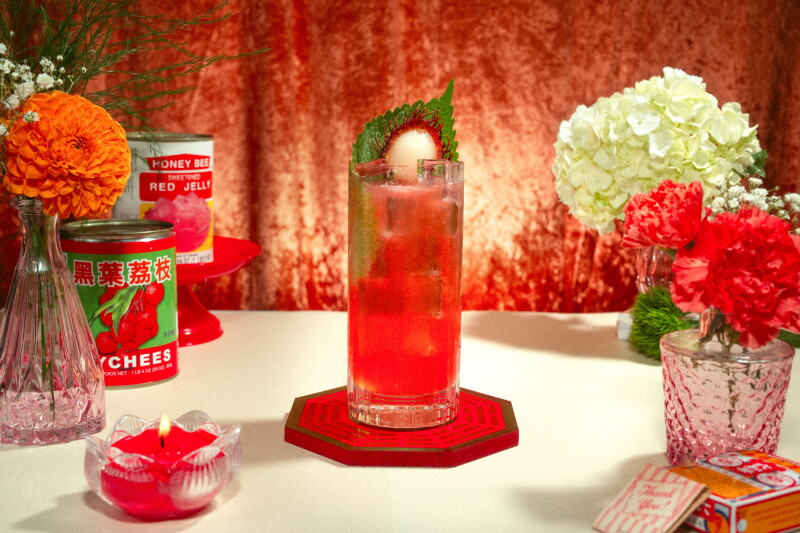
Jue Let’s Conventionally Attractive cocktail combines French aperitif Dolin Chamberyzette with lychee liqueur, strawberry syrup, lemon, and sparkling yuzu mineral water.
Photo by John Paul Garrigues
312 Pearl Pkwy, Bldg 2, Ste 2107, San Antonio, TX 78215 | View on Google Maps
Chef Jennifer Dobbertin, a three-time James Beard Award semifinalist, had long planned to open a cocktail bar following the success of her restaurant, Best Quality Daughter, in San Antonio. The name came later, inspired by a little-known Cantonese private chef who once cooked for James Beard’s family. In late 2025, Dobbertin opened Jue Let in the city’s Historic Pearl neighborhood.
Every detail reflects Dobbertin’s Chinese American upbringing—from the bar’s two private karaoke rooms to quirky touches in the maximalist design, such as the glittering, manicured chicken foot suspended from the ceiling.
On the menu, Dobbertin favors the Divine Intervention: your spirit of choice, fresh lemon juice, sparkling water, and a cordial made from Osmanthus, a fragrant ingredient used in Cantonese dim sum. Each order arrives with a coin that unlocks a complimentary I Ching reading from the bar’s fortune-telling machine.
Ligaw
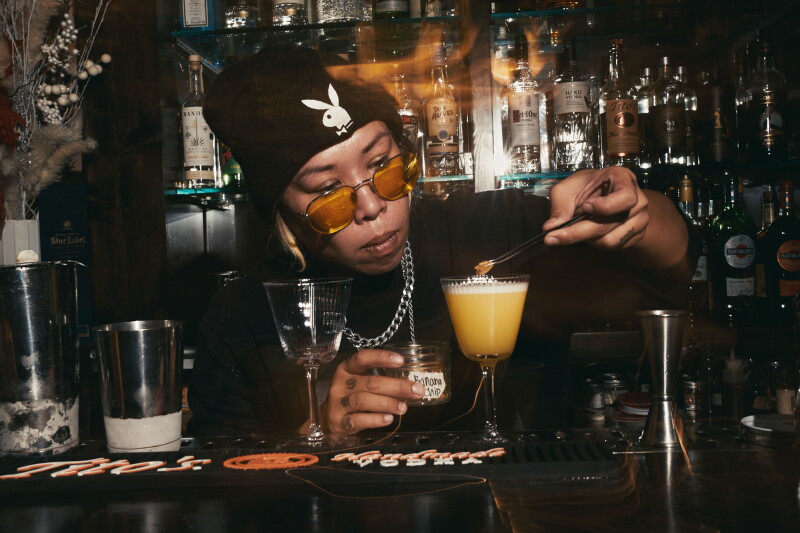
Katrina Sobredilla opened the queer- and women-owned speakeasy Ligaw in August 2025.
Courtesy of Ligaw
87 Ludlow St, New York, NY 10002 | View on Google Maps
The recently opened Ligaw on the Lower East Side of New York City is a lively subterranean lounge accessed by a pink stairwell, run by partners in love and life, Katrina and Leighann Sobredilla.
“We wanted it to feel like stepping into a home—a safe, familiar place where you can exhale,” says Katrina, a first-generation Filipino. The cocktails trace different stages of courtship and love.
The subtly sweet First Kiss is named for the feeling Katrina had, after kissing Leighann, that she would always be part of her life. She also wished her grandparents, who were farmers in the Philippines, could have met her partner. “Every element in the drink comes from the land they worked and the life I grew up around—ube, rice, sugarcane, and corn tea,” she says.
After Ours
2226 NE Broadway, Portland, OR 97232 | View on Google Maps
More than a bar, After Ours in Portland, Oregon, considers itself a community hub. “It’s for our people who’ve been rocking with us over the years,” says co-owner Richard Văn Lê, who runs the morning-to-night, vinyl-heavy space with fellow Vietnamese American hospitality veterans Kim Dam and Mikey Nguyen.
The cocktails draw from their shared backgrounds, with nods to staple ingredients in many Vietnamese households. The house margarita is shaken with a tamarind–fish sauce shrub, while the Saigon Old Fashioned is mixed with Hennessy, a spirit Nguyen loves so much he has it tattooed on his body.
The food menu is inspired by nhậu, the Vietnamese tradition of bonding over shared plates and drinks, and includes a beef tartare finished with salted egg yolk, fish sauce, pickled shallots, and a rice cracker.
Merai
14 Harvard St, Brookline, MA 02445 | View on Google Maps
Opened in 2024, Merai (“alcohol” in Thai) is a sibling to the award-winning restaurant Mahaniyom in Brookline Village.
Though billed as a “dive bar,” Merai swaps the category’s usual grubbiness for warm lighting, wood tables, and a wall-spanning mural by local artist Ponnapa “Gift” Prakkamakul. The artwork depicts the Merai’s five partners: Chompon Boonnak, Smuch Saikamthorn, Tanapon Authaiphan, Thanarat Kasikitthamrong, and Chayada Kornchuarat.
The drinks draw on their Thai roots. The popular Wonka’s Ticket riffs on an old-fashioned, blending coconut, Thai coffee, and pandan with Western notes of butter and cacao—a concoction that, surprisingly, drinks like a liquid chocolate bar. The tequila-based Melon incorporates makrut lime leaves and cantaloupe syrup for a tropical, creamy profile.
Indn
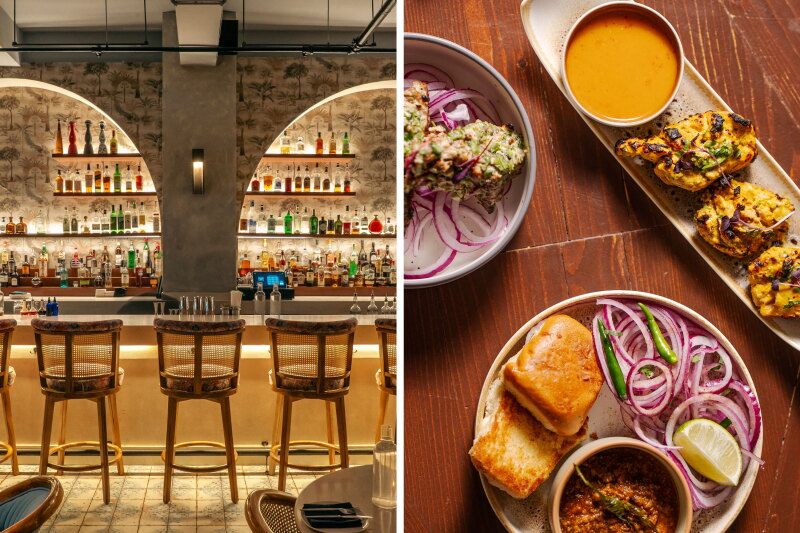
The menu at Indn revolves around chakhna—Indian snacks designed to be eaten with a drink in hand.
Courtesy of Indn
30 W 30th St, New York, NY 10001 | View on Google Maps
At Indn in New York City’s NoMad neighborhood, co-owner Kanika Vij Bakshi—who runs the concept with her husband, Simran Bakshi, and her father, Vicky Vij—says the Indian cocktail and small-plates bar was founded to push past the “curry house” stereotype. “We didn’t want to water down the flavors for a general audience,” she says. “It’s about taking ownership of our heritage and presenting it with the same level of craft as a high-end Japanese or European bar.”
The cheekily named Butterface is an homage to butter chicken. Made with ghee-washed mezcal and garam masala–spiced tomato cream, the drink is crystal clear but unexpectedly rich. It pairs beautifully with savory small plates like the Lamb Keema Pao: sloppy joe–style sandwiches filled with heavily spiced minced lamb.
BlindPig Speakeasy
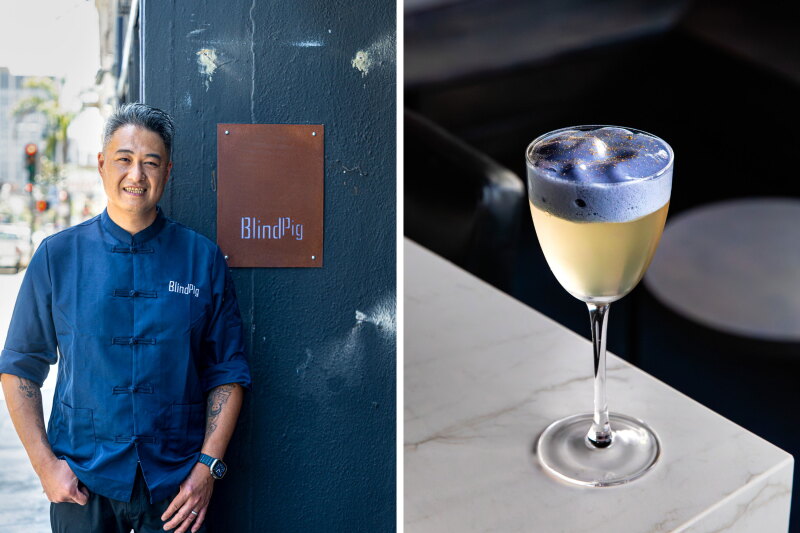
Derrick Li’s Blindpig operates a walk-ins-only policy, with patrons ringing a doorbell to await entry.
Courtesy of Blindpig Speakeasy
1113 Polk St, San Francisco, CA 94109 | View on Google Maps
BlindPig Speakeasy in San Francisco’s Lower Nob Hill neighborhood has all the classic speakeasy cues—no signage, an unassuming facade, and password-only entry. Inside, however, are touches of owner Derrick Li’s childhood in Guangzhou, China, including paper-fan menus with handwritten drink descriptions.
Li cites Journey to the West, the seminal 16th-century Chinese novel, as a key inspiration for the beverage program: “Each drink feels like a character or a moment from its world.” Among his favorites is the signature Blind Pig, an ode to Zhu Bajie, one of the book’s major characters, that taps into the flavors of pork-flecked mapo tofu.
“On the nose, it’s really soft—like walking past a Chinese restaurant and catching that familiar aroma drifting out of the kitchen,” Li says. Made with baijiu (a clear Chinese distilled spirit), mustard cream, and a house-made mapo tofu cordial, the cocktail “starts light and clean, then opens up into something more earthy, in a really nostalgic way.”


