

Rates: From $490
It’s barely 7:30 a.m.—late by farming standards, but early for me—and I’m wobbling up a wooden ramp into an egg mobile crowded with restless hens. Farmer Angus McIntosh, a barefoot, Gen X philosopher of the soil, urges me to hurry. Chickens, it seems, don’t wait for coffee.
Each morning, mobile coops are wheeled to fresh pasture, where the chickens scratch, peck, fertilize, and revive the soil before they are wheeled to a new location. This is my first stop with Angus after arriving at Spier Wine Farm, one of South Africa’s oldest estates in Stellenbosch, about 40 minutes by car from Cape Town. From here, we move on through pigsties and cattle fields and then head to the food garden, where staff harvest vegetables, mushrooms, and herbs as ducks march past on pest-control duty. Together, these systems power Spier’s 650 acres of vineyards and regenerative farmland.
A historic wine estate, rebuilt around regeneration
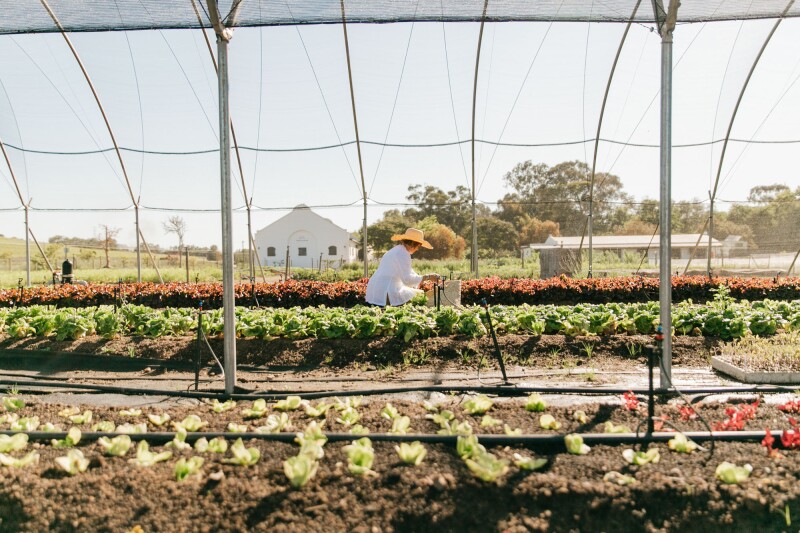
Everything grown at Spier is free of artificial fertilizers and inorganic pesticides.
Courtesy of Spier Wine Farm
Founded in 1692, Spier began its current chapter in 1993, when South African entrepreneur and art patron Richard Enthoven acquired the property and, with his family, began transforming it with a radically different approach. The estate moved from monoculture vines toward a model designed to restore soil health and reduce chemical dependence and built an ecosystem where wine, food, and community are interdependent.
By the early 2020s, the family undertook a full redesign of the hotel and the hospitality experience, reopening in March 2025 with sustainability woven through the property’s architecture, dining, and programming. I came to Spier to enjoy the wine but also to understand the estate’s place in a broader shift in global wine culture.
A vineyard that operates as a full farm
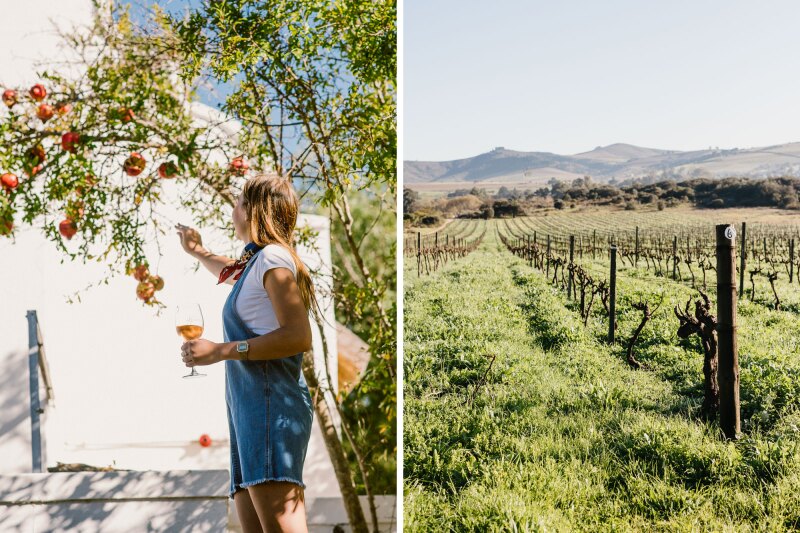
Many of the vineyards grow grapes for Spier’s Old Vine Chenin Blancs
Courtesy of Spier Wine Farm
The landscape was arresting, with its rugged mountains, wide skies, and long fields. But what struck me more was how the farm operates.
At many large wine estates, vines dominate while food production and community engagement remain secondary. At Spier, visitors encounter a different model: a working farm that produces pasture-raised meat, poultry, vegetables, and herbs alongside the vineyard, with art programs and community initiatives folded into daily operations.
Livestock rotates daily to enrich the soil. Indigenous plants are reintroduced. Food waste from nearby grocery stores is converted into animal feed. “We don’t do just one thing here,” Angus told me. “Everything is connected.”
What the hotel is like
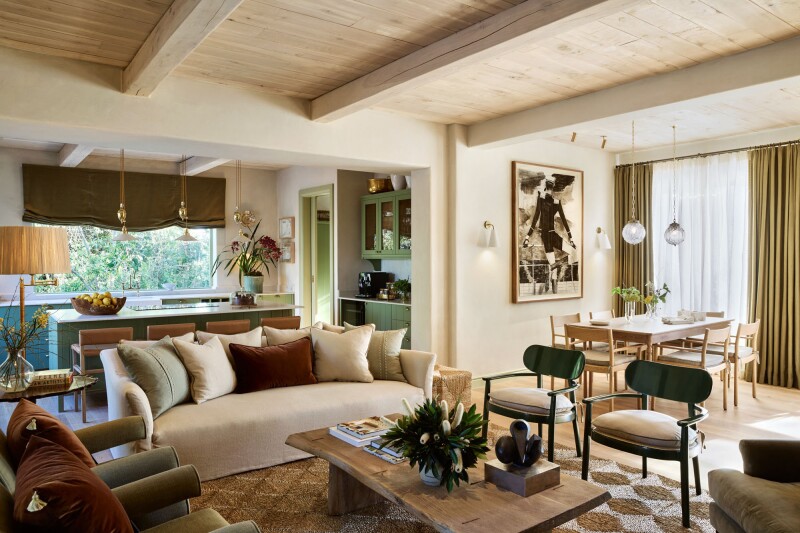
The Riverside Villa at Spier has three bedrooms and a private heated pool.
Courtesy of Spier Wine Farm
Spier’s ethos carries into the hospitality experience. The hotel is designed as a cluster of whitewashed, Cape Dutch–inspired buildings, with 80 guest rooms arranged across duplex-style structures that echo the layout of a small village. Interiors are finished with light-wood furnishings, moss-green textiles, and white linens; minimalist bed frames are softened by cushions embroidered with floral motifs. Artworks from the owners’ collection hang throughout, selected to complement each room’s palette and mood.
Four signature suites take a more expressive turn. The Yellowwood Suite, for example, is decorated in sage and soft yellows and has illustrations by local artist Lisa Strachan, while the Water Lily Suite is embellished with saffron and gold tones, with lily motifs that carry from the walls to the textiles.
Farm-to-table dining and drinking
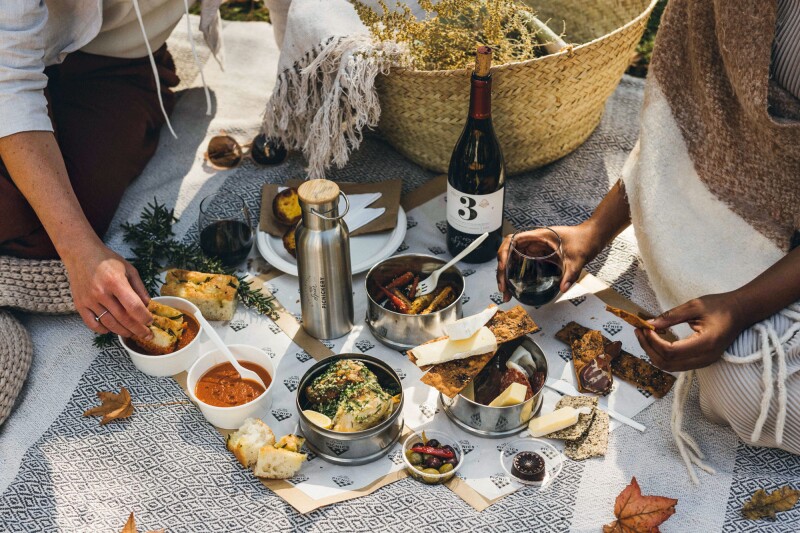
Picnics on the grounds of Spier are commonplace in the warmer months.
Courtesy of Spier Wine Farm
Spier’s kitchens draw directly from its fields and gardens, with South African–inspired menus. Food waste is redirected into compost or animal feed. Dining is centered around Veld, the main restaurant, along with Vadas Smokehouse & Bakery and the wine-tasting room.
One morning, I foraged herbs with the estate’s herbalist, and the peppermint, wormwood, cancer bush, and wild pelargonium we collected reappeared later in the day at lunch alongside mushrooms harvested on-site. Breakfast was poolside: I enjoyed shakshuka with chorizo, poached eggs, and feta on a thick slice of sourdough. Dinner one night at the Veld included a tender springbok loin, while another evening I ate tomato and red pepper soup made from the garden’s harvest in a table set up for me in a greenhouse.
Wine, of course, remains central. A tasting I experienced focused on Stellenbosch producers and paired local cheeses and cured meats with Spier’s 21 Gables Chenin Blanc 2022 and selections from Spier’s blended Creative Block series.
Farm-to-massage-table wellness experiences
The same principles extend to the spa, where treatments are created with inspiration from what grows on premises. One afternoon, I booked a three-hour experience that included a long soak in a tub, where I was cocooned in a tisane of rooibos, wild mint, cancer bush, and rose pelargonium.
The contemporary South African art collection

The Creative Block program encourages emerging artists to create and display their work at the farm.
Courtesy of Spier Wine Farm
The spirit of regeneration extends to Spier’s art program. Since 1993, the Enthoven family has built one of the most significant collections of contemporary South African art—now more than 27,000 works—with about 1,600 on display across the estate’s lounges, tasting rooms, guest suites, and gardens. I encountered works by renowned artists like Nandipha Mntambo and Zanele Muholi, alongside up-and-coming talent from across the country.
A focal point is the Creative Block collection, a mentorship initiative run by Spier Arts Trust. Participating artists receive blank square panels each month to experiment with, and selected works are acquired by Spier and added to its collection.
In Spier’s open-plan tasting room, hundreds of these works, typically in 18-by-18 or 30-by-30 centimeters, are displayed in grid formations. The standardized scale creates a cumulative effect, encouraging close viewing of individual pieces within a larger composition. The works are for sale, and after one is purchased, another takes its place, so the display is constantly evolving.
Three more regenerative wine resorts around the world
Quinta do Paral, Alentejo, Portugal
Set in Portugal’s sun-baked Alentejo region, Quinta do Paral combines organic vineyards with solar power and hyperlocal cuisine. Estate wines focus on Indigenous Alentejo grapes, grown with regenerative practices that prioritize biodiversity and soil health. The 22 rooms and suites are split between a whitewashed manor house with hacienda-style influences and a converted farmhouse. From $360
Hotel California Road at Inkwell Wines, McLaren Vale, Australia
Hotel California Road at Inkwell Wines was constructed from 20 recycled shipping containers that house a dozen sleek, eco-conscious guest suites with polished concrete, warm wood, and large windows framing vineyard views. Inkwell was one of the first vineyards in Australia to become Regenerative Organic Certified; it produces small-batch shiraz, grenache, and cabernet sauvignon. From $330
Viña Vik, Millahue Valley, Chile
In Chile’s Millahue Valley, Viña Vik merges regenerative viticulture with ambitious architecture. Designed by Chilean architect Smiljan Radić Clarke, the main structure has an undulating, sculptural wooden roof. Sustainability systems include solar power, water recycling, and low-intervention farming. The retreat has 22 rooms and seven glass-walled bungalows overlooking the valley. From $1,700


