Siem Reap

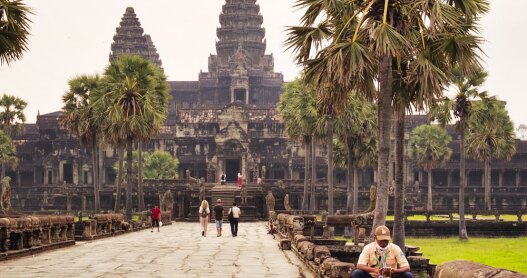
Cambodia’s riverside city is best known as the departure point for exploring UNESCO World Heritage site Angkor Wat and other atmospheric ruins in Angkor Archaeological Park. Temple Town, as it’s fondly called, is an engaging destination in its own right, with an abundance of things to do, from bird-watching on Southeast Asia’s largest lake to horseback riding through rice fields and zip-lining through forest canopies. Hands-on travelers can learn to dance like an ethereal Apsara or master the medieval martial art Bokator, while foodies might discover the secrets of cooking Cambodian cuisine or learn to shake a killer Khmer cocktail.

Angkor Wat Temple at sunset, Siem reap in Cambodia.

Photo By Guitar Photographer/Shutterstock

Overview

When’s the best time to go to Siem Reap?

High season is from December to February. It’s the coolest and driest period and the most popular time to visit. While the weather is loveliest, the city and temples are crowded, so you’ll need to rise in the darkness to start exploring the temples at sunrise, before the tour groups arrive. March and April are the hottest months and best avoided if you can’t handle the heat. The days cool a little in May when the early rains come. June, when monsoon really kicks in, is wet, yet the countryside quickly greens and remains lush through to November. For many, the wet or green season is the best time to visit.

How to get around Siem Reap

As the gateway to Angkor Archaeological Park, one of Asia’s star attractions and Cambodia’s main tourist destination, Siem Reap’s international airport is busy, with frequent flights arriving from around Asia. The petite airport is not equipped to handle large long-haul flights, so you’ll likely fly via Bangkok, Singapore, Kuala Lumpur, or any number of Asian capitals, before transferring to a smaller jet. This means you can take advantage of low-cost airlines like Air Asia. If traveling overland, good bus services exist between Hanoi and the Cambodian capital Phnom Penh (5 hours) and from there to Siem Reap (7-8 hours), and from Bangkok via the border town of Poipet to Siem Reap (8-9 hours). It’s also possible to take a train from Bangkok and then a bus from the border.

Taxis (US$7) or tuk-tuks ($6), pre-arranged with your hotel, are the main wheels from the airport to your hotel, but once in town, it’s tuk-tuk all the way. Expect to pay $1–$2 for short journeys around town, while day trips to the temples can cost $10–$20 depending on the duration and distance. If you’re not afraid of chaotic traffic and reckless unlicensed local drivers, you can rent bicycles for as little as $1–$2 a day for a basic bike, and up to $5 a day for a top quality mountain bike. Foreign tourists are prohibited from riding motorbikes for safety reasons.

Can’t miss things to do in Siem Reap

Spend a Sunday evening on Road 60 on the edge of town, tucking into street food and sipping cold beers on roadside picnic mats. Cambodians call it “the local’s Pub Street,” although it has much more of a family vibe and fun-fair feel, with its few simple kids’ rides, than the backpacker party street—also known as Pub Street—in the center of town. It should not be confused with another “Khmer Pub Street,” a gritty street off Airport Road (National Highway 6), lined with local beer gardens (no signs in English) and karaoke or “KTVs.” If you feel like singing karaoke, head to the Corner bar instead.

Food and drink to try in Siem Reap

Cambodian cuisine is one of Asia’s most misunderstood. The better-known Royal Thai Cuisine of neighboring Thailand was actually born from Royal Khmer Cuisine. Restaurants such as Sugar Palm and Chanrey Tree serve up refined renditions of home-style Cambodian food, while Cuisine Wat Damnak, recently voted Best Restaurant in Cambodia among Asia’s 50 Best Restaurants, is renowned for its creative contemporary Cambodian cuisine. Markets, roadside stalls, mobile carts, and roaming vendors offer tasty street-food treats such as soups, barbecue skewered meats, noodle dishes, and pork and rice, while countless international restaurants serve up everything from authentic Korean and Indian to Italian and French cuisines.

Culture in Siem Reap

As you’d expect from a civilization that built the Angkor temples, the Khmer Empire was artistically rich, with talented sculptors, artists, dancers, and musicians. Art and sculpture are on display in the elaborate carvings and bas-reliefs on the temple walls and at Angkor National Museum. Nightly Apsara dance performances, accompanied by classical Khmer musicians, are held at dozens of venues around the city. Wat Bo Pagoda is the location of twice-weekly shows of traditional shadow puppetry and musical ensembles, while the Bambu Stage showcases contemporary dance and the big top behind the Museum is home to nightly performances by the quirky Phare Cambodian Circus.

The biggest party of the year for Cambodians is Khmer New Year, celebrated around the same time as Thailand’s Songkran, though less about water fights and more about pagoda activities such as making offerings to the monks, worshipping ancestors, and washing Buddha statues. While the main holiday lasts over three days, Cambodians will take a week to 10 days off if they are able to return to their hometowns. In Siem Reap, it’s the only time of year that Pub Street and Angkor Archaeological Park teem with groups of Cambodian friends and families. Traditional games, dancing, and concerts take place around the park, including in front of Angkor Wat. It’s a wonderful time to visit.

Local travel tips for Siem Reap

The average three-day stay in Siem Reap isn’t nearly long enough. Try to spend a week to explore the best of the Khmer Empire archaeological sites and more off-the-beaten-path ruins, as well as to experience the city beyond the temples.
Guide Editor

READ BEFORE YOU GO
With mass tourism kept at bay by the COVID-19 pandemic, now is the best time to be in the Cambodian city and gateway to Angkor Wat.
RESOURCES TO HELP PLAN YOUR TRIP
The beloved Cambodian breakfast dish of nom banh chok is a love-it-or-hate-it dish for most foreigners, who would probably prefer to have this cold to luke-warm noodle dish served hot. The process of making these rice noodles is depicted in bas reliefs on Angkor temples, suggesting that the dish dates back to the Khmer Empire and traveled to Thailand at the end of the Angkorian era. In Thailand, there is a similar noodle dish called kanom jeen. In Siem Reap it’s typically served at street-side stalls and by roaming women vendors who carry baskets of ingredients on their shoulders. Like anything in Cambodia, you can expect to find an array of versions but a favorite comes with a yellow kroeung curry, a mound of thinly sliced banana blossoms, pickled cucumber, and fresh fragrant green herbs.
It may seem unbelievable now, given the pace of Siem Reap’s evolution, but reliably great coffee and other deli and bakery staples were tough to find before Blue Pumpkin set up shop near the turn of the millennium. Success may have changed the venture—it now has a number of outlets in Siem Reap, and several more in Phnom Penh—but the philosophy of serving simple but high-quality Asian and Western dishes remains intact. Menu highlights include generously proportioned breakfasts and sandwiches, decadent cakes, famous yogurt shakes, and a wide selection of homemade ice creams and sorbets.
There comes a time for everyone on a Cambodia trip when, no matter how much you’re enjoying sampling the local food, you’ll get a craving you need to satisfy. Fortunately, Siem Reap has an abundance of restaurants serving cuisines from around the globe, and many of them are very good. Filling pastas are fantastic if you’ve been cycling or scrambling the temples all day and a plain Margarita pizza is a terrific choice if you’ve been a tad sick in the tummy. Of Siem Reap’s handful of Italian restaurants, I love Il Forno, on a narrow alley off Pub Street, just down the lane from Asana and around the corner from Miss Wong.

The pizzas come piping hot from the traditional Neapolitan wood-fired oven and many of the handmade pastas are made fresh daily on the premises. While some of the products, such as the Parma ham, are imported from Italy (as you’d hope!), others are local and seasonal, like the beautiful fragrant basil. They also offer decent Italian wines by the glass and carafe. Check the blackboard for daily specials. If you can’t get a table, I also like Little Italy on the parallel lane on the other side of Pub Street. The specialty there is their excellent carpaccio and house-made charcuterie.
This local institution and late opener is a popular haunt of Siem Reap‘s expats and locals, from archaeologists to artists, poets to tour guides. Laundry Bar’s friendly staff, decent pool tables, and cheap drinks are all big appeals, but it’s the excellent music that continues to draw most local residents to this dimly-lit, bohemian haunt a block from Pub Street. Whether it’s a live band, such as the superb Cambodian Space Project, above, who channel the sounds of Khmer rock ‘n’ roll from the Sixties and Seventies, a visiting Euro-DJ, or the eclectic soundtrack that shifts from jazz and blues to eighties French pop, the music is always interesting and engaging and gets punters tapping their feet or at the very least talking. While the staff will be booting drinkers out in the wee hours of the morning during high season, the bar can often close early (before midnight) during low season, so if you don’t want to miss getting a taste of Laundry, get here by 10pm. A warning: the drinks are cheap but they’re pretty awful. If you want good cocktails, go to Miss Wong. Laundry is all about the cool sounds and casual vibe. Check the bar’s Facebook page to see what bands or DJs are on while you’re in town and plan around it.
Siem Reap sees a lot of Koreans visiting throughout the year, both tour groups and independent travelers. This means the city has a large number of Korean restaurants to cater for them. My favorite is Dae Bak, on busy Sivutha Boulevard. This simple place with stainless steel tables that get packed with groups of tourists, as well as off-duty guides and Korean expats, does deliciously authentic Korean food. There’s a fairly long menu of specialties, including everything from dumplings to kimchi soup and bulgogi to seafood pancakes. A few dishes to share is enough for a couple, as also serve half a dozen tiny dishes of starters, from kimchi to various pickled and fermented vegetables. Dishes start at $5 and a bottle of soju goes for $4. My only gripe is that the Korean BBQ is done outside and not at the table.
The racks at Jasmine Boutique hang with gorgeous handwoven Cambodian silk garments, including exquisitely tailored blouses and trousers, elegant cocktail dresses and gowns, and classic shirts and skirts that can be teamed with anything from crisp cottons for a smart-casual look to sequined tops for a glam night out. The boutique was started in 2001 by Australian Cassandra McMillan and New Zealander Kellianne Karatau, who are passionate about handwoven Cambodian silk, evident in the quality of the beautiful clothes and accessories, such as silk scarves and clutch-purses. They also support other local designers and you’ll find pretty handmade jewelry like the pieces above to team with their clothes. They also have boutiques in Phnom Penh. Jasmine is located in the stylish shopping arcade at the riverside Foreign Correspondents Club or FCC Angkor. Home to Wa Gallery, a branch of Eric Raisina, and the John McDermott photography gallery, it’s easy to spend a couple of hours here browsing these chic boutiques in between drinks and dinner.
If you’ve come to Siem Reap, you’ve already got architectural wonders on the mind. And though you’ll spend your days learning about a 1,000-year-old civilization, a stay at Viroth’s Villa allows a more recent era of Khmer creativity to be contemplated: the 1960s. The decade saw the arts flourish in newly independent Cambodia, most notably in the modernist New Khmer Architecture style.

Viroth’s Villa’s boxy, petite, two-story building is one of the Le Corbusier–inspired genre’s few remaining examples (there are others in Phnom Penh and Kep, on the coast), and its owners, Fabien Martial and Viroth Kol, went to great pains to honor its clean lines and honest aesthetic when renovating the dilapidated building in 2007. Rooms use local materials to modern effect, with dark gray tiled floors and polished terrazzo baths, woven water hyacinth mats, and teak doors. Decor is kept to a minimum—a single standing Buddha, a giant frond from an Elephant Ear palm in a vase—but expertly curated and placed, lending the property the feel of a Southeast Asian art gallery. The intimate, seductive style can also be found in the couple’s second, larger property, Viroth’s Hotel, a newly constructed 1950s-inspired space that opened in January 2015.
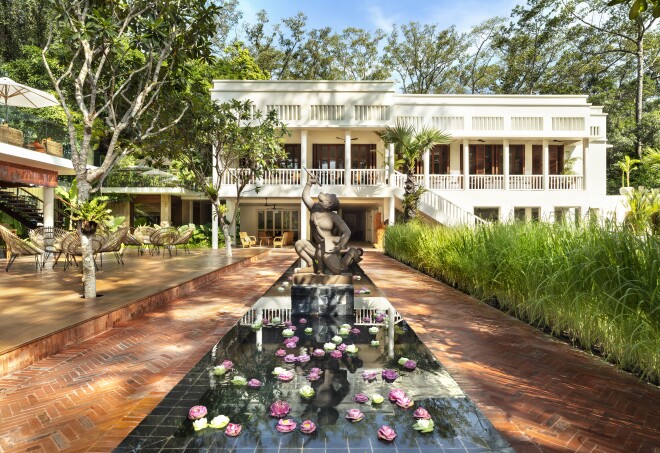
How often does a king’s car pick you up at the airport? Arrival at Heritage Suites begins with a vintage 1962 or 1968 Mercedes—one of which used to belong to the late King Norodom Sihanouk—before you’re promptly whisked off to a historic cream-colored building of soaring arches, mahogany columns, and wrought-iron balconies. With just 26 rooms (most of which are suites), the boutique hideaway is often so serene as to feel more like a royal’s private compound than a hotel—if a royal’s compound had its own high-end tour agency and one of the trendiest jazz bars in town. Rooms are spacious and surprisingly modern in style—all suites have a lush private garden, and top-tier rooms also have a private hot tub—and welcome drinks and canapés help guests immediately acclimate to the villa’s languid and decadent atmosphere. The sprawling saltwater pool and its umbrella-shaded sunbeds beckon at all hours (including for romantic candlelit dining), while the intimate spa offers yet another way to unwind in between temple excursions.

Best of all, the hotel gives back: It works closely with the Sala Baï Hotel and Restaurant School, training and hiring students from this school that works with underprivileged Cambodians, especially women, and offers guests opportunities to participate in activities with the school.
Dutchman Dirk de Graaff left a demanding consulting position in Hong Kong to become a hotelier in Siem Reap, falling for Cambodia’s natural beauty, smiling residents, and laid-back way of life. He ran the first gay-friendly guesthouse in town before opening two hotels, a boutique hotel and the more upscale Rambutan Resort, a 16-room property, where he’s successfully re-created the traits that led him to the country in the first place. The simple but stylish rooms employ local, natural materials, with custom-made, chocolate-brown and white-flecked sugar-palm beds (of eco-friendly wood), brightly hued silk lamps, and private outdoor terrazzo soaking tubs. Modern Asian art—including comical pieces by Chinese artist Yue Minjun—adorns the walls. A lovely slate-and-stone tiled, tree-shaded pool anchors the property, its cascading water feature lending a meditative quality.

And though Rambutan’s flair is more than enough reason to stay, it’s the exceedingly personable staff that makes it a true standout. Guests are welcomed like old friends (many are on return visits); the affable check-in crew and servers artfully walk the line between doing their jobs and making time for a chat. De Graaff invests in his team—providing scholarships to further their careers in hospitality, for instance—and their mutual affection for the place shows.
Hidden away in the lush jungle south of Siem Reap, the sleepy village of Treak is home to one of Cambodia’s best-kept secrets. In such a tourist-flooded destination, it’s easy to get swept away in the sightseeing infrastructure—both luxury and backpacker—and miss out on local Cambodian culture. But this palm tree–filled oasis of just 10 villa-style rooms has the answer. The hotel is staffed almost entirely by villagers, the sleek modern decor comes from local artisans, water is heated through solar energy, and the restaurant sources its fresh ingredients from nearby farms. Sojourn even has its own NGO, Husk, which works with local families on everything from health to education, providing opportunities for guests to educate themselves and engage with the community in a positive way.

Best of all, Sojourn encourages this responsible tourism without sacrificing a modicum of luxury, from its glassy saltwater pool with a swim-up bar to its custom-made destination dining experiences. The secluded, romantic suites have private gardens, and the decadent spa is the perfect way to bliss out after a day of exploring the dusty ruins.