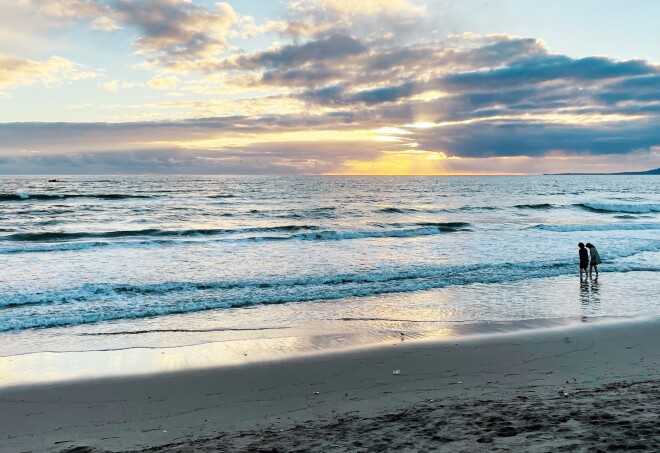
San Diego

San Diego is the birthplace of California and sits just 20 minutes from the border with Mexico. Mild weather, sunshine, and 70 miles of coastline help justify the nickname “America’s Finest City.” Travelers come to San Diego for world famous tourist attractions such as the San Diego Zoo and the beaches, but there’s more to the city beyond the Gaslamp and Pacific Beach. In San Diego’s culturally diverse neighborhoods, you’ll find unique restaurants, breweries, art galleries, and locally owned boutiques. San Diego is built atop undeveloped canyons giving the city’s neighborhoods distinctive boundaries and interspersing the city with open space. The canyons also mean that attractions are a bit spread out.

original-san-diego-banner-crop-2019.jpg

Photo Courtesy of Ganapathy Kumar

Overview

When’s the best time to go to San Diego?

During the months of May and June, known as “May Gray” and “June Gloom,” the sun remains hidden much of the day behind a thin veil of high fog. The hottest months, with temps in the eighties, are August, September, and October, when hillsides are golden-brown. A little rain falls during winter, which is the best time to view the natural landscape at its greenest. The combination of ocean, coastal canyons, and mountains to the east creates a variety of microclimates. A 10-degree temperature difference can occur within as little as 15 miles.

Can’t miss things to do in San Diego

Definitely check out Sunset Cliffs Natural Park in Point Loma. See the crystal waters from the sandstone bluffs. You might feel like you’re in some other country—a beautiful one, for sure.

Food and drink to try in San Diego

The border location plus the influx of Asian immigrants over the centuries means San Diego specializes in Mexican and Asian cuisines. The locavore movement is growing, and many restaurants have been developing relationships with farms just outside the city. You’ll find chef-owned fine-dining establishments, hole-in-the-wall destinations, and dozens of food trucks.

Culture in San Diego

San Diego’s climate and location on the West Coast draw people from all over the world. A variety of cultures are reflected in the shops and restaurants around the city. Each neighborhood has its own feel and style. If you love architecture and hidden treasures, plan to park your car, get out, and walk around!

FESTA!, in Little Italy, is the largest Italian festival on the West Coast. Balboa Park December Nights is a Christmas-themed festival that draws over 350,000 visitors. Restaurant Week happens twice a year—a time to eat gourmet at a great price from more than 170 participating restaurants. The San Diego LGBT Pride fest in Hillcrest draws over 200,000 participants. San Diegans love their festivals, and something is usually happening every month of the year. At these lively events, the trolley offers an easy transportation alternative to parking a car.

Local travel tips for San Diego

- The best time of year is September and October, when the ocean is warm enough for most swimmers to get in the water without a wetsuit, and the hordes of tourists have left.
- Winter is considered “off-season,” so you can get lower hotel rates and still enjoy great weather.
- No matter the time of year, dressing in layers is recommended, as the temperature can change in short distances due to microclimates.
- San Diego’s weather is dry, so carrying water with you is essential!
- The neighborhoods of La Jolla, Ocean Beach, and Pacific Beach have only one main road leading in and out. Avoid visiting around the morning and evening rush hours or you may get caught in a traffic bottleneck.

How to get around San Diego

The San Diego International Airport, formerly known as Lindbergh Field, sits right in the heart of San Diego. Flying in can be a real thrill as the plane passes low over Balboa Park and between buildings.

The San Diego freeway system is laid out in a grid, making it easy to get around by car anywhere in the 372 square miles of city. The trolley is a great choice if you are staying in downtown San Diego, as it stops at many destinations of interest. A machine at each trolley stop accepts cash or credit. Another option is to rent an electric smart car from Car2Go (register in advance, as it takes about five business days to get your membership card). Use the card to activate any Car2Go smart car, and when you’re done, just leave it parked in any legal parking space in the city. To get to the various towns along the coast in San Diego County, or farther north, hop aboard the Amtrak Pacific Surfliner.

READ BEFORE YOU GO
From desert blooms in Death Valley to coastal florals in the Channel Islands and popular poppies in the Sierra foothills, here’s where to find California’s wildflowers.
HOTELS
Live like a local in San Diego by basing your stay at one of the city’s top neighborhood Airbnbs.
RESOURCES TO HELP PLAN YOUR TRIP
Located in the Gaslamp Quarter, the recently constructed Hotel Indigo San Diego toes the line between hip and historic. The eco-chic boutique property prides itself on achieving LEED certification and boasts such unique features as a 4,000-square-foot green roof and a business center with Macs and iPads. History plays out in the hotel’s neighborhood story: an ode to the Wild West and the founding of San Diego.

Boldly designed rooms are outfitted with modern cherry blossom linens, vibrant murals, and oversized cushioned headboards. Clean up with Aveda bath products in your spa-inspired shower, and wake up to your own music thanks to an in-room iHome docking station. High-definition flat screens with premium cable and free Wi-Fi throughout the hotel mean you can stay as connected as you wish. At sunset go up to Level 9 Rooftop Bar for stunning city views and craft cocktails. Daily happy hour from 3:30 to 6:30 p.m. sweetens the deal.
From the moment you step inside Carlsbad’s Park Hyatt Aviara, you feel like you’re on a retreat. A quiet soundtrack and the hotel’s signature jasmine scent permeate the airy lobby. And between the hotel and the ocean sits a garden that may lure you out before you even check in. Palm Court is a fantasia of palms, along with orange blossoms, jasmine, hibiscus, and parrot lilies. In keeping with the serene theme, the 329 guest rooms are comfortable and well-appointed, with views of the local foothills, the LPGA-frequented golf course, one of the two pools, or the nearby Batiquitos Lagoon. The hotel offers plenty of ways to fill your days, with an upscale spa (try the Carlsbad Sea Stone Massage) as well as tennis, volleyball, badminton, and bocce courts. For a peak California experience, sign up for a private surf lesson—which wraps with a gourmet meal on the beach—or sign up for yoga under the palm trees. Pro tip: The hotel is so pet friendly—with “care stations” scattered throughout, plus extra plush dog beds—you’ll feel guilty if you leave Fido home with a sitter.
Spanish colonial fountains. Roaring outdoor fireplaces. Brightly colored bougainvillea vines and hibiscus flowers. Rancho Valencia Resort & Spa, Southern California’s only Relais & Châteaux, is spread over 45 hilly acres of gardens and groves. No detail is too small here, as you’ll discover on the Bridge of Champions, a narrow wooden span that leads you across a brook. As for the champions in question, they’re bygone net men memorialized on the path to the resort’s fabled tennis complex: 18 courts and a pro shop. Not to be outdone, the landscaping around your casita (or luxury villa or private hacienda) will lend a secret garden feel to your patio, where you may also find a private fireplace, hot tub, or—in the case of the hacienda—heated pool. Inside, expect 600-thread-count linens, Frette towels, and a Bang & Olufsen sound system. At the spa, waterfalls and a yoga pavilion that appears to float work in tandem with the treatments to induce maximum relaxation.
At first glance, the lobby is the place to be at this boutique hotel in the Gaslamp Quarter. At check-in guests are offered a selection of local wine and beer—and again during happy hour. Under soaring ceilings supported by leather-wrapped pillars and surrounded by colorful art, you can sip and socialize. But don’t ignore the scene on the roof, either, where you’ll find a pool with oversized, floating pillows; fire pits with food and drink service; and views of the Coronado Bridge, Mount San Miguel, and the old and new architectural icons of downtown. In fact, the rooftop is so special, you may want to book the only accommodation in the 159-room hotel that grants you direct access to it: the Cabana Suite, where a private staircase leads to your own poolside cabana. On the other hand, if you’re traveling as a family, you may find that another option beats private rooftop access: the Star Suite, complete with three king-size beds, two of which form a custom-built bunk bed. Either way, expect ultra-modern furnishings paired with skyline views.
With over 7,000 images from 850 artists, the Museum of Photographic Art displays a collection of pictures depicting the transformation of photojournalism and social documentaries from the early 19th century to modern day. Boasting works from Alex Webb, Margaret Bourke-White, and Ruth Bernhard, this museum is a must see in San Diego’s art scene. So stop on by MOPA, and make sure to leave enough time to explore the rest of Balboa Park surrounding it!
A 1,200-acre green space filled with museums, theaters, and gardens, Balboa Park is the center of art and culture in San Diego. It’s also one of the city’s most historic sites, built for the Panama–California exhibition in 1915. While the museums are definitely worth seeing, there are also a number of free attractions, including the photogenic Botanical Building, which houses more than 2,100 plants (including Venus flytraps); the Desert Garden, filled with succulents from around the world; and a sculpture court with works by Miró and Rodin. For one of the area’s best views, purchase a timed ticket to climb the California Tower in the Museum of Man. The ornate structure reopened to the public in 2015 after being closed for nearly 80 years and features a spiral staircase to the eighth floor, where you can catch a glimpse of the Cuyamaca Mountains, the Cabrillo Bridge, and even Mexico’s Coronado Islands.
If you want to check out where the San Diego locals hang out, you have to stop by Bootlegger, located on the border of Gaslamp. The bar itself is unique, with a beautiful stone top and lined with hand-carved wooden panels imported from Mexico. There are comfortable seats no matter where you look. Although the decor is going for that dive bar feel, it’s got a touch of hidden elegance. When you come in, as long as it’s not too crowded, the service is highly personable. The Bootlegger is designed somewhat to look like a 1920s speakeasy, and has some interesting art on the walls. The drinks are poured using top-grade liquors; my favorite so far (pictured) is the ‘Old Fashioned'—Bulleit Bourbon, Angostura bitters, sugar, fresh lemon and orange peel. They have a good number of beers on tap and a great selection from the local micro-breweries. I recommend the happy hour—it’s not too crowded and select drinks and all appetizers are half price. For a neighborhood bar, the food is really good. The Bootlegger bar is a great place to experience the San Diego vibe. Another cool thing is that they don’t allow smoking out on the patio around the bar, so if you want to enjoy a smoke-free night, this is the place to be. Tip: It gets impossibly crowded during any game going on at Petco Park, which is the local baseball stadium. During the late week to weekend it also gets crowded. If you want to come and chill before a night on the town, come by for the happy hour, from 3–8 p.m.
More than worth a visit if you’re in the Gaslamp Quarter, Neighborhood features healthy food for everyone from the meat lover to the gluten avoider. Guests will also find around 27 local brews on tap and many more kinds of bottled beer. The vibe here is cozy, with plenty of shared seating by large, open windows. Note: it can get busy during peak hours, so it’s best to visit just before or after the usual lunch and dinner times.
Mission San Diego is the very first Mission built in what is now the state of California and was built in 1769. Many people come to California for what is known as the “Mission Trail”, a tour of all the Missions built in the state by the Spaniards. You can take a tour for $2 and it is still a working Mission, so if you’re Catholic (or not) you can attend Mass.
At 4,235 acres, Mission Bay Park is the largest man-made aquatic park in the U.S. Here, water-sports enthusiasts can enjoy everything from kayaking, windsurfing, and wakeboarding to snorkeling, scuba diving, and fishing, while landlubbers can take advantage of several trails and grassy areas. For equipment rentals, head to the Mission Bay Aquatic Center, located right on the bay.