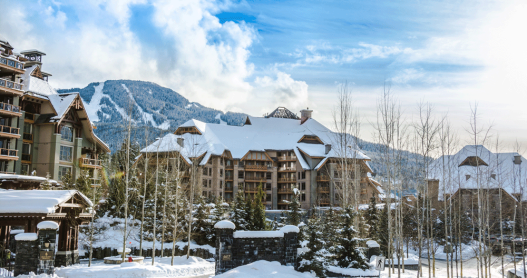
Whistler

Don’t dismiss Whistler as a sleepy ski resort town: The village’s two spectacular mountains make up the largest ski area in North America with more than 8,000 skiable (and hikeable) acres with over 200 named runs. And secondly, summertime visitors now outnumber winter guests, and the shoulder seasons are quickly catching up.

The resort was first developed to lure the 1968 Winter Olympics. The Winter Games didn’t arrive until 42 years later, but when they did, Whistler was changed significantly. One lasting benefit, the widening of the Sea to Sky Highway, has eased travel between the village and Vancouver. The Whistler Sliding Centre—built for the Olympics and still serving as a training site for athletes—now invites anyone along for a bobsled or skeleton ride.

Peak to Peak

Peak to Peak

© Mike Crain Tourism

Overview

Food and drink to try in Whistler

Whistler benefits from its proximity to Vancouver, one of North America’s premier restaurant towns. Many celebrity chefs, such as Bearfoot Bistro’s Melissa Craig, have moved to the village both for the greater culinary good and for the laid-back mountain lifestyle. Whistler teems with trendy tables: among them, Bar Oso’s tiny tapas bar, Alta Bistro with its unusual take on Canadian cuisine, and restaurants serving up brick-oven pizza, inspired sushi, and great pub fare. Terraces are popular in all weather here, providing the perfect setting for après-ski tall tales and leisurely meals on long summer nights.

Best of Summer

Every May, North America’s largest ski area transitions into the continent’s biggest downhill mountain bike park. Like its winter brethren, Whistler Bike Park features an ever-expanding map of trails—you can now “summit” on your two-wheeler—and arguably the best instructional school on the planet. Come summer, duffers are hardly left out in the cold, the three Whistler golf courses were designed by the likes of Nicklaus, Palmer, and Jones II, though the Pemberton track, Big Sky, remains the locals’ favorite. Active visitors and residents paddle the lakes and hike the mountain trails, and wander the village to check out the museums and shops. Feel a need for speed? Slip into the Whistler Sliding Centre year-round to drop down the Olympic bobsled course at 65 mph.

Culture in Whistler

The historic and living influence of First Nations people in the region is a source of pride and respect, as evidenced by several cultural sites of significance. The new Audain Art Museum together with the Squamish Lil’Wat Cultural Centre position Whistler among the most important art destinations in the Pacific Northwest. The Audain showcases an impressive array of Emily Carr paintings as well as one of the world’s largest aboriginal mask collections. The interactive Squamish Lil’Wat Cultural Centre is the first museum of its kind in North America: a joint venture between two nations. Outside of the institutions, village galleries showcase the thriving village arts scene of painting, sculpture, and crafts that often reflect the alpine setting, as well as authenticated First Nations artwork.

Events

Originally created to draw crowds and business to the village during the shoulder seasons, festivals like Cornucopia, GO Fest, the Whistler Film Festival, the Ski and Snowboard Festival, and CrankWorx now cut can’t-miss notches on many annual calendars. The Longtable Series, an August tradition started by the chef-owner of Araxi Restaurant, is a wildly popular ticket, with diners clamoring to take part in an alfresco dinner set among the windrows on Pemberton’s North Arm Farm.

How to get around Whistler

The village is car-free and access to most other activities can be navigated on foot, or by free shuttle. Visitors arriving via Vancouver can opt for a direct shuttle from the airport or choose to drive the 2.5-hour route along the Sea to Sky Highway. A floatplane flight from Vancouver to nearby Green Lake provides thrilling mountain views.

When’s the best time to go to Whistler?

Because of its proximity to the Pacific, winters here are mild, and daytime temperatures in the village rarely dip below 20F, even in January and February, the biggest snow “dump” months. Summers are spectacular, warm enough for a dip in Alta Lake, but cool enough at night to warrant a light sweater. Fall brings festival season and colorful foliage. (The weeks that follow spring skiing are the mud season, but the lack of crowds can make this the great time for a quiet visit.)

Guide Editor

READ BEFORE YOU GO
HOTELS
Whether it’s a staycation or a trip to a far destination, these hotels have activities to keep you (and your kids or travel buddies) busy during the winter season.
RESOURCES TO HELP PLAN YOUR TRIP
Whistler Blackcomb receives lots of press about its big-mountain features, but the resort offers plenty of terrain for every family member and skill level. The Whistler Blackcomb Snow School, among the best in North America, is great for both seasoned skiers and kids as young as toddlers. Even tweens and teens can enjoy small-group lessons, which offer equal parts socializing and instruction in the terrain parks and beyond. Welcome on the Whistler and Peak 2 Peak gondolas, non-skiers will have the village to themselves during the day. When back with their group, they can hang at one of the more than 25 on-mountain restaurants.
Finding a charming alpine town snug at the base of Whistler and Blackcomb mountains may make skiers, hikers, and lovers of beauty feel like they’re having a fever dream, but the dream is real. Whether you come in winter for the world-class downhill skiing and snowboarding, or in summer for mountain biking, hiking, gallery-hopping, and long evenings spent on restaurant decks, you’ve found Whistler Village, one of the jewels of British Columbia.
Enjoy a drink by the fire in après-ski bliss or dine on a spacious deck overlooking the green slopes on a long summer night—Whistler serves up plenty of tasty options for eating, drinking, and living the good life in this British Columbia mountain village.
Of all the reasons to hike in B.C.’s Coast Range, visiting a train wreck would not rank high elsewhere. This is Whistler, though, where a train derailment becomes a canvas for artists and a must-see novelty that remains well off the beaten track (sorry!), even for many locals. A new bridge spanning the Cheakamus River makes the hike legal and considerably less treacherous. The trail’s steel-meets-seedlings design is reminiscent of New York City’s High Line, and among the many spurs are a boardwalk into the coastal rain forest and a longer trek that leads to the Sea to Sky Trail. Once a hush-hush locale for graffiti artists and mountain bikers, the Train Wreck hike and suspension bridge route are now well-marked at the Sea to Sky trailhead, just outside of Function Junction.
Brandywine is just one of half-a-dozen provincial parks that surround the Sea to Sky Highway like a fir wrap. A trailhead located just 12 miles south of Whistler leads to a 15-minute walk through the mixed hemlock forest to a 200-foot cascade. The falls overview is merely a picturesque appetizer for the fantastic wilderness beyond. The Lava Lake trail provides a marvelous meander through the forest, and if it’s a hot day, you might want to hike all the way to Swim Lake. You can also access the Sea to Sky Trail and head north to the Whistler Train Wreck then hike to the Valley Trail through Whistler and beyond. The park tripled in size in 2010 to fully enclose the habitat of the endangered red-legged frog, so keep an eye peeled for peepers.
It might be the handpainted Venetian chandeliers, but Quattro elevates the concept of a ski resort restaurant. This is a level of cuisine and ambience you’re more likely to find in New York or San Francisco. On chef Jeremy Trottier’s menu, the prix fixe fare changes seasonally, with certain favorites, like rigatoni pecorari and risotto, always available. Though Araxi and Bearfoot Bistro lead the party charge during Whistler’s wildly successful Cornucopia festival every November, always check the schedule to see what Trottier is stirring up during this wine and food extravaganza.
Rimrock Cafe stood by itself as Whistler’s destination dining room for years as Whistler Creekside Village matured around it. Chef Rolf Gunther’s menu doesn’t dazzle you with fads, but focuses instead on classics such as terrine of duck confit, foie gras, rack of lamb, and the Rimrock mixed grill, featuring filet mignon, lamb chop, and venison. Like the menu, Rimrock’s cocktails recall former days when every element of a dining experience was done exactly right (try the Canadian Whisky Sour). Not surprisingly with its cuisine and cocktails held at such high standards, Rimrock is known for consistently impeccable service.
The River of Golden Dreams that connects Alta and Green lakes is a calm, meandering stream that gently conveys your kayak or canoe with hardly a riffle in sight. The self-paced three-mile voyage, typically about three hours, takes you under willow branches and between the second growth alder forests. This rare alpine riparian zone is a habitat for breeding yellowthroat warblers, great blue herons, and all manner of amphibians and reptiles, as well as wildflowers like foxglove and Indian paintbrush. Most rivers in the Coast Range have whitewater passages and require guides, but on this run between Whistler’s largest lakes, a novice will feel comfortable behind the paddle. Vessel rentals, guides, and return shuttle services run throughout the summer.
Much of the indigenous artwork for sale in the Pacific Northwest is, unfortunately, counterfeit. It’s difficult to tell if the masks and other artwork carved and painted in Salish styles of gentle curving lines, depicting animal icons such as the raven, wolf, and orca, are actually the work of Coast Mountains First Nations artists. Black Tusk Gallery, in the heart of Whistler Village, is a cooperative founded to represent indigenous artists. You can commission an artist to carve a totem that tells the story of your family. The gallery supports emerging teen artists of the British Columbia and Yukon First Nations people through an annual aspiring artists award.
You can’t miss the Stawamus Chief Mountain when you travel to Whistler via the Sea to Sky Highway. The granite edifice, the tallest monolith north of Yosemite, provides a fine introduction to how stone shapes and defines this landscape. Fathom Stone Art is a gallery dedicated to artists’ work in the local granite as well as marble, jade, quartz, and many other minerals. The grizzlies on display here, carved by founding sculptor Jon Geoffrey Fathom, are particularly popular. Examples of iconic inuksuit, the tall stone markers used by peoples of the Arctic region, are displayed alongside contemporary sculptures from leading stone artists across the region. Many of these sculptors began their careers as Fathom apprentices. You can, too, by signing up for a soapstone art carving class.