
From grand civic landmarks to reinvented industrial spaces, Buffalo’s architectural legacy is shaping a new era of art, culture, and travel. The city is a place where architecture isn’t just preserved—it’s actively reimagined.
Across downtown and beyond, historic buildings have been transformed into hotels, museums, performance venues, and restaurants, offering visitors a layered experience of past and present. The result is a destination where design plays a central role in how travelers explore the city.
Stay at the Richardson Hotel or Hotel @ The Lafayette

The Richardson Hotel in Buffalo
Courtesy of Visit Buffalo
Buffalo’s architectural revival is perhaps best experienced through the places visitors can stay and explore. A National Historic Landmark, the Richardson Hotel stands as one of the city’s most compelling examples of adaptive reuse.
Originally designed in the late 1800s by Henry Hobson Richardson with landscape architecture by Frederick Law Olmsted, the former mental healthcare center now operates as an 88-room hotel set on 40 acres of green space. Its restored Romanesque architecture and expansive grounds make it one of the most distinctive places to stay in the city. The campus is also continuing to evolve as a cultural destination with the addition of the forthcoming Lipsey Architecture Center Buffalo, which will further highlight the city’s rich architectural legacy.
Another historic stay is Hotel @ The Lafayette, built in 1904 and designed by Louise Blanchard Bethune, the first professional female architect in the United States. The building is a key example of Buffalo’s early architectural ambition and design legacy.
Tour downtown Buffalo and City Hall

City Hall in downtown Buffalo
Courtesy of Visit Buffalo/Matthew Digati
An exploration of Buffalo’s architecture begins with a visit to Buffalo City Hall, the city’s most recognizable architectural landmark. Completed in 1931, the art deco tower is a symbol of Buffalo’s early 20th-century ambition, with intricate detailing and sweeping views of Lake Erie from its observation deck. (You can also go on a self-guided outdoor audio tour of another art deco landmark, the Buffalo Central Terminal, which is currently undergoing a major revitalization.)
Beyond Buffalo City Hall, downtown Buffalo reveals a broader architectural story. Walking the city’s streets, the landscape unfolds as a layered mix rather than a single defining style. Landmarks like the Guaranty Building, Louis Sullivan’s influential early skyscraper, and the grand Ellicott Square Building showcase the city’s late 19th– and early 20th–century ambition.
You’ll find beaux-arts facades sitting alongside ornate banks, art deco towers, and mid-century commercial buildings, each reflecting a different chapter of Buffalo’s growth. Together, these preserved landmarks and everyday structures create a streetscape that feels historic and lived-in. For visitors wanting deeper context, Explore Buffalo’s downtown walking tours offer an excellent introduction to the city’s architectural legacy.
Visit Buffalo’s arts institutions and Frank Lloyd Wright landmarks

The Graycliff Estate, designed by Frank Lloyd Wright, in Buffalo, NY
Courtesy of Visit Buffalo
Buffalo’s arts institutions further connect architecture and culture. The Buffalo AKG Art Museum anchors the city’s arts renaissance, with its 2023 expansion introducing a contemporary addition that complements its historic campus.
Nearby, the Burchfield Penney Art Center highlights regional artists. The building was crafted with architectural details, such as open corridors and nature-inspired lighting, to echo Charles E. Burchfield’s work.

Shea’s Performing Arts Center is a historic venue in Buffalo, NY.
Courtesy of Visit Buffalo
For live performance, Shea’s Performing Arts Center offers a restored theater experience where ornate interiors enhance everything from Broadway productions to concerts. Now more than 100 years old, the theater recently completed a multi-decade restoration that returned much of the space to its original grandeur.
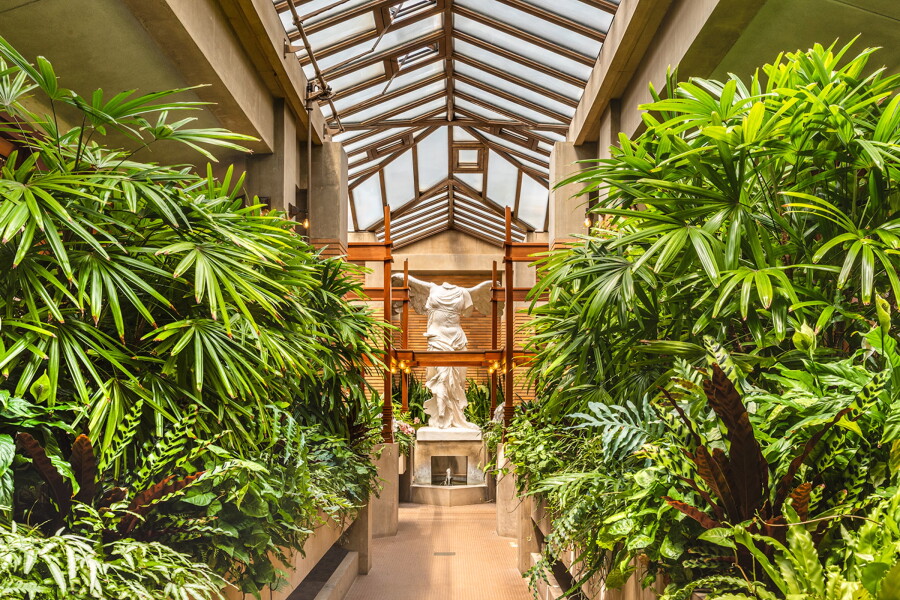
A short drive away, the region is also home to one of the most significant collections of Frank Lloyd Wright’s work in the country. The Darwin D. Martin House and Graycliff Estate offer visitors a window into Wright’s Prairie School philosophy, where architecture is designed in harmony with its surroundings.
Both landmarks were restored after years of neglect and uncertain futures, transforming once-deteriorating properties into major cultural attractions. Part of the enriching experience of visiting today is understanding how dramatically they’ve been revitalized.
Buffalo’s identity as a leader in adaptive reuse comes into focus at Silo City, where towering grain elevators have been transformed into an experimental arts space that hosts performances, installations, and events. The site captures the city’s industrial past while embracing its creative present.
Dine in Silo City and Buffalo’s historic buildings

Duende in Silo City
Courtesy of Visit Buffalo/Olivia McCarthy
Duende is a bar and restaurant on the grounds of Silo City. It adds to the area’s cultural energy as a dynamic space that blends food, musical performances, and event programming within the former industrial setting.
Across the city, historic architecture continues to shape Buffalo’s dining scene. Angeline serves dishes such as roasted beets with whipped goat cheese and pistachios and prosciutto-wrapped filet mignon with fried truffle gnocchi in a restored 1880s residence.

The Terrace at Delaware Park
Courtesy of Visit Buffalo/Sharon Cantillon
The Terrace at Delaware Park sits within Frederick Law Olmsted–designed parkland, connecting architecture with landscape. Grab a table outside on the terrace (enclosed in the cooler months), order oysters or baked brie, and admire the sunset over the lake in Delaware Park. It’s the perfect spot to end a day spent touring Buffalo.
For a more casual option, the West Side Bazaar, located in a repurposed warehouse, brings together global food vendors and small businesses, reflecting Buffalo’s evolving cultural identity. Or try a restaurant inside the historic Marin Building, Vault @ 237, which preserves its past life as a 1912 bank. Original vault elements and safe deposit boxes remain part of the dining experience, alongside a menu featuring French onion soup and pan-seared salmon with tomato confit and leek risotto.
Buffalo’s architectural story is one of transformation. Across the city, thoughtful restorations and reimagined historic buildings create spaces that connect past and present in meaningful ways. For travelers, the result is a destination where architecture is something to see—and experience.


