

Rates: $242 per person
Less than two hours from Tokyo by train, Hakone has long been a restorative retreat for Tokyoites. During the early Edo period (1603 to 1868), the Tokaido Road linking Kyoto and Tokyo turned Hakone into a vital post town, where merchants, samurai, and pilgrims soaked in its hot springs before tackling the steep Hakone Pass.
On a scenic stretch of the old Hakone Kaido path, just beyond the village, the modern ryokan Kai Hakone has been a refuge for three decades, and last year, it was reimagined for a new era. Many visitors experience Hakone as a day trip from Tokyo, but Kai Hakone is reason enough to stay the night.
After a yearlong renovation, the Hoshino Resorts property reopened in August 2025 with redesigned signature rooms, two suites with private onsen baths, an outdoor tea house, and a refreshed communal onsen, plus new activities that delve into Hakone’s history. Kaiseki breakfasts and dinners were also given an upgrade, from the intimate private dining spaces to the colorful artisanal dishware used for each course.
All the essentials of a traditional stay are here—tatami floors, futon beds, yukata (robes), tabi (socks), and zori (thong sandals)—but the retreat is designed to appeal to a wider range of travelers, with updates including Japanese-Western hybrid bedding, contemporary seating, and high-speed Wi-Fi.
As I spent a few hours lounging with a warm rice drink in hand, watching the autumn leaves turn on ancient cypress trees, it was easy to see why Kai Hakone remains such an alluring stop along one of Japan’s oldest travel routes.
Who’s Kai Hakone for?
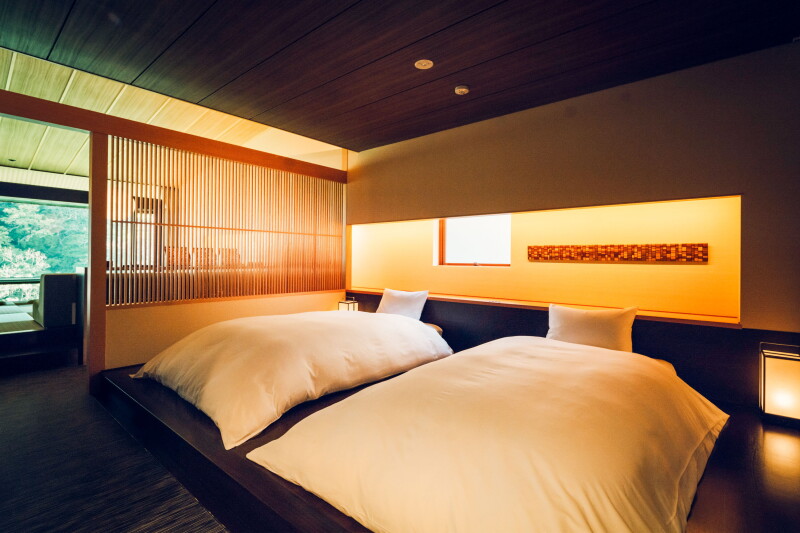
Rooms at Kai Hakone feature handcrafted Yosegi-zaiku wood marquetry, a centuries-old craft that originated in the Hakone region.
Courtesy of Kai Hakone
It’s a great getaway for families (larger rooms have several twin beds separated by sliding doors), but it’s even better suited to couples seeking a meditative one- to two-night stopover between Japan’s larger cities. Everything, from lounging by the windows with a book to soaking in the onsen, encourages guests to slow down.
Who it isn’t for
The ryokan experience isn’t for everyone. Meals are served at set hours, the kaiseki dinner is a lengthy affair, and the pace is deliberately slow. If you prefer to pack your days with sightseeing or keep a flexible hotel schedule, a ryokan may feel constraining.
The location: Fuji-Hakone-Izu National Park
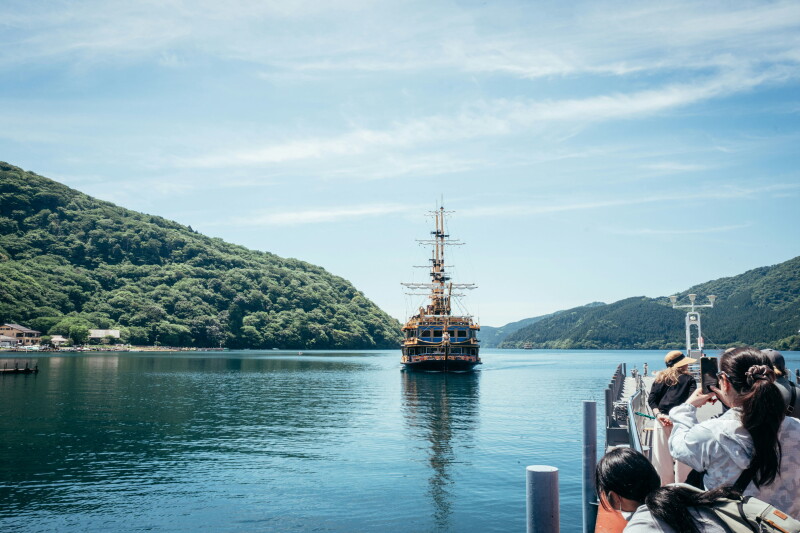
The iconic pirate sightseeing ship arrives at the pier on Lake Ashi in Hakone, surrounded by green mountains.
Photo by Loris Boulinguez/Unsplash
Set within Fuji-Hakone-Izu National Park on the rim of an ancient volcanic caldera, the town’s dramatic hills and valleys draw more than 20 million visitors a year. My husband and I took the Shinkansen from Tokyo to Odawara station, followed by a 20-minute taxi to the property. Guests can also take the Romancecar express train from Shinjuku station to Odawara or Hakone-Yumoto, the station closest to Kai Hakone. The hotel is a quick drive from Hakone’s attractions, which are connected by a ropeway aerial lift system and cable cars.
On a clear day, it’s worth considering a jaunt on Lake Ashi aboard a sightseeing boat inspired by a pirate ship, which offers postcard views of Fuji. Meanwhile, the Hakone Open-Air Museum offers one of Japan’s first sculpture parks, with works by Rodin and Henry Moore, as well as an impressive Picasso collection.
The modern ryokan Kai Hakone has been a refuge for three decades, and last year, it was reimagined for a new era.
The rooms
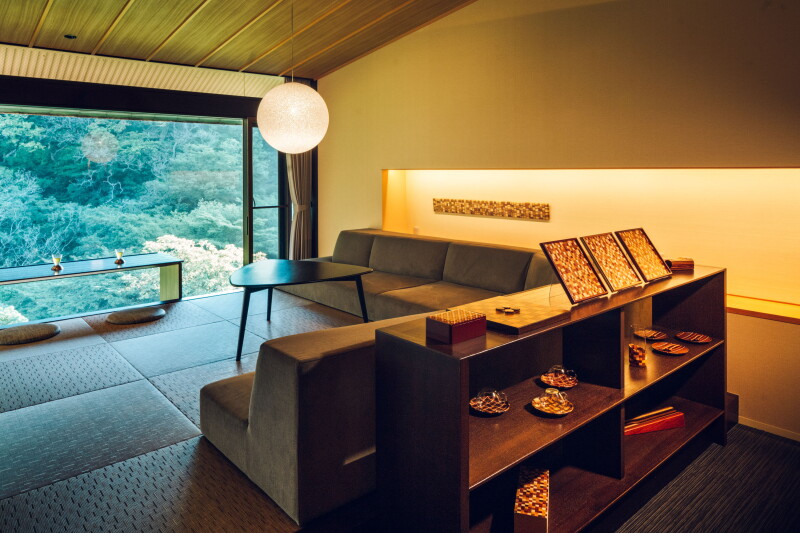
Floor-to-ceiling windows bring Hakone’s forested landscape into every guest room at Kai Hakone.
Courtesy of Kai Hakone
All 34 rooms and suites overlook the forest. Two are in Western style, but the rest are a modernized ryokan style, with beds on low platforms with futon mattresses rather than directly on the floor, and minimalist couches rather than sitting cushions. The decor offers a subtle nod to travelers along the Tokaido Road, including wall art with sandogasa hats and rain cloaks once worn by pilgrims, bed runners patterned with straw sandals, and Akari lamps. Rooms also showcase Yosegi-zaiku (Hakone’s traditional wood marquetry with geometric patterns), in key chains, trays, and decorative pieces. Guests can even try the craft at a daily workshop.
The two new Hakone-Gokochi Suites, where we stayed for two nights, dial up the exclusivity with a private, open-air onsen bath. When we weren’t soaking, we relaxed in a sitting area that faced trees, sporting our yukata and sipping complimentary tea and coffee from locally designed artisan ceramics. Bathrooms were stocked with amenities made for the hotel, including face-cleansing products, while the powder room had a delightful surprise: leather slippers reserved for visits to the Toto toilet.
The food and drink
The highlight is the kaiseki dinner, a seasonal, multicourse meal that unfolds with choreographic precision. Ours began with an amazake vichyssoise made with a fermented rice beverage and eight appetizers, then moved through soup, sashimi, and a steamed course before the chef’s signature sukiyaki hot pot of thick-cut beef and vegetables seared table-side.
Japanese sake and wines accompany the meal, with staff on hand for pairings. Dessert blends Western and Japanese styles, such as the black bean tiramisu. You’ll want to reserve an early dinner to leave enough time to be hungry for the similarly generous breakfast spread. A note on comfort: At most ryokans, meals are served at low tables on floor cushions, which some travelers may find physically challenging. Here, guests are seated in chairs at tables, with the option to take the meal in-room.
Staff and service
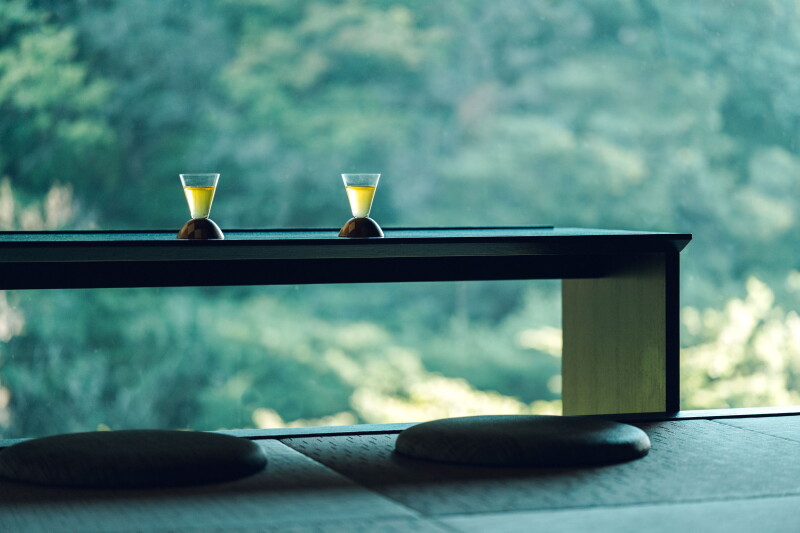
Drinks with a view: Kai Hakone’s forest setting encourages guests to slow down between soaks and sightseeing.
Courtesy of Kai Hakone
Because about 60 percent of the hotel’s guests are from Japan, some guest activities are conducted only in Japanese. And while the staff make major efforts, most have limited English proficiency. I found that translation apps proved invaluable, making conversations smoother for everyone.
We especially appreciated one staff member who printed out an English itinerary with train and cable car schedules also in English so we could make the most of our time in Hakone.
Onsen culture
Our suite’s private onsen was wonderful, but I ultimately preferred the communal semi-open-air baths (separate for men and women), which face fragrant hinoki cypress trees—a view better than the one from our suite. Conveniently, the baths switch between men and women each morning.
Accessibility
The hotel has elevators and ramps connecting the parking lot, common areas, guest room wings, and the onsen facility for guests with reduced mobility. The baths have handrails but aren’t fully accessible, and staff cannot provide customized mobility adjustments. For more information, call the hotel at +81-50-3134-8096.
Make a trip of it
Kai Hakone makes an ideal one- or two-night pause between Tokyo and Kyoto or the Japanese Alps. It’s close enough to be convenient but restorative enough to reset your pace after packed days of sightseeing. Set aside at least one full day to explore Hakone’s open-air museum, Lake Ashi, and volcanic Owakudani before traveling onward. Check out our itinerary for the perfect four days in Tokyo and our favorite hotels in Tokyo, too.


