New Orleans

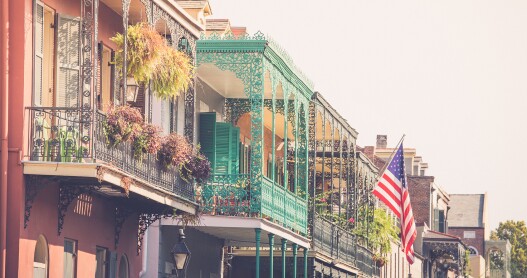
New Orleans, on Lousiana’s Gulf Coast, is never short of an excuse to laissez les bon temps rouler—and the city’s popularity has been driven by what the Big Easy does best: eating, drinking, and being merry. The French Quarter has plenty to entertain beyond the neon-lit Bourbon Street, so it’s worth exploring the city’s outlying neighborhoods, from the manse-lined streets of Uptown to the boho Bywater. And one need only wander into any of the bars along Frenchmen Street to be convinced that New Orleans’s musical heritage beats on—and that no matter how small the venue, there’s always room to dance.

NEW ORLEANS, LOUISIANA USA- FEB 2 2016: An unidentified  local jazz band performs  in the New Orleans French Quarter, to the delight of visitors and music lovers  in town.

Jazz spills out onto the street everywhere across New Orleans.

Photo By GTS Productions/Shutterstock

Overview

When’s the best time to go to New Orleans?

Mardi Gras, Essence Festival, and Jazz Fest, the city’s biggest events, take place in winter, summer, and spring. Though summer brings fewer crowds due to the heat, it’s worth considering a nonpeak trip to avoid the tourist throngs and exorbitant hotel rates. August’s Satchmo Festival is a celebration of native son Louis Armstrong, while the holiday season brings bonfires, Reveillon dinners, and caroling in Jackson Square.

How to get around New Orleans

New Orleans’s Louis Armstrong International Airport is about 25 minutes from the French Quarter by taxi. The fare is a flat rate of $36 for the first two passengers, plus a $15 surcharge for each additional person. Airport shuttles are slightly more—$30 for a one-way ticket, $56 round-trip—and run every half-hour or so to hotels and other locations.

The French Quarter is easily navigated on foot, and the city’s streetcars can be useful if you’re planning to explore well-trodden parts of the city like the Garden District, City Park, and the Superdome; a day pass costs $3. For everywhere else, taxis are readily available.

Can’t miss things to do in New Orleans

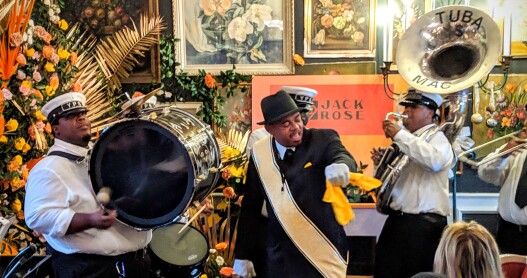
If you’re within earshot of a brass band, chances are good it’s a second line; drop anything you’re doing and follow that sound—you won’t be sorry. Or head over to Congo Square in Treme, the epicenter of Black culture and music in the city.

A crawfish boil—ideally in someone’s backyard—is an iconic New Orleans pastime. If you don’t have a backyard to borrow, pick up crawfish, potatoes, corn, and sausage from KJean’s, and head to City Park.

Food and drink to try in New Orleans

New Orleans’s already renowned restaurant scene has only gotten stronger over the years. Restaurants that are shaking up the old guard, jazzing up Cajun classics, and bringing new flavors to the forefront include Mid-City’s Heard Dat Kitchen and Senegalese-inspired Dakar Nola. Lunching at Commander’s Palace (when martinis are a 25 cents apiece at lunch on certain days) or queuing for fried chicken at Willie Mae’s Scotch House is essential—but so are whole grilled fish at Donald Link’s Peche, globally inspired street food at Booty’s, and cocktails at Cure.

Culture in New Orleans

In Cajun cooking, the holy trinity is a riff on mirepoix that refers to onion, celery, and bell peppers and is the base for iconic dishes from gumbo to jambalaya. If the city of New Orleans had a holy trinity, it would be food, music, and the Saints. To understand the city’s culture, go for Friday lunch at Galatoire’s, grab a bench at Preservation Hall, and catch a game at the Superdome. There’s also a burgeoning gallery scene along Julia Street and a handful of worthwhile museums, including the Contemporary Arts Center and the National WWII Museum.

New Orleans is a city that likes to get its party on, and its festivals are nothing short of epic. The most famous are Mardi Gras and Jazz Fest, but also of note are alternative music festivals like Satchmo Summerfest and Crescent City Blues and BBQ, plus the (free) French Quarter Festival. Even if you don’t plan your trip around a special event, there’s almost always a parade or a party going on somewhere in the Big Easy.

Local travel tip for New Orleans

The French Quarter—Bourbon Street in particular—is where the tourists go. If you’re a native, chances are you’re hanging out elsewhere.

READ BEFORE YOU GO
HOTELS
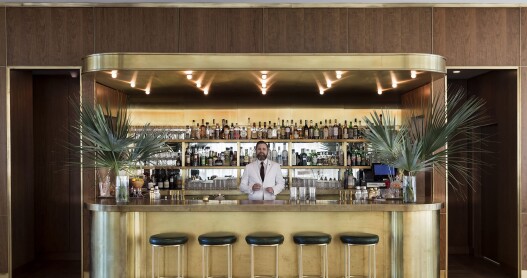
From lobby bars to rooftop lounges, these are the hotel bars Afar editors love checking out when they’re checking in.
Carnival season is here, but there’s still time to make reservations for a last-minute trip to the Big Easy.
The New Orleans City Council just unanimously voted to place heavy restrictions on short-term rentals throughout the city. Here’s what it means for travelers.
The Ace Hotel Group just announced plans to open Maison de la Luz in New Orleans as part of its new luxury spin-off brand.
RESOURCES TO HELP PLAN YOUR TRIP
This venue has closed.

Every time I get a chance to spend some time in NOLA, you’ll find me on Frenchmen Street, Marigny, Bywater, 9th area. This art market, while not really a hidden gem, is always worth a visit. Grab a cocktail and catch some music to loosen up and chat it up with the incredible artists and business owners selling really fun swag in the heart of The Frenchmen Street party.
Named after Dot Domilise and her daughter-in-law Patti, this shack-like corner shop on Annunciation draws locals and in-the-know visitors for some of the city’s best po’ boys. You can’t really go wrong whether you opt for the hot smoked sausage with gravy or “The Peacemaker” (half shrimp, half oysters). Either way, grab a Barq’s root beer and a stool at the bar while you wait for your sandwich and a table—they’re in short supply, especially during the lunch hour rush.
This is where the cool kids (Uma Thurman, Led Zeppelin, Anthony Bourdain) lay their heads when they stop over in the Big Easy. The look is modern but not excessively so, location-appropriate, but not in an overly Fleur-de-Lys kind of way. Think: creamy hues, contemporary furnishings, and lofty ceilings paired with intricate woodwork, ornate chandeliers, and black-and-white photos of jazz greats. The former bank is also well positioned for late-night revelry, while still being far enough away from the French Quarter action—so you can get a good night’s sleep in one of the just-renovated king-size Apple rooms.
The very first restaurant that was recommended to me by the bellhop at my hotel was Mother’s Restaurant. Mother’s is one of the oldest and most successful restaurants in the NOLA. The line to get inside stretches down the sidewalk to the back of the building. The menu has all of the Nawlins classics like Po-Boy sandwiches and jambalaya. Breakfast is also amazing. Creations like the shrimp creole omelet with grits really popped out on the menu for me. Try it, try it all!
Tucked away on Rampart Street on the sliver between the French Quarter and the Treme enclave, this cool bar balances neighborhood dive-iness and of-the-moment popularity. Find yourself a cozy corner and order up an updated version of a Big Easy classic or something fantastic hatched from the mind of one of the skilled cocktail craftspeople behind the bar.
Bourbon House is one of New Orleans’ best restaurants, serving fresh seafood (oysters topped with caviar!) and dishes made with local ingredients. In fact, over 70% of ingredients are sourced within 150 miles. Moreover, Bourbon House is passionate about fresh seafood and if something isn’t in season you won’t see it on the menu. For dessert, try their chocolate chunk bread pudding with bourbon sauce or a bourbon milk punch made with milk, gelato, nutmeg and bourbon. Bourbon is, unsurprisingly, a specialty: The restaurant offers over 100 different bourbons. With picture windows looking out on Bourbon Street, it’s also a great place to people watch.
New Orleans’ cemeteries are part of the city’s culture as well as its landscape—and St. Louis Cemetery No. 1 is the oldest and most famous. Opened in 1789 on the edge of the French Quarter, the cemetery is home to the tomb of Marie Laveau, a free woman of color who earned a reputation as the city’s most powerful voodoo queen in the 1800s. Her tomb is littered with tributes (money, alcohol, candy, trinkets) left by those who hope the queen will grant their desires from beyond the grave. In the Garden District, Lafayette Cemetery No. 1 made a cameo in several movies, including Interview with a Vampire and Double Jeopardy. Save Our Cemeteries, a non-profit dedicated to cemetery restoration and preservation, runs tours of both St. Louis No. 1 and Lafayette No. 1.
Discover a history that can be felt and a little local flavor with one of the many tours available or explore it all on your own. The beauty of this cemetery is a reflection of it’s location. Worn and unkempt, its air of mysterious romanticism can only be felt and explained with a visit. Although, it is rumored that the above-ground tombs are due to the water levels, it is in fact, mainly Spanish influence that dictated the above-ground practice. Here, you’ll find the reputed resting place of Marie Laveau and a little farther into the city of the dead, her daughter. Both are easily recognized by the offerings left. Here’s a little bit of lagniappe: Many years ago, the groundskeeper started a myth that is still perpetuated by many today. Although the offerings left at the base of the tomb are mainly authentic, the ritual of the 3 x’s are not. Recounted by the misguided groundskeeper to rich white folks after Marie Laveau’s death, the groundskeeper hoped that they would leave money as an offering for the sorely needed repairs of the grounds. It is said that the more gullible the tourists appeared, the sillier the ritual became. It is speculated that the origins of the 3 x’s in fact come from the tomb maker’s signature who mostly poor men of color, could neither read nor write. Be sure you spread the word if you go for a visit and be warned that if perpetuated, you risk a hefty fine.
Little-known fact: New Orleans was the first place in North America to license pharmacists (starting in 1769, when the city was still under Spanish rule). After Louisiana became a territory, the U.S. governor extended the requirement, also decreeing that pharmacists take a three-hour licensing exam in order to practice. And no wonder illness got such attention—the city was arguably the least healthy place to live on the continent; it was riddled with yellow fever, malaria, and dysentery. This dark but fascinating history is explored in this atmospheric 1822 town house, which was once the home and shop of Louis J. Dufilho, the first licensed pharmacist in the city—and hence in the country. Exhibits include apothecary jars, tools of the trade, and leeches. (Yes. Leeches.)
This Frenchmen Street landmark offers up a steady parade of remarkable local musicians from late afternoon until early morning, with an emphasis on foot-tapping traditional and swing jazz. Musicians play on a low stage against the front window; the curious wanderers outside press their noses up against the glass, providing yet another level of entertainment. Nobody comes here for elaborate cocktails—it’s more or less a beer-and-a-shot joint—but people do come here for music, and they come in droves. Plan to arrive early enough to nab a seat at the bar or along the wall, and you’ll have a good perch when things get going.