
New Delhi

Delhi showcases India’s unique ability to modernize at a rapid pace without casting aside its cultural, historical, and spiritual identity. The capital city is a vast metropolis, with eclectic neighborhoods that reflect different ethnicities, heritages, and mobility. New Delhi, the government district of Delhi, is the administrative heart of India and an embodiment of the zeitgest of this huge, diverse nation. Amid the modern skyscrapers, award-winning restaurants, garden parks, breweries, and vibrant markets, a series of proud monuments provide silent reminders of India’s legacy.

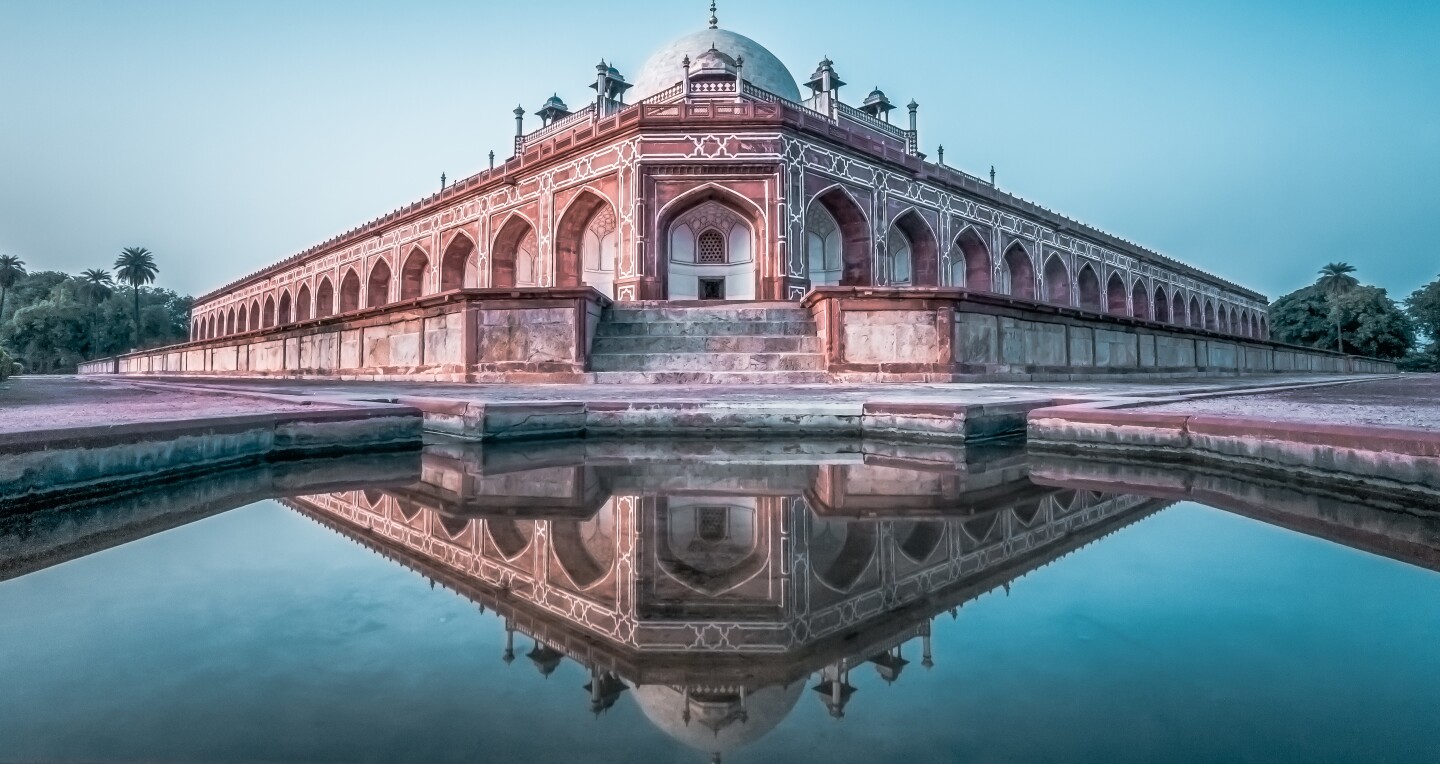
The last refuge of Mughal Emperor Humayun reminds rather of a luxurious palace, than a tomb. Located in the eastern part of Dehli, Humayun's tomb is one of the best preserved Mughal monuments.

Shutterstock

Overview

When’s the best time to go to New Delhi?

Delhi is best experienced between October and March: a time of moderate temperatures, little rain, and festivals galore. April through September can be hot and muggy, and the seasonal summer rains only complicate matters. Heavy fog in December and January can affect flight and train schedules, as well as early morning sight-seeing—so plan ahead.

How to get around New Delhi

The city center is approximately 45 minutes from the airport, and you can reserve a taxi or private vehicle after exiting baggage claim. The metro—which offers air conditioning and female-only compartments—is an affordable, reliable, and environmentally friendly option, but can also be congested with heavy crowds. Taxis are required by law to register as commercial vehicles, and they do have meters, although many drivers prefer to set a pre-paid flat rate. Surcharges will be applied for extra baggage, night rides, and tolls. Buses, usually run by the government, provide a cheap and convenient mode of public transportation. New features like air conditioning and low-floor lifts are being installed on city buses to improve the system and to draw private car owners away from busy roads. An auto-rickshaw, or tuk-tuk, is a three-wheeled motor vehicle for hire. Generally green, yellow, or black in color, auto-rickshaws have regulated, metered fares, and are common throughout the city. Private vehicles also povide a cheap, flexible, and comfortable option, but be sure to check that the car is licensed for tourists.

Can’t miss things to do in New Delhi

Old Delhi is a culinary, architectural, and historical adventure. Start at the Red Fort, a sandstone fortress that covers nearly 255 acres. Consider returning in the evening when the fort comes alive with a sound-and-light show that recreates 5,000 years of India’s history. Next, continue to Jama Masjid, the largest mosque in India, which was commissioned by Shah Jahan—the same emperor who built the iconic Taj Mahal. Step outside the gates and enter Chandni Chowk, which is touted as the oldest and busiest street market in Delhi. Chandni Chowk hosts an impressive mix of shops that specialize in goods such as silk, silver, crafts, spices, and leather products. Find renowned restaurants, food stands, and sweet shops—including the original Haldiram’s, Meghraj and Sons, Bikaner Sweet Shop, and Ghantewala Halwai. The street also houses several different religious shrines that illustrate a genuine cultural harmony: Sri Digambar Jain Lal Mandir and Bird Sanctuary, Gauri Shankar Hindu Temple, Sikh Gurdwara Sis Ganj Sahib, and Central Baptist Church. You’ll also find historic private residences nestled amid a labyrinth of small streets and neighborhoods around Chandni Chowk.

Food and drink to try in New Delhi

Delhi has a vibrant food scene including award-winning restaurants, roadside stands, and comfort food—lots of comfort food. Restaurants typically fall into two categories: veg (vegetarian) and non-veg. Remember that the cow is sacred in India, so beef is difficult to find. In the neighboring city of Gurgaon, permits are now issued for legal microbreweries, and creative new pubs are gaining popularity. India has also won numerous international accolades for beer, wine, and rum.

Culture in New Delhi

Delhi is such a multicultural society that each religious and ethnic demographic celebrates its own festivals. Diwali, the Festival of Lights, is celebrated in October/November with a profusion of lamps, fireworks, and anything that sparkles. Holi, the Festival of Colors, is a Hindu celebration at the end of the winter season. Bonfires are lit to signify a devotion to Lord Vishnu, the God of Preservation, and people gather to throw colored powder and water at each other. Many children make a game out of throwing powder on foreigners—even hiding in trees to sprinkle handfuls of red, green, blue, and gold powder on the heads of unsuspecting tourists.

Delhi is also home to an excellent collection of museums and cultural relics. The National Handicrafts and Handloom Museum displays tribal and rural art and artifacts. With over 35,000 pieces ranging from textiles to clay, the space is a welcoming community of artisans and art lovers. Each month, approximately 50 craftspeople from across the country are invited to reside on the property and demonstrate their talents. Don’t miss the Village Complex, an exhibition that displays village life from varying regions in India. Akshardham, located across the Yamuna River in Noida, is an elaborate Swaminarayan temple complex that features an IMAX theater, musical fountains, sunken gardens, and the Mandir: a temple with over 20,000 statues of India’s religious personalities. Be sure to experience the 12-minute boat ride that highlights over 10,000 years of India’s heritage, including inventions, discoveries, and the world’s first university, Takshashila.

Local travel tips for New Delhi

Distances are misleading in Delhi, so aim to group your activities by routes and time of day. A restaurant may only be a couple of miles away—but depending on traffic, the drive can take an hour or longer! The metro is a reliable and affordable way to reach neighboring cities like Gurgaon or Noida.
Guide Editor

READ BEFORE YOU GO
RESOURCES TO HELP PLAN YOUR TRIP
Smokehouse Grill is a true novelty in the hospitality scene of Delhi. It’s an absolute treat for beef-starved tourists in India. It’s one of the very few places in Delhi that has started serving India’s holy animal on a plate. Aside from the tantalizing steak dishes, the vivacious ambience and live house music complete this lounge/bar. Prices are on the high end, but it’s well worth it when a night on the town is in order. The martinis and classic cocktails are made well, so do give those a try. There are two floors, but the top floor is generally reserved for VIP guests or private parties. Although there is no cover charge, do make reservations, or you might be waiting ages for a table! There is no set dance floor, but you’ll see plenty of youngsters groovin’ to the hottest house/lounge beats at the bar. It’s considered one of the swanky, upscale lounge bars of Delhi, so naturally you will find that the crowd consists of foreigners, expats, and a wealthy local crowd. It’s located right next to Kuki Bar in Greater Kailash II, in Masjid Moth.
Rickshaw rides are common in Chandni Chowk, the vast and crowded market in the Old Delhi quarter, but book a comprehensive rickshaw tour for an immersive experience that lasts longer than 15 minutes. Witness the architectural marvels, multicolored facades, beautifully decorated shops, and the fragrances emanating from the potpourri of eateries that line the historic alleys. The tour covers 20 main sites—palaces, mansions, elegant shrines, and colorful bazaars—and finishes at an 1860 haveli (mansion) where you’ll visit a gallery of photos depicting the lifestyle of Mughals, as well as a small lounge where you can relax and try some typical snacks.
Delhi’s Qutub Minar, at 72.5 meters or 238 feet tall, is the tallest tower in India. Built as an Islamic monument in the early 13th century of red sandstone and marble, the minar is not without controversy. Some believe the tower was built to celebrate Muslim rule in the country, and others claim it was erected to call the devoted to prayer. The surrounding complex houses the first mosque to be built in India, tombs, a madrassa, and an iron pillar that is mysteriously resistant to corrosion, even after being exposed to the natural elements for centuries. Until 1981, visitors were able to climb the 379 stairs to the top of Qutub Minar, but the interior is now closed.

The Qutab Minar is notable for being one of the earliest and most prominent examples of Indo-Islamic architecture. It is surrounded by several other ancient and medieval structures and ruins, collectively known as Qutub complex. Within the Qutab complex, amidst the ruins of the Quwat-ul-Islam Mosque, stands one of the legendary Ashoka Pillars. This large iron pillar has withstood the ravages of Delhi’s weather (and recent pollution) and has not rusted in over 1500 years.
Yes, Hauz Khas Village is perhaps most known for its artsy vibe, boutique shops, and trendy restaurants. But before it became a lively commercial district, Hauz Kaus was (and remains) a 13th-century historical complex with a mosque, tombs, and an Islamic seminary. Take a break from the bustle of shopping and dining to explore the sites from Muslim royalty, then spend some time at the charming lake with its swans, ducks, and other wildlife.
Designated a UNESCO World Heritage Site, the Red Fort, located in New Delhi, is a treasure trove of cultural history. You can spend hours wandering among the various buildings, learning much about the history of India. Tucked away within the walls of the Red Fort is the Hall of Public Audience. Don’t be fooled by the modest red exterior, for once you cross the threshold you are greeted by intricately detailed inlaid-paneled walls that run from the floor to the canopy-ceiling. It is within this chamber that the emperor would receive people from the community and hear their complaints. (I entered this building to whine about the 104-degree heat, but alas, there was no emperor available, as it was far too hot.)
Jama Masjid, India’s largest mosque, was commissioned by Shah Jahan, the same emperor who built the iconic Taj Mahal for his beloved wife, Mumtaz Mahal. Completed in 1656, the courtyard of Jama Masjid can accommodate 25,000 devotees. Visitors must comply with a dress code; traditional robes can be rented at the northern gate. The mosque is located in Old Delhi near other notable sites, including the Red Fort and Chandni Chowk market, so schedule extra time to explore the area. Note: No visitors are allowed during prayer hours.
Make a reservation at one of Delhi’s highest rated restaurants, featuring a range of modern and classic cuisine. From the iconic, cutlery-free dishes at Bukhara to the Michelin starred dim sum and dumplings at Yauatcha, top chefs have made their mark in India’s capital. The award-winning restaurants offer intimate dining spaces, views of Delhi’s skyline, and live jazz bands.
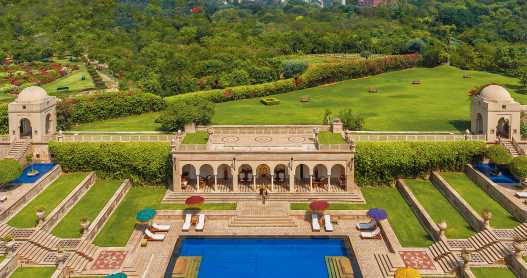
Delhi’s diverse hotel scene includes luxury palaces, family-run B&Bs, and even homestays that offer a window into local culture. Since the sprawling city is prone to lengthy traffic jams, it’s vital to select a hotel near your scheduled activities.
Hauz Khas Social can be considered a social space or a social experiment. Either way, this is perhaps one of the best drinking spots in Delhi. Social is a unique concept that unites a cafe, office space, and nightclub. The identity depends on the time of day, though the crowds pounce in the evening hours. Enjoy the lake views while sipping on “Two Lost Souls Swimming in a Fish Bowl” or “Trip on the Drip.”
Locals may argue over their favorite places for kathi rolls, but Nizam’s is one spot that’s always on the list. The atmosphere is nothing much to speak of—it’s an order-at-the-counter, seat-yourself kind of place—but the freshly-made stuffed rolls are sure to satisfy your lunchtime (or late-night) craving. Choose from a long list of fillings, from mutton and egg or chicken tikka to paneer cheese, mushroom, and potato. Sides like kebabs, biryani rice (vegetarian and not), and omelets are also available, and you can wash it all down with a fresh lime soda. There are multiple Nizam locations in Delhi (as well as a few other in other states), but the Connaught Place shop—not far from the famous ring of colonnaded Georgian buildings, the Janpath Market, and the name-brand retailers—is a particular landmark.