Buenos Aires

Traditionally, it’s the world capital of tango. These days, thanks to a vibrant urban art scene and nightclubs spurring on musical innovation, cool kids from all over the globe look to Buenos Aires as a style capital of Latin America. The Argentine metropolis, by turns moody and frenetic, is just as colorful as you’d expect—and porteños (its inhabitants) themselves are as notoriously proud and effortlessly hip as you’d imagine. While there are sights to be seen, of course, half the joy in visiting Buenos Aires is drinking up the intoxicating blend of the city’s romantic past and trendsetting present.

2_buenos_aires.jpg
Overview

When’s the best time to go to Buenos Aires?

Temperate spring (September to November) and autumn (March to May) are the most desirable times to visit Buenos Aires. Though winter days (June−August) are shorter, and the weather is gray and chilly. The Argentine capital almost never sees snowfall and the cold weather is fine for cultural sightseeing, but winter visitors miss out on the long strolls, park outings, and outdoor café action that make the city so charming. January is oppressively hot: schools are out, some businesses close, and porteños (what the locals call themselves) with enough money to clear out take refuge at beaches outside of the city.

How to get around Buenos Aires

Nearly all international flights arrive at Ezeiza International Airport (EZE), located about 22 miles from the city center. Though public buses serve the airport, they’re notoriously inconvenient; you’re better off paying for a taxi at the official desks inside the arrivals hall. (Prices fluctuate all the time; the current price of 900 pesos is about $15.50.) Some shorter flights arrive at Buenos Aires’ smaller, more central airport, Aeroparque Jorge Newbery (AEP).

Once in the city, public transportation options include the traveler-friendly Subte (subway) and a vast, somewhat overwhelming, but efficient and fast system of colectivos (buses). Purchase Subte tickets in the underground stations before boarding, and if you’re getting on a bus, be prepared with exact change in monedas (coins) to feed into the machine behind the driver. Taxis are abundant and affordably priced; just be aware that many taxistas refuse large bills.

Can’t miss things to do in Buenos Aires

Some cities have food trucks; Buenos Aires has roadside carritos. Look for billowing smoke—or just follow the mouthwatering aroma of sizzling meat—to one of these rickety grill stands. Then ask for a local favorite, the choripán (a chorizo sandwich), and use a plastic spoon to top it off with freshly prepared chimichurri, set out in small bowls near the grill.

Food and drink to try in Buenos Aires

Argentina is world famous for beef; you’ll find it on nearly every table in Buenos Aires, from basic parrillas (steak houses), where grilled steak are served with chorizo, papas fritas (french fries), and green salads, to upmarket restaurants where rare cuts of bife de chorizo are perfectly paired with Malbec from Mendoza. Though vegetarian cuisine and ethnic food trends have been relatively slow to catch on in this meat-eating culture, you’ll find a growing number of international options in the Palermo Soho and Palermo Hollywood districts.

Culture in Buenos Aires

Architecturally speaking, Buenos Aires is fascinating, particularly along the Parisian-style Avenida de Mayo and throughout the historic barrios of San Telmo, Recoleta, San Nicolás, and Monserrat, where the grand Spanish and Italianate buildings stand as testament to the city’s proud immigrant past. On rainy days, see some of the city’s museums—MALBA hosts many of the most significant Latin American art exhibits.

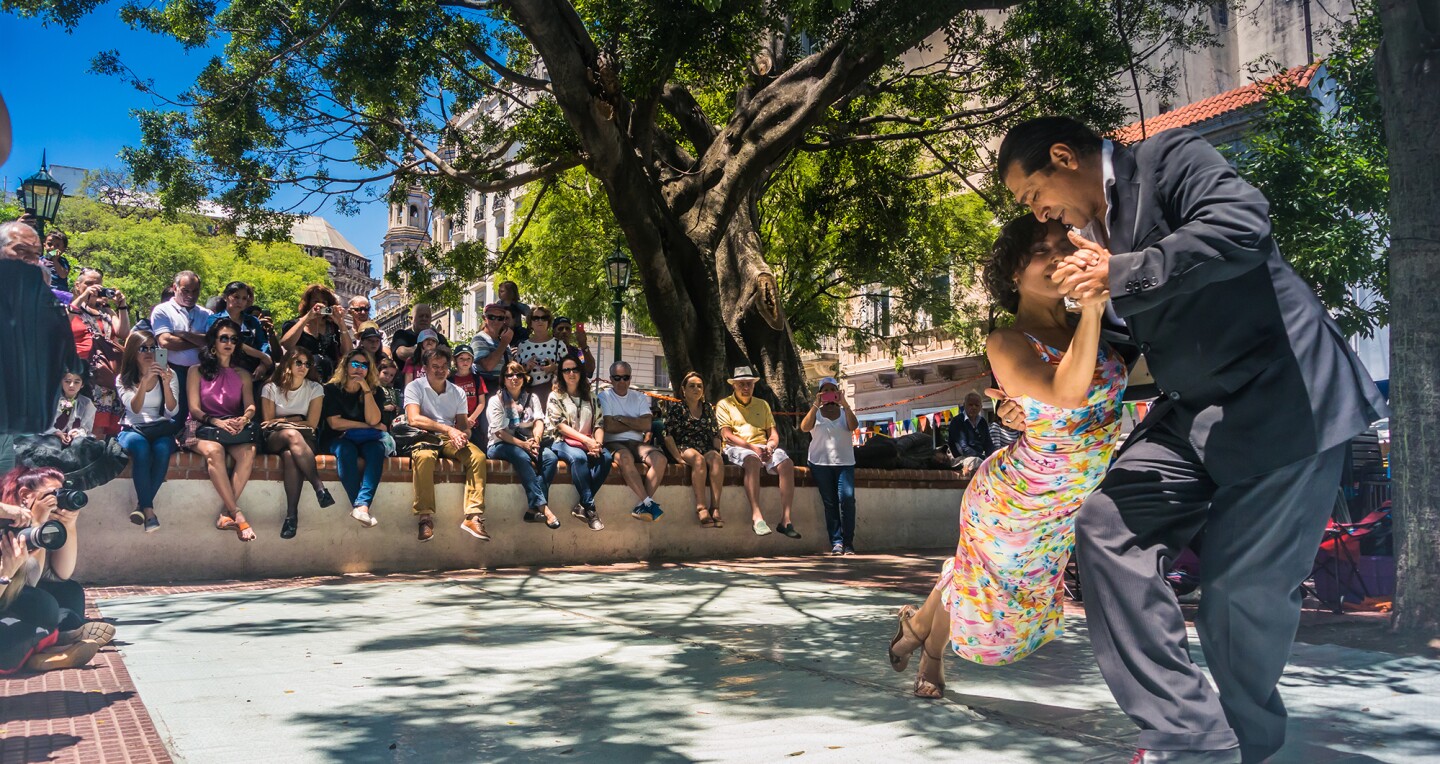
For the most authentic taste of porteño culture, you’ll have to wait until after dark, when local dancers crowd the floors of traditional milongas (tango clubs) and imaginative musicians and DJs mix and mash provincial Argentine music with cumbia, hip-hop, and house music in the city’s nightclubs.

Buenos Aires hosts major events throughout the year. The biggest draws are the ArteBA art exposition, Feria del Libro book fair, Tango Buenos Aires Festival y Mundial, Casa FOA design festival, and La Exposición Rural, a farm show−like agricultural fair.

Local travel tips for Buenos Aires

In Buenos Aires, you can always spot the out-of-towners. They’re usually wandering around the streets in the evening, hungry for dinner at 7 p.m.—and wondering why none of the restaurants have even turned their lights on yet. As a rule, the locals have a light breakfast (often coffee and medialunas—sweet, croissant-like pastries), a late lunch, and merienda (a snack with coffee, mate, or tea) around 5 or 6 p.m. Dinner never happens earlier than 8:30 or 9 p.m., often much later on weekends. Note that the city empties out in January, with many porteños away on their summer vacations.

Guide Editor

READ BEFORE YOU GO
RESOURCES TO HELP PLAN YOUR TRIP
With its hundreds of literature-focused shops, cafés, and events, this city is filled with places to enjoy a good book, surrounded by like-minded bibliophiles.
It was 1852 and Argentine society was so polarized, the country’s very existence was threatened. Thus, Club del Progreso was born as a gentlemen’s retreat whose noble goal was to unite the nation’s political factions through thoughtful discussion and cooperation, thereby ensuring Argentina’s progress. The club still hosts academic debates on issues of national interest, and its stately, wood-paneled dining room, hung with dazzling chandeliers, frames an elegant, historical setting for trying classic Argentine fare like roast suckling pig or revuelto gramajo (scrambled eggs with potato and vegetables).
La Boca’s Don Carlos is heaven for the indecisive. Since there is no menu, the restaurant’s namesake owner sizes you up and intuits what you need. The idea is to feel like you’re at home, where the whims of whoever’s cooking determine what comes out of the kitchen. Everything is made from scratch, in-house, and reflects what you’d get in a typical Argentine household: pastas, Spanish tortillas, vegetable croquettes, juicy grilled meats. Plates come out in quick succession until you say uncle. Wash them down with a bottle from their impressive wine list; you’ll leave with a full belly and a smile. Closed Sundays and Boca soccer match days.
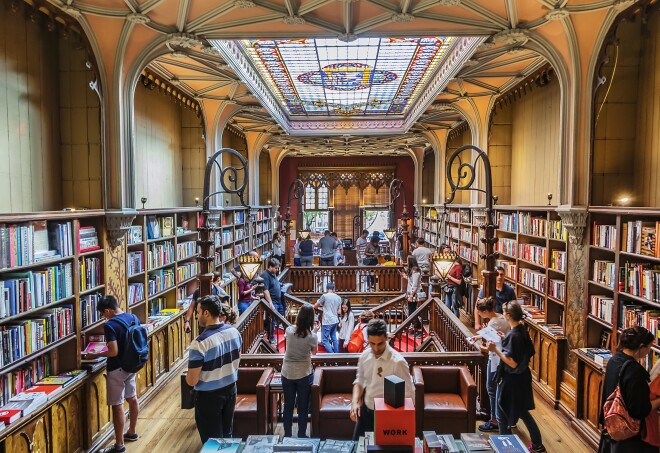
Buenos Aires is a city of readers—it supports more bookstores per capita than any other place in the world. The crown jewel of the librerías here is the Ateneo Grand Splendid. Housed in a theater where music legends such as Carlos Gardel once attracted vast crowds, the store features shelf after shelf of tempting volumes on its rounded balconies. Italian frescoes on the domed ceiling and plush red-velvet curtains are from the theater’s original 1919 design. The four-story space carries over 120,000 books and a local-music selection, and there’s a café on the erstwhile stage.
The bricked-over windows of the bookstore/wine bar Falena may have you worrying the place has closed. But the isolation from the street that the bricks provide is part of what gives Falena the feel of a hidden sanctuary. Ring to enter and step into what could be some bookworm’s particularly inviting minimalist home. Downstairs, floor-to-ceiling shelves hold books handpicked by local independent publishers; a basement wine cellar safeguards a carefully curated selection of boutique vintages. And the rooftop terrace is the perfect spot to enjoy a glass—or pore over newly acquired volumes.
It would be easy to walk past this tiny, unassuming joint in the Recoleta neighborhood. But those in the know flock to La Cocina, which is still run by the Catamarca Province family that opened it 40 years ago (the owners’ grandson answers the phone and wraps up lunch orders nonstop). La Cocina’s famous empanadas are oven-baked (as opposed to fried), and this lighter take on the Argentine staple feels like something you could eat every day. Go early for lunch or dinner, as the tiny place fills up at peak hours; don’t miss the picachu, a spicy cheese-and-onion empanada. Open Monday through Saturday from noon to 3 p.m. and 6 p.m. to 1 a.m.
Once-abandoned railway sheds have been repurposed to create an open-air outlet mall in Palermo, one of the city’s buzziest neighborhoods. Clothes are expensive in Argentina so don’t expect rock-bottom prices, but you’ll appreciate discounts on local brands like Las Pepas. In addition to clothing retailers, there are several food carts, plus pop-up restaurants, here and there beneath a redbrick viaduct that supports the General San Martín commuter train. Large flowerbeds and the trains’ overhead comings and goings make Distrito Arcos a pretty spot for snacks or browsing the racks.
Facon presents exquisitely handcrafted goods from all around Argentina. Look for baskets by the Matriarca women’s collective; Siwan’i natural, handwoven textiles produced by Wichí-nation women; and Warmi scarves and blankets the women of that Andean ethnicity also create. All items are fair-trade products that constitute an important source of income for the indigenous communities. Additionally, the store showcases contemporary design with an ecological spin, alongside leather goods, objets d’art, and a selection of local boutique wines. Facon is also headquarters to Salú, a club that hosts cooking classes, wine- and cheese-tastings, and talks by local chefs on topics like the origins of the Argentine mixed-grill known as asado.
Buenos Aires is so grand that the El Centro (city center) district alone has more historic sites than many world cities. As you stroll, you’ll view the iconic Obelisk, which overlooks the main Avenue 9 de Julio, and the Plaza de Mayo, where Evita addressed throngs of her followers from the balcony of the Casa Rosada. The churches are works of art—the Baroque Basilica of San Francisco is only one example—and even the office buildings are worth seeing (check out the elegant Palacio Barolo). In all, the architecture rivals that of any city in Europe.
Tango is as essential to Buenos Aires as pizza is to Naples, so the Anselmo Hotel is a perfect fit for the city, with its location in the heart of the San Telmo neighborhood—known for spontaneous street dancing—in a 1906 mansion once belonging to tango composer Anselmo Asiento. The hotel is perched on Plaza Dorrego, a lively public space surrounded by cafes and shops which especially gets going on Sunday, when the San Telmo antique fair and flea market spills into the street, attracting shoppers, musicians, and revelers. Clean-lined, modern furniture and black-and-white photographs of Buenos Aires compliment the building’s original wooden shutters and wrought-iron balconies. Sip a glass of Malbec in the cozy wood interior of the Acacia bar and restaurant, or take it outside into the calm inner courtyard. A small gym is available if you haven’t gotten in enough steps wandering the neighborhood’s cobblestone streets or tango dancing the night away.