

This article was originally published in September 2025 and most recently updated on September 21, 2026.
November is a month to give thanks, and not just in America. Venice builds a bridge across the Grand Canal to honor the end of a 17th-century plague, Bangkok sets its river flickering with candles for the goddess of water, and Tahiti welcomes back the rains. Antigua and Barbuda toasts 45 years of independence, and Oregon wine country opens its tasting rooms for the Thanksgiving break.
Here are the 10 best places to travel this November.
Venice, Italy, for a centuries-old celebration

Venice’s Violino d’Oro hotel is centrally located, so you can be in the midsts of the November festival.
Courtesy of Violino d’Oro
Plague was the Achilles heel of the Venetian Republic. Its tentacle-like trading routes brought it a fortune—and a constant problem with imported diseases, notably bubonic plague. Look around the city’s churches and you’ll see endless depictions of St. Roch, that odd-looking saint with what appears to be a gash on his thigh—it is a bubo (an inflamed lymph node, a common affliction during the bubonic plague), and he was invoked for protection.
So, too, was the Virgin Mary, and Venice even built a church dedicated to her as a thanks for her supposed intervention in a particularly gnarly spate of plague, which ended in 1631. The city also vowed an annual festival, the Festa della Madonna della Salute—held this year on Saturday, November 21.
A temporary bridge is built to straddle the Grand Canal and connect to that plague-thanking church, the huge, wedding cake–like Basilica Santa Maria della Salute. Thousands march across the bridge to light candles and pray. For supper, try castradina, the mutton and cabbage stew that’s the day’s default dinner. It will be on the menu at most restaurants.
Where to stay: Violino d’Oro
Florentine hotelier Sara Maestrelli opened this passion project, her first outside Tuscany, in the San Marco neighborhood, a two-minute walk from Piazza San Marco. The jewel box–like property was created by combining a series of smaller hotels into this 32-room hideaway. Book Room 13, and you’ll have a private terrace overlooking a courtyard, away from the crowds.
Willamette Valley, Oregon, for a boozy Thanksgiving
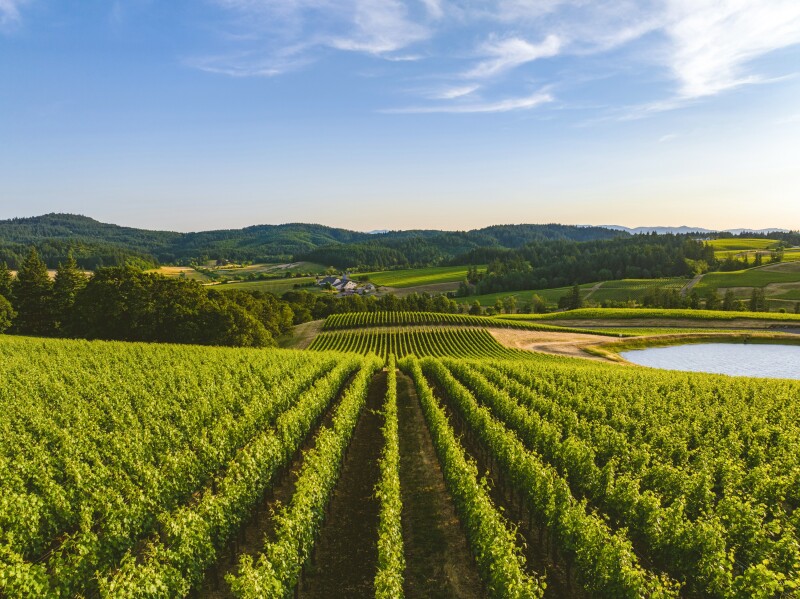
The long, cool growing season of the Willamette Valley encourages slower ripening of pinot noir grapes, resulting in greater complexity and structure.
Courtesy of Dan Meyers/Unsplash
Come to the Willamette Valley for Wine Country Thanksgiving and sample some of the region’s best earthy, high-acidity pinot noir. Over Thanksgiving break, many of the tasting rooms at the 700 or so wineries here host special events or allow drop-ins when normally appointments are necessary. Check these listings. (Don’t forget that PDX-serving Alaska Airlines offers its Atmos Rewards members a perk: Wine Flies Free, where you can check up to a dozen bottles in the hold gratis.)
November is Native American Heritage Month, when the Willamette Valley’s Indigenous communities come to the fore; this was historically part of the land of the Kalapuya peoples. Look for wines from Greywing Cellars, too, including at Uva wineshop in West Salem.
Greywing Cellars’ co-owner Brandy Grey, a former journalist, has Cherokee and Shawnee heritage and operates it essentially as a pro-social project: a portion of sales from each bottle are donated to Indigenous nonprofit organizations. You can also spend some time at the Chachalu Museum & Cultural Center, dedicated to foregrounding the stories of local indigenous people.
Where to stay: Allison Inn & Spa
The 85-room resort sits on its own 35-acre parcel of green grounds, with a spectacular view across the Chehalem Mountains and working vineyards of the region. Rooms feature gas fireplaces for chilly evenings and private terraces if the weather’s still warm. Guests will find all that plus a 15,000-square-foot spa on site.
Cape May, New Jersey, for birding and being festive

Cape May’s lighthouses and Victorian mansions will be lit by only moonlight and candlelight this month.
Photo by Jon Bilous/Shutterstock
Tiny, tony Cape May, is a manicured Victorian settlement at the southernmost tip of the Jersey Shore, and it’s as worthwhile visiting in winter as the classic summer season. This month, Washington Street Mall hosts a festive artisan market selling ornaments, crafts, hot cider, and roasted nuts from late this month, running through early January.
In addition to holiday festive season, it’s also migration season here, as a plethora of birds funnel down the peninsula en route to their warmer winter homes. Look for raptors like red-tailed hawks and peregrine falcons, as well as songbirds like sparrows and finches. The ideal perch for any avid birders: Cape May Point State Park, or try the official Cape May Bird Observatory. Fancy being a little more hands-on? Family-owned Rea’s Farm, in West Cape May, is a pick-your-own spot in summer and fall, while also offering kid-friendly activities when the crops have finished; this month, book tickets to try falconry on Tuesday mornings with master falconer Joe Kosakowski.
Where to stay: Congress Hall
This spot claims to be America’s oldest seaside resort, first welcoming guests for the season in 1816. The hotel, with more than 100 rooms, remains a celebration of Victoriana, complete with original moldings and a grand lobby.
Copenhagen, Denmark, for taking the plunge

The Refshaleøen neighborhood has plenty of places to plunge into the sea.
Photo by Julia Sellman
Any ice bath obsessives who’ve already checked off every Wim Hof-endorsed experience should test their mettle in Denmark this month. Dive into the waters off the Danish capital as the city’s winter bathing season swings into action. It isn’t for the faint-hearted or thin-skinned: Danish swimmers advise that you can’t really call it “winter bathing” until the water dips below 16 degrees Celsius (about 60 degrees Fahrenheit). Experts recommend just two or three minutes in the chilly sea. Don’t do this alone. Still, it’s an invigorating way to immerse yourself in a tradition that the Danes treasure and celebrate every winter.
There are eight winter bathing clubs here and countless spots to try it. One standout is in the warehouse-district-turned-hipster-hub Refshaleøen; the classic experience is La Banchina, a 16-seat restaurant on the water’s edge with a wood-fired sauna and its own bathing pier.
Pair a plunge with the Scandinavian tradition known as saunagus, which includes essential oils in a sauna. You can also toggle between sessions in the heat and then take a dip in the ice-cold outdoors.
And if you’ve ever wanted to experience the Danish concept of hygge—hard to translate, but a tradition grounded in homey, twinkly coziness—then this is the time. Come in November for an authentic onslaught of candlelight (according to The Economist, the Danes reportedly burn through the most in Europe, around 13 pounds of wax per person per year), comfort food, and Christmas markets. The Tivoli Gardens amusement park market starts November 13.
Where to stay: Nimb Hotel
The ideal holiday perch in Copenhagen is at this whimsical luxury hotel where most of the rooms overlook Tivoli Gardens, which act more like an urban rec room than a Scandi Disney; indeed, what’s now the Nimb began as the restaurant complex serving Tivoli Gardens patrons. The Moorish-style, minaret-heavy architecture is charmingly out of place among the low-slung, low-key Danish buildings that surround it.
Bangkok, Thailand, for an illuminated river

Tourist sail past Wat Paknam, Big Buddha, at sunset along Bangkok’s Chao Phraya River.
Photo By daphnusia images/Shutterstock
The end of monsoon season—and so, the start of less humid weather—is marked by Loy Krathong, or the Thai Festival of Lights. It’s fêted on the full moon night of the 12th lunar month, which this year falls on Wednesday November 25.
Locals head to the river to float krathongs, traditional offerings made from a banana leaf, flowers, and a single flickering candle. They’re intended to thank Phra Mae Khongkha, the goddess of water and also to cast off the misfortunes of the year before; the most astonishing sight is the Chao Phraya, the city’s main artery, which becomes a congested, candle-flickering stream. There will also be folklore performances, classical Thai music concerts, and, of course, fireworks to celebrate the day.
You can also catch a similar, Lanna-culture counterpart, the Yi Peng Sky Lantern Festival, in Chiang Mai November 24–25, when flaming lanterns are launched into the sky.
Where to stay: Four Seasons Bangkok
Keen to see those flickering flotillas right from your hotel? The Chao Phraya River outpost of this global chain sits right on the water, so you can easily amble down; it also offers a special dinner on its terrace to mark the occasion. The hotel’s interior is a tribute to that river, too. Starchitect Jean-Michel Gathy, its designer, has dotted it with reflecting pools and water features.
Related: These Are the Best Hotels in Thailand
French Polynesia, for the return of the rains

The Brando on Tetiaroa in French Polynesia, 30 miles north of Tahiti.
Courtesy of the Brando
Traditional French Polynesia culture uses a calendar that bifurcates the year into two, six-month periods: matari’i i ni’a, or the season of abundance, and matari’i i raro, the season of scarcity. The former kicks off on November 20 per the Gregorian calendar, pegged to the reappearance of the Pleiades star cluster in the night sky (known as matari’i in Tahitian), which typically signals the arrival of the rains.
Local elders and musicians will perform dances and ceremonies in honor of the new season, thankful that the star cluster—and so, rain—has returned once more. It’s no gimmicky event intended to lure tourist dollars, either. This is a keenly felt, deeply rooted experience that’s a privilege to observe firsthand on any visit. The Pape’ete waterfront is always a hub for these celebrations.
This season, of course, is when the landscape is at its greenest, the fruit ripens quickest, and local animals reproduce. Most notable among them: the green sea turtles, whose nesting season also starts this month, with females returning to the beaches where they were born to lay their own eggs. Nonprofit Te Mana o Te Moana monitors nesting on Tetiaroa, the atoll that is home to the Brando hotel.
Where to stay: The Brando
This private island—part of the Tetiaroa atoll, technically—was once the reclusive, eccentric actor’s hideaway, and one of his sons still has a house here. It’s an idyllic, over-the-top exclusive experience. But forget the pricey upscale restaurant and ask instead if you can chow down on classic poisson cru at the staff café just by the landing strip; if the chef’s on island, and it’s open, you’re welcome to join.
Green Bay, Wisconsin, for Indigenous experiences
Just west of Green Bay, the Oneida Nation, which resettled here from New York in the 1820s, is marking Native American Heritage Month with a brand-new museum. The 21,000-square-foot Kahnekano·Lú Cultural Center unspools the stories of those peoples, and it also includes an area where visitors can learn traditional Oneida dances. Join workshops at Ukwakhwa farm, too, which hosts lessons on making corn husk dolls and leather pouches, among other crafts; the working educational farm uses Indigenous agricultural methods on its heirloom crops.
During November 6–8, you can attend Woodland Indian Art Show & Market at Oneida Casino, which showcases the work of Indigenous artists from across North America for a juried competition. Packers fan? Pair that with a mosey along the Walk of Legends, a one-mile path east of Lambeau Field, featuring 24 statues that weave Packers history in with stories of the local tribes, including Oneida Nation men who were pioneers of the sport here.
Where to stay: Hotel Northland, Autograph Collection
The nine-story 1920s-era grand hotel, a Tudor revival landmark, was reborn in the past decade as a 160-room luxury hotel downtown. It has long been associated with the Packers. Cofounder Curly Lambeau lived there for some time. It’s even acted as the team’s headquarters in past seasons.
Kyushu, Japan, for a centuries-old parade
For the past four centuries, the city of Karatsu, on the northern coast of Kyushu island overlooking the Genkai Sea, has hosted Karatsu Kunchi. This year, it runs November 2–4. Think of this fall celebration like a history-soaked riff on the Macy’s Thanksgiving Day Parade, where locals pull a flotilla of enormous, tall floats, or hikiyama, around the historic, castle-topped town. The floats are sumptuously decorated, often taking years to complete, and festooned with lions, dragons, and samurai ephemera. Expect lots of lacquer work and gilding.
Those in use today date back to the 19th century and are on display in a hall adjacent to the main shrine during the rest of the year. Expect a joyous, off-duty vibe throughout the three days of celebrations, which include a nighttime parade on the first day, a beachfront pilgrimage on the second, and the return to their year-round perch on the third, when locals dress in traditional Edo-era clothing.
Where to stay: Yōyōkaku
Experience a classic Japanese inn or ryokan via this artfully restored boutique hotel within walking distance of major sights, including Karatsu Castle and Karatsu Shrine. Ask for a room with a private, cypress timber bathtub, and enjoy the traditional public baths attached to the hotel. Just be ready to sleep on tatami mats and classic futons.
Death Valley, California, for unmatched darkness

Color floods Death Valley’s badlands at golden hour, the warm-up act for its Bortle-dark skies.
Gregoire Thibaud/Unsplash
At night, it may take several minutes for your eyes to adjust to the inky blackness of the sky here. It’s easy to think of Death Valley National Park as synonymous with sun-baked desert, but many visitors come for its after-dark appeal, too. Indeed, it’s the largest International Dark Sky park in the USA, where portions of what you can see above regularly reach Bortle Class 2. For lay folks, that’s dark enough that the Milky Way casts visible shadows and you can spot many star clusters without the help of a telescope.
There are two stellar opportunities to stargaze here this month. The New Moon on November 9 brings the darkest night; return November 17–18 for the Leonid meteor shower, which peaks after midnight at about 10 to 15 meteors an hour. The night sky will rain golden confetti, as the Earth passes through debris left along the orbit of Comet Tempel-Tuttle. They enter the earth’s atmosphere at around 159,000 mph, and as they burn up create that gorgeous cascade. Arrange to join one of the park-directed, ranger-run tours for the best after-dark experience
Where to stay: The Inn at Death Valley
Gable. Lombard. Brando. Pick a Hollywood icon and they likely spent time at this hotel, which a borax company opened in 1927 to draw tourists to the desert. It’s gone through several iterations since then, including a nine-figure renovation eight years ago, which added 22 standalone, self-contained casitas that would have pleased even the privacy-obsessed Garbo.
Antigua & Barbuda, for its Independence Day

Yachts crowd English Harbour as Antigua’s sailing season opens.
Shinzan Murray/Unsplash
Antigua & Barbuda, two islands with very different cultures, were bound together largely by British colonial administration. Mark their freedom from that this month as the locals unleash a party on November 1, the date in 1981 when they gained full independence from the U.K. This year’s theme is “Renaissance: Rooted in Pride, Bounded by Prosperity for All.”
It’s usually a weeklong fiesta, which includes a calypso competition and steel pan bands, with events on both islands. Quiet Barbuda (a short ferry ride or flight away from Antigua) is an island with long-running disputes with the national government over land and development. It holds its own flag-raising ceremony.
This month also begins the yachting season. Head down to the area around English Harbour, where you’ll not only spot a slew of super-yachts but can also experience a quirky corner of the Caribbean. Lore has it that an Italian sailor, here for a race, spotted the appeal of the deep-harbored, undeveloped coastline and settled down. Many of his countrymen followed, creating a Little Italy in the Caribbean. Try a pie or two at Mauro’s Pizza, established by Sardinia-born Mauro Falangola.
Where to stay: Curtain Bluff
On Antigua’s south coast, west of English Harbour, this all-inclusive hotel, run by Brits Tim and Pat Scott, dates back to the 1960s when the Hulford family originally operated it. It’s set on a promontory in 20 acres of lush landscaping and offers a luxury experience, which comps tennis courts and Hobie Cat use as part of the package.


